Why the Letter Z Is Special
Have you ever noticed how exciting the letter Z feels? It’s the last letter of the English alphabet, and it has a cool, zippy sound that makes words stand out. Think about words like zebra, zoo, or zipper they’re easy to remember because of that buzzing “zz” sound.
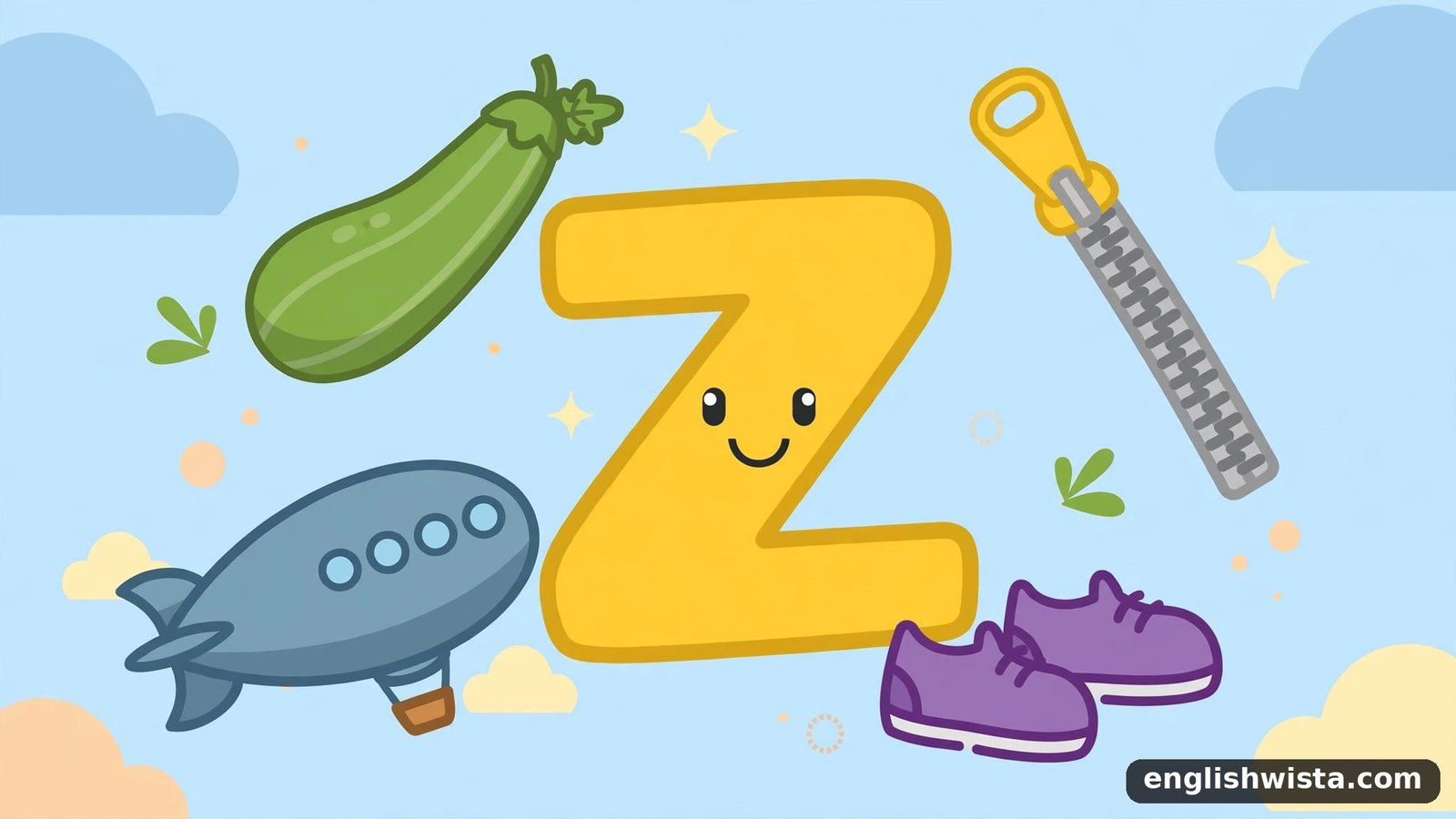
In this article, we’re going to explore nouns that start with Z. A noun, one of the most important parts of speech, is simply a word that names a person, place, thing, or idea. What makes Z nouns interesting is that they’re not as common as nouns beginning with other letters. That’s why learning them can feel like discovering hidden treasures in the English language.
By the end of this article, you’ll not only know many nouns starting with Z but also how to use them in real-life example sentences — a fun way to expand your vocabulary. We’ll look at definitions, examples, fun facts, and even word origins. Ready? Let’s dive into the zany world of Z nouns!
What Exactly Are Z Nouns?
Z nouns are words that begin with the letter Z and act as nouns. That means they name something a person, place, animal, object, or concept.
For example:
- Zebra → an animal (a striped horse-like creature).
- Zoo → a place (where animals are kept for people to visit).
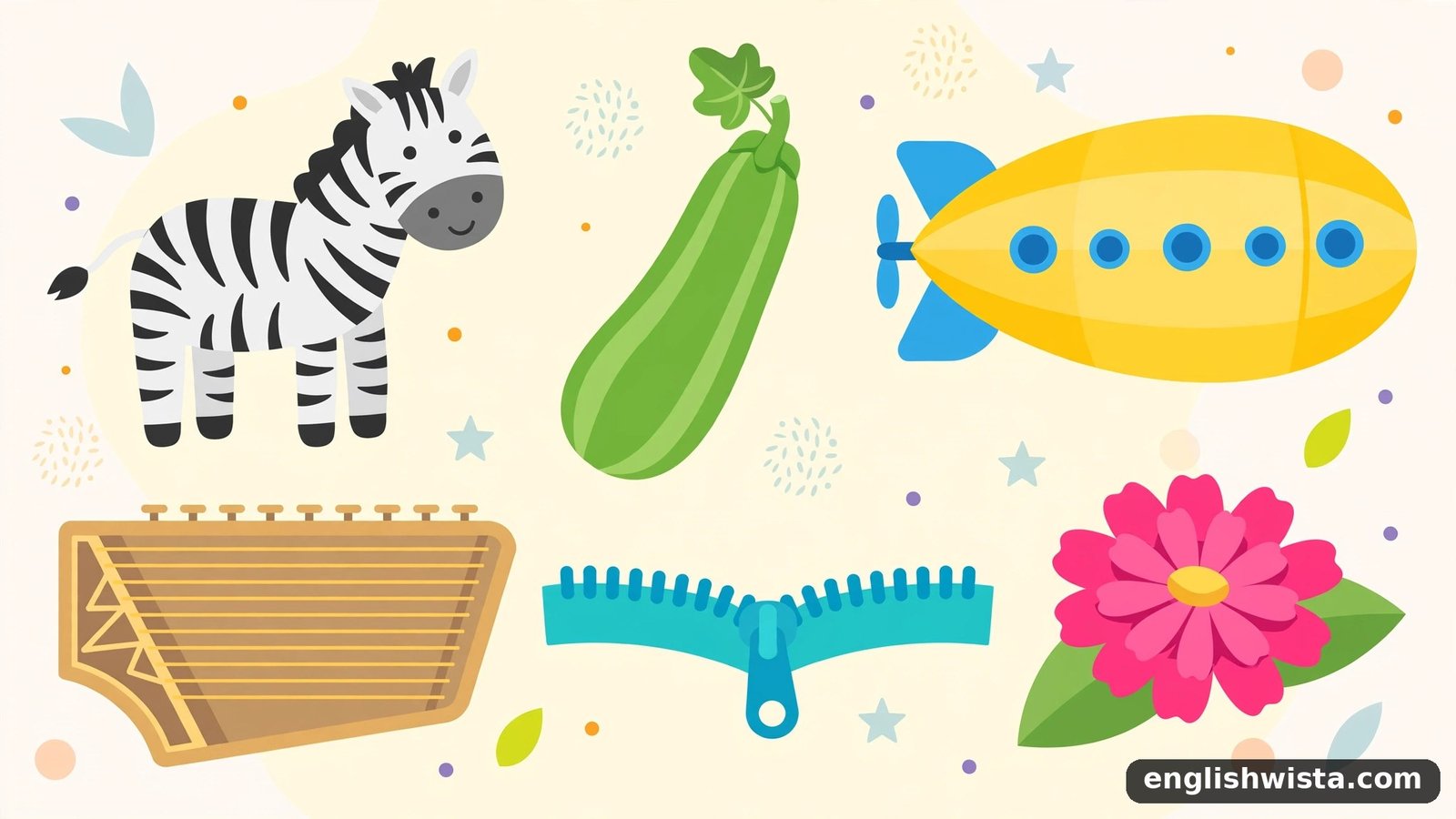
- Zucchini → a thing (a vegetable, also called a courgette).
These nouns may not show up in daily conversation as often as words starting with A, B, or C, but they are powerful and unique.
Common Z Nouns You Should Know
Let’s start with some of the most common nouns beginning with Z. These are words you’re likely to hear or use in everyday life.
- Zebra – a black-and-white striped animal found in Africa.
- Zoo – a place where animals are kept for study, care, and display.
- Zucchini – a type of green vegetable.
- Zero – the number 0.
- Zipper – a device used to open and close bags or clothing.
- Zone – an area or section.
- Zest – enthusiasm or the outer peel of citrus fruits.
- Zombie – a creature from stories or movies that is half-dead, half-alive.
- Zephyr – a gentle wind.
These common nouns are not only fun to say, but they also bring variety to your vocabulary.
Is Zebra Singular or Plural?
A common question is: how do we make Z nouns plural? Let’s look at an example.
- Singular: zebra
- Plural: zebras
Pretty simple, right? Most Z nouns follow the regular rule just add an -s.
Examples:
- One zoo, two zoos.
- A zipper, several zippers.
- One zone, many zones.
There are exceptions, of course, but for most Z nouns, you won’t need to worry.
Example Sentences with Z Nouns
Now, let’s see how these nouns work in real sentences.
- The zebra ran across the grassy plain.
- We visited the zoo last weekend.
- I cooked pasta with zucchini for dinner.
- She got a grade of zero on the test because she forgot her name.
- My jacket has a broken zipper.
- The city is divided into several zones.
- He spoke with great zest about his new project.
- The movie had a scary zombie scene.
- A light zephyr made the summer evening pleasant.
These example sentences show you how natural Z nouns can sound in conversation or writing.
Where Do Z Nouns Come From?
Many Z nouns have interesting origins. Let’s take a quick look:
- Zebra – from Old Portuguese or Italian, possibly from an African language.
- Zoo – short for zoological garden, from Greek zoion meaning “animal.”
- Zucchini – from Italian, meaning “small squash.”
- Zero – from Italian zero, which came from Arabic sifr (meaning empty).
- Zephyr – from Greek mythology, where Zephyrus was the god of the west wind.
So, when you use Z nouns, you’re actually connecting with history, different cultures, and even ancient languages.
Fun and Unusual Z Nouns
Not all Z nouns are common. Some are rare, unusual, or even funny. Here are a few interesting ones:
- Ziggurat – a step-shaped temple tower from ancient Mesopotamia.
- Zeitgeist – a German word meaning “the spirit of the time.”
- Zamboni – a machine used to smooth ice at skating rinks.
- Zoology – the scientific study of animals.
- Zymurgy – the study or practice of fermentation in brewing.
These might not come up in everyday conversation, but they’re excellent for expanding your vocabulary.
Example sentences:
- The archaeologists discovered a ziggurat in the desert.
- The fashion of the 1960s reflected the zeitgeist of freedom and change.
- The ice skater had to wait for the Zamboni to finish cleaning the rink.
- She studied zoology because she loved animals.
- Brewing beer requires knowledge of zymurgy.
Fun Facts About Z Words
Here are a few fun tidbits about Z nouns:
- The letter Z is sometimes called “zed” (in British English) and sometimes “zee” (in American English).
- In Scrabble, the letter Z is worth 10 points, making it one of the most valuable letters.
- Zebra and zigzag are often used in children’s books to teach the sound of Z.
- Some Z nouns are also brand names that became common words, like Zamboni.
Why Learn Z Nouns?
You might be wondering why bother learning nouns that start with Z? Here are some reasons:
- They make your vocabulary richer. Using positive words like zest, or colorful ones like zephyr, can make your speech or writing more lively.
- They’re memorable. Because Z words are less common, people tend to notice them.
- They help in games. If you enjoy Scrabble or word puzzles, Z nouns can give you an advantage.
- They connect you to culture. Many Z nouns come from history, mythology, or science.
How to Practice Using Z Nouns
Here are some easy ways to remember and practice Z nouns:
- Make flashcards — a favorite for kids and beginners. Write “zebra” on one side and a picture of the animal on the other.
- Use them in a story. For example: “The zebra escaped from the zoo and ran into a zone of zucchini fields.”
- Play word games. Challenge yourself to make as many sentences as possible with Z nouns.
- Speak them aloud. Saying words like “zipper” or “zephyr” helps them stick in your memory.
How to Pronounce Z Nouns
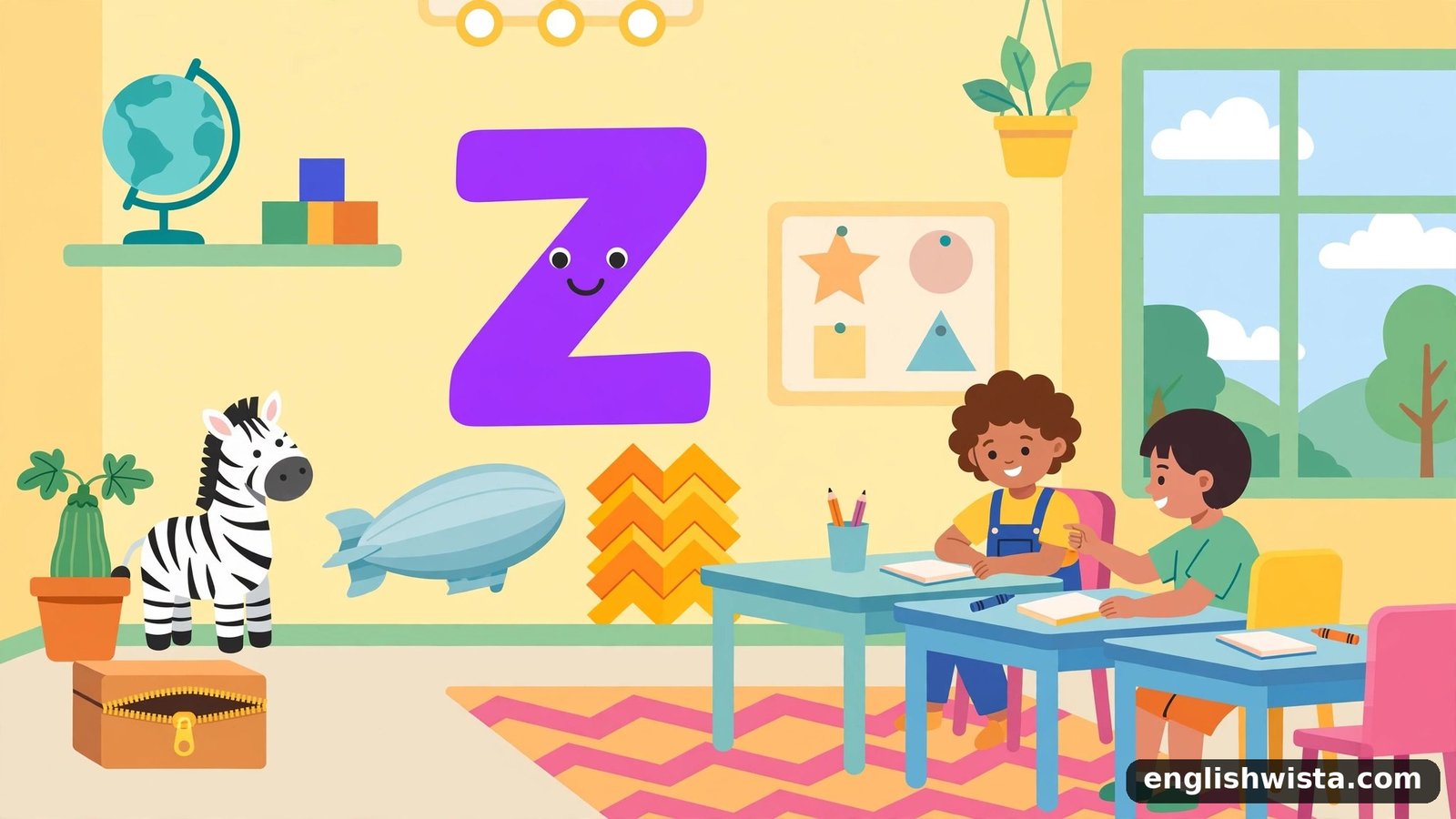
The letter Z makes a buzzing /z/ sound, like a bee: zebra, zoo, zipper, zero, zone. Put your hand on your throat as you say “zzzz” — you should feel a vibration, because Z is a voiced sound, unlike the quiet hiss of S. Watch the syllable stress: ZE-bra and ZIP-per stress the first syllable, while zu-KEE-ni and zo-OL-o-gy stress the second.
In British English the letter is called “zed” and in American English “zee” — both are correct, so use whichever your teacher uses. One tricky borrowing is “zeitgeist”: it comes from German, where Z sounds like “ts,” so English speakers say it roughly like “TSYTE-guy-st.” Practice with this sentence: “The zany zebra zigzagged past the zoo.” Saying Z nouns slowly at first helps the pronunciation click, and soon the buzzing letter sounds will feel completely natural.
Frequently Asked Questions
What are nouns that start with Z?
Nouns that start with Z are naming words that begin with the letter Z, such as zebra, zoo, zucchini, zero, zipper, zone, zest, zombie, and zephyr. They are some of the rarest nouns in English, which makes them memorable and fun to learn. Many come from other languages, including Italian, Greek, and Arabic.
What are 10 common nouns that start with Z?
Ten common nouns that start with Z are zebra, zoo, zucchini, zero, zipper, zone, zest, zombie, zephyr, and zigzag. Most form plurals by simply adding s: zebras, zoos, zippers. Keep this complete list handy for word games — in Scrabble, the letter Z is worth 10 points.
What are some positive nouns that start with Z?
Positive nouns that start with Z include zest (enthusiasm), zeal (passion), zing (energy), and zenith (the highest point). These are mostly abstract nouns that describe lively, upbeat qualities. Sprinkling positive words like these into your speech — “She tackled the project with real zest” — makes your English sound confident and cheerful.
How do you pronounce words that start with Z?
Z makes a buzzing /z/ sound, like a bee: zebra, zoo, zipper, zero. It is a voiced sound, so you should feel your throat vibrate — unlike the quiet hiss of S. Note that the letter itself is called “zed” in British English and “zee” in American English. Stress the first syllable in ZE-bra and ZIP-per, but the second in zu-KEE-ni.
Review and Quick Recap
Let’s quickly recap what we’ve learned:
- Z nouns are simply nouns that start with the letter Z.
- Common ones include zebra, zoo, zucchini, zipper, and zero.
- Plural forms usually just add an -s (e.g., zebra → zebras).
- Many Z nouns have fascinating origins from other languages.
- Some unusual ones, like ziggurat or zymurgy, are great for advanced vocabulary.
- Learning Z nouns can make your English richer, more fun, and more impressive.
Conclusion: A Zesty Ending
And there we have it the wonderful world of nouns that start with Z! From the familiar zebra at the zoo to the mysterious ziggurat of ancient times, Z nouns describe animals, describe a place, and bring a spark of excitement to language.
Whenever you hear or read a Z noun, take a moment to appreciate how rare and special it is. Remember, vocabulary building doesn’t have to be boring — it can be as fun as spotting zebras on safari or discovering a new word in a book.
So the next time you zip up your jacket with a zipper or enjoy a summer zephyr, you’ll know you’re using one of the coolest letters in English. Keep exploring, keep practicing, and let Z nouns add zest to your language journey!