Have you ever found yourself writing a sentence about airplanes and suddenly paused, wondering, “Wait… is it aircrafts or aircraft?” If so, you’re not alone. English is full of irregular plurals, especially words that don’t seem to follow the usual rules.
Normally, we just add an -s to make a plural. For example, car → cars, book → books, computer → computers. But some words don’t play by the same rules. The word aircraft is one of those irregular plurals.
In this article, we’ll take a closer look at what the correct plural form of aircraft is, why it works that way, and how you can use it correctly in your everyday writing and speaking. Don’t worry we’ll keep it simple, light, and full of example sentences. By the end, you’ll never hesitate again when talking about more than one aircraft.
What Does the Word “Aircraft” Mean?
Before we jump into plurals, let’s make sure we understand the word itself.
Definition (in simple words):
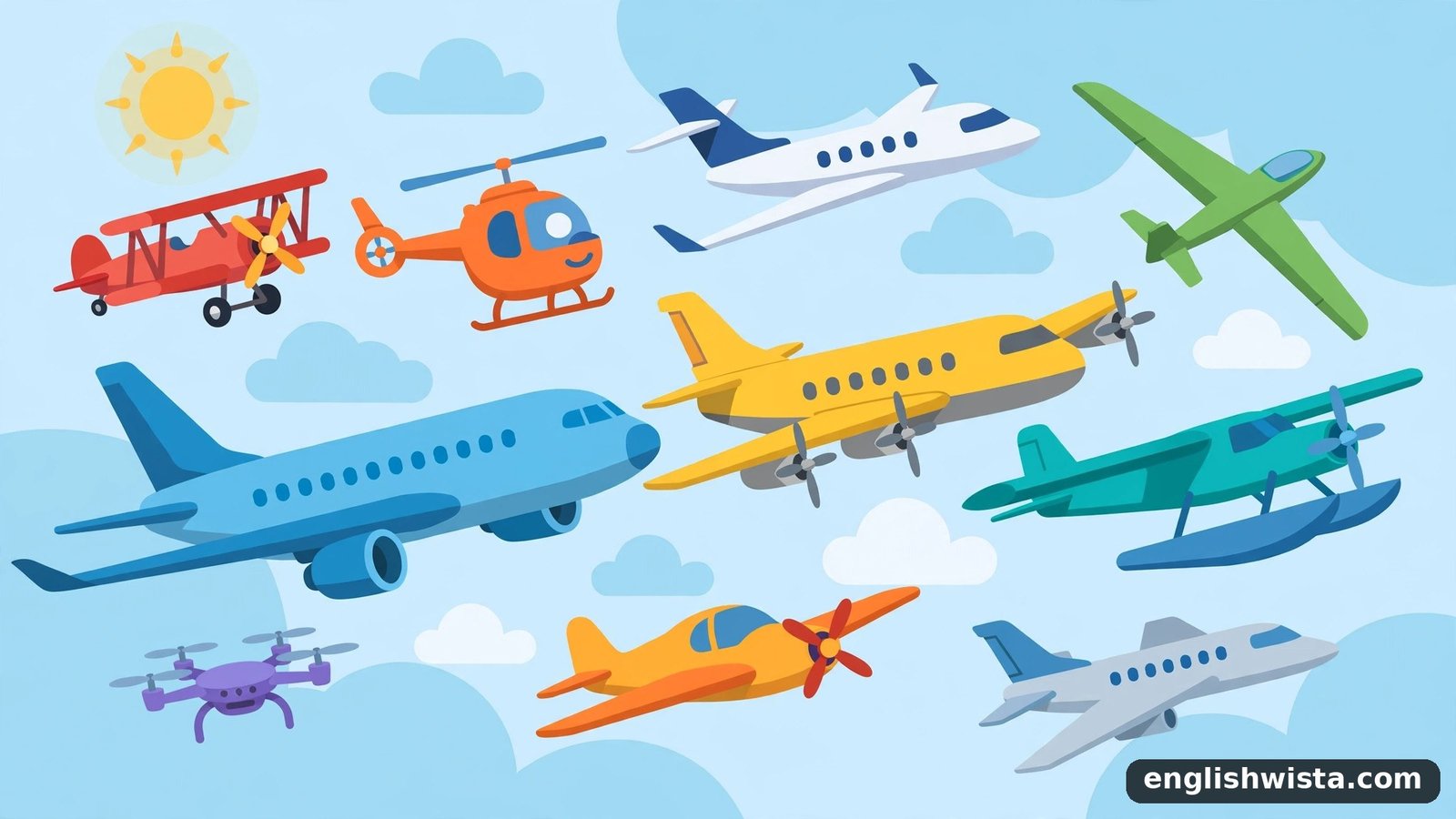
An aircraft is any vehicle that can fly in the air.
That includes:
- airplanes
- helicopters
- jets
- gliders
- drones
- even hot-air balloons
So, “aircraft” is not just another word for airplane it’s a bigger category. Think of it like an umbrella term for anything that flies.
Example sentences:
- “The airport is full of different types of aircraft.”
- “Helicopters and airplanes are both kinds of aircraft.”
What Is the Plural of Aircraft?
Here’s the simple answer:
👉 The plural of aircraft is aircraft.
That’s right. It does not change. Whether you mean the singular vs plural, the word stays exactly the same.
- Singular: “One aircraft landed safely.”
- Plural: “Five aircraft landed safely.”
At first, this might feel strange because most English words change form when they go from singular to plural. But some special words don’t. And aircraft is one of them.
Why Doesn’t It Change?
Great question! The reason is that aircraft is an irregular plural noun.
Some English words simply keep the same form in both singular and plural. Aircraft belongs to this group. Other examples include:
- sheep → sheep
- deer → deer
- fish → fish (though “fishes” is also correct in some cases)
So, in everyday usage in sentences, just like you’d say “ten sheep are in the field” and not “ten sheeps,” you say “ten aircraft are at the airport” and not “ten aircrafts.”
Common Mistake: Aircrafts
You might be wondering, “But wait, I’ve heard people say aircrafts before.”
Here’s the truth:
- Aircrafts is sometimes heard, but it’s not standard English and isn’t dictionary-recognized.
- It might appear in casual speech or in older texts.
- In modern, correct usage, we stick with aircraft as both singular and plural.
So if you want to avoid this common mistake and sound correct and natural, always use aircraft without the s for the plural.
Is “Aircraft” Singular or Plural?
This question often confuses learners. The word aircraft can be either singular or plural depending on the sentence.
Think of it like the word deer:
- Singular: “A deer is in the forest.”
- Plural: “Several deer are in the forest.”
Now with aircraft:
- Singular: “That aircraft is flying very high.”
- Plural: “Many aircraft are flying over the city.”
The trick is to look at the rest of the sentence. If the verb is singular (is, was), then aircraft is singular. If the verb is plural (are, were), then aircraft is plural.
A Quick Origin Story of the Word
Let’s add a fun little history lesson.
For the etymology, the word aircraft comes from two parts:
- air (meaning the atmosphere or sky)
- craft (meaning a vehicle, machine, or vessel)
So together, it literally means “a craft that travels through the air.”
The word started being used in the early 20th century, around the time airplanes were becoming more common. Since then, it has stuck as the main general term for flying vehicles.
Real-Life Example Sentences
Let’s practice with some easy examples to see how it looks in action.
Singular uses:
- “The military aircraft is ready for takeoff.”
- “That aircraft belongs to the national airline.”
- “An aircraft was spotted near the coast.”
Plural uses:
- “Several aircraft are waiting on the runway.”
- “These aircraft were designed for long-distance travel.”
- “How many aircraft can this airport handle at once?”
See how natural it sounds to keep the word the same for both forms? As a memory trick, link it to sheep: no extra letter when the number grows.
Comparing with Similar Words
It helps to compare aircraft with confusable words that follow the same no-change plural rule:
- Spacecraft → spacecraft
- Singular: “One spacecraft entered orbit.”
- Plural: “Three spacecraft entered orbit.”
- Watercraft → watercraft
- Singular: “That watercraft is moving fast.”
- Plural: “Several watercraft are near the dock.”
- Hovercraft → hovercraft
- Singular: “This hovercraft can float on water.”
- Plural: “Two hovercraft are parked by the beach.”
Notice the pattern? If a word ends with -craft and refers to a vehicle, it usually keeps the same form for plural.
Fun Facts About Aircraft
Here are a few interesting tidbits to keep things engaging:
- Collective nouns:
A group of aircraft is often just called a “fleet.” Example: “The airline owns a fleet of modern aircraft.” - Military use:
The military often talks about “combat aircraft,” “surveillance aircraft,” or “transport aircraft.” Again, the plural form never changes. - In everyday speech:
Many people simply say “planes” instead of aircraft when talking casually. But in formal, technical, or official writing, “aircraft” is the more precise term.
Possessive Forms and Verb Agreement
Beyond the plural itself, two things confuse learners most: showing ownership and picking the right verb. Here’s how aircraft handles both.
- Singular possessive: aircraft’s — “the aircraft’s engine needed repairs” (one aircraft).
- Plural possessive: also aircraft’s — “the aircraft’s maintenance schedules were reviewed” (several aircraft).
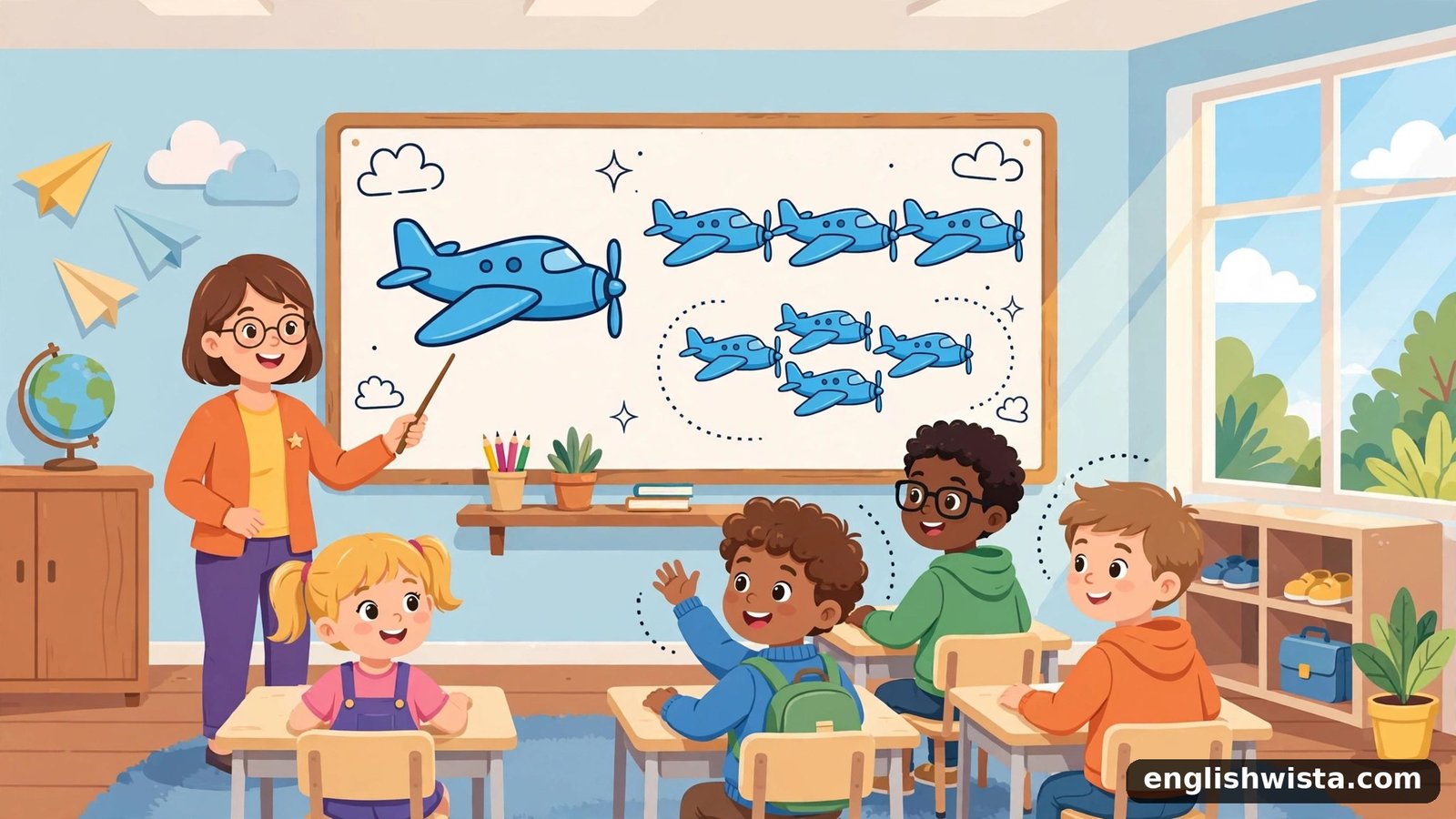
Yes, the spelling is identical! Because the plural never adds an s, the plural possessive follows the same rule as the singular: apostrophe plus s. Only the context — or the verb — tells you which one it is.
For subject-verb agreement, match the verb to the number: “the aircraft is refueling” (one) versus “the aircraft are refueling” (many). Compare the correct and incorrect pairs: ✗ “These aircraft is new” → ✓ “These aircraft are new”; ✗ “One aircraft were delayed” → ✓ “One aircraft was delayed.”
Frequently Asked Questions
What is the plural of aircraft?
The plural of aircraft is aircraft — the word never changes. One aircraft, two aircraft, a fleet of aircraft: no extra s, no spelling change. It’s one of English’s irregular plurals, just like sheep and deer.
Is “aircrafts” a real word?
Aircrafts is one of the most common incorrect forms people use. It’s not standard English and isn’t recognized by dictionaries. Always use aircraft for both singular and plural.
What is the singular possessive of aircraft — and the plural possessive?
Both are spelled aircraft’s. Since the plural never adds an s, you add an apostrophe plus s in both cases: “the aircraft’s engine” (one) or “the aircraft’s engines” (many). Context or the verb tells you which meaning applies.
Do I say “the aircraft is” or “the aircraft are”?
Both are correct, depending on number. Use is for one aircraft (“the aircraft is ready”) and are for more than one (“the aircraft are ready”). This subject-verb agreement is how listeners tell singular from plural.
Quick Recap
Let’s do a quick recap of the key points so you don’t forget:
- Aircraft means any vehicle that can fly, not just airplanes.
- The plural of aircraft is aircraft (no “s”).
- It works like words such as sheep, deer, or spacecraft.
- Pay attention to the verb in the sentence to know if it’s singular or plural.
- Using aircrafts is not standard English better to avoid it.

Conclusion
English plurals can sometimes be puzzling, but the good news is that once you know the rule for aircraft, it’s easy to remember. The word doesn’t change whether you’re talking about one or many. Just like with sheep or deer, the same form works for both.
So next time you’re writing about airports, flying machines, or the military, you can confidently say:
- “One aircraft is flying overhead.”
- “Several aircraft are flying overhead.”
Simple, right?
Language may have its quirks, but once we break them down step by step, they become much less scary. Hopefully, this guide has made the plural of aircraft clear and easy to remember. And who knows maybe the next time someone around you says “aircrafts,” you’ll be the friendly expert who can gently explain why it’s just aircraft.