Have you ever been shopping for plants and found yourself wondering, “Is it cactuses or cacti?” Don’t worry, you’re not alone. The word cactus often causes confusion because it is one of those irregular plurals that doesn’t behave like most regular English nouns. That’s why today, we’re going to take a fun and easy journey into the world of the plural of cactus. By the end of this article, you’ll know exactly how to use it, when to use it, and why it sometimes has more than one correct plural form.
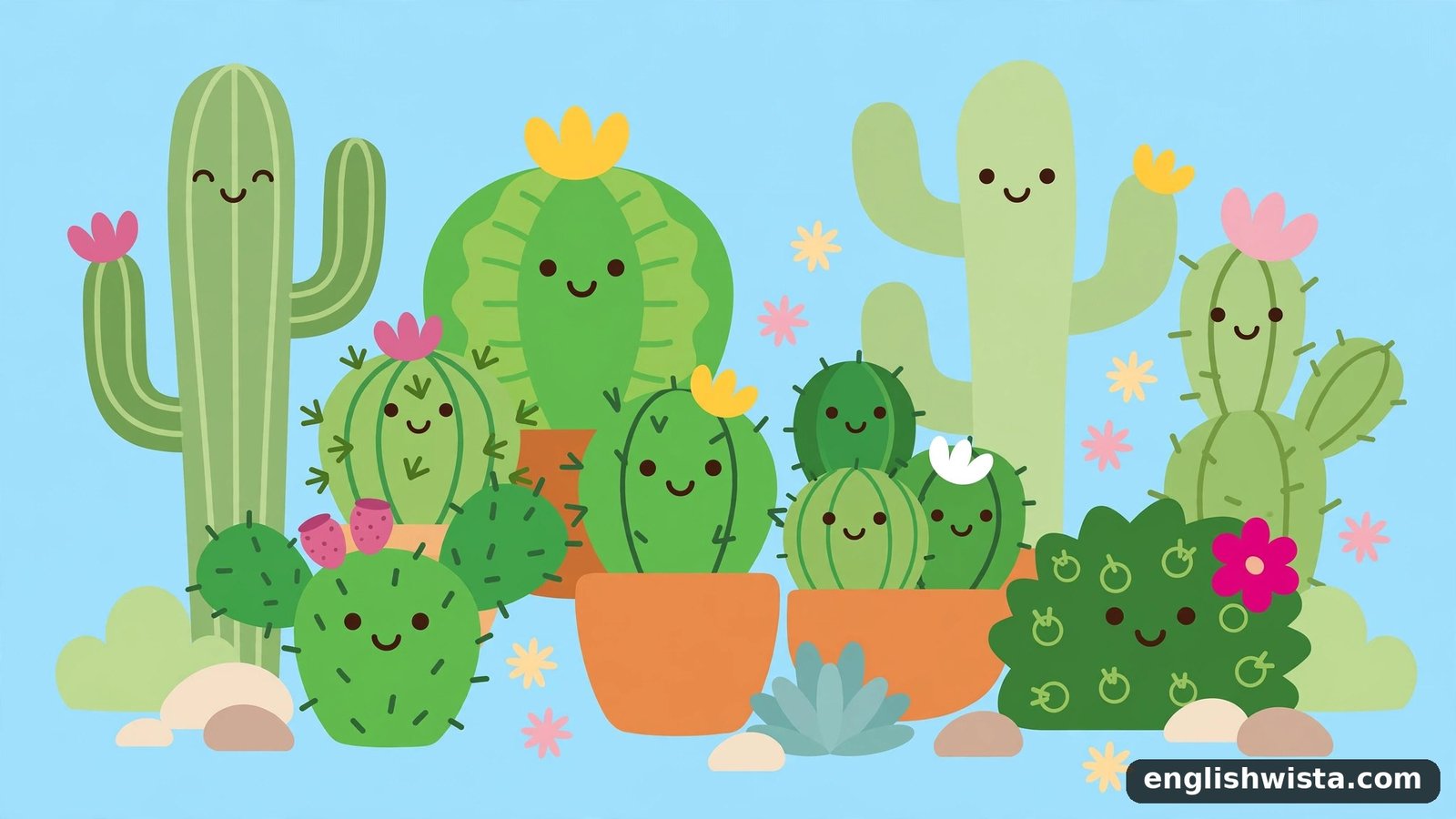
Let’s dig into it step by step, keeping things simple, clear, and a little bit playful.
What Does “Cactus” Mean?
Before we dive into plurals, let’s quickly define the word.
A cactus is a type of plant that usually grows in dry places like deserts. Cacti (yes, we’re already sneaking in the plural!) are known for their thick, fleshy stems that hold water, and many have spines instead of leaves.
So whenever you see a plant that looks like a spiky green water tank, you’re probably looking at a cactus.
What Is the Plural of Cactus?
Here comes the big question: What’s the plural of cactus?
The answer is:
- Cacti
- Cactuses
Yes, both are correct! English accepts both as the correct plural form, which is what makes this word so interesting. You can use either cacti or cactuses depending on the context, your preference, or the style of English you’re following.
Why Are There Two Plurals?
This happens because cactus has a Latin origin. In Latin, many words ending in “-us” follow the -us to -i rule, forming their plural by changing to “-i.” That’s why cactus can become cacti.
But English has its own way of making plurals: usually by adding “-es” or “-s.” So, when the word entered English, people also started using cactuses.
Over time, both versions became accepted.
Which One Should You Use?
Great question! Let’s break it down:
- Cacti: This is the preferred plural in formal contexts — the more traditional form. You’ll see it often in science books, botanical studies, or more formal writing.
- Cactuses: This is the simpler, more “English-friendly” form. It’s common in everyday speech, casual writing, and modern usage.
In everyday usage in sentences, if you’re chatting with a friend, you might say “I bought three cactuses for my windowsill.” But if you’re reading a botany article, you’ll likely see “Several cacti grow in this desert region.”
Both are correct you won’t be wrong either way!
Example Sentences with Cacti and Cactuses
To make things super clear, let’s look at some example sentences.
Using Cacti:
- The desert is full of tall cacti.
- I saw many different types of cacti during my trip to Mexico.
- Scientists study how cacti store water in their stems.
Using Cactuses:
- My neighbor’s garden has so many cactuses.
- We bought three small cactuses from the plant shop.
- Cactuses are easy to care for because they don’t need much water.
See how both versions fit perfectly? It’s all about which one feels natural in the moment.
Is Cactus Singular or Plural?
To clear up any confusion: cactus is singular.
That means it refers to just one plant.
- Example: “This cactus is very tall.”
The plural forms are cacti or cactuses — both are dictionary-recognized and listed in Merriam-Webster.
- Example: “These cacti are beautiful.”
- Example: “I like those cactuses by the window.”
Origin of the Word “Cactus”
Here’s something fun about the word’s etymology: the word cactus comes from the Greek word kaktos, which was used to describe a type of spiky plant. Later, the Latin language adopted it as cactus.
When English borrowed the word, it kept some of that Latin flavor, which is why we have the plural cacti. But English speakers also created their own version cactuses.
So, the history of the word is the reason we have two perfectly acceptable plurals today.
Similar Words with Two Plurals
Cactus isn’t alone in having two plural forms. Here are a few more examples:
- Octopus → octopuses / octopi
- Focus → focuses / foci
- Fungus → fungi / funguses
This shows that English is flexible it accepts both its Latin roots and its modern, simpler patterns.
Common Misconceptions
Let’s clear up some myths:
- Myth 1: “Only cacti is correct.”
Nope! Both cacti and cactuses are correct. - Myth 2: “Cactuses is wrong or informal.”
Not true. Cactuses is recognized in dictionaries and widely used. - Myth 3: “You should never mix them.”
Actually, you can use either depending on the tone of your writing. Just try to stay consistent in the same piece of writing.
Collective Noun for Cactus
Here’s a fun extra fact: when you see a group of cacti together, you can simply call it a stand of cacti or a stand of cactuses.
Botanists sometimes use “stand” to describe a group of plants growing naturally in one place. So next time you’re hiking in the desert, you can say, “Wow, look at that stand of cacti!”
Fun Facts About Cacti
To keep things interesting, let’s throw in a few cactus facts:
- Water storage champions: Some cacti can hold hundreds of liters of water.
- Long lives: Many cacti can live for decades, and some survive over 200 years.
- Flowers: Despite their tough looks, cacti produce some of the most beautiful flowers in the plant world.
- Global spread: While native to the Americas, cacti are now grown all over the world as houseplants.
- Cultural symbol: In Mexico, the cactus is a national symbol and appears on the country’s flag.

How to Pronounce the Plural (Pronunciation Guide)
Knowing the correct plural form is only half the battle — you also want to say it with confidence. Here’s a simple pronunciation guide with the singular and both plurals side by side.
- Cactus (singular): say KAK-tus (/ˈkæk.təs/).
- Cacti: say KAK-ty (/ˈkæk.taɪ/). Notice it rhymes with “sky” — that final long “i” sound is the classic Latin ending.
- Cactuses: say KAK-tuh-siz (/ˈkæk.tə.sɪz/).
The stress always falls on the first syllable (KAK-). A handy mnemonic: cacti rhymes with “eye,” so picture two cactus spikes pointing like eyes and you’ll remember both the spelling and the sound. Practice by saying each form out loud three times — cactus, cacti, cactuses — until the right one rolls off your tongue.
Frequently Asked Questions
What is the plural of cactus?
The plural of cactus is cacti or cactuses — both are correct. Cacti is the preferred plural in scientific and formal writing, while cactuses is the everyday, English-style plural you’ll hear in casual conversation.
Is “cactuses” a real word?
Yes! Cactuses is a real, dictionary-recognized word. It follows the regular English pattern of adding “-es” and appears in major dictionaries, including Merriam-Webster. You can use it with full confidence.
How do you pronounce the plural of cactus?
Cacti is pronounced KAK-ty (/ˈkæk.taɪ/), rhyming with “sky.” Cactuses is pronounced KAK-tuh-siz (/ˈkæk.tə.sɪz/). The stress always stays on the first syllable.
Which plural form should I use in formal or academic writing?
Use cacti in formal, academic, or scientific writing — it’s the traditional Latin form and the preferred plural in those contexts. For blog posts, emails, and everyday speech, cactuses is perfectly fine. Just stay consistent within a single piece of writing.
Quick Recap
Let’s sum everything up in a simple list:
- Cactus = singular (one plant).
- Cacti = plural (Latin form).
- Cactuses = plural (English form).
- Both plurals are correct, so use the one you prefer.
- In science or formal writing, cacti is more common.
- In casual speech or writing, cactuses works just fine.
Conclusion
So, what’s the plural of cactus? It’s both cacti and cactuses. You now know why there are two options, when to use each, and how to spot them in real-life sentences.
Language is full of surprises like this. Sometimes there’s not just one “right” answer, and that’s part of what makes English so flexible and fun.
Next time you’re in a plant shop, you can confidently say, “I’d like two cacti, please,” or “I’ll take three cactuses.” Either way, you’ll be perfectly correct. Here’s a simple memory trick: if the sentence sounds scientific, say cacti; if it sounds casual, say cactuses.
Now that you’re an expert on this prickly topic, maybe it’s time to treat yourself to a cactus or maybe even a few cacti!