Have you seen “miner” and “minor” and wondered which one digs coal? You are not alone! These two words sound the same but mean very different things. Today, we will explain exactly what miner vs minor means, with a simple trick to remember it forever.
What Is the Simple Difference?
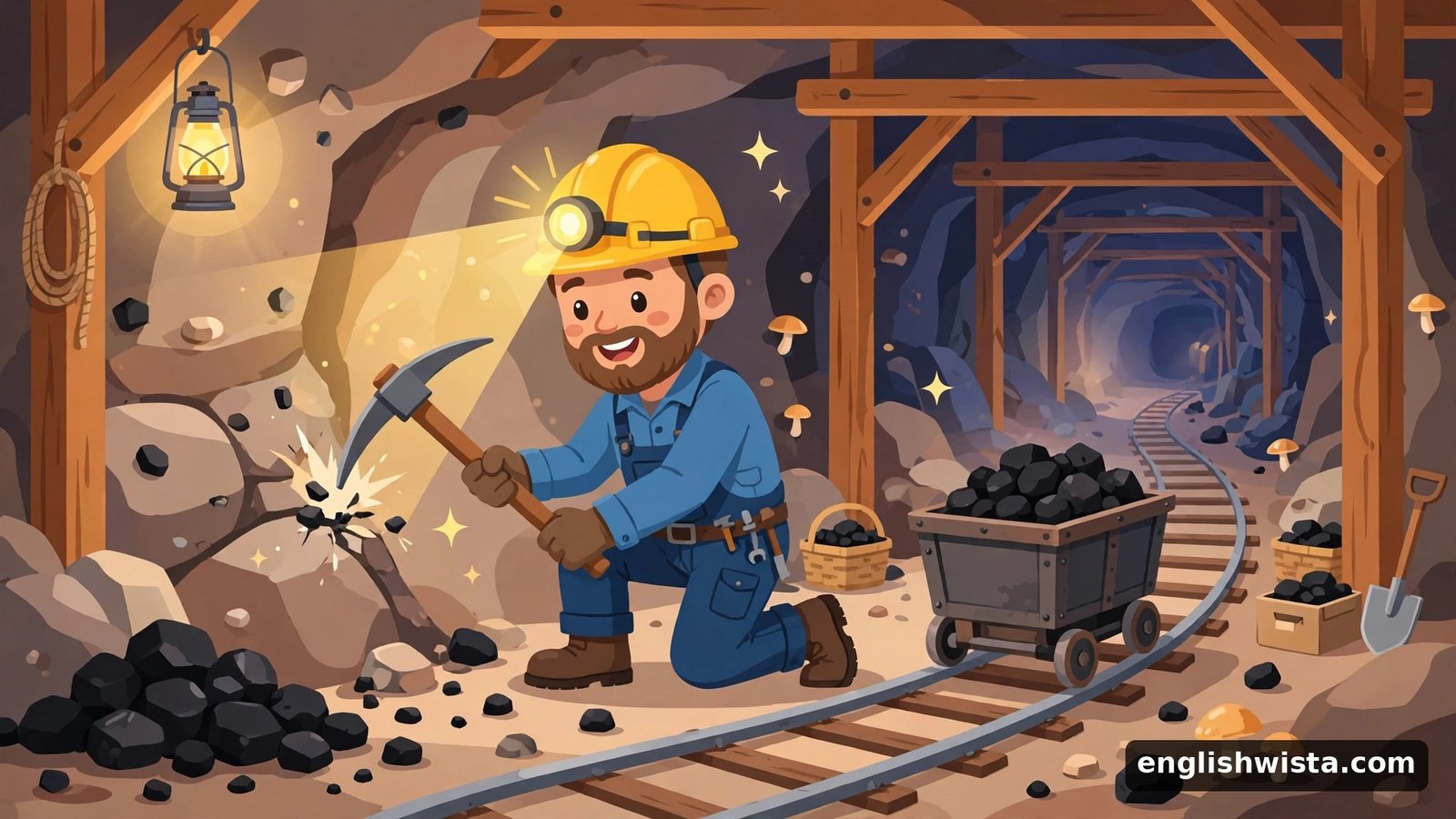
Miner is a noun — a person who works in a mine, digging coal, gold, or gems.
Minor is a noun/adjective — a person under legal adult age, or something small and unimportant.
- Miner = the worker (digs in mines).
- Minor = the young person, or a small thing.
Think of it this way: a miner works underground; a minor is not yet an adult.
Miner: The Worker
Miner means someone whose job is extracting minerals from the earth.
- “The miner wore a helmet with a lamp.”
- “Coal miners worked deep underground.”
- “Gold miners rushed to California in 1849.”
If the person digs in a mine, it is a miner — mine + r (the worker).
Minor: Young or Small
Minor has two common meanings:
- A young person: “The film is not for minors under 18.”
- Something small: “It was only a minor problem, fixed in minutes.”
- “She had a minor role in the play.” (small part)
If it means young or unimportant, it is minor.
The Easy Trick to Remember
- Miner = mine + r — the person who works in a mine. The word “mine” is right inside it!
- Minor = mini + or — think “mini” (small)! A minor is small in age or importance.
Mine = miner. Mini = minor. That is the whole trick!
Example Pairs
- Miner: “The miner found a gold nugget.” / Minor: “Only a minor delay — five minutes.”
- Miner: “Miners wear strong boots.” / Minor: “Minors need a parent’s signature.”
- Miner: “The old miner told stories of the gold rush.” / Minor: “It was a minor mistake, easily fixed.”
Common Mistakes to Avoid
Mistake 1: Writing “minor” for a mine worker.
- Wrong: “The minor dug for coal all day.”
- Right: “The miner dug for coal all day.”
Mistake 2: Writing “miner” for a young person.
- Wrong: “This game is not for miners.”
- Right: “This game is not for minors.”
Mistake 3: Thinking “minor” only means young. Minor also means small or less important — “a minor issue,” “a minor key” in music.
Frequently Asked Questions
What age is a “minor”? Usually under 18, but the exact age depends on the country’s laws.
What is “minor” in music? A minor key or scale sounds sad or serious — the opposite of a major key.
How do you pronounce them? Both sound the same: “MY-nur.” Only spelling tells them apart.
Mini Quiz: Test Yourself
Choose the best answer for each question.
- 1. The ______ dug deep for diamonds.
- 2. Children under 18 are called ______.
- 3. Which word contains “mine”?
- 4. True or false: “minor” can mean small or unimportant.
- 5. “A minor problem” means a big problem or a small one?
Answers: 1. miner 2. minors 3. miner 4. True 5. A small one
Quick Recap
- Miner = person who works in a mine (mine + r).
- Minor = young person, or something small (mini + or).
- Trick: mine = miner; mini = minor.
- They sound identical — spelling is the only difference.
Conclusion
So, miner vs minor: the miner digs in the mine, the minor is still small in age or importance. Remember mine and mini, and you will never mix them up again!