Into and in to sound the same, but they have different jobs in a sentence. One is a preposition that shows movement or change, and the other is simply the word in followed by the word to. Many learners mix them up because they are pronounced identically. This simple guide will help you understand the difference with easy examples, a memory trick, and a mini quiz.
What Is the Simple Difference?
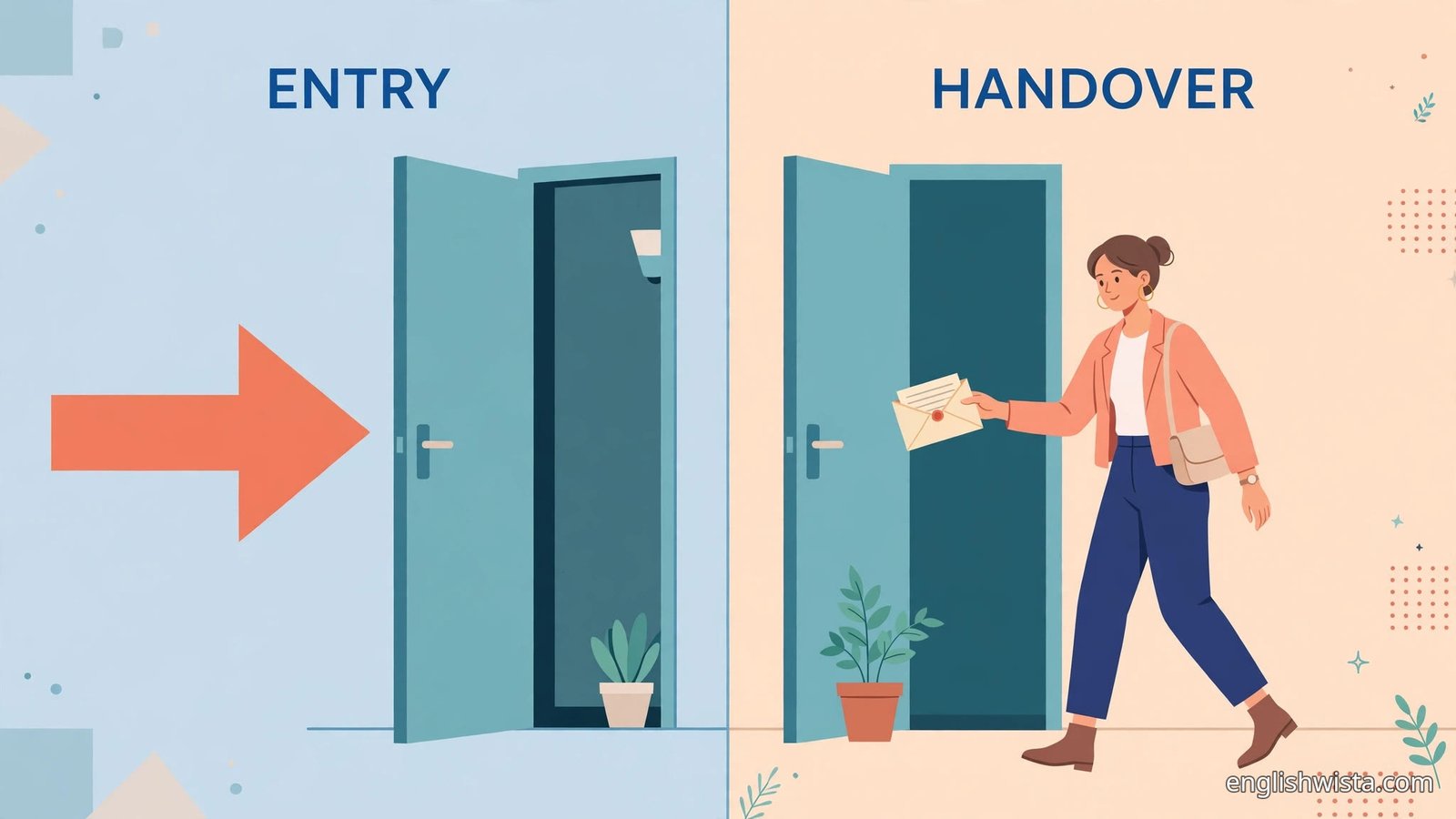
The simple difference is this: into (one word) is a preposition that shows movement toward the inside or a change from one thing to another, while in to (two words) is the adverb or verb particle in plus the preposition or infinitive marker to. So when you walk through a door, you go into the room. When you arrive inside to see someone, you come in to see them. Remember: into is one idea of movement, in to is two separate words doing two jobs.
Into: The Movement Preposition
Into shows movement from outside to inside, a change of state, or a strong interest. Use it when something goes inside, turns into something else, or when someone is very interested in something.
- She walked into the classroom.
- The caterpillar turned into a butterfly.
- He is really into football these days.
In To: The Two-Word Pair
In to is just two small words that happen to sit next to each other. In is usually part of the verb (come in, go in, walk in, log in), and to either starts an infinitive verb (“to see”, “to help”) or is a preposition of direction. If you can move in before the verb, you need two words.
- She came in to ask a question.
- He logged in to check his email.
- They walked in to the meeting late.
The Easy Trick to Remember
- The move test. Try moving “in” right before the verb. “She came in to ask” → “To ask, she came in” works, so in to is right. You cannot do that with into: “She walked into the room” → “The room, she walked into” sounds wrong.
- The change test. If something changes from one thing to another, use into: “turned into a butterfly”.
- The inside test. If it shows movement to the inside of a place, use into.
- Say it as a rhyme: “Walk into the room, or walk in to say hello.”
Example Pairs
- He jumped into the swimming pool. / He jumped in to save the child.
- Pour the milk into the glass. / She dropped in to say hello.
- Water changes into ice when it freezes. / He went in to get his coat.
Common Mistakes to Avoid
Wrong: She came into ask for help.
Right: She came in to ask for help.
Wrong: He walked in to the store.
Right: He walked into the store.
Wrong: The prince turned in to a frog.
Right: The prince turned into a frog.
Frequently Asked Questions
Is “log in to” one word or two? Two words for “in to”: “log in” is the verb and “to” starts the infinitive. So: “I logged in to my account.”
What does “be into something” mean? It means to be very interested in something: “She is into painting.” This is informal, everyday English.
Can “into” ever be split into two words? No. Into is always one word. When you see “in to” as two words, “in” belongs to the verb and “to” belongs to what follows.

Mini Quiz: Test Yourself
- 1. She poured the juice ___ the cup.
- 2. He came ___ to borrow a book.
- 3. The frog turned ___ a prince in the story.
- 4. They walked ___ the cinema to watch the film.
- 5. She logged ___ to check her messages.
Answers: 1. into, 2. in, 3. into, 4. into, 5. in.
Quick Recap
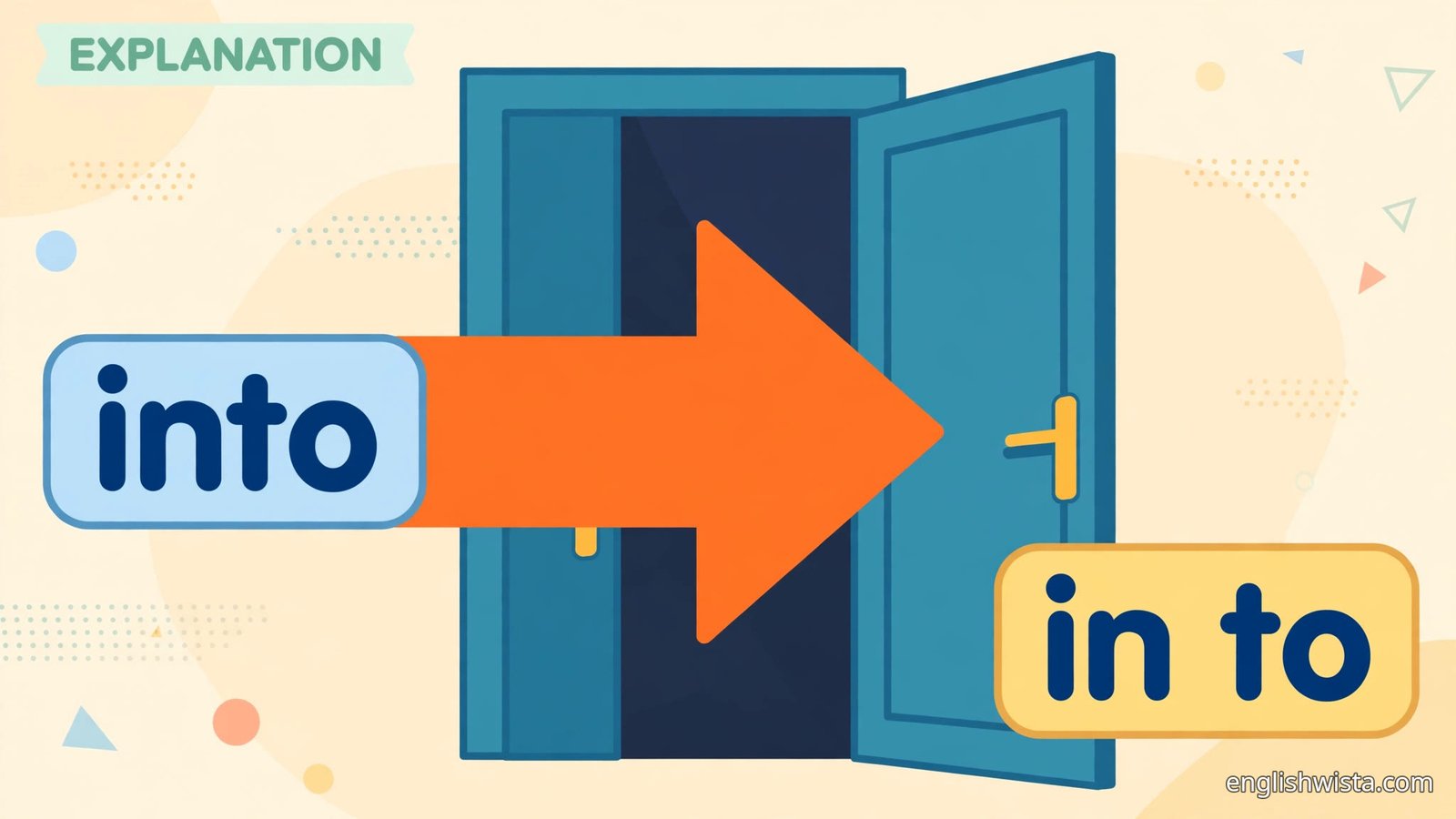
- Into = movement to the inside, a change, or an interest (one word, one idea).
- In to = the verb particle “in” plus “to” (two words doing two jobs).
- Move test: if “in” can move next to the verb, write in to.
- Change test: “turned into a butterfly” is always into.
Conclusion
Now you know the simple difference: into shows movement or change and in to is two separate words working together. Keep the move test in mind, practice with the example sentences, and you will never mix up these two look-alike words again.