Currant and current sound almost the same, but one is a tiny fruit and the other is a flow of water, air, or electricity. You eat currants in a cake, and you swim against a current in a river. This simple guide will help you tell them apart with easy examples, a memory trick, and a mini quiz.
What Is the Simple Difference?
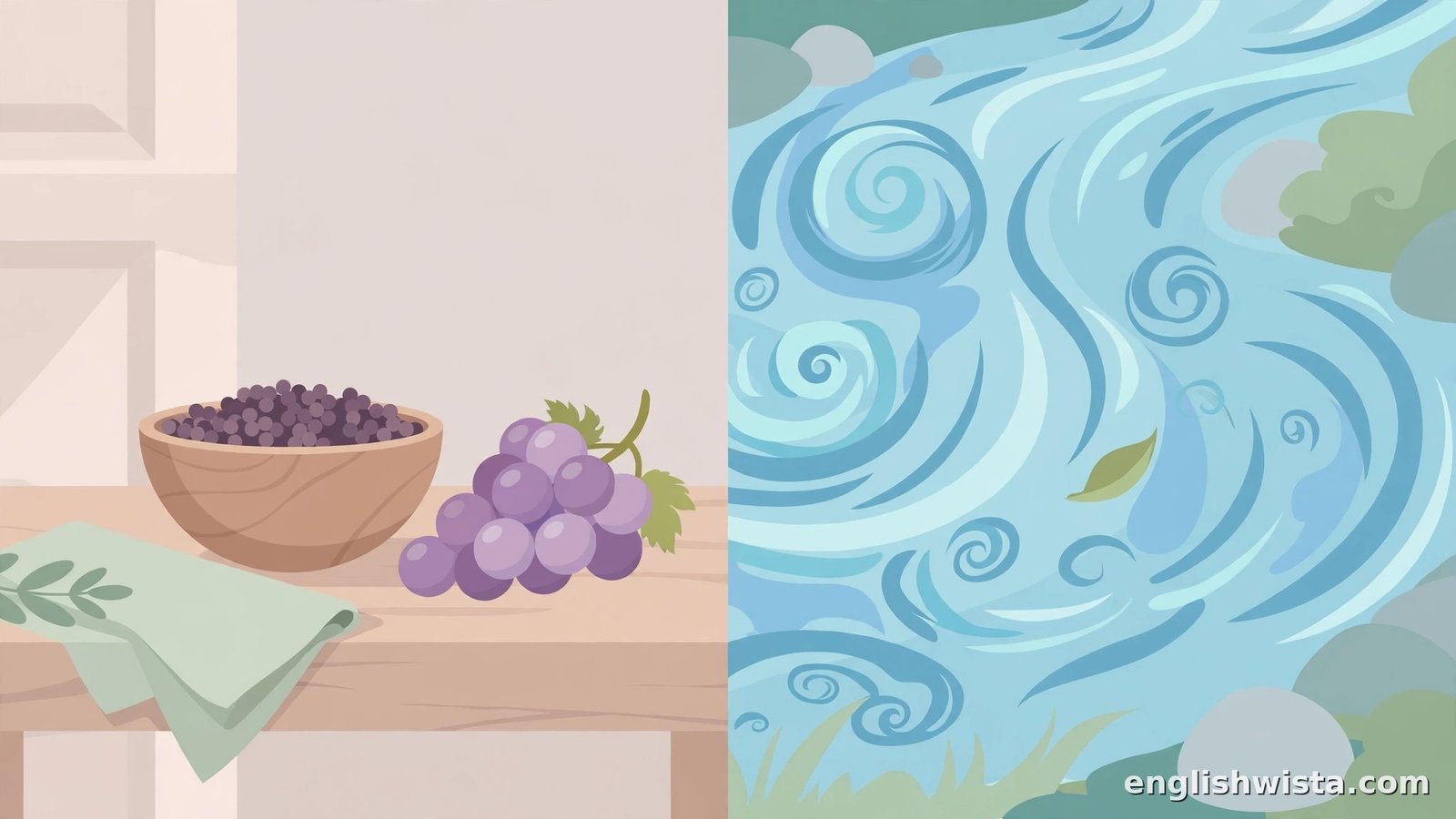
The simple difference is this: a currant is a small dried grape, or a small berry that grows on a bush, used in cooking and baking. A current is a steady flow of water, air, or electricity — or the present time, as in “current events”. So a cake has currants, but a river has a strong current.
Currant: The Fruit Word
Currant (pronounced “KUR-uhnt”) is a noun meaning a small dried grape, like a tiny raisin, or a small sour berry that grows on a bush. Currants are often used in cakes, puddings, and scones.
- She added a handful of currants to the fruit cake.
- Red currants grow on bushes in the garden.
- The scone was full of sweet currants and raisins.
Current: The Flow Word
Current (pronounced “KUR-uhnt”) is a noun meaning a flow of water, air, or electricity moving in one direction. As an adjective, it means happening now, or belonging to the present time.
- The river’s current was too strong to swim across.
- An electric current flows through the wire.
- What is the current price of this book?
The Easy Trick to Remember
- Currant has an “a” — like “a snack”. Currants are food you can eat, and the “a” reminds you of “apple” and “eat”.
- Current has a “u” — like “underwater”. A current flows in water, air, and wires.
- Currant is small — the word hides the tiny word “ant”, and currants are as small as ants.
- Say it as a rhyme: “I eat a currant from the jar, while the current carries the boat afar.”
Example Pairs
- The cake was studded with sweet currants. / The boat drifted with the river’s current.
- She picked red currants from the bush. / The current news is all about the storm.
- He sprinkled currants over the pudding. / An ocean current carried the warm water north.
Common Mistakes to Avoid
Wrong: The river’s currant was very strong.
Right: The river’s current was very strong.
Wrong: She added current berries to the cake.
Right: She added currant berries to the cake.
Wrong: What is the currant time?
Right: What is the current time?
Frequently Asked Questions
Are “currant” and “current” pronounced the same? Yes, in everyday speech they sound the same — “KUR-uhnt”. Only the spelling and the meaning tell them apart.
Is a currant the same as a raisin? Almost. A currant is a very small dried grape, smaller and darker than an ordinary raisin, and it is often used in baking.
Can “current” describe time? Yes. As an adjective, “current” means “now” — current events, the current year, the current price.
Mini Quiz: Test Yourself
- 1. She added ___ to the Christmas pudding.
- 2. The river ___ carried the boat downstream.
- 3. Red ___ grow on bushes in summer.
- 4. What is the ___ exchange rate today?
- 5. An electric ___ runs through the cable.
Answers: 1. currants, 2. current, 3. currants, 4. current, 5. current.
Quick Recap
- Currant = a small dried grape or berry used in baking (think: the “a” in “snack”, and the tiny “ant” inside the word).
- Current = a flow of water, air, or electricity; also “happening now” (think: the “u” in “underwater”).
- Both words sound the same, so the spelling is the clue.
- You eat currants, but you never eat a current.
Conclusion
Now you know the simple difference: a currant is a tiny fruit for cakes and puddings, and a current is a flow of water, air, or electricity — or simply what is happening now. Keep the memory trick in mind, practice with the example sentences, and you will never mix up these two sound-alike words again.