Luxuriant and luxurious both come from the word “luxury”, but they describe different kinds of richness. One is about plants growing thick and wild, and the other is about expensive comfort. A garden can be luxuriant, while a five-star hotel is luxurious. This simple guide will help you tell them apart with easy examples, a memory trick, and a mini quiz.
What Is the Simple Difference?
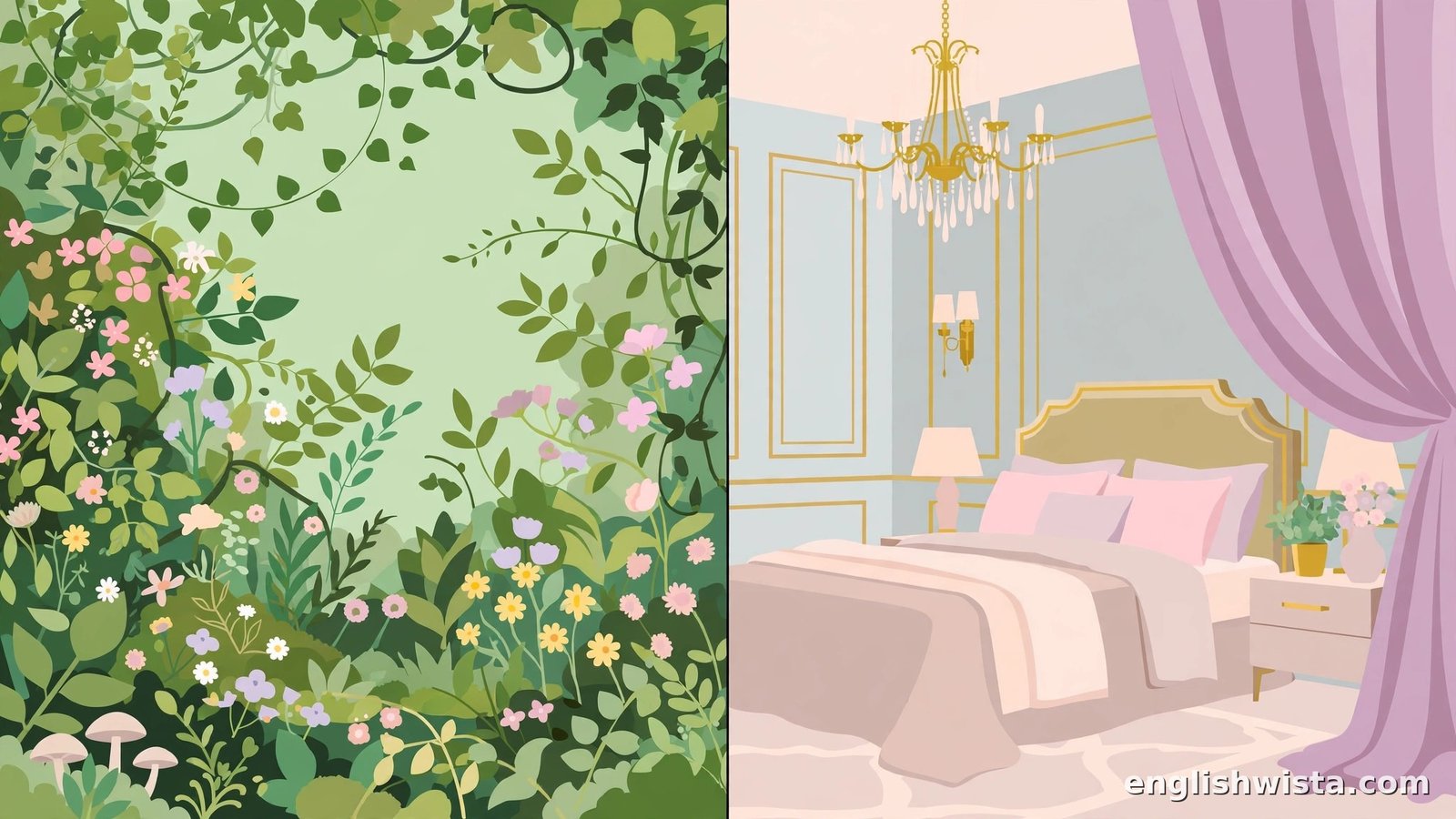
The simple difference is this: luxuriant means growing thickly and abundantly — lush, rich growth, usually of plants or hair. Luxurious means very comfortable and expensive — full of luxury, like a palace hotel or a silk dress. So a tropical forest is luxuriant, but a first-class cabin is luxurious.
Luxuriant: The Growing Word
Luxuriant (pronounced “lug-ZHOOR-ee-uhnt”) is an adjective meaning growing in great abundance — thick, lush, and full of life. It is mostly used for plants, vegetation, and hair.
- The garden was full of luxuriant green plants after the rain.
- She had luxuriant black hair that reached her waist.
- Tropical forests have luxuriant vegetation all year round.
Luxurious: The Comfort Word
Luxurious (pronounced “lug-ZHOOR-ee-uhs”) is an adjective meaning very rich, comfortable, and expensive — giving great pleasure and ease. It describes hotels, cars, clothes, and lifestyles.
- They stayed in a luxurious hotel with a swimming pool.
- She wore a luxurious silk dress to the party.
- The luxurious car had leather seats and a quiet engine.
The Easy Trick to Remember
- Luxuriant has an “a” — like “abundant”. It is about abundant growth — plants, leaves, and hair.
- Luxurious has a “u” — like “upmarket”. It is about expensive, upmarket comfort.
- Luxuriant grows; luxurious costs — one is nature, the other is money.
- Say it as a rhyme: “Plants grow luxuriant and grand, while luxurious hotels are built by hand.”
Example Pairs
- The valley had luxuriant grass and flowers. / The palace offered luxurious rooms for the guests.
- His luxuriant beard grew thick and long. / She enjoyed a luxurious holiday on a private island.
- After the monsoon, the fields looked luxuriant. / The luxurious sofa was made of soft leather.
Common Mistakes to Avoid
Wrong: They stayed in a luxuriant hotel.
Right: They stayed in a luxurious hotel.
Wrong: The forest was luxurious with green plants.
Right: The forest was luxuriant with green plants.
Wrong: She wore a luxuriant silk dress.
Right: She wore a luxurious silk dress.
Frequently Asked Questions
Can “luxuriant” describe hair? Yes. “Luxuriant hair” is a common phrase meaning thick, healthy, abundant hair.
Is “luxurious” always about money? Almost always. It describes things that are expensive, comfortable, and pleasant — the opposite of simple or plain.
What is the noun for each word? “Luxuriance” means abundant growth, while “luxury” means expensive comfort. Both come from the same Latin root.
Mini Quiz: Test Yourself
- 1. The rainforest has ___ vegetation all year.
- 2. They enjoyed a ___ stay at a five-star resort.
- 3. She had ___ long hair that shone in the sun.
- 4. The ___ car had soft leather seats.
- 5. After the rain, the fields looked ___ and green.
Answers: 1. luxuriant, 2. luxurious, 3. luxuriant, 4. luxurious, 5. luxuriant.

Quick Recap
- Luxuriant = growing thickly and abundantly, lush (think: “a” for “abundant” — plants and hair).
- Luxurious = very comfortable and expensive (think: “u” for “upmarket” — hotels, cars, and clothes).
- Luxuriant grows in nature; luxurious costs money.
- Both come from “luxury”, but only “luxurious” means expensive comfort.
Conclusion
Now you know the simple difference: luxuriant describes lush, abundant growth, and luxurious describes expensive comfort. Keep the memory trick in mind, practice with the example sentences, and you will never mix up these two look-alike words again.