
Foul and fowl sound exactly the same, but they have two very different meanings. One is about something bad or against the rules, and the other is about birds. Mixing them up is easy, but this simple guide will help you tell them apart with easy examples, a memory trick, and a mini quiz.
What Is the Simple Difference?
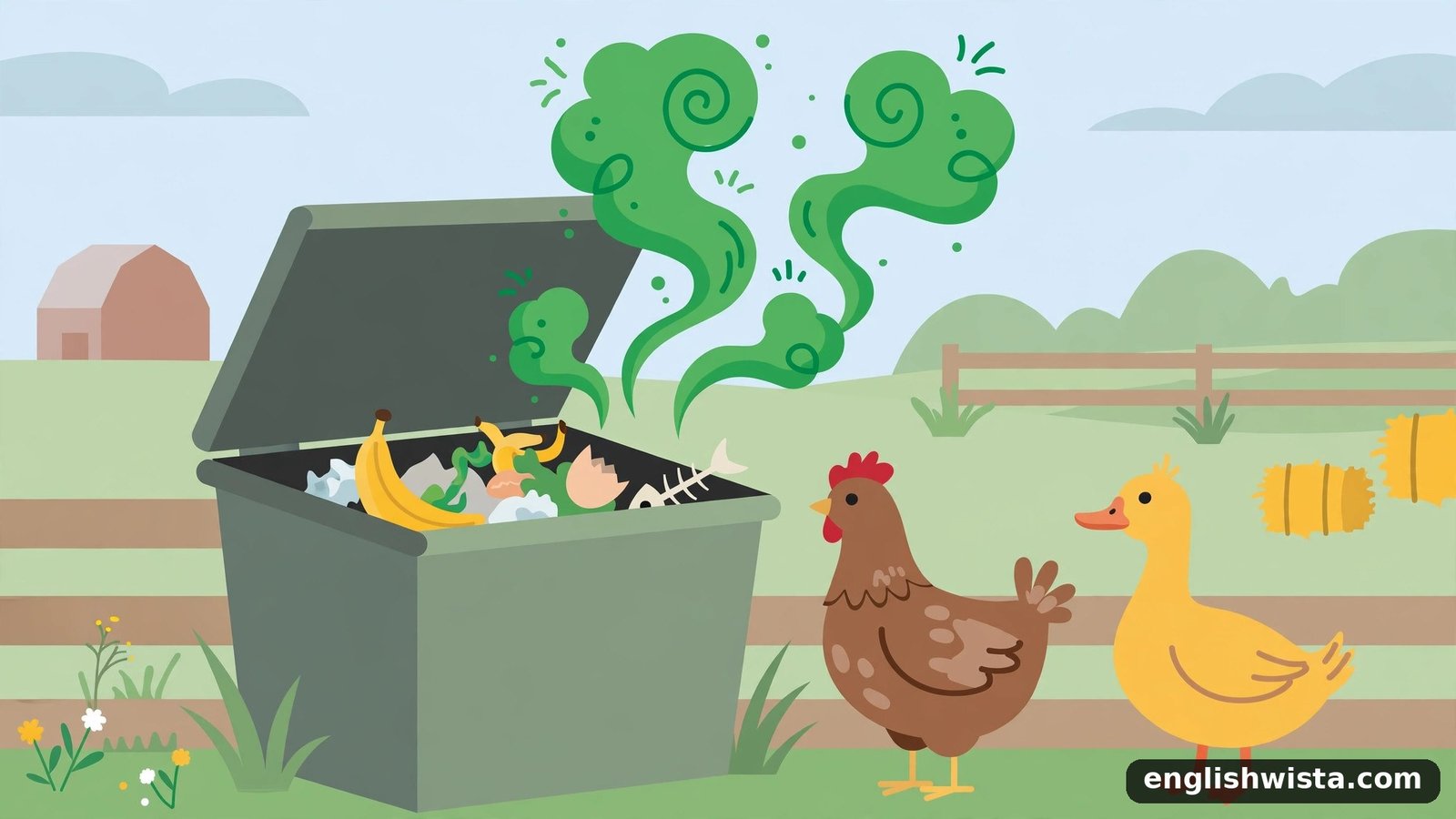
The simple difference is this: foul means bad, dirty, or against the rules, while fowl means a bird, especially one kept on a farm for food, like a chicken, duck, or goose. So a foul smell makes you hold your nose, and a fowl like a hen lays eggs on the farm.
Foul: The Bad Word
Foul (pronounced “fowl”) is an adjective meaning very bad, dirty, or unpleasant — a foul smell, foul weather, or foul language. In sports, a foul is an action that breaks the rules, and as a verb “to foul” means to break a rule or to make something dirty.
- The foul smell from the drain made everyone cover their noses.
- The referee gave him a foul for pushing the other player.
- It was a dark and stormy night with foul weather.
Fowl: The Bird Word
Fowl (pronounced “fowl”) is a noun meaning a bird, especially a domesticated bird kept for its meat or eggs, such as a chicken, duck, turkey, or goose. Wild birds can also be called fowl, as in “waterfowl” for ducks and swans. The plural of fowl is usually “fowl” as well.
- The farmer keeps many fowl — chickens, ducks, and geese.
- Wild fowl like ducks and swans live near the lake.
- She bought a fresh fowl from the market for Sunday dinner.
The Easy Trick to Remember
- Foul has a “u” — like “yuck”. Think of something that smells foul and makes you say “yuck”.
- Fowl has a “w” — like “wing”. Birds have wings, and fowl are birds — think “fowl with wings”.
- Think of it this way: a fowl can make a foul smell, but they are not the same word.
- Say it as a rhyme: “The fowl flew away from the foul smell.”
Example Pairs
- The foul smell came from the bin. / The fowl pecked at the grain in the yard.
- He committed a foul in the football match. / The hunter watched the wild fowl on the lake.
- Do not use foul language in class. / The farm sells eggs from its fowl.
Common Mistakes to Avoid
Wrong: The farmer keeps many foul on his farm.
Right: The farmer keeps many fowl on his farm.
Wrong: The fowl smell made us leave the room.
Right: The foul smell made us leave the room.
Wrong: The player got a fowl for tripping his opponent.
Right: The player got a foul for tripping his opponent.
Frequently Asked Questions
Are foul and fowl homophones? Yes. Both are pronounced exactly the same — “fowl”, rhyming with “owl” — but they are spelled differently and have different meanings.
What is the plural of “fowl”? The plural is usually the same — “fowl”. You say “five fowl” just as you say “five sheep”. The form “fowls” is also used sometimes.
Can “foul” be a verb? Yes. To foul means to make something dirty or to break a rule, as in “He fouled the other player” or “The oil fouled the clean water.”
What does “foul play” mean? “Foul play” means dishonest or criminal behaviour, often used when someone suspects a crime — for example, “The police suspect foul play in the fire.”

Mini Quiz: Test Yourself
- 1. The ___ smell from the kitchen was terrible.
- 2. The farmer feeds his ___ every morning.
- 3. The player was sent off for a serious ___.
- 4. Ducks and geese are water ___.
- 5. Please do not use ___ language in school.
Answers: 1. foul, 2. fowl, 3. foul, 4. fowl, 5. foul.

Quick Recap
- Foul = bad, dirty, or against the rules (think: “yuck” — foul things smell bad).
- Fowl = a bird, especially a farm bird (think: “wing” — fowl are birds with wings).
- Both sound the same — “fowl”, rhyming with “owl” — but their spelling gives the meaning away.
- Remember the rhyme: “The fowl flew away from the foul smell.”
Conclusion
Now you know the simple difference: foul is for something bad or against the rules, and fowl is for birds. Keep the memory trick in mind, practice with the example sentences, and you will never mix up these two sound-alike words again.