
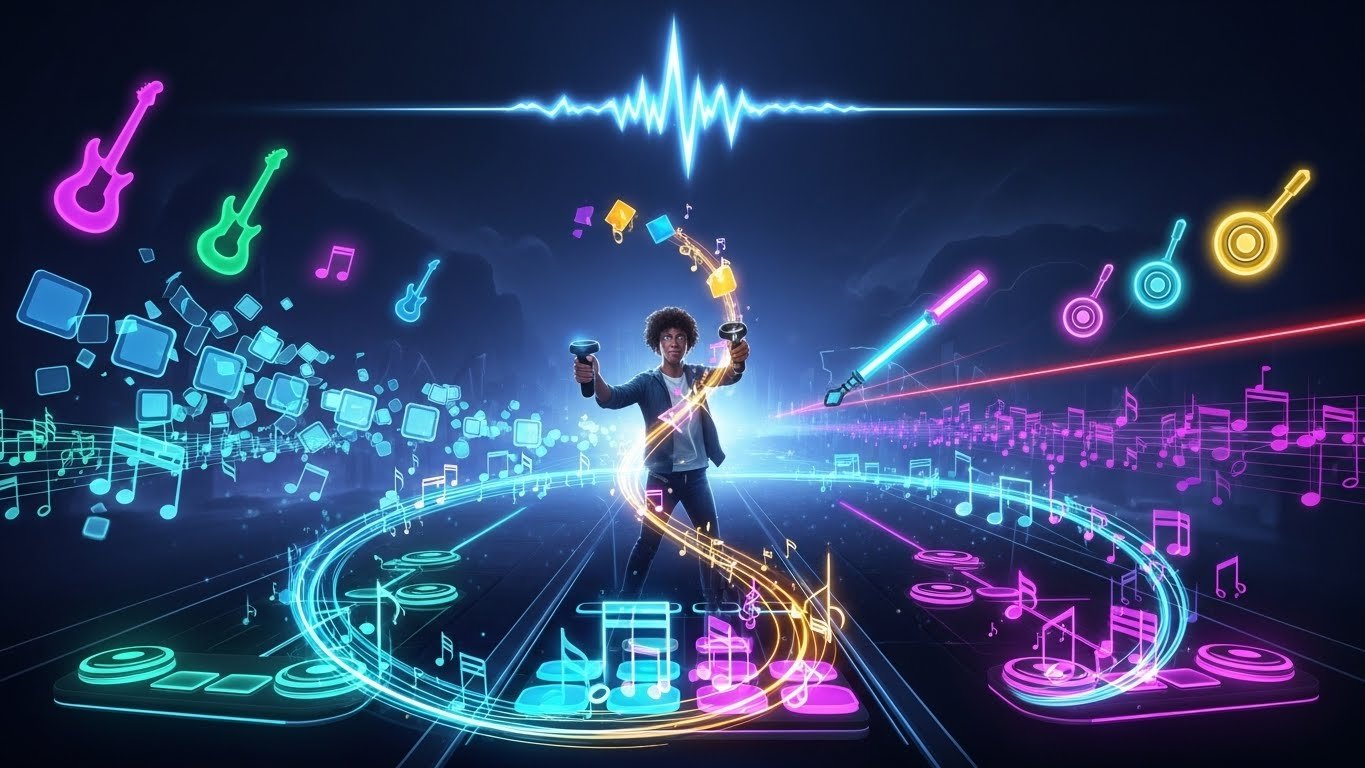
Imagine a world where music is not just background noise but the heartbeat of gameplay. Where every tap, swipe, or strum is connected to rhythm, and the player is both musician and gamer. Welcome to harmonicode gaming, a genre that fuses music, rhythm, and interactivity into an experience unlike any other.
In harmonicode games, soundtracks are not just an enhancement—they are mechanics. Timing, precision, and synchronization with the beat drive gameplay. This unique blend engages the senses, evokes emotions, and draws players into a flow state where time fades, challenges excite, and victories feel euphoric.
In this article, we’ll explore the core elements of harmonicode gaming, how it works, why players love it, and the future of this music-driven genre.
1. Understanding Harmonicode Gaming
1.1 What Makes Harmonicode Unique
Unlike traditional games where music serves as ambiance, harmonicode games integrate music into gameplay itself. Every action—tapping a note, slicing a block, or strumming a chord—is synchronized with a beat. The difference lies in how rhythm shapes the player’s experience:
- Music drives every move, making timing and synchronization critical.
- Players are not merely reacting—they are performing.
- Success depends on a combination of reflexes, focus, and the ability to perceive and anticipate rhythm.
This approach turns gaming into a performance, blending entertainment with an almost meditative musical experience.
1.2 The Cognitive and Emotional Appeal
Harmonicode games are not just enjoyable—they also enhance mental and motor skills. Studies and observations of rhythm-based gameplay reveal:
- Improved focus and attention: Following rhythmic patterns requires sustained concentration.
- Enhanced hand-eye coordination: Actions aligned with music strengthen reflexes and precision.
- Flow state induction: Synchronization of music, visuals, and player actions immerses players completely, often leading to a state of effortless concentration.
- Emotional connection: Music evokes emotion, and pairing it with gameplay amplifies joy, excitement, or calm.
The combination of these cognitive, motor, and emotional effects makes harmonicode gaming both engaging and rewarding on multiple levels.
2. Core Elements of Harmonicode Games
To understand why harmonicode gaming captivates players, it helps to break down the fundamental elements that define the genre.
2.1 Rhythm Integration
At its core, harmonicode gaming is about rhythm. Key aspects include:
- Beat-aligned actions: Every move is linked to a musical cue, whether tapping, slicing, or swiping.
- Timing feedback: Successful hits are reinforced with visual or auditory confirmation, creating a satisfying loop of action and reward.
- Flow of gameplay: Consistent rhythm encourages smooth, continuous play, pulling players deeper into the experience.
This rhythm-driven design transforms simple actions into a musical performance, where accuracy and timing are both challenge and pleasure.
2.2 Visual and Auditory Immersion
Harmonicode games combine sight and sound to enhance rhythm integration:
- Dynamic visuals: Notes, blocks, or indicators appear in sync with music, guiding the player’s actions.
- Immersive soundtracks: Carefully designed music enhances mood, tempo, and player engagement.
- Sensory synergy: The combination of visual cues, musical beats, and physical action creates a heightened sense of presence.
This immersive design makes players feel part of the rhythm rather than merely responding to it.
2.3 Accessibility and Inclusivity
Harmonicode games also prioritize accessibility, ensuring enjoyment for diverse players:
- Customizable controls allow players to adjust gameplay to their comfort.
- Colorblind-friendly visuals and clear cues make games approachable for everyone.
- Varied difficulty levels ensure that both beginners and advanced players can find a satisfying challenge.
By making these games inclusive, developers expand the audience while maintaining the immersive rhythm experience.
3. How Harmonicode Games Work
Understanding gameplay mechanics sheds light on what makes these games uniquely satisfying.
3.1 The Mechanics
Harmonicode games typically follow a simple pattern: audio cue → visual prompt → player action → feedback. Examples include:
| Step | Description |
|---|---|
| Audio Cue | The music sets tempo and rhythm. |
| Visual Prompt | Notes, blocks, or symbols appear in sync with the beat. |
| Player Action | Players tap, slice, swipe, or strum according to the cue. |
| Feedback | Successful actions are reinforced visually, aurally, or with score increases. |
Through this loop, players develop precision, coordination, and an intuitive sense of rhythm.
3.2 Player Experience
The gameplay experience is defined by:
- Flow states: Accurate synchronization leads to immersive focus and a sense of effortless mastery.
- Emotional resonance: Music amplifies satisfaction, joy, or tension depending on performance.
- Skill progression: As players improve timing and coordination, previously difficult sequences become fluid and natural.
Playing a harmonicode game can feel like performing a musical piece, combining cognitive focus, physical skill, and emotional engagement.
4. Popular Harmonicode Games
Certain titles exemplify the genre and highlight its evolution.
4.1 Beat Saber
A virtual reality game that revolutionized rhythmic gameplay:
- Players wield sabers to slice blocks in time with music.
- The combination of neon visuals and music creates full immersion.
- Custom songs and community levels expand replayability.
4.2 Osu!
A non-VR rhythm game emphasizing precision and speed:
- Players click, tap, or drag in sync with musical cues.
- The game supports extensive community-generated levels.
- Accessible to both beginners and high-skill players.
4.3 Guitar Hero
One of the earliest games to popularize music as a core mechanic:
- Players strum notes on a guitar-shaped controller in time with songs.
- Introduced many players to rhythm-based gameplay.
- Set the foundation for modern harmonicode experiences.
5. Why Players Love Harmonicode Games
5.1 Challenge Meets Enjoyment
Harmonicode games balance difficulty and pleasure:
- Skill improvement is tangible as timing and precision improve.
- Success and failure feel emotionally meaningful, creating highs and lows.
- Casual and competitive players alike find satisfaction in progression and mastery.
5.2 Cognitive and Emotional Benefits
- Improves attention, memory, and spatial-temporal reasoning.
- Enhances hand-eye coordination and fine motor skills.
- Music-driven feedback provides stress relief, motivation, and emotional engagement.
5.3 Social and Community Aspects
- Multiplayer and community-generated content add collaboration and competition.
- Rhythm games foster creative sharing through custom levels, remixes, and challenges.
- Online communities amplify engagement, allowing players to connect and collaborate.
6. The Future of Harmonicode Gaming
6.1 Emerging Technology
- VR and AR will expand immersion and interactivity.
- Adaptive AI-generated music may create personalized rhythmic challenges.
- Enhanced haptics and spatial audio will deepen the sense of performance.
6.2 Expanding the Genre
- New musical collaborations can broaden the range of songs and styles.
- Accessibility improvements will allow even more players to participate.
- Community-driven content ensures the genre continues to evolve with fresh experiences.
6.3 Potential Challenges
- Hardware requirements for VR games may limit accessibility.
- High learning curves can frustrate new players.
- Repetitive content risks player disengagement without continuous updates.
By addressing these issues, developers can sustain growth while keeping the genre fresh and engaging.
Conclusion
Harmonicode gaming is a fusion of music, rhythm, and gameplay that transforms ordinary actions into musical performance. From the tactile strumming of Guitar Hero to the immersive slicing of Beat Saber, players experience challenge, mastery, and emotional resonance simultaneously.
By integrating rhythm, visuals, and music-driven mechanics, harmonicode games provide not just entertainment but cognitive stimulation, emotional satisfaction, and a sense of flow rarely matched in other genres. As technology, accessibility, and community engagement advance, this genre promises a future where playing a game feels as much like performing a musical masterpiece as it does gaming.
Whether you are a casual player seeking relaxation or a rhythm enthusiast chasing mastery, harmonicode games deliver an unparalleled blend of skill, joy, and musical harmony.