Have you ever come across the word “ox” and wondered what the correct plural form is? You’re not alone! English can be tricky, especially when it comes to irregular plurals. While most nouns follow the simple rule of adding “-s” or “-es” to form their plurals, some words have their own unique patterns. “Ox” is one of them, and its plural form might surprise you. Let’s dive in and make this crystal clear, so you’ll never have to second-guess again.
What Is the Plural of “Ox”?
The plural form of “ox” is “oxen.” Yes, instead of the usual “oxes,” we use “oxen.” This might sound a bit strange if you’re more familiar with regular plurals — and “oxen” is the preferred plural form, dictionary-recognized everywhere — but don’t worry — it’s just one of those quirks of the English language. Words like “oxen” are remnants of older forms of English, which we’ll explore later.
Here’s a quick example:
- Singular: The ox is grazing in the field. (Notice the subject-verb agreement: singular “is” with “ox,” plural “are” with “oxen.”)
- Plural: The oxen are grazing in the field.
Why Isn’t It “Oxes”?
That’s a great question — and the source of one of the most common mistakes with this word! Most nouns in English become plural by adding “-s” or “-es,” like “dog” (dogs) or “box” (boxes). However, “ox” belongs to a small group of irregular nouns that form their plurals differently. This group includes words like “child” (children) and “goose” (geese). Instead of following the usual rule, these words stick to older pluralization patterns from Old English.
In Old English, many nouns formed their plurals with “-en” instead of “-s.” Over time, most of these patterns disappeared, but a few words — like “ox” — held onto the tradition. That’s why we say “oxen” today.
Fun Fact: What’s the Origin of the Word “Ox”?
According to the Oxford English Dictionary and Merriam-Webster, the word “ox” comes from the Old English word “oxa,” which referred to a domesticated bovine animal often used for plowing fields or pulling carts. Back then, the plural form was “oxan,” which eventually evolved into “oxen” in modern English. This etymology explains why “oxen” feels a bit old-fashioned compared to regular plurals.
Is “Ox” Singular or Plural?
“Ox” is singular. If you’re talking about just one animal, you use “ox.”
- Example: The ox is a strong animal.
When you’re referring to more than one, that’s when you switch to “oxen.”
- Example: The oxen were used to pull the heavy cart.
It’s similar to how “man” and “men” work: one man, but many men.
Are There Other Words Like “Oxen”?
Yes, but they’re quite rare. Some other examples of irregular plurals include:
- Child → Children
- Goose → Geese
- Mouse → Mice
These words, like “oxen,” follow older pluralization rules that have stuck around. They’re exceptions to the standard “-s” and “-es” rule, so it’s worth memorizing them.
Real-Life Examples of “Oxen”
Let’s see “oxen” in action. These example sentences show natural usage in sentences:
- The farmer relies on his oxen to plow the fields every spring.
- In the parade, a pair of decorated oxen pulled a traditional wooden cart.
- Oxen have been used as draft animals for thousands of years.
- The children were excited to see a group of oxen at the petting zoo.
Notice how “oxen” is always used when referring to more than one ox.
Collective Nouns for Oxen
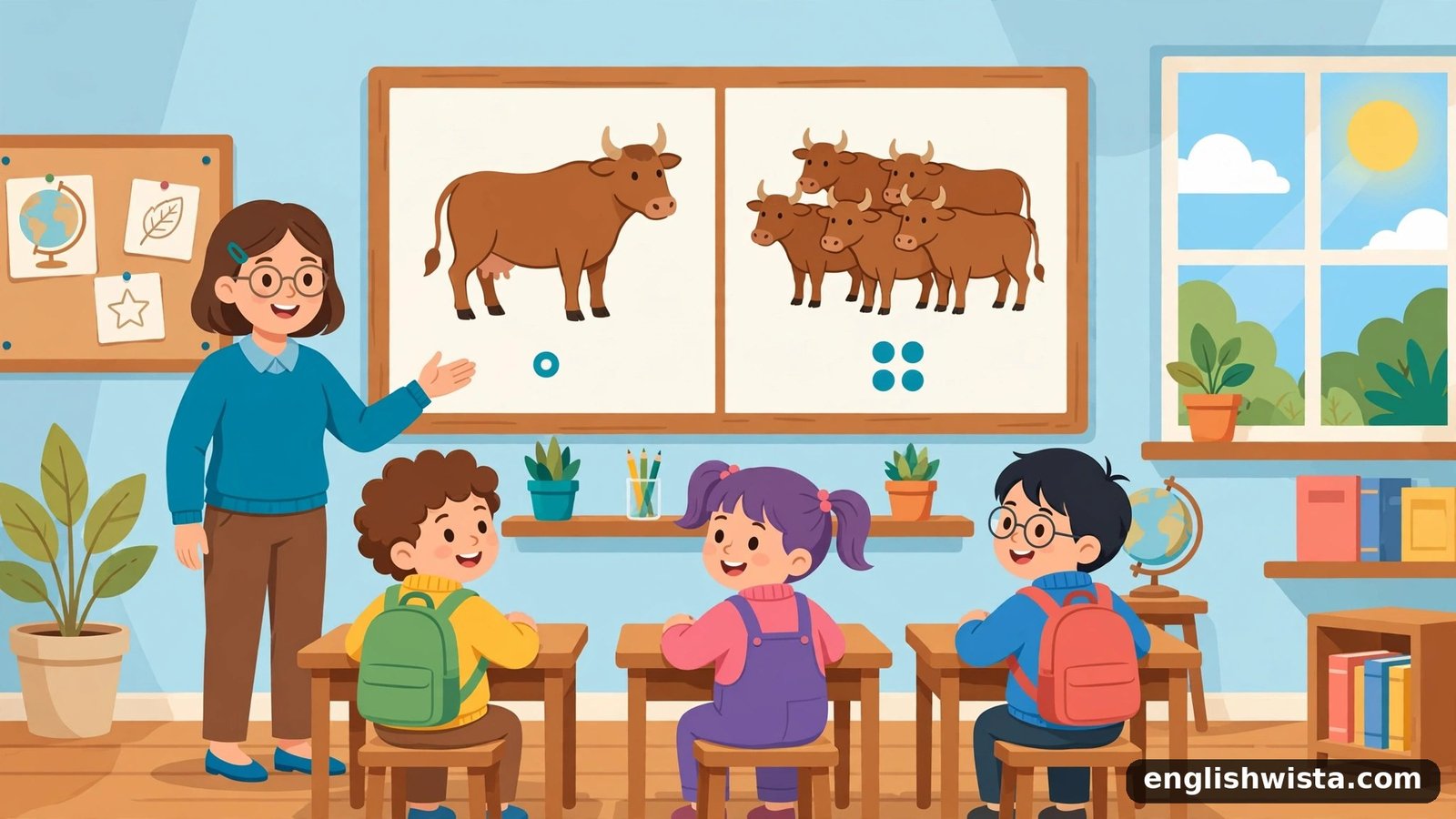
Did you know that animals often have special collective nouns? For oxen, the collective noun is “a team of oxen.”
Here’s an example:
- The team of oxen worked together to pull the wagon.
Other animal examples include:
- A flock of birds
- A herd of cows
- A pack of wolves
These terms make it easy to describe groups of animals in a fun and specific way.
How Can You Remember “Oxen”?
If you’re worried about forgetting, here are a few memory tricks:
- Think of “children.” Just like “child” becomes “children,” “ox” becomes “oxen.”
- Use it in a sentence. Practice saying or writing sentences like: “The oxen are grazing in the field.”
- Make it a fun rhyme. Try saying: “One ox, two oxen — that’s the plural solution!”
The more you practice, the easier it will become.
Fun Fact: Oxen in History
Oxen have been vital to human civilization for thousands of years. They were some of the earliest animals domesticated for agricultural work. Farmers used them to plow fields, pull carts, and even transport goods. Their strength and endurance made them indispensable before the invention of modern machinery. Even today, in some parts of the world, oxen are still used for farming and transportation.
Common Questions About “Ox” and “Oxen”
1. Can I Say “Oxes”?
No, “oxes” is an incorrect form. The only correct plural form is “oxen.”
2. Is “Oxen” Still Used Today?
Yes! While you might not hear it every day, “oxen” is still used, especially in farming or historical contexts.
3. What’s the Difference Between “Ox” and “Cow”?
An “ox” is typically a domesticated male bovine trained for work, while “cow” refers to a female bovine, usually kept for milk production. Not all male bovines are oxen; they’re specially trained for tasks like pulling carts or plows.
4. Are Oxen the Same as Bulls?
No. Bulls are male bovines that are not castrated and are often used for breeding. Oxen, on the other hand, are usually castrated males trained for work.
How to Pronounce the Plural (Pronunciation Guide)
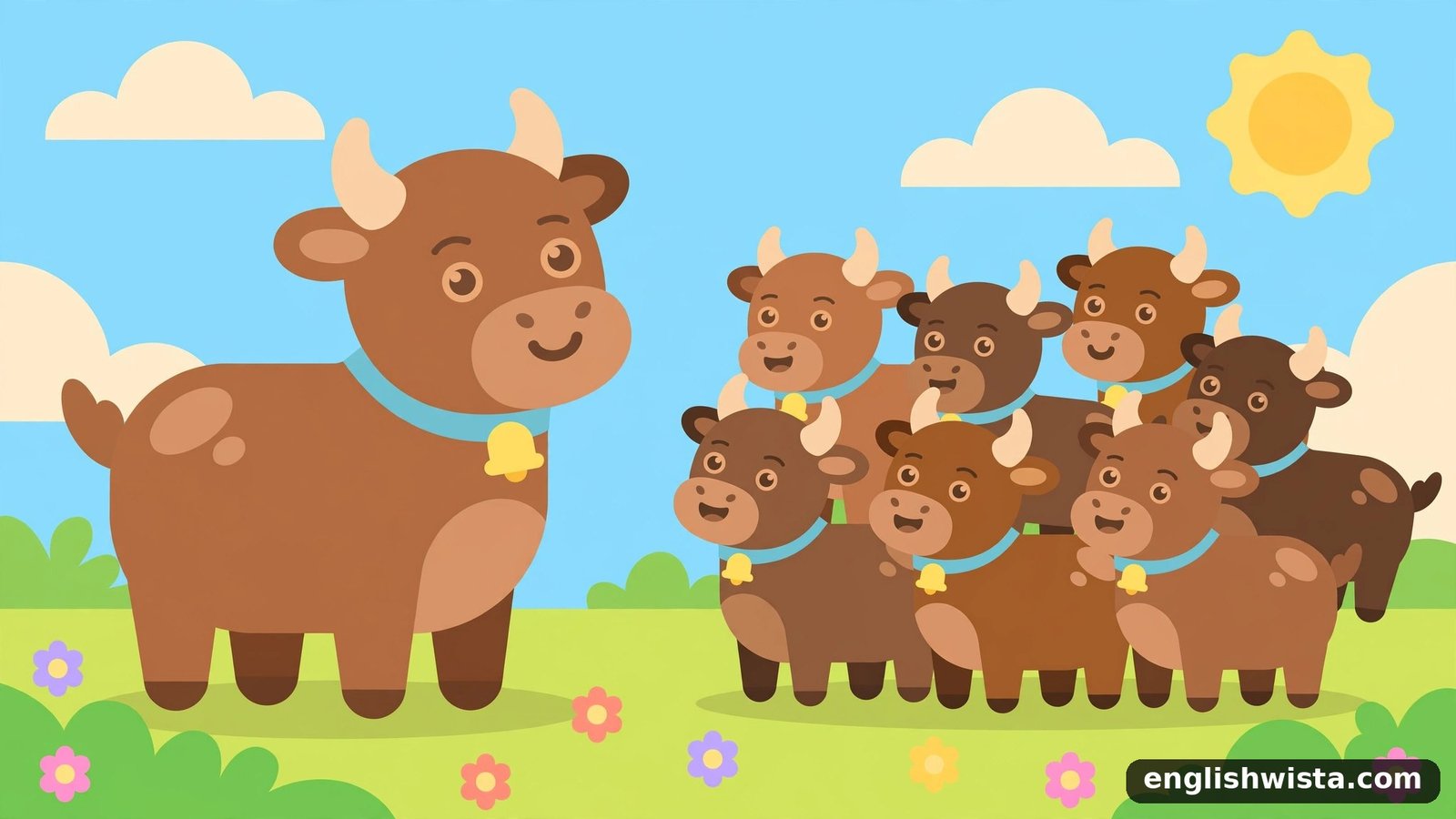
Knowing the spelling is only half the battle — let’s make sure you can say it with confidence. Here’s the singular and plural side by side:
- Ox (singular): pronounced /ɒks/ — say it like “ocks,” rhyming with “box” and “fox.” The vowel is short and open.
- Oxen (plural): pronounced /ˈɒksən/ — say it like “OK-sun.” The stress falls on the first syllable (OK), and the ending is a soft, unstressed “-uhn” sound, just like the “-en” in “children.”
A common slip is stressing the second syllable (“ox-SEN”), which sounds unnatural. Practice tip: say “oxen” right after “children” — they share the same rhythm and the same old “-en” plural ending, which makes the pronunciation easier to lock in.
Conclusion
So, there you have it! As a quick recap: the plural form of “ox” is “oxen,” not “oxes.” While it might seem unusual, it’s a fascinating reminder of English’s rich and complex history. Next time you hear someone mention oxen, you’ll know exactly why the word works the way it does.
To sum up:
- Singular: Ox
- Plural: Oxen
Keep practicing, and soon this will feel as natural as “child” and “children.” Who knew grammar could be this much fun? Now go impress your friends with your newfound knowledge!
Frequently Asked Questions
What is the plural of ox?
The plural of “ox” is “oxen.” It’s an irregular plural: instead of adding “-s” or “-es,” the word keeps an old “-en” ending from Old English, the same pattern you see in “child → children.”
How do you pronounce the plural of ox?
“Oxen” is pronounced /ˈɒksən/ — say “OK-sun,” with the stress on the first syllable. The ending is a soft, unstressed “-uhn,” exactly like the “-en” in “children.” The singular “ox” is pronounced /ɒks/, rhyming with “box.”
What is the singular possessive of ox — ox’s or ox’? (And the plural possessive?)
The singular possessive is ox’s (“the ox’s yoke”), formed by adding ’s to the singular noun. The plural possessive is oxen’s (“the oxen’s harness”), because “oxen” doesn’t end in “s.” And remember: an apostrophe never makes a plural — “ox’s” is not how you write more than one ox.
Do I say “the oxen is” or “the oxen are”?
You say “the oxen are.” “Oxen” is a plural noun, so it always pairs with a plural verb: “The oxen are grazing,” never “the oxen is grazing.” Use the singular verb only with “ox”: “The ox is grazing.”