Son and sun sound exactly the same but mean very different things. Mixing them up is easy — but after this simple guide with easy examples, a memory trick, common mistakes, and a mini quiz, you will never confuse them again.
What Is the Simple Difference?
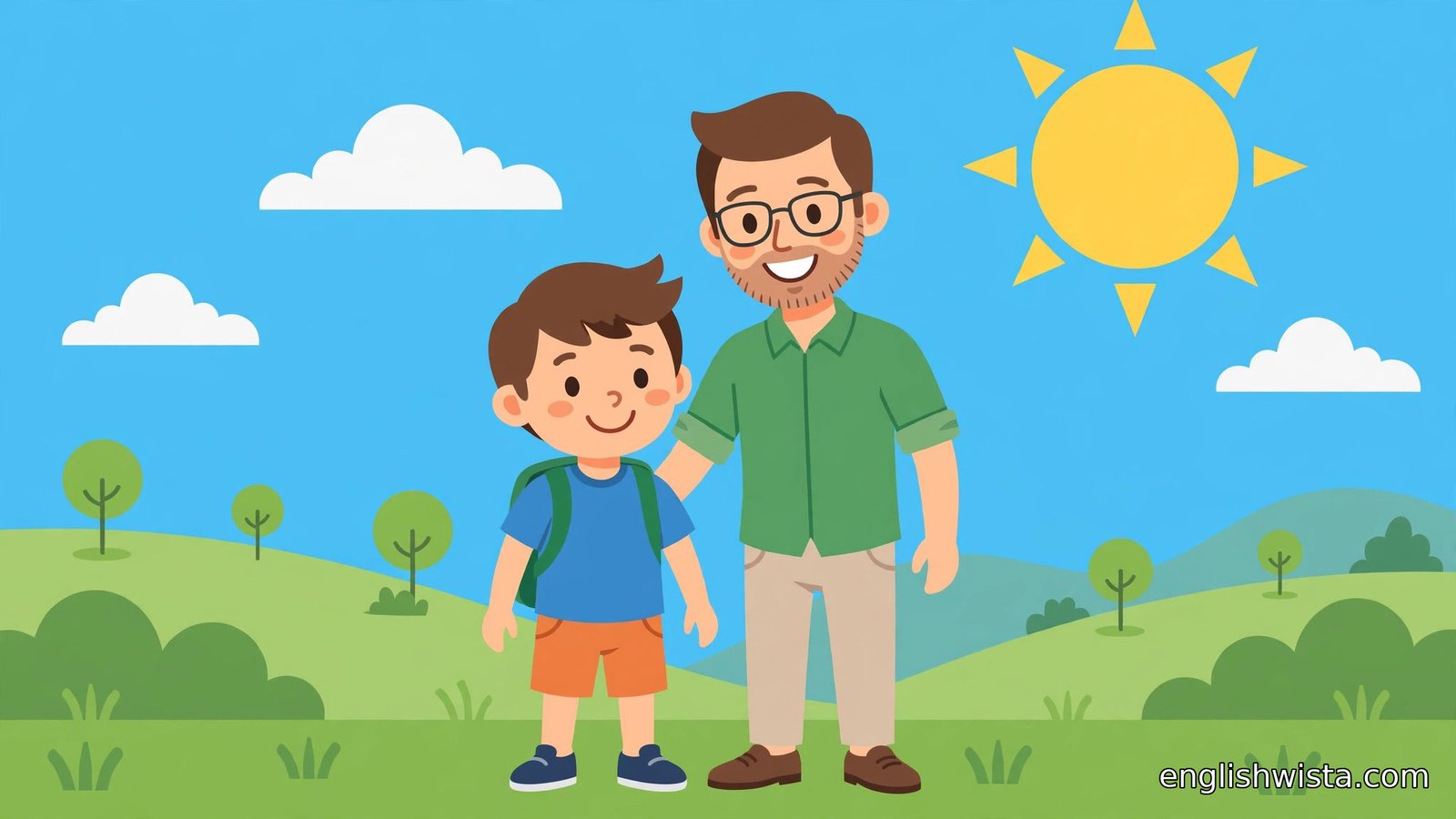
Son is a noun — a male child.
Sun is a noun — the star that gives Earth light and heat.
- Son = child.
- Sun = star.
Think of it this way: a son is part of your family, and the sun is part of the sky.
Son: The Child Word
Son means a boy or man in relation to his parents — a male child.
- “Their son is five years old.”
- “He is the son of a teacher.”
- “My son loves football.”
If it is about a male child, it is son.
Sun: The Star Word
Sun means the giant star at the center of our solar system — the source of light and heat.
- “The sun rises in the east.”
- “The sun is shining today.”
- “Plants need sun and water.”
If it is about the sky’s light and heat, it is sun.
The Easy Trick to Remember
- Sun is Up in the sky — the U points up!
- Son carries ON the family name — he keeps the family going on.
- Sun = skY (U). Son = family continues ON.
U is up in the sky = sun. ON keeps the family going = son. That is the whole trick!
Example Pairs
- Son: “Their son plays guitar.” / Sun: “The sun is hot today.”
- Son: “He is an only son.” / Sun: “The sun set at six.”
- Son: “My son drew this picture.” / Sun: “We sat in the sun.”
Common Mistakes to Avoid
Mistake 1: Writing “son” for the star.
- Wrong: “The son is shining.”
- Right: “The sun is shining.”
Mistake 2: Writing “sun” for the child.
- Wrong: “My sun is ten years old.”
- Right: “My son is ten years old.”
Mistake 3: Misspelling the family word.
- Wrong: “my sun-in-law”
- Right: “my son-in-law” (a male child by marriage)
Frequently Asked Questions
Can “sun” be a verb? Yes — “to sun oneself” means to sit or lie in sunlight.
What is the plural of “son”? “Sons” — for example, “They have two sons.”
How do you pronounce them? Both sound the same: “SUN.” Only the spelling tells them apart.

Mini Quiz: Test Yourself
Choose the best word for each question.
- 1. “My ______ is ten years old.” (son / sun)
- 2. “The ______ rises in the east.” (son / sun)
- 3. “They have three ______.” (sons / suns)
- 4. “We relaxed in the warm ______.” (son / sun)
- 5. True or false: “The sun is a male child.”
Answers: 1. son 2. sun 3. sons 4. sun 5. False — a male child is a “son”
Quick Recap
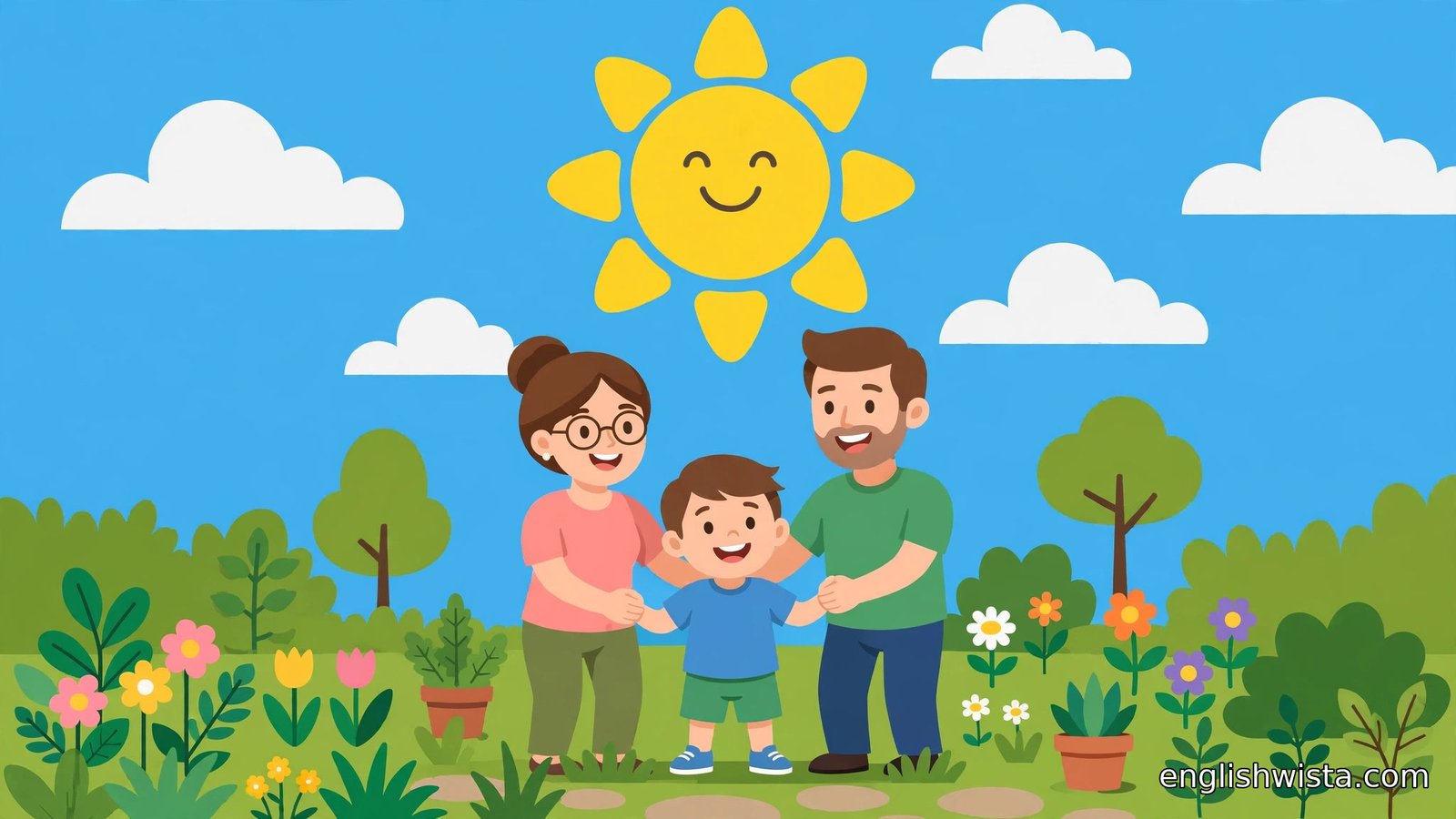
- Son = male child (ON = carries ON the family name).
- Sun = the star (U = up in the sky).
- They sound identical — spelling is the only difference.
Conclusion
So, son vs sun: a son is a child, and the sun is a star. Remember “up in the sky” and “carries on the name,” and you will never mix them up again!