The plural of goose is a fascinating topic that might surprise you! Most people assume it’s simply geese, but the story behind this common word is rich with history and evolution. Understanding how language evolves can deepen your appreciation for the words we use every day.
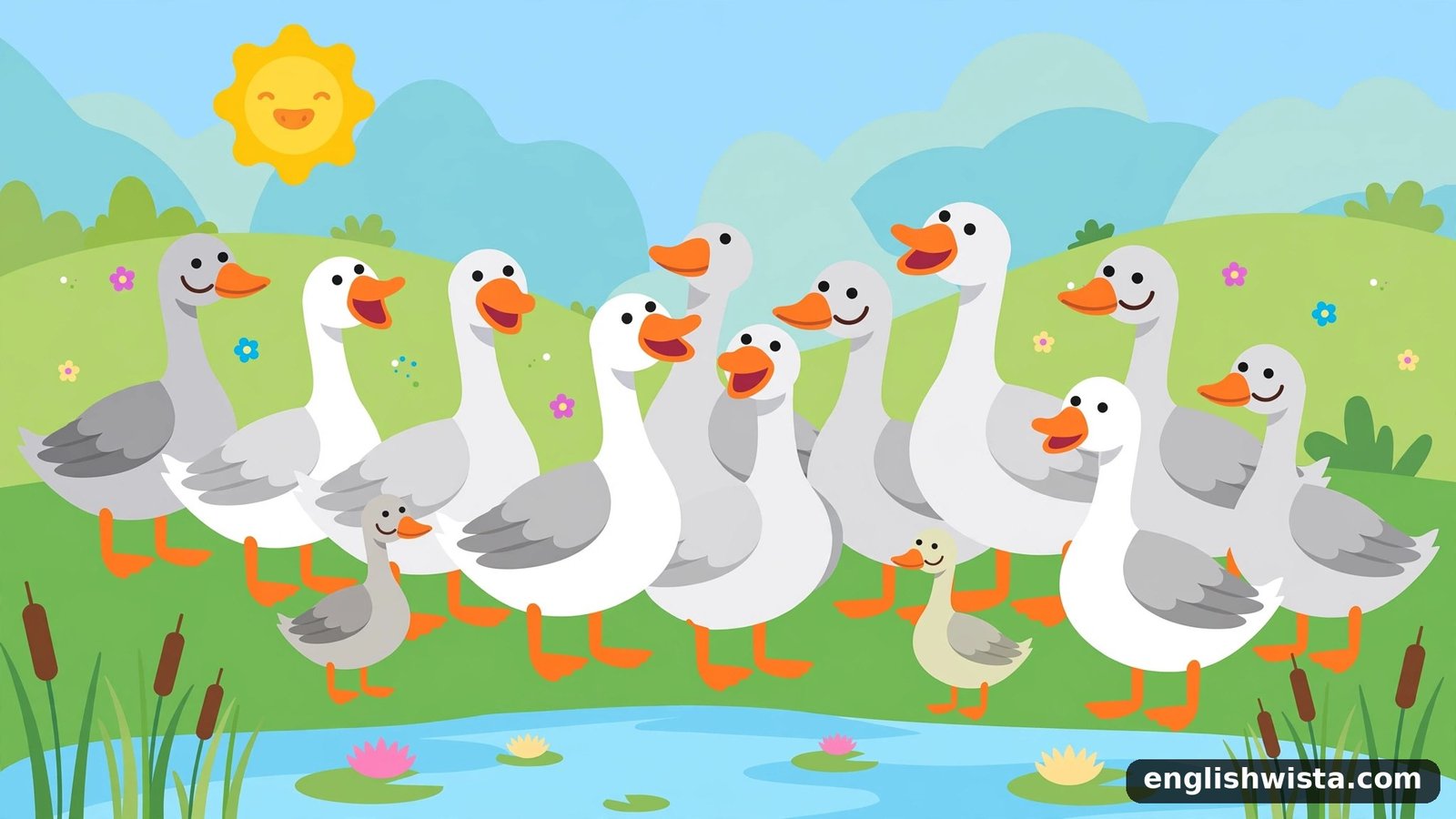
Have you ever wondered why some words change so dramatically in their plural forms? Join me as we explore the curious journey of “goose” to “geese,” diving into the quirks of the English language. You’ll discover not just the answer, but also why it matters in our everyday conversations. Let’s embark on this linguistic adventure together!
What Is the Plural of Goose?
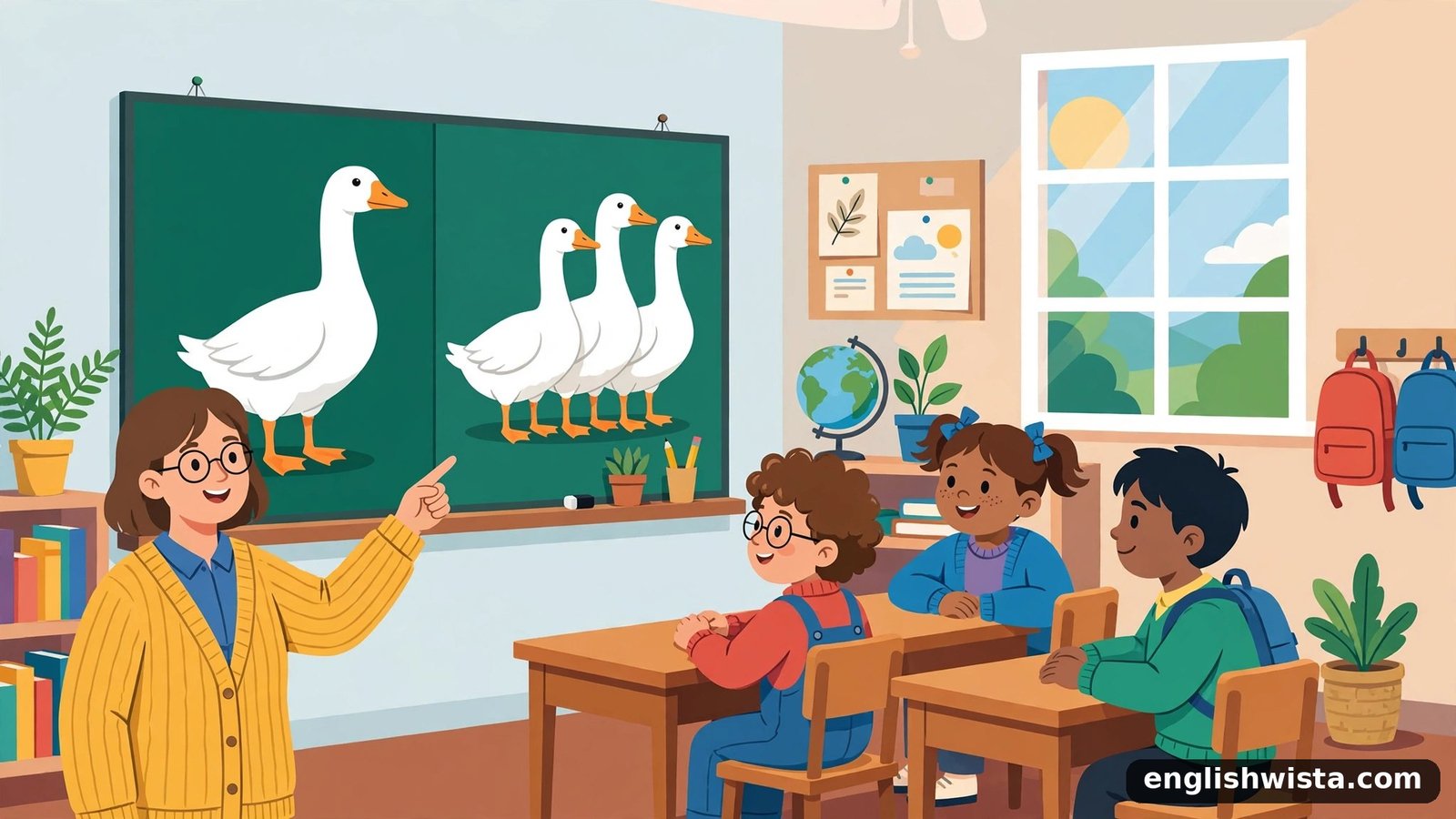
The correct plural form of “goose” is “geese.” Yes, that’s right! One goose becomes multiple geese. It may sound a little odd at first, but it’s correct — geese is the preferred plural, the dictionary-recognized form listed by both Merriam-Webster and the Oxford English Dictionary. This classic irregular plural doesn’t follow the typical rule of simply adding “-s” or “-es” to the end of a word.
For example:
- Singular: I saw a goose by the lake.
- Plural: The geese are swimming together in the pond.
Why Isn’t It “Gooses”?
English has rules for forming plurals, but it also has exceptions. “Goose” falls into a special category of irregular plurals — nouns that change an inner vowel instead of adding an ending. This irregularity dates back to Old English and its ancestor languages.
In Old English, the word for “goose” was “gōs” (pronounced “gos”). The plural form was “gēs” (pronounced “geese”). Over time, the vowel sound changed due to a linguistic phenomenon called “vowel mutation.” While most words in English evolved to use the simpler “-s” plural, “goose” kept its old pattern.
How Does This Compare to Other Words?
“Goose” isn’t the only word with an irregular plural. Here are a few more examples:
- Mouse → Mice
- Tooth → Teeth
- Foot → Feet
These words also underwent vowel changes in their plural forms. While it might seem tricky at first, recognizing patterns like these can make learning English more enjoyable.
Common Confusions: Is Goose Ever Singular or Plural?
Getting singular vs plural right can be tricky, and sometimes people might wonder if “goose” could be used as both singular and plural. The answer is no. Unlike some words (like “sheep”), “goose” always refers to a single bird in its singular form. For more than one, you must use “geese.”
Here are some examples to clarify:
- Incorrect: Look at all those goose in the field.
- Correct: Look at all those geese in the field.
Real-Life Examples of Goose and Geese
Seeing “goose” and “geese” used correctly in example sentences can help reinforce the rule:
- Singular: A goose waddled across the road, stopping traffic.
- Plural: The geese honked loudly as they flew in a V-formation.
- Singular: That goose looks so graceful on the water.
- Plural: The geese are gathering by the river for the winter.
Fun Fact: Collective Nouns for Geese
Did you know that geese have special collective nouns depending on where they are? For example:
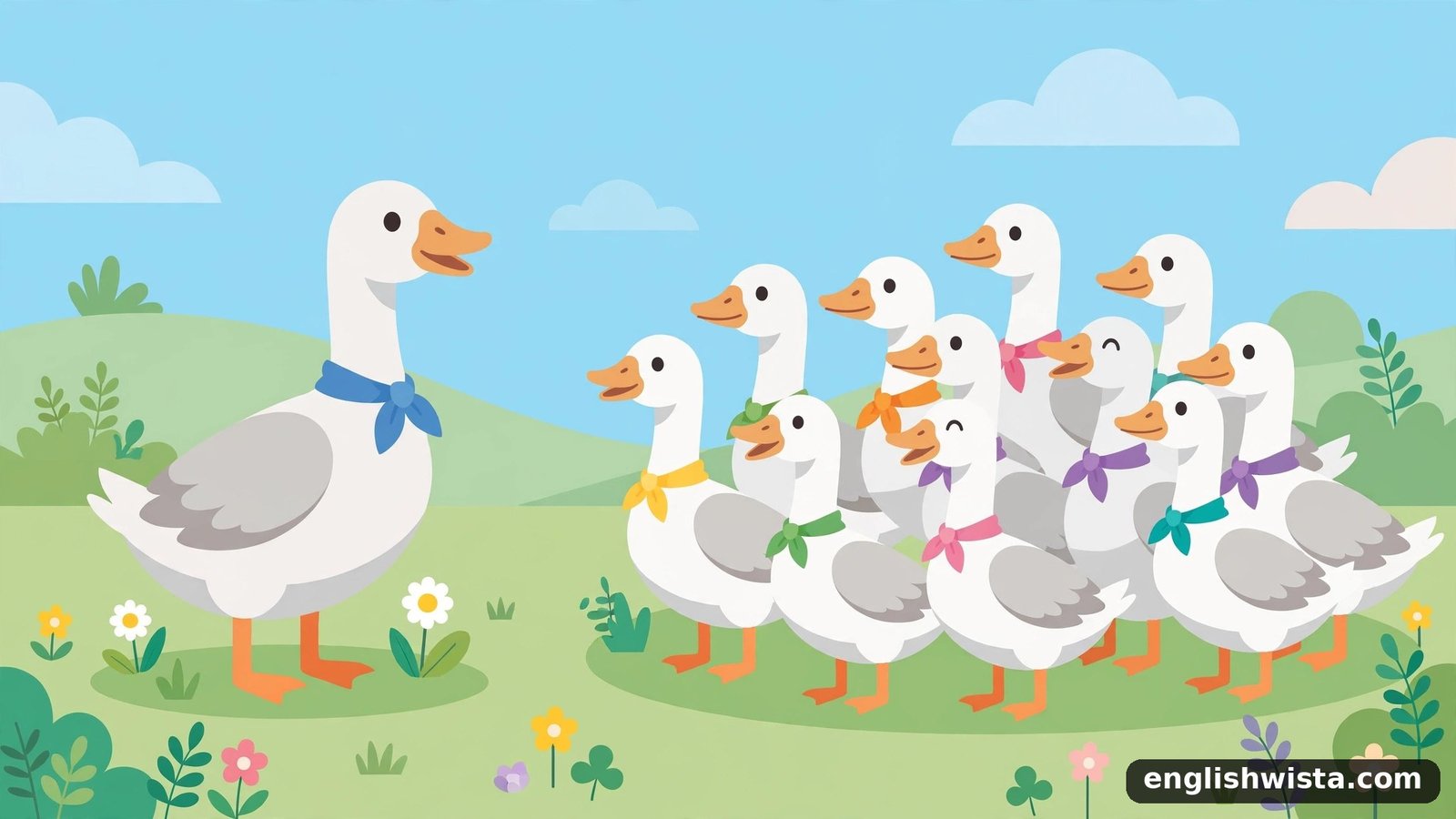
- A group of geese on land or water is called a “gaggle.”
- A group of geese in flight is called a “skein” or a “wedge.”
Isn’t that fascinating? The English language loves to add extra layers of fun!
Origins of the Word Goose
The word “goose” has a long history. It comes from the Proto-Germanic word “gans” and the older Proto-Indo-European word “gʰans.” Many modern languages have similar words for “goose” that trace back to the same root. For example:
- German: Gans
- Dutch: Gans
- Swedish: Gås
This shared origin shows how languages are connected and how words evolve over time.
Tips to Remember Goose and Geese
Learning irregular plurals can be challenging, but here are some tips to make it easier:
- Practice with Examples: Write sentences using both “goose” and “geese” to reinforce the distinction.
- Make Associations: Link the word “geese” with the sound they make—“honk, honk!” It’s a playful way to remember.
- Group Similar Words: Pair “goose” with other irregular plurals like “mouse” and “tooth” to build familiarity.
- Try a Mnemonic: Picture two birds side by side — the double “ee” in “geese” looks just like a pair of geese together. This little memory trick makes the spelling almost impossible to forget.
When to Use Goose vs. Geese
If you’re ever unsure — especially about subject-verb agreement — just think about the number involved:
- Use “goose” when talking about one bird.
- Use “geese” when talking about more than one.
Examples:
- One goose was enough to scare the dog.
- The geese at the park love being fed bread crumbs.
Fun Extra: Geese in Culture and Idioms
Geese often appear in idioms and cultural references. Here are a few examples:
- “What’s good for the goose is good for the gander” means what’s fair for one person should be fair for another.
- The story of the “Goose that Laid the Golden Eggs” teaches a lesson about greed.
- “Wild goose chase” refers to a hopeless or pointless pursuit.
These phrases show how geese have waddled their way into language and storytelling!
Common Mistakes to Avoid
Even though “geese” is the correct plural form, a few incorrect forms keep showing up. Here are the most common mistakes people make with the plural of goose:
- Writing “gooses” as the plural: More than one bird is always geese, never gooses. (“Gooses” is a real verb — as in “he gooses the gas pedal” — but never the plural of the bird.)
- Adding an apostrophe to a plural: Write “the geese,” not “the geese’s” — save “geese’s” for the plural possessive, as in “the geese’s honking woke us up.”
- Using “goose’s” for many birds: “Goose’s” is the singular possessive (“the goose’s nest”), not the plural. For more than one bird, use geese.
- Using “goose” as a plural: Unlike “sheep,” goose never does double duty. One bird is a goose; two or more are always geese.
Avoid these four and your writing will always look polished.
Conclusion: Wrapping Up the Goose Talk
The plural of “goose” is “geese,” and understanding this irregular vowel change can help you feel more confident in your English skills. Whether you’re watching geese fly in the sky or learning fun facts about their language history, this quirky word is a great reminder of how fascinating English can be. Next time you see a goose (or geese), you’ll know exactly what to say!
Frequently Asked Questions
What is the plural of goose?
The plural of goose is geese — one goose, two geese. This is an irregular vowel change inherited from Old English (gōs → gēs), where the “oo” sound shifted to “ee” instead of adding an “-s.” It’s the preferred plural in every major dictionary, so geese is always the safe choice.
Is “gooses” a real word?
As the plural of the bird, no — “gooses” is an incorrect form and a common mistake. However, “gooses” does exist as the third-person singular of the verb “to goose” (meaning to poke or prod), as in “She gooses the gas pedal.” So the word is real, just never the plural of goose.
How do you pronounce the plural of goose?
The plural “geese” is pronounced /ɡiːs/ — plainly spelled, it rhymes with “cheese.” The singular “goose” is /ɡuːs/, rhyming with “loose.” Both are single-syllable words; just swap the long “oo” sound for a long “ee” and you’ve got it.
Do I say “the geese is” or “the geese are”?
Say “the geese are.” Because geese is plural, it takes plural verbs — this is basic subject-verb agreement. So it’s “The geese are flying south” and “The geese were honking,” never “the geese is flying.”