Ever feel puzzled when deciding between cite, site, and sight? You’re not alone! These commonly confused words sound alike but have very different meanings and uses. Don’t worry this guide is here to help. We’ll break things down step by step so you’ll know exactly when to use each word in a sentence. By the end, you’ll be confident about distinguishing between these tricky homophones.
Let’s dive in and make sense of it all!
What Does “Cite” Mean?
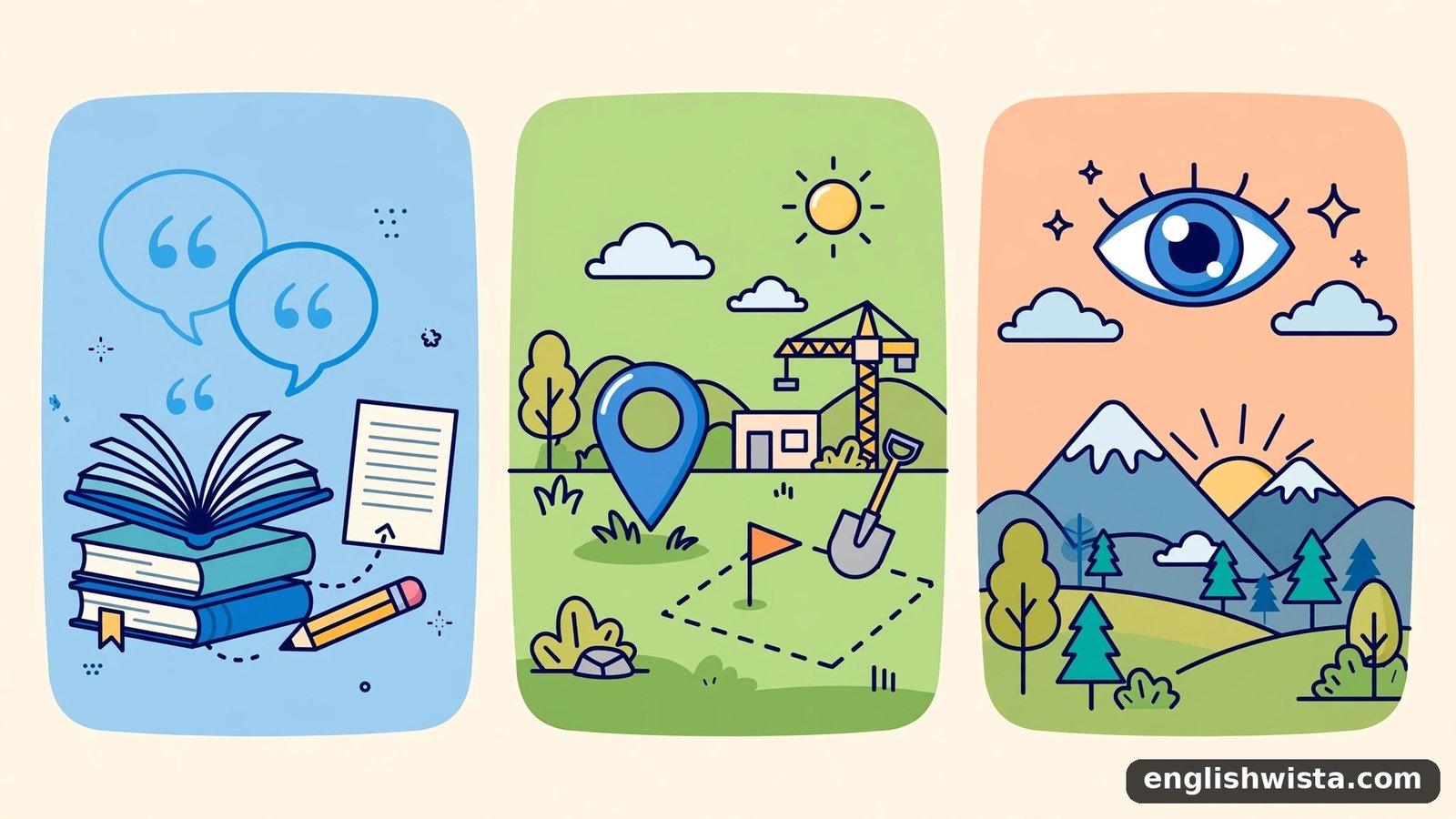
Cite (pronounced /saɪt/, exactly like its two partners) is all about referencing or giving credit. Think of it as pointing to a source of information, a rule, or an example. You might encounter it most often in academic or legal contexts.
Quick Definition:
Cite means to quote, mention, or refer to something as evidence or proof.
Examples in Action:
- “In her paper, Maria cited several scientific studies to support her argument.”
- “Please cite the book where you found that information.”
- “The lawyer cited a previous case to strengthen his point.”
When you’re writing an essay or doing research, citing sources is key to showing where your information came from. As a practice tip, write a few example sentences of your own — repetition is the fastest way to make the correct spelling stick.
What About “Site”?
Site has to do with locations. It can refer to physical places or online destinations. If you’re visiting a construction site or browsing a website, this is the word you’ll need.
Quick Definition:
Site means a specific place or location, whether physical or digital.
Examples in Action:
- “The company is building a new factory on the construction site.”
- “This park is the site of many historical events.”
- “I found some useful information on that website.”
Here’s a quick memory trick: if you can physically stand at the location (or imagine yourself standing there), then “site” is likely the word you’re looking for.
What Does “Sight” Mean?
Sight relates to seeing or vision. It’s all about things you observe with your eyes or imagine seeing.
Quick Definition:
Sight refers to the act of seeing or something that can be seen.
Examples in Action:
- “The sunset over the mountains was a breathtaking sight.”
- “She lost sight of her dog in the crowd.”
- “The tourists were excited to visit all the famous sights in the city.”
Here’s an easy trick: if it’s about vision or appearances, “sight” is the right word. Try this substitution test: if you can swap the word with “vision,” you’ve got the right one.
How to Tell Them Apart
To make things even clearer, let’s summarize the distinctions:
| Word | Meaning | Examples |
|---|---|---|
| Cite | To reference or give credit | “Please cite your sources.” |
| Site | A physical or digital location | “The construction site is busy today.” |
| Sight | Vision or something seen | “The Grand Canyon is an amazing sight.” |
Common Mistakes and How to Avoid Them
- Mixing up “cite” and “site” in writing.
- Wrong: “Can you site your sources?”
- Right: “Can you cite your sources?”
- Using “sight” when you mean “site.”
- Wrong: “I visited the historical sight.”
- Right: “I visited the historical site.”
- Overusing one word because it feels “safe.”
- If you’re unsure, think about the context: Is it about giving credit (cite)? A location (site)? Or seeing something (sight)?
Fun Facts About These Words
- Word Origins:
- Cite comes from the Latin word citare, meaning “to summon or call.”
- Site originates from the Latin situs, meaning “position” or “place.”
- Sight has Old English roots, linked to the word siht, meaning “vision.”
- Homophones:
These three words are homophones, meaning they sound alike but have different meanings and spellings. English is full of them, like there, their, and they’re! Studying them in word pairs makes the comparison much easier.
Real-Life Scenarios
Let’s see how these commonly confused words work in real conversations, including fixed phrases you’ll hear every day:

- Academic Setting:
- Professor: “Make sure to cite at least three sources in your essay.”
- Student: “I found some great articles on this site, and I’ll use them!”
- Travel Planning:
- Friend 1: “What’s a good site to visit in Paris?”
- Friend 2: “The Eiffel Tower is an unforgettable sight!”
- Work Context:
- Manager: “We’ll meet at the construction site tomorrow morning.”
- Team Member: “Got it. I’ll also cite the safety regulations during our meeting.”
Quick Tips to Remember
- Cite: Think “citation” (references or quoting).
- Site: Think “location” (physical or digital).
- Sight: Think “vision” (what you see).
Test Yourself!
Try filling in the blanks with the correct word:
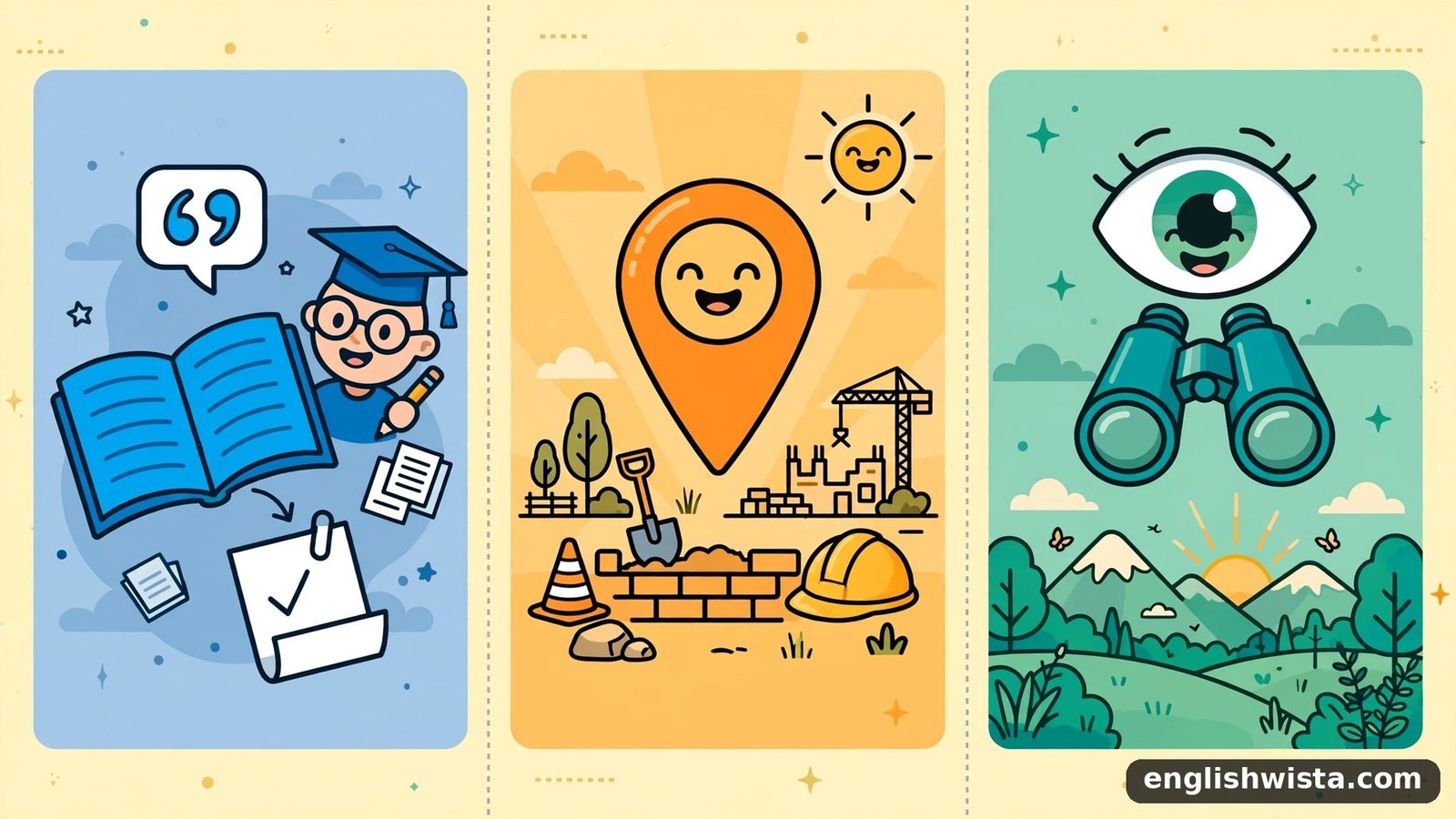
- “The scientist had to ___ her research in the presentation.”
- “We went to the historical ___ where the battle took place.”
- “The fireworks display was an incredible ___ to behold.”
(Answers: 1. cite, 2. site, 3. sight)
Conclusion: Easy as 1-2-3!
Now you know the difference between cite, site, and sight! These words might sound the same, but their meanings are worlds apart. Remember: cite is for references, site is for locations, and sight is for seeing.
With a little practice and repetition, you’ll master them in no time. The next time these words come up, you’ll be ready to use them confidently and correctly. Keep this guide handy, and feel free to share it with friends who might need a little help too!
Confused by These Too? More Word Pairs to Explore
Homophones like cite, site, and sight are just the beginning. English is packed with commonly confused words that trip up even confident writers. If this guide helped, you’ll love exploring these similar troublemakers next: their, there, and they’re; your vs. you’re; its vs. it’s; to, too, and two; affect vs. effect; and then vs. than. Each pair follows the same playbook you just learned: check the meaning, run the substitution test, and practice with your own example sentences. Bookmark englishwista.com and work through one confusing pair a week — small, steady repetition is how strong spelling habits are built.
Frequently Asked Questions
What is the difference between cite, site, and sight?
Cite means to quote or refer to a source, as in “Please cite your references.” Site means a location, physical or digital, as in “the construction site.” Sight relates to vision or something seen, as in “a beautiful sight.” They sound identical but their meanings are completely different.
How do you use cite in a sentence?
Use cite when you quote, mention, or refer to something as evidence. For example: “The lawyer cited three earlier cases to support her argument.” Or: “In your essay, remember to cite every source you used.”
How do you use site in a sentence?
Use site for a place or location. For example: “The construction site closes at 6 p.m.” Or: “This website has excellent grammar lessons.” If you can stand at it — or visit it online — it’s a site.
How do you use sight in a sentence?
Use sight for seeing or something visible. For example: “The northern lights were an unforgettable sight.” Or: “She never lost sight of her goal.” If it connects to vision, sight is the word.
Is there a mnemonic to remember cite vs site vs sight?
Yes! Think Cite = Credit or Citation (quoting sources); Site = Spot or location (a place); and Sight contains “gh” like light — what your eyes see. Quick test: “___ your sources before submitting!” The answer is cite, because it’s about giving credit.