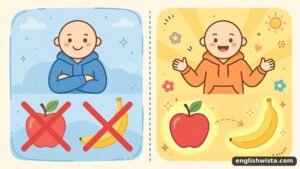
Have you ever seen a supermarket sign that says “10 items or less” and wondered why something about it feels wrong? Your feeling is correct! The sign should really say “10 items or fewer.” This tiny mistake is everywhere — in stores, in ads, and even in everyday speech. Today we will learn the simple rule behind fewer and less, so you can use them correctly every time.
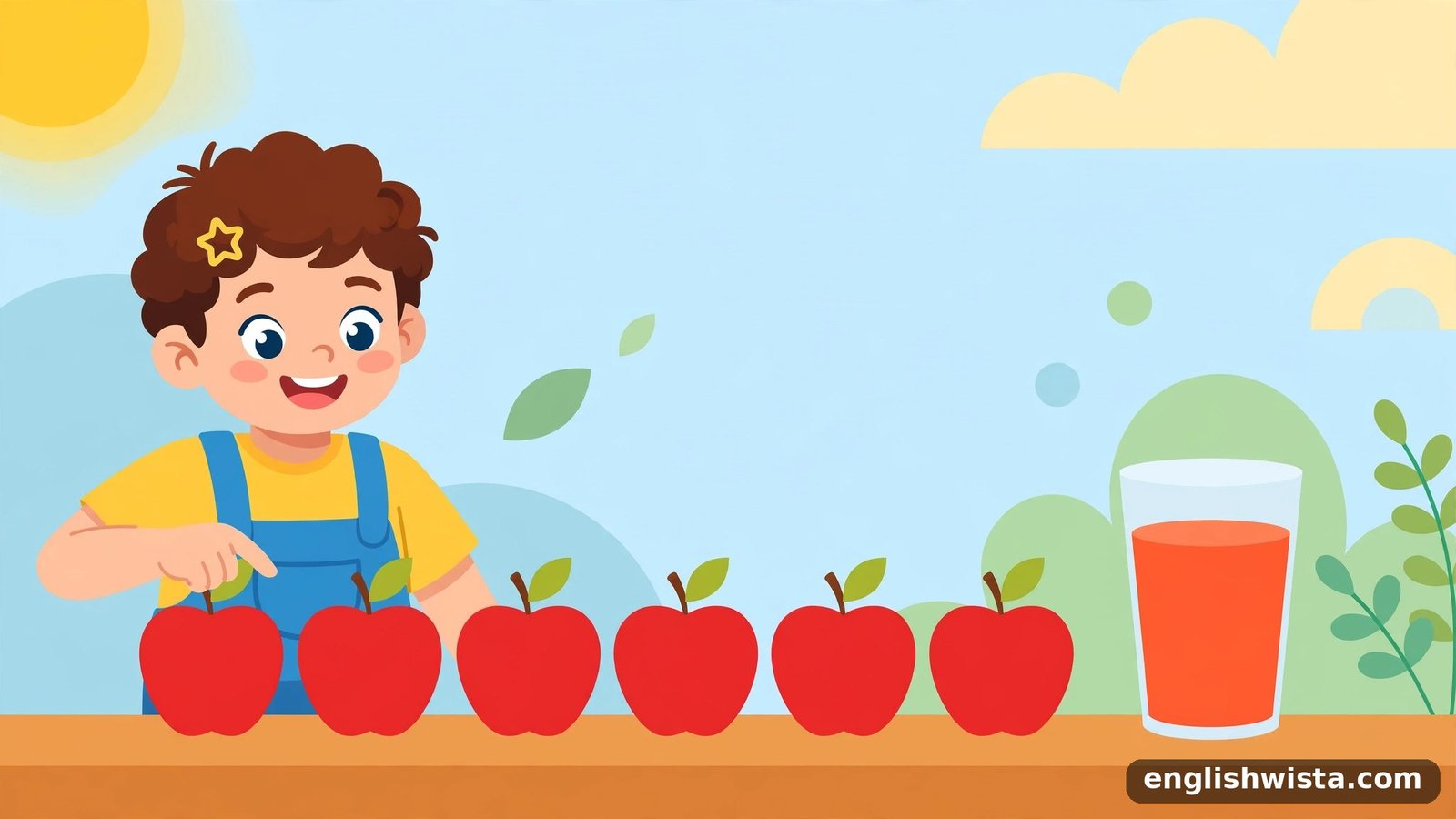
The Simple Rule: Countable vs Uncountable
The whole rule comes down to one question: can you count it?
- Use fewer with countable nouns — things you can count one by one.
- Use less with uncountable nouns — things you cannot count one by one.
That is really all there is to it! Let’s make it concrete with examples.
What Are Countable Nouns?
Countable nouns are things you can count: one book, two books, three books. They have a plural form, and you can put numbers in front of them.
Use fewer with countable nouns:
- There are fewer people here today.
- She bought fewer apples than last week.
- He has fewer friends in this city.
- We need fewer chairs in the room.
- This restaurant serves fewer dishes at lunch.
Notice that all these nouns — people, apples, friends, chairs, dishes — are things you can count. So fewer is the right word.
What Are Uncountable Nouns?
Uncountable nouns are things you cannot count one by one: you cannot say “one water” or “two musics.” They are usually masses, liquids, or abstract ideas, and they do not have a plural form.
Use less with uncountable nouns:
- There is less water in the bottle now.
- She puts less sugar in her tea.
- He has less time than before.
- We need less noise in this room.
- This job gives me less stress.
Water, sugar, time, noise, stress — you cannot count these one by one, so less is correct.
Fewer or Less in Example Sentences
Let’s compare the two words in similar situations:
- Fewer cars are on the road today. (cars = countable)
- There is less traffic on the road today. (traffic = uncountable)
- I have fewer meetings this week. (meetings = countable)
- I have less work this week. (work = uncountable)
- She made fewer mistakes this time. (mistakes = countable)
- She felt less fear this time. (fear = uncountable)
See the pattern? Cars, meetings, and mistakes can be counted. Traffic, work, and fear cannot.
Tricky Cases: Time, Money, and Distance
Here is where English gets a little sneaky. Words like time, money, distance, and weight are often thought of as one amount, even though they contain countable parts. English treats them as uncountable, so we use less.
- I have less than three hours left. (not “fewer”)
- He earns less than fifty dollars a day.
- The store is less than five miles away.
- The baby weighs less than ten pounds.
Why? Because we are thinking of one amount of time, one sum of money, one distance — not separate hours, dollars, or miles. It feels strange at first, but it is the standard rule.
The One Common Exception
In everyday speech, some native speakers say things like “less people” instead of “fewer people.” You will hear it in shops and on TV. It is technically incorrect, but it is so common that many people do not notice. For exams, writing, and professional English, always use fewer with countable nouns.
Common Mistakes to Avoid
Here are three mistakes learners (and even native speakers) make most often:
- Mistake 1: “Less people attended the event.” → Say: “Fewer people attended the event.” (People are countable.)
- Mistake 2: “I have fewer money than you.” → Say: “I have less money than you.” (Money is uncountable.)
- Mistake 3: “She needs less hours of sleep.” → Say: “She needs fewer hours of sleep.” (Hours are countable — but if you say “less time,” that stays correct, because “time” is uncountable!)
That last one shows how two very similar sentences can take different words. “Fewer hours” is right, and “less time” is right too. English is fun like that!
The Easy Memory Trick
Think of this phrase: “fewer” has fewer letters than “less”… no wait! Let’s use a better one:
- Fewer = think of friends you can count. Friends are countable!
- Less = think of liquid. Liquids cannot be counted one by one!
Or simply remember the supermarket sign: “10 items or fewer.” Items can be counted, so fewer is right — and now you know more English than many supermarkets!
Frequently Asked Questions
- Q: Why do supermarkets say “10 items or less” if it is wrong?
A: Old habits! The phrase became popular decades ago, and changing every sign is expensive. Many language experts have complained about it, but the incorrect version stuck around in some stores. - Q: Can “less” ever go with a countable noun?
A: Yes, in a few fixed cases: time, money, distance, and weight (“less than three hours”). These are treated as single amounts, not counted items. - Q: Is “fewer” used in American and British English the same way?
A: Yes! The rule is identical in both. You will hear “less people” informally in both countries, but “fewer people” is correct in both. - Q: What about “much” and “many” — do they follow the same rule?
A: Exactly! Many goes with countable nouns (“many books”) and much goes with uncountable nouns (“much water”). It is the same countable/uncountable logic.

Mini Quiz: Test Yourself
Choose fewer or less. Answers are below!
- 1. I drink ______ coffee than my brother.
- 2. There are ______ books on the shelf now.
- 3. We need ______ help with this project.
- 4. ______ students came to class today.
- 5. Add ______ salt to the soup.
Answers: 1. less, 2. fewer, 3. less, 4. Fewer, 5. less.
Five out of five? Excellent! Your English just got a little sharper.

Quick Recap
- Fewer goes with countable nouns (books, people, cars).
- Less goes with uncountable nouns (water, time, money).
- Time, money, distance, and weight take less because they are seen as one amount.
- The trick: if you can count it one by one, use fewer.
Now you know the rule behind that famous supermarket sign! Next time you see “10 items or less,” you can smile quietly, knowing it should say “10 items or fewer.” Keep practicing with real sentences around you — on signs, in ads, in conversations — and this rule will soon become second nature.