
Have you ever stumbled upon a tricky word and wondered, “How do I even make this plural?” You’re not alone! English has plenty of words borrowed from Latin, Greek, and other languages, which sometimes makes plural forms confusing. One of those words is papilla.
At first glance, papilla looks like a fancy scientific term. And to be fair, it is often used in biology and medicine. But don’t worry you don’t need to be a doctor or a language expert to understand it. In this article, we’re going to explore what papilla means, how to make it plural, and how to use it in real-life examples. We’ll also dive into some fun facts about the word’s origin. By the end, you’ll feel confident whenever you see or use the word papilla and its plural.
Let’s take a closer look together.
What Does Papilla Mean?
Before we jump into the plural, let’s understand what papilla actually means.
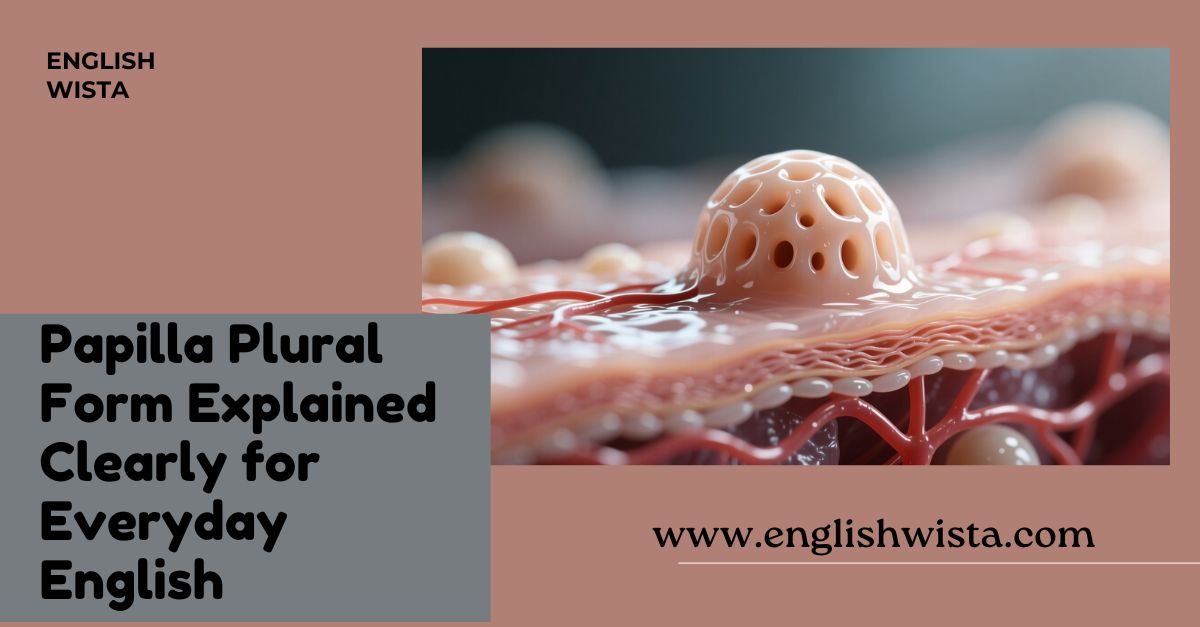
In simple terms, a papilla is a small, nipple-like or finger-like projection in the body. The word is often used in biology and anatomy. For example:
- On your tongue, you have tiny raised bumps. These are called papillae. They often contain taste buds.
- In plants, a papilla can describe small, rounded outgrowths on certain surfaces.
So, the basic definition is:
Papilla (noun): A small, rounded projection or bump on a surface, often in living organisms.
That’s it easy to grasp!
What Is the Plural of Papilla?
Here’s the main question: How do you make “papilla” plural?
The plural of papilla is papillae (pronounced puh-PIH-lee or puh-PIH-lai, depending on accent).
This plural form follows a common Latin rule: words ending in -a often change to -ae in the plural.
Some other examples include:
- formula → formulae
- alumna → alumnae
- larva → larvae
So, papilla → papillae.
Is Papilla Singular or Plural?
This is a very common confusion. To make it crystal clear:
- Papilla is the singular form (one bump).
- Papillae is the plural form (more than one bump).
Think of it like this:
- One papilla on the tongue.
- Many papillae on the tongue.
Here’s a quick sentence example:
- The doctor pointed to a single papilla on the tissue.
- The scientist studied the papillae under a microscope.
Why Isn’t the Plural Papillas?
You might be wondering, “Why can’t we just say papillas? It feels natural in English.”
That’s a great question! English usually adds -s or -es to make plurals. But since papilla comes from Latin, it keeps its original Latin plural form. That’s why it becomes papillae instead of papillas.
However, in casual or less formal contexts, some people might say “papillas.” But in scientific, medical, or academic writing, papillae is the correct and accepted plural.
How Do You Pronounce Papilla and Papillae?
Words borrowed from Latin sometimes look scary, but they’re not too bad once you hear them.
- Papilla → puh-PILL-uh
- Papillae → Two common pronunciations:
- puh-PIH-lee (more common in American English)
- puh-PIH-lai (closer to the classical Latin style, used in some academic settings)
Both are correct, so don’t stress too much.
Real-Life Examples of Papilla and Papillae
Now let’s put these words into action. Seeing them in sentences will make them easier to remember.
Examples with Papilla (singular):
- The dentist noticed a swollen papilla near the gum line.
- A single papilla on the tongue can contain several taste buds.
- The scientist examined one papilla under the microscope.
Examples with Papillae (plural):
- The surface of the tongue is covered with papillae.
- Under the microscope, the papillae appeared as tiny raised structures.
- The doctor explained that inflamed papillae can cause discomfort.
Notice how papillae is used when talking about multiple structures.
Where Do We Use the Word Papilla?
You might be thinking, “Okay, but where would I actually encounter this word?” Great question!
Here are some common contexts where papilla and papillae show up:
- Biology classes: When studying the structure of the tongue or skin.
- Medical field: Doctors, dentists, and dermatologists often use this term.
- Plant science: Botanists use papilla to describe certain small structures on plants.
- Anatomy textbooks: Papillae are mentioned in discussions of taste buds, hair follicles, and other tissues.
So, while it might not be an everyday word, it’s definitely useful if you’re into science or medicine.
Fun Facts About the Word Papilla
Let’s make this more interesting with some fun extras!
- Word origin: Papilla comes from Latin, meaning “nipple” or “small teat,” which makes sense because it describes tiny raised bumps.
- Connection to everyday life: You’ve probably seen papillae on your own tongue without realizing it. Those little bumps? Yep, those are papillae!
- Types of papillae: On the tongue, there are different kinds like fungiform, filiform, circumvallate, and foliate papillae. Each type has its own role in helping you taste and feel textures.
- Misconceptions: Some people think taste buds are the same as papillae. In reality, papillae are the bumps, and many of them contain taste buds inside.
Comparing Papilla to Other Latin Plurals
To help you remember, let’s compare papilla → papillae with other Latin-based words that follow the same pattern:
- antenna → antennae (though “antennas” is also used in technology)
- vertebra → vertebrae
- formula → formulae
This shows that the -a to -ae plural is quite common. Once you learn the pattern, you’ll recognize it in many words.
Quick Tips to Remember Papilla and Papillae
Let’s wrap up the learning part with some simple memory tricks:
- Singular ends with “a.” Papilla = one.
- Plural ends with “ae.” Papillae = many.
- Think: “A” is for one, “AE” is for many.
- Visual trick: Imagine one bump as “a papilla,” but lots of bumps crowded together as “papillae.”
Short Quiz for Practice
Let’s test your understanding with a mini quiz. Try answering before checking the answers.
1. Which is correct?
a) The doctor saw three papillas.
b) The doctor saw three papillae.
Answer: b) The doctor saw three papillae.
2. Fill in the blank:
The scientist studied one ______ under the microscope.
Answer: papilla.
3. Fill in the blank:
The tongue is covered with tiny raised bumps called ______.
Answer: papillae.
Conclusion
So, what have we learned today?
- Papilla is singular, and papillae is plural.
- The word comes from Latin and follows the -a to -ae plural pattern.
- You’ll mostly see this word in science, medicine, and anatomy.
- Papillae are not the same as taste buds, but they often contain them.
- Using the correct plural shows accuracy, especially in formal or academic contexts.
The next time you hear someone mention the bumps on the tongue or read a biology textbook, you’ll know exactly what “papilla” and “papillae” mean. Pretty cool, right?
Language may seem complicated at times, but once you understand the patterns, everything gets easier. And now, you’ve got this one mastered.
So, remember: one papilla, many papillae and you’re good to go!