Do you ever write “affect” and wonder if it should be “effect”? You are not alone! This is one of the most famous confusing pairs in English. One is usually the action, the other is usually the result. Today, we will clear it up once and for all with a simple rule and easy examples you can actually remember.

What Is the Simple Difference?
Here is the short answer you can use almost every time:
- Affect = a verb — to influence or change something.
- Effect = a noun — the result of a change.
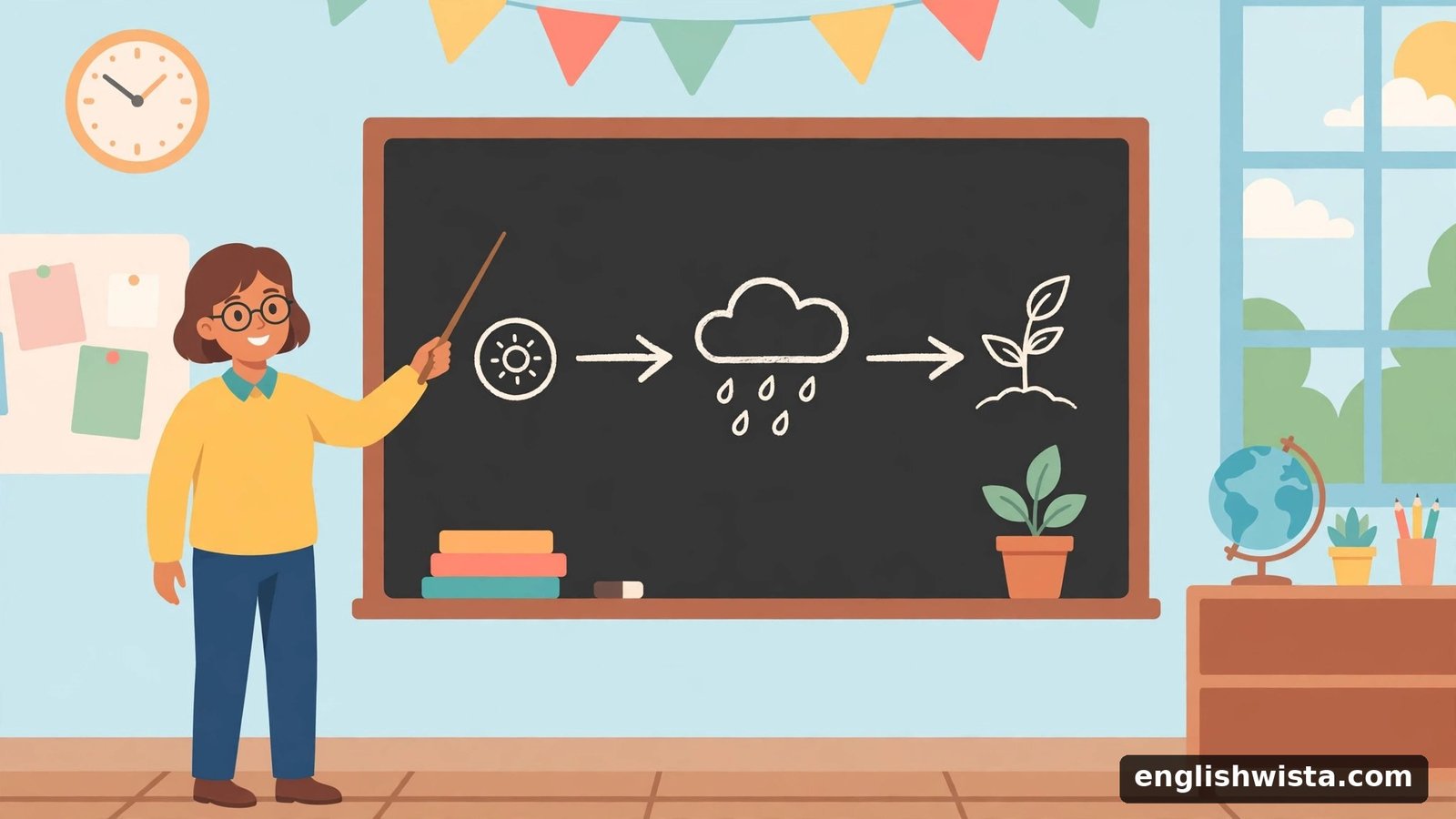
Think of it this way: things affect (act on) other things, and that produces an effect (a result).
Affect: The Action (Verb)
Use affect when something influences or changes something else. It is an action word.
- The rain affected our plans. (Changed them.)
- Stress can affect your health. (Influence it.)
- The news deeply affected her. (Moved/changed her feelings.)
- How will this decision affect us? (Influence us?)
If something is doing the influencing, it is affect.
Effect: The Result (Noun)
Use effect for the result or outcome of something.
- The medicine had a quick effect. (A result.)
- The effect of the rain was flooding. (The outcome.)
- His words had no effect on her. (No result.)
- The new law takes effect tomorrow. (Comes into force.)
If it is the thing that happened because of something, it is an effect.
The Easy Trick to Remember
Here is the famous trick that never fails — RAVEN:
- Remember: Affect = Verb, Effect = Noun.
Or even simpler: Affect = Action, Effect = End result.
Try it:
- “Smoking affects health.” — action! Correct!
- “The effect was terrible.” — result! Correct!
Action = affect. Result = effect. That is the whole secret!
Affect vs Effect in Example Sentences
Let us look at real-life pairs side by side:
- The heat affected the crops. / The effect was a poor harvest.
- Music affects my mood. / Music has a calming effect on me.
- The policy will affect everyone. / The policy’s effect is unclear.
In each pair, affect = the influencing action and effect = the result.
Common Mistakes to Avoid
Mistake 1: “Effect” for the action.
- Wrong: “The weather effected our trip.”
- Right: “The weather affected our trip.” (Action!)
Mistake 2: “Affect” for the result.
- Wrong: “The affect of the drug was drowsiness.”
- Right: “The effect of the drug was drowsiness.” (Result!)
Mistake 3: The rare exceptions. Effect can be a verb meaning “to bring about”: “The manager effected change.” And affect can be a noun in psychology (emotion display). These are formal/specialized — the RAVEN rule covers 95% of everyday English.
Frequently Asked Questions
What about “side effect”? Always effect (a result): “The drug’s side effects include headaches.”
Is it “affect” or “effect” in “personal effects”? Effects — belongings: “personal effects” (things that result from/belong to a person). A fixed phrase.
How are they pronounced? Very similarly: affect = “uh-FEKT,” effect = “ih-FEKT.” In fast speech they often sound identical — spelling is what matters.
Which one after “an” or “the”? Almost always effect (noun): “an effect,” “the effect.” Articles signal nouns!

Mini Quiz: Test Yourself
Choose affect or effect for each sentence.
- 1. Lack of sleep can _____ your memory.
- 2. The _____ of the storm was severe damage.
- 3. This change will _____ all students.
- 4. The medicine had no _____.
- 5. Loud music _____s my concentration.
Answers: 1. affect (action) 2. effect (result) 3. affect (action) 4. effect (result) 5. affects (action)
Quick Recap
- Affect = verb: to influence (A = Action).
- Effect = noun: the result (E = End result).
- RAVEN: Remember Affect Verb, Effect Noun.
- “Side effects” and “personal effects” always use effect.
- Rare exceptions: “effect change” (verb) and psychology “affect” (noun).
Conclusion
So, affect or effect? Now you know: affect is the action that influences, and effect is the result that follows. With RAVEN in your pocket, you will never mix them up again. Keep practicing with real sentences, and soon the right word will come to you automatically!