Have you heard someone say “he ghosted me” and wondered what it means? You are not alone! Ghosting is one of the most talked-about dating words of the social media age. It describes a painful — and very modern — way of ending contact. Today, we will explain exactly what ghosting means, when people use it, and how to use it yourself.
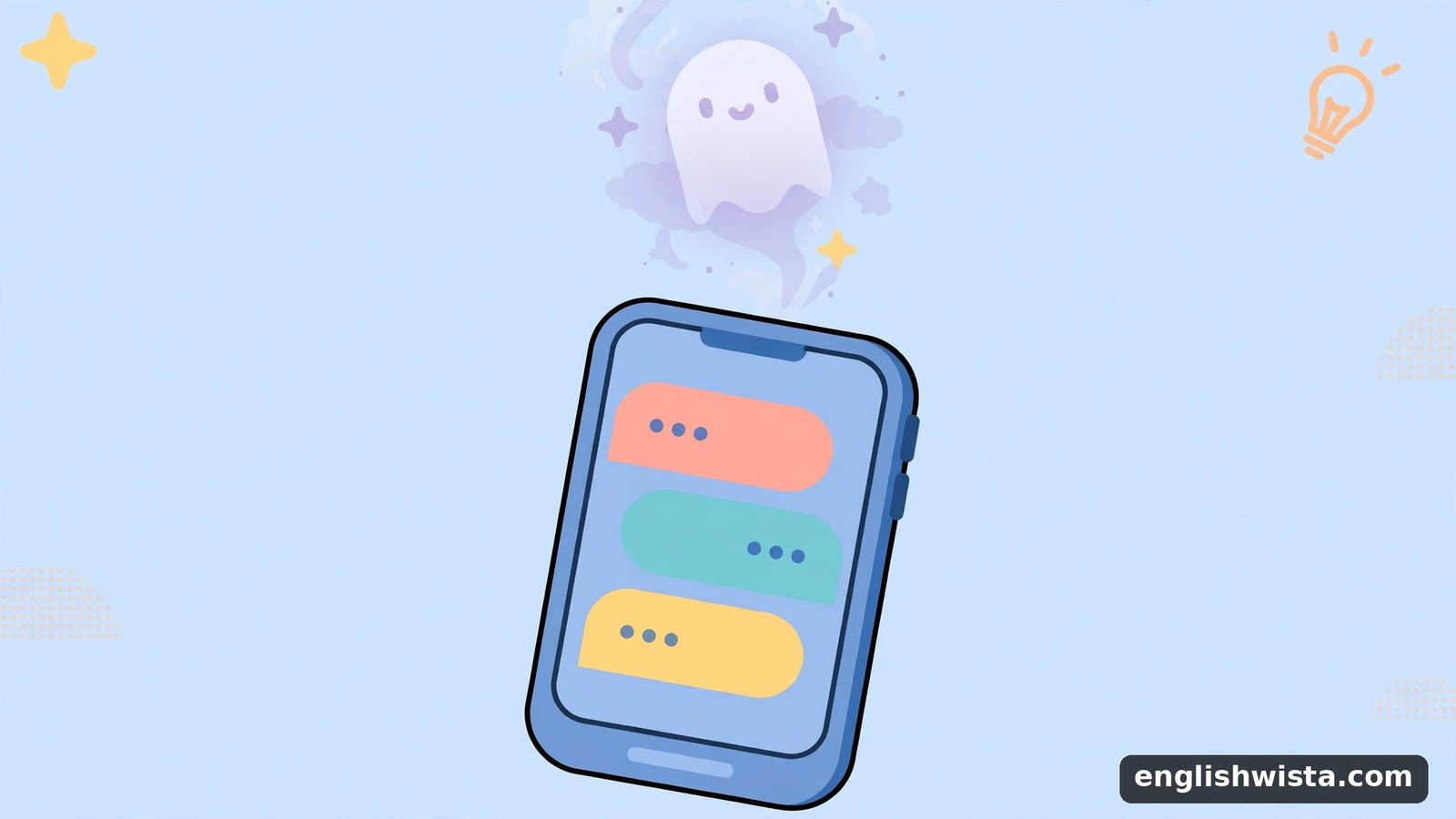
What Does Ghosting Mean?
Ghosting means suddenly cutting off all communication with someone, without any explanation — no replies, no calls, no goodbye. The person simply vanishes, like a ghost.
- It is a noun: “Ghosting is cruel.”
- It is also a verb: “He ghosted her after two dates.”
- It happens mostly in dating, but also with friends and even jobs.
Think of ghosting as: disappearing without a word.
How People Use Ghosting
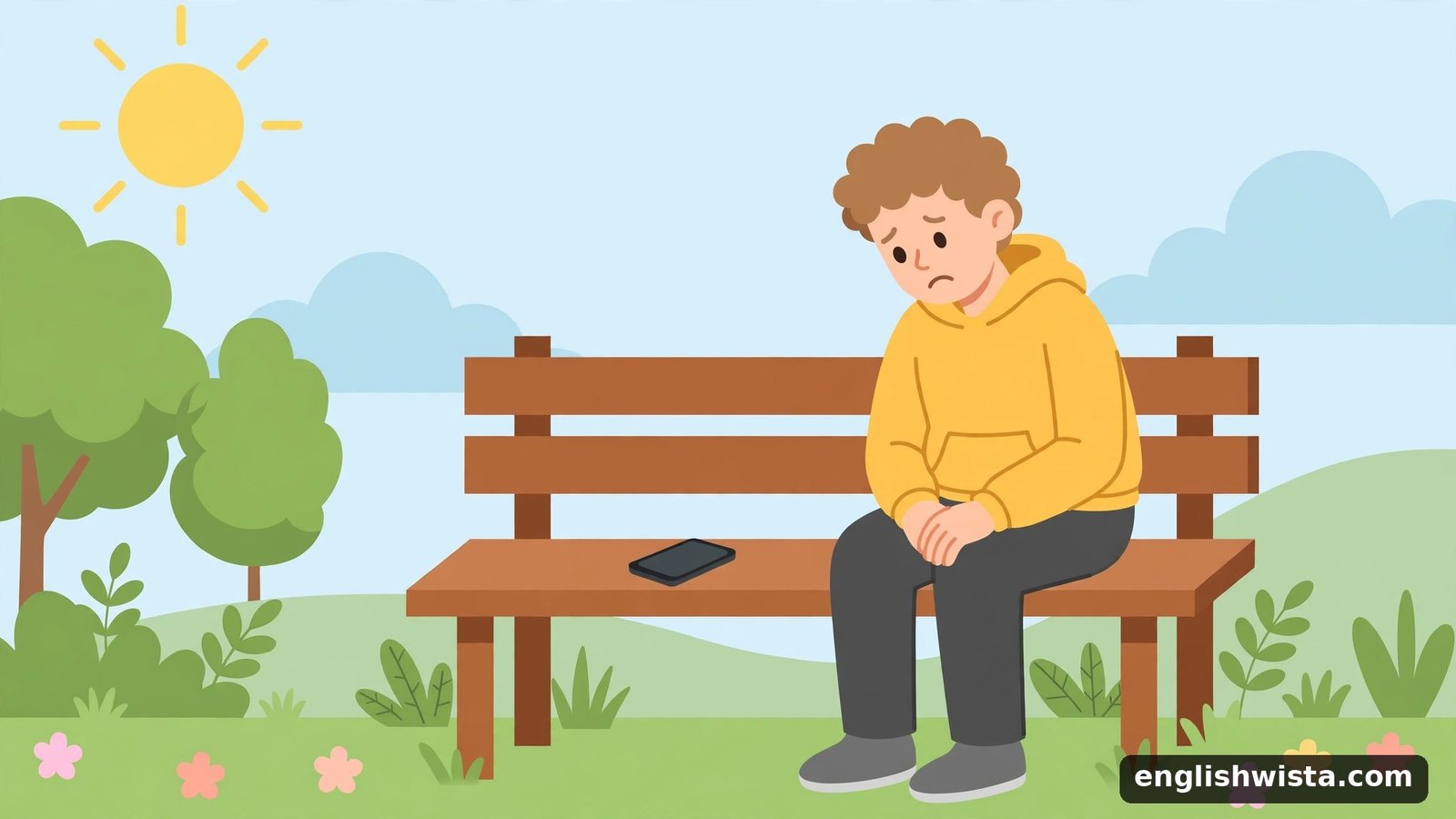
People use ghosting to describe the experience of being ignored into silence.
- “We were texting every day, then he just ghosted me.”
- “I hate ghosting — just tell me you’re not interested!”
- “She ghosted the group chat months ago.”
- “Getting ghosted after an interview is so frustrating.”
It is usually written in lowercase (ghosting).
Ghosting in Example Sentences
Let us look at how it sounds in real conversations:
- A: “How’s it going with Sam?” B: “He ghosted me last week.”
- “Ghosting someone instead of being honest is cowardly.”
- “Three days of silence — classic ghosting.”
- “She didn’t reply for a month. Total ghosting.”
Notice how ghosting always involves sudden, unexplained silence.
Where Did Ghosting Come From?
Ghosting grew up with texting and dating apps in the early 2010s.
- 2000s: “Ghost” as a verb (to vanish) existed in hip-hop slang.
- 2011–2015: Dating apps make sudden silence easy — the term spreads online.
- 2015: Major dictionaries add “ghosting.”
- Today: it covers jobs too — candidates and employers both “ghost.”
Fun fact: related terms include “caspering” (a friendly ghost — slowly fading with kind messages) and “zombie-ing” (a ghost who comes back from the dead!).
Ghosting vs Similar Terms
The internet has a whole family of fading-away words:
- Ghosting: total, sudden disappearance. No explanation.
- Breadcrumbing: sending occasional flirty messages to keep someone interested, with no real intent.
- Benching: keeping someone as a backup option while dating others.
- Slow fade: gradually replying less and less until contact dies.
Of them all, ghosting is the most abrupt — and the most famous.
Common Mistakes to Avoid
Mistake 1: Calling a slow reply “ghosting.” Someone busy for a day isn’t ghosting. Ghosting means complete, permanent silence with no explanation.
Mistake 2: Using it in formal writing.
- Wrong: “The applicant ghosted the company. — in a formal HR report”
- Right: “The applicant ceased communication without notice.”
Mistake 3: Confusing “ghosted” with “ignored once.” One missed text is nothing; ghosting is the full vanishing act.
Frequently Asked Questions
Is ghosting always about dating? No — friends, family, and jobs all get ghosted now. Recruiters complain candidates ghost; candidates complain employers do it too.
What is the person who ghosts called? Simply “a ghost” — “He turned out to be a ghost.” The victim is “the ghosted.”
Why do people ghost? Usually to avoid an awkward conversation. Psychologists say it’s easier — but much crueler — than an honest goodbye.
How do you pronounce it? “GOH-sting” — like the word “ghost” plus “-ing.”
Mini Quiz: Test Yourself
Choose the best answer for each question.
- 1. What does ghosting mean?
- 2. Where did ghosting become common?
- 3. Your date stops replying forever after 3 weeks of daily texts. That’s…?
- 4. True or false: one missed text is ghosting.
- 5. What is “zombie-ing”?
Answers: 1. Suddenly ending all communication without explanation 2. Dating apps / texting culture (2010s) 3. Ghosting 4. False — ghosting is total, permanent silence 5. When a ghost (someone who vanished) suddenly comes back

Quick Recap
- Ghosting = vanishing without explanation.
- Born in dating-app culture of the 2010s.
- Verb (“he ghosted me”) and noun (“ghosting hurts”).
- Related: breadcrumbing, benching, slow fade.
- Keep it casual — formal writing needs “ceased communication.”
Conclusion
So, what does ghosting mean? Vanishing like a ghost — no reply, no reason, no goodbye. Now you know where it came from, how to use it, and how it differs from its cousins. And if it happens to you: it says more about the ghost than about you.