Have you seen “that’s so cringe” in a comment and wondered what it means? You are not alone! Cringe names a feeling everyone knows: that full-body flinch when something is so awkward you feel it for someone else. Today, we will explain exactly what cringe means, when people use it, and how to use it yourself.
What Does Cringe Mean?
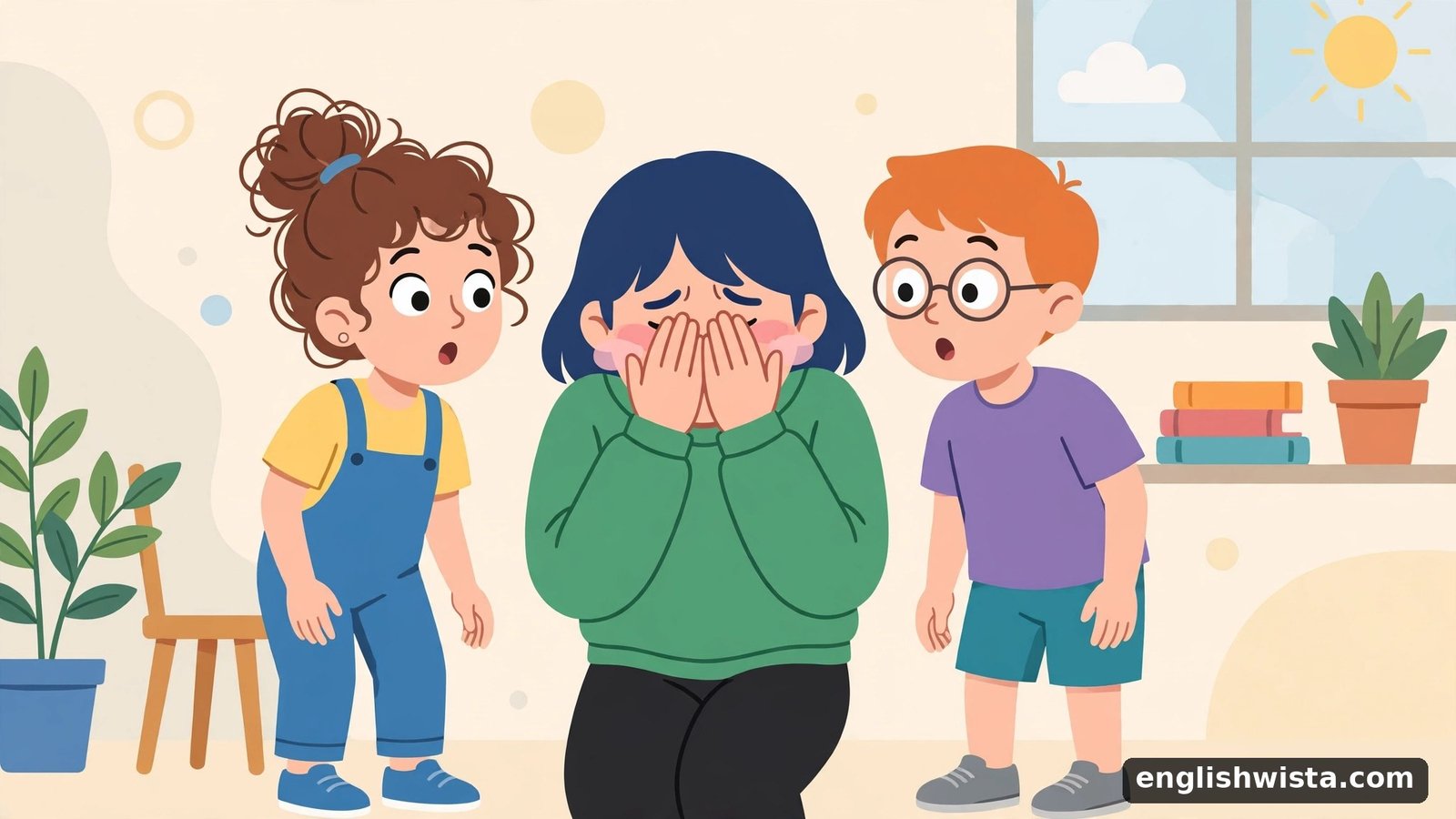
Cringe describes something so embarrassing or awkward that it makes you flinch — or the flinch itself. It is secondhand embarrassment as a word.
- As a noun: “That speech was pure cringe.”
- As an adjective: “His pickup line was cringe.” (Also: cringey.)
- As a verb: “I cringed watching it.”
Think of cringe as: embarrassment you can feel in your shoulders.
How People Use Cringe
People use cringe to react to awkward videos, failed jokes, and trying-too-hard moments.
- “That dance video is cringe.”
- “I cringe every time I read my old posts.”
- “Secondhand cringe is real.”
- “He really posted that? Cringe.”
It is usually written in lowercase (cringe).
Cringe in Example Sentences
Let us look at how it sounds in real conversations:
- A: “Watch me sing to the whole restaurant.” B: “Please no, the cringe…”
- “Her apology video was maximum cringe.”
- “I cringed so hard at my 2016 photos.”
- “That joke landed so badly — total cringe silence.”
Notice how cringe always involves watching awkwardness and feeling it yourself.
Where Did Cringe Come From?
The verb cringe is ancient — it meant physically shrinking back in fear. The slang meaning is an internet-era twist.
- Old English roots: “cringan” — to yield, shrink, or fall in battle.
- For centuries: cringe = flinching away physically, in fear or disgust.
- 2000s-2010s: Forums and Reddit (r/cringe) turn it into THE word for embarrassing content.
- 2020s: “Cringe” becomes the internet’s favorite judgment — and then, in a twist, proudly enjoying “cringe” things becomes cool too.
Fun fact: Gen Z humor now often embraces cringe ironically — “cringe is dead, be free” — sincerity is back.
The Cringe Family
Cringe built a whole vocabulary:
- Cringey/cringy: the adjective form — “a cringey video.”
- Cringe compilation: a video collecting painfully awkward clips.
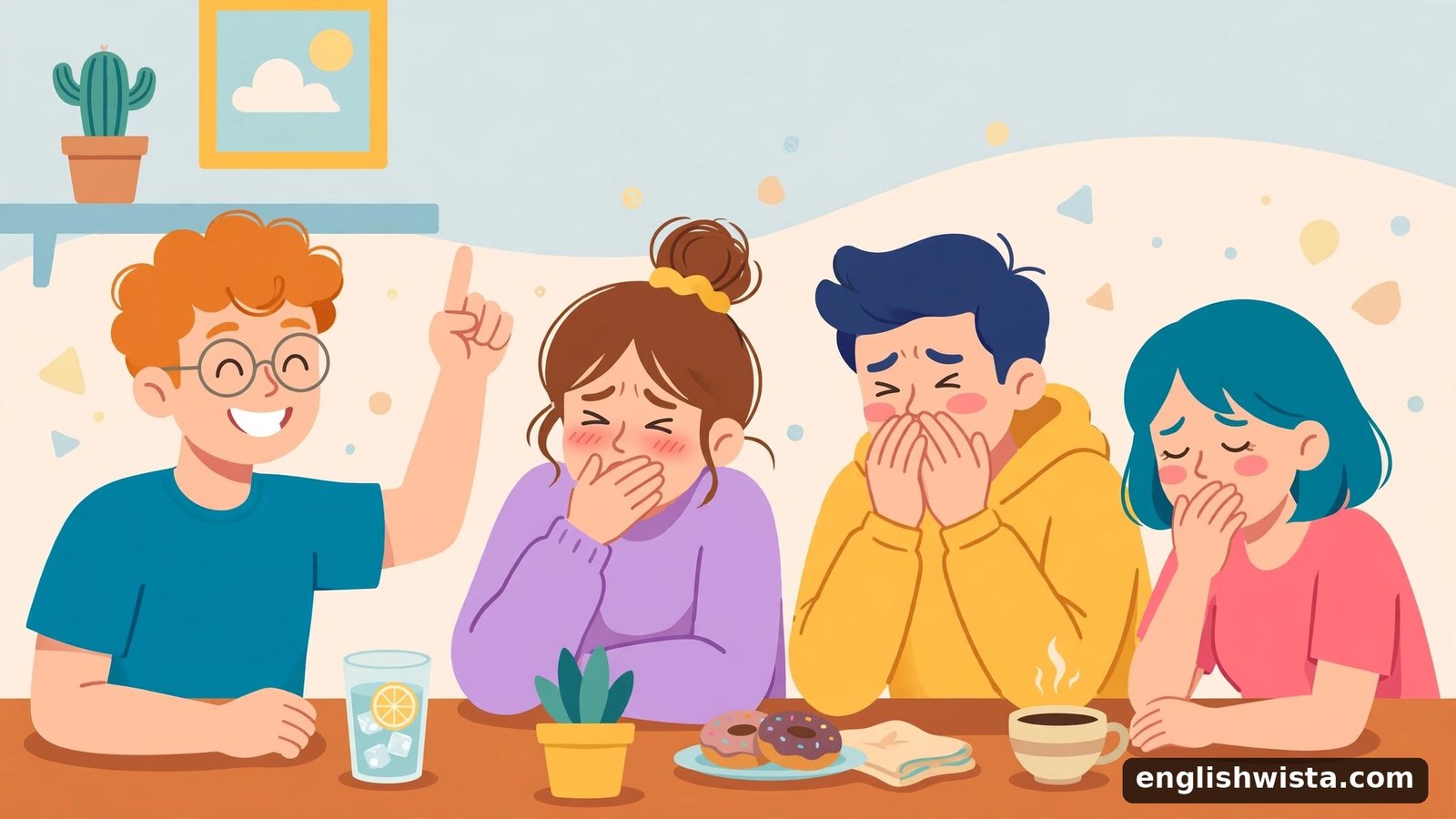
- Secondhand embarrassment: the feeling cringe creates — embarrassment FOR someone else.
- Cringe culture: the habit of mocking people’s earnest hobbies — increasingly called out as unkind.
If it makes you shrink into your chair, it belongs to the cringe family.
Common Mistakes to Avoid
Mistake 1: Using “cringe” for anything you merely dislike. Cringe is specifically about awkward embarrassment — a bad song isn’t cringe unless watching it makes you flinch for the performer.
Mistake 2: Using it in formal writing.
- Wrong: “The presentation was cringe. — in a work report”
- Right: “The presentation was uncomfortable and poorly received.”
Mistake 3: Confusing “cringe” with “cringeworthy.” Actually — good news — cringeworthy means the same thing (worthy of cringing) and is slightly more formal. Both are acceptable in casual writing.
Frequently Asked Questions
Is “cringe” a noun or adjective now? All of them! Modern slang uses cringe as noun (“pure cringe”), adjective (“so cringe”), and verb (“I cringed”). Flexibility is its superpower.
What is the opposite of cringe? Online, the opposite is based — confidently being yourself without shame. Cringe shrinks; based stands tall.
Why do people watch cringe content? Same reason people watch horror: a safe dose of a strong feeling. Secondhand embarrassment is weirdly entertaining — in small doses.
How do you pronounce it? “Krinj” — one syllable, ending like “hinge.”
Mini Quiz: Test Yourself
Choose the best answer for each question.
- 1. What does “cringe” mean in slang?
- 2. What does “secondhand embarrassment” mean?
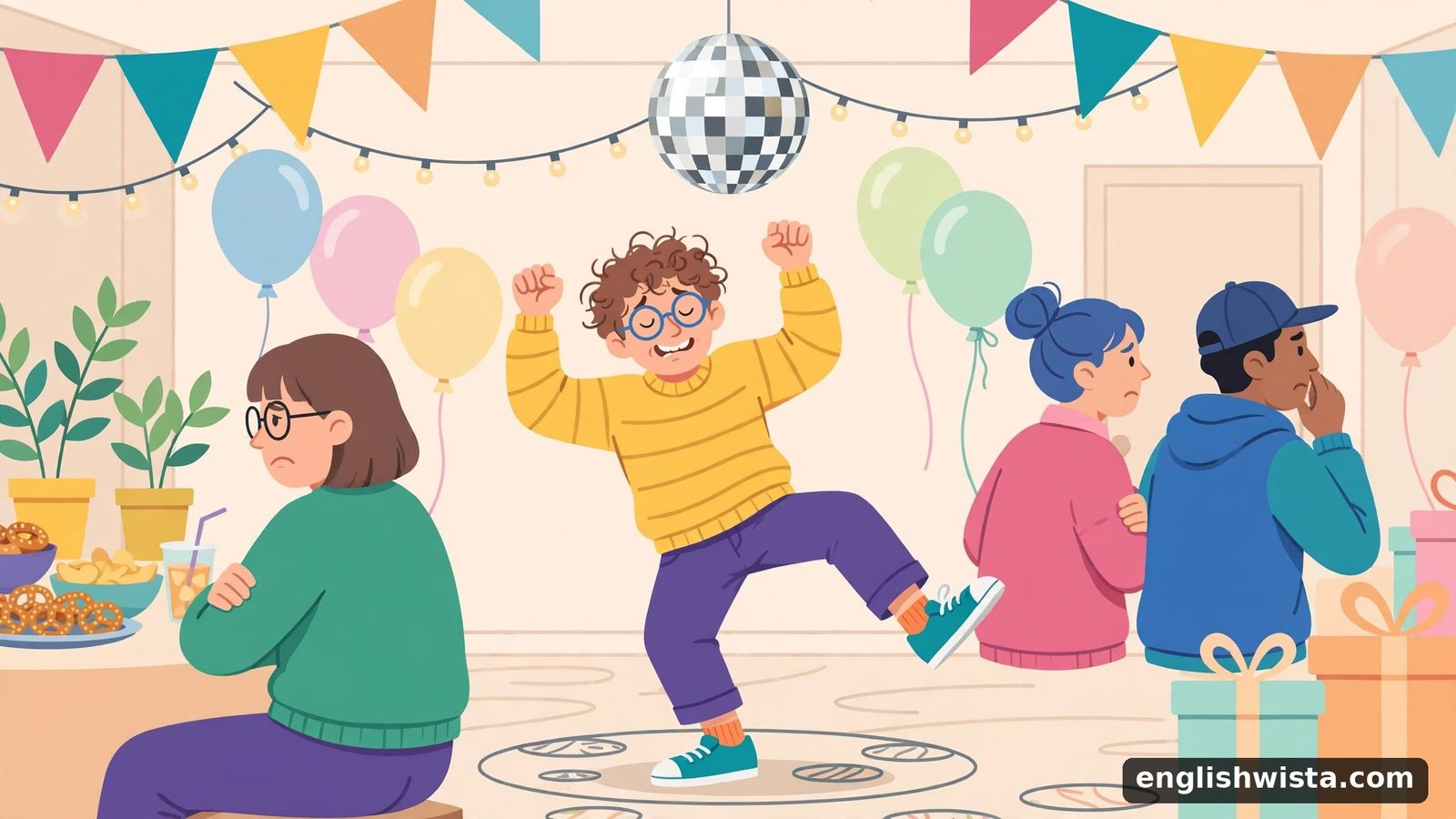
- 3. A singer forgets the words and freezes on stage. The video is…?
- 4. True or false: cringe can be a noun, adjective, and verb.
- 5. What slang word is cringe’s confident opposite?
Answers: 1. Something so awkward/embarrassing it makes you flinch 2. Feeling embarrassed for someone else 3. Cringe 4. True 5. Based
Quick Recap
- Cringe = awkward embarrassment that makes you flinch.
- Ancient verb (to shrink back), modern slang via forums/Reddit.
- Noun, adjective, and verb forms all work.
- Key flavor: secondhand embarrassment, not mere dislike.
- Keep it casual — and a little kind.
Conclusion
So, what does cringe mean? Awkwardness you can physically feel. Now you know where it came from, how to use it, and why the internet can’t stop watching it. May your own posts age gracefully!