Do you ever write “wake” and wonder if it should be “awake”? You are not alone! One is an action and the other is a state — and English loves to blur them (“wake up” vs “stay awake”). Today, we will clear it up once and for all with a simple state-vs-action rule.
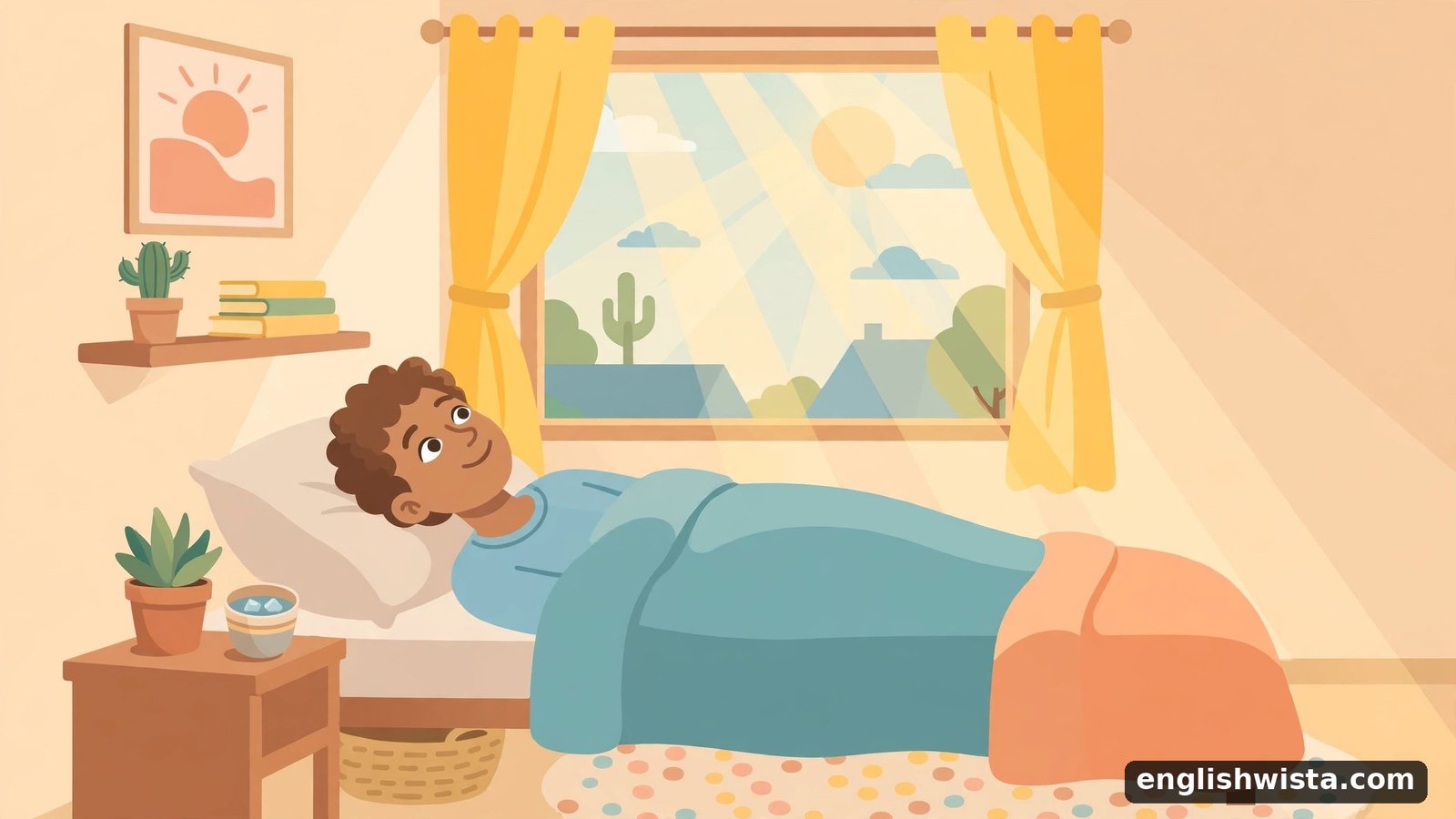
What Is the Simple Difference?
Here is the short answer you can use almost every time:
- Awake = the state of not sleeping — an adjective. (“I am awake.”)
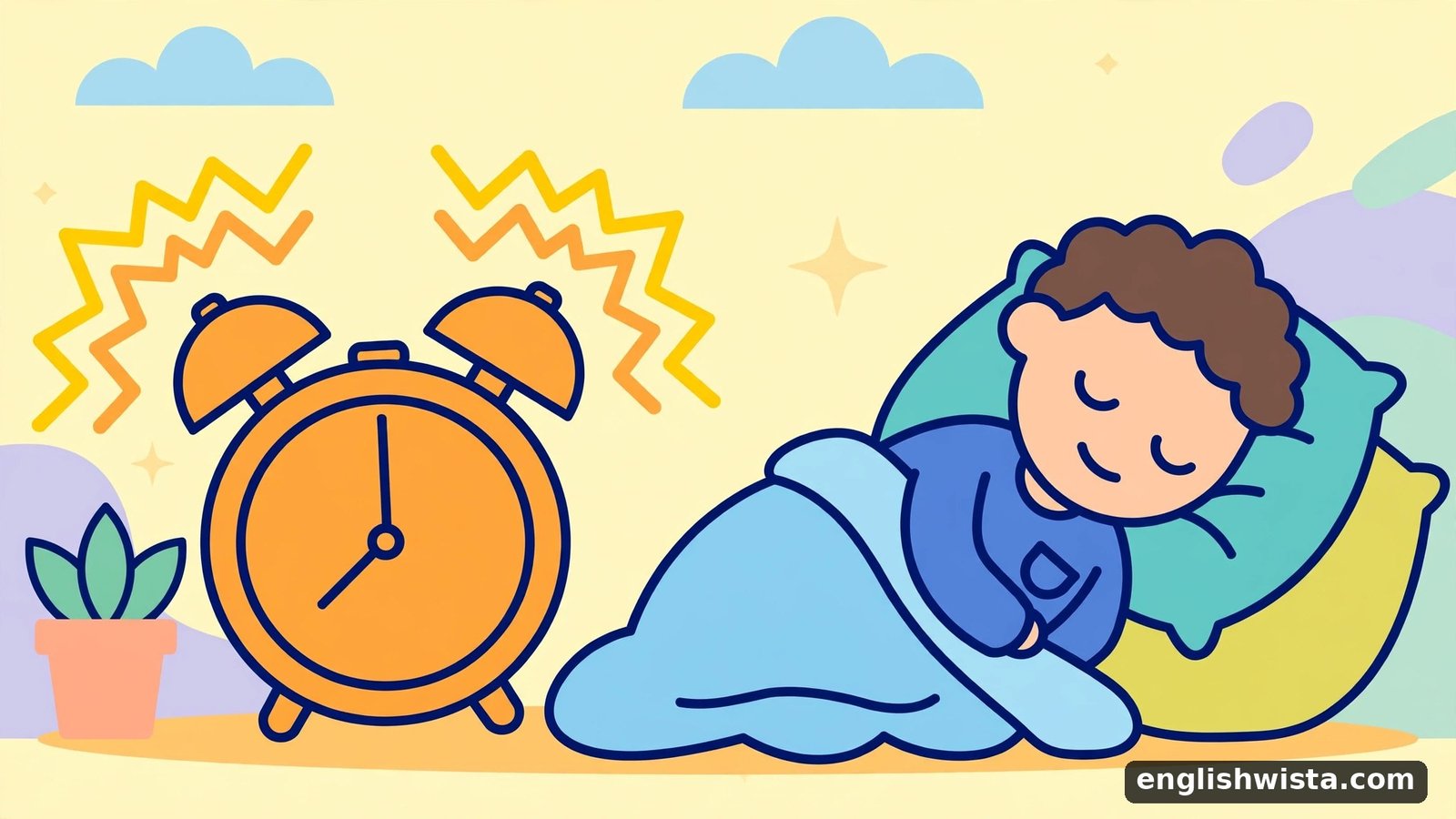
- Wake = the action of stopping sleep — a verb. (“Wake me at 7.”)
Think of it this way: wake is the alarm; awake is being up.
Awake: The State
Use awake (adjective) to describe someone who is not asleep — after “be,” “stay,” “lie,” or “keep.”
- I am awake now. (State: not sleeping.)
- She stayed awake all night. (State continued.)
- The baby is awake. (State: eyes open.)
- He lay awake thinking. (State: in bed, not sleeping.)
If it describes being up, it is awake.
Wake: The Action
Use wake (verb) for the act of ending sleep — your own or someone else’s. Usually with “up.”
- Wake me at 7. (Action: end my sleep.)
- I woke early today. (Action: I stopped sleeping.)
- The alarm woke her. (Action: it ended her sleep.)
- Wake up! (Command: stop sleeping!)
If sleep ends by action, it is wake.
The Easy Trick to Remember
Here is a trick that never fails — the grammar test:
- After “am/is/are/was/stay”? → adjective → awake.
- As the main action of the sentence? → verb → wake (or woke/woken).
Try it:
- “I am awake.” — after “am”! Correct!
- “I woke at 6.” — main action! Correct!
After “be” = awake. Main verb = wake. That is the whole secret!
Awake vs Wake in Example Sentences
Let us look at real-life pairs side by side:
- The noise woke me. / I stayed awake for an hour after.
- She wakes at dawn. / She is awake by 6.
In each pair, wake ends sleep and awake describes the result.
Common Mistakes to Avoid
Mistake 1: “I am wake.”
- Wrong: “I am wake now.”
- Right: “I am awake now.” (After “am,” use the adjective!)
Mistake 2: “Awake me.”
- Wrong: “Awake me at 8.”
- Right: “Wake me at 8.” (As a command verb, use wake!)
Mistake 3: Past form mix-ups. Wake → woke → woken (“I have woken up”). Awake → awoke → awoken as a verb too (“He awoke at dawn”) — but in modern English, “woke/woken” covers nearly everything; “awoke” sounds literary.
Frequently Asked Questions
What about “waken” and “awaken”? Both are verbs meaning “to wake” — “awaken” is the formal/literary twin: “The prince awakened Sleeping Beauty.” Everyday English: wake up.
Is “awake” also a verb? Yes, in formal writing: “He awoke to find snow.” But as a verb, modern speakers almost always say woke instead. Keep awake for the adjective job in daily English.
What is “wide awake”? Fully, alertly awake — the opposite of drowsy: “After that coffee, I was wide awake.” A fixed, emphatic phrase.
How are they pronounced? Awake = “uh-WAYK”; wake = “wayk” (same “wake” sound, with a soft “a-” prefix for awake).
Mini Quiz: Test Yourself
Choose awake or wake for each sentence.
- 1. I am _____ now, thanks.
- 2. Please _____ me before you leave.
- 3. She stayed _____ until midnight.
- 4. The baby _____ crying at 3 a.m.
- 5. He lay _____ listening to the rain.
Answers: 1. awake (after “am”) 2. wake (command verb) 3. awake (state after “stayed”) 4. woke (main action) 5. awake (state after “lay”)
Quick Recap
- Awake = adjective, the state of not sleeping.
- Wake = verb, the action of ending sleep (woke, woken).
- After “be/stay/lie” = awake; main action = wake.
- “Wake up” is the everyday phrasal verb.
- “Awaken” = the formal/literary twin.
Conclusion
So, awake or wake? Now you know: wake ends the sleep, and awake is the state that follows. With the grammar test in your pocket, you will never mix them up again. Keep practicing with real sentences, and soon the right word will come to you automatically!