
Do you ever stop in the middle of a sentence and wonder, “Should I say bring or take here?” You are not alone! These two little words cause big confusion, even for native English speakers. They both talk about carrying something from one place to another, so which one is right? Today, we will clear up the confusion once and for all with simple rules and easy examples you can actually remember.
Table of Contents
- What Is the Simple Difference?
- Bring: Movement Toward the Speaker
- Take: Movement Away from the Speaker
- The Easy Trick to Remember
- Bring or Take in Example Sentences
- Common Mistakes to Avoid
- Mini Quiz: Test Yourself
- Quick Recap
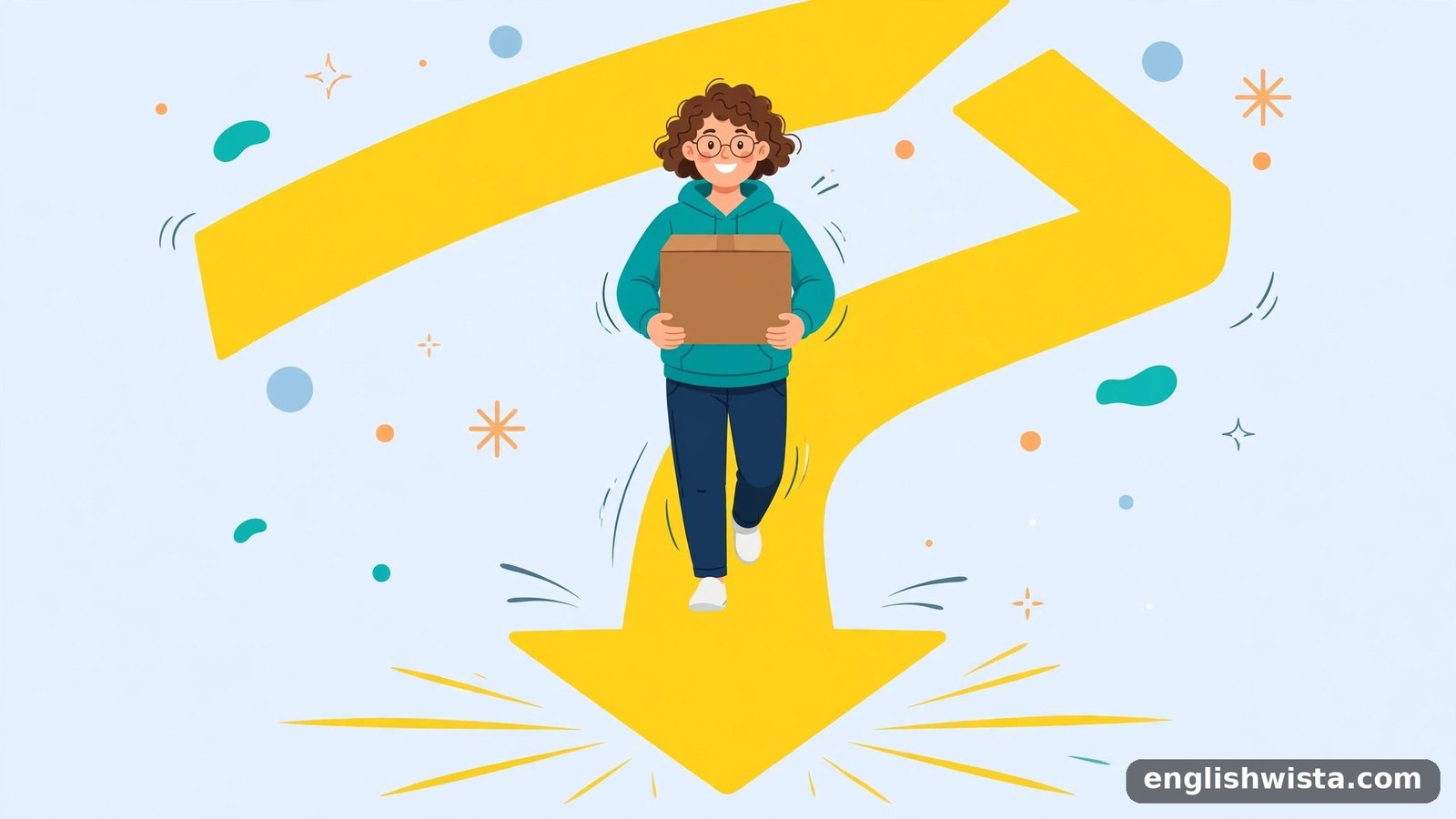
What Is the Simple Difference?
Here is the short answer you can use almost every time:
- Bring = carry something toward the speaker (toward “here”).
- Take = carry something away from the speaker (toward “there”).
Think of it this way: bring comes here, and take goes there. The direction depends on where you, the speaker, are.
Bring: Movement Toward the Speaker
Use bring when something moves toward you or toward the place where you are (or will be).
- Bring me a glass of water, please. (The water comes toward me.)
- Can you bring your notebook to class tomorrow? (The notebook comes to where I will be.)
- She brought her famous cake to the party. (The cake came to the party, where the speaker was.)
- Please bring an umbrella — it might rain. (Bring it here, to me.)
Notice the past tense: bring → brought → brought. It is an irregular verb, so do not write “bringed”!
Take: Movement Away from the Speaker
Use take when something moves away from you or away from the place where you are.
- Take this letter to the post office. (The letter goes away from me.)
- He took his dog to the park. (The dog went away with him, to the park.)
- Do not forget to take your keys when you leave. (Take them away from here.)
- She takes the bus to work every day. (She goes away from home to work.)
The past tense is take → took → taken. Another irregular verb to memorize!
The Easy Trick to Remember
Here is a trick that never fails. Ask yourself: is it coming HERE or going THERE?
- Coming here (toward me) → bring
- Going there (away from me) → take
Try it with this pair:
- “Bring your friend to my house.” (Your friend comes here, to my house.)
- “Take your friend to the station.” (Your friend goes there, away from me.)
Same friend, different direction — and that is the whole secret!
Bring or Take in Example Sentences
Let us look at more real-life pairs side by side:
- Please bring the report to my office. / Please take the report to the manager’s office.
- Bring me the menu, please. / Take the dirty dishes to the kitchen.
- He brought flowers for his mother. / He took flowers to the hospital for his friend.
- Will you bring your guitar to the picnic? / Will you take your guitar to the repair shop?
In each pair, bring points toward the speaker and take points away.
Common Mistakes to Avoid
Mistake 1: Using “bring” for both directions. Some learners say “bring” for everything. Remember: if it goes away from you, use take.
- Wrong: “Bring this box to the storage room.” (said by someone staying behind)
- Right: “Take this box to the storage room.”
Mistake 2: Forgetting the irregular past tenses.
- Wrong: “He bringed the documents yesterday.”
- Right: “He brought the documents yesterday.”
- Wrong: “She taked her umbrella.”
- Right: “She took her umbrella.”
Mistake 3: Mixing up the direction in questions. When you invite someone, the thing comes toward you, so use bring: “Can you bring some snacks tonight?”
Frequently Asked Questions
Can “bring” and “take” be used for future plans? Yes! Direction still decides. “I will bring snacks to the party” (the snacks come to where I will be). “I will take my laptop to the office” (the laptop goes away with me).
What does “take after” mean? This phrasal verb has nothing to do with carrying. “She takes after her mother” means she resembles her mother. Do not confuse it with the direction rule.
Can I use “bring” for non-physical things? Absolutely. “The news brought joy to everyone” — here “bring” means “cause,” and the joy comes to the people. Similarly, “take” can mean “require”: “This job takes patience.”
Which is correct: “bring it here” or “take it here”? “Bring it here” — the word “here” signals movement toward the speaker, so bring is right. For the opposite direction, say “take it there.”
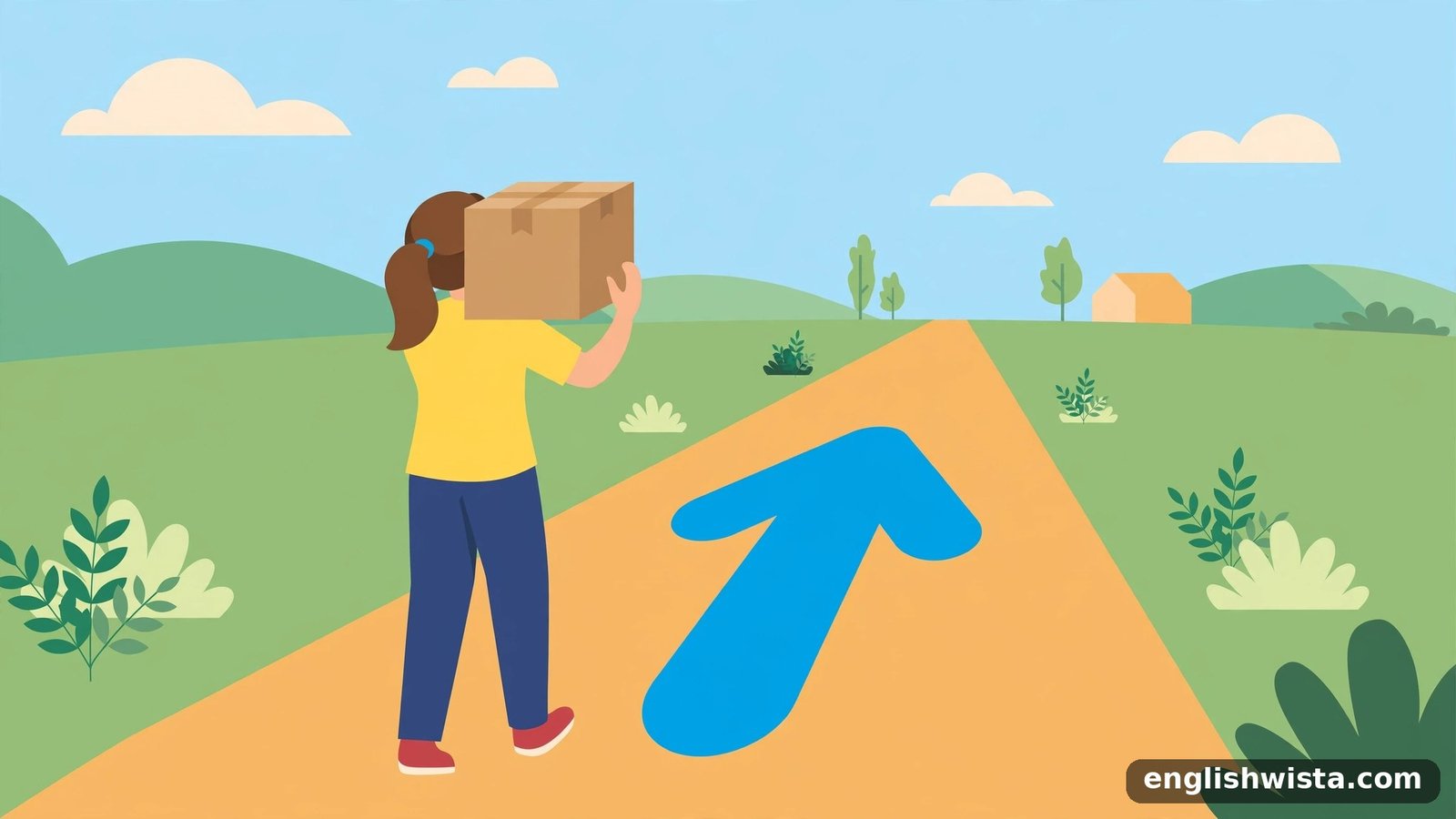
Mini Quiz: Test Yourself
Choose bring or take for each sentence.
- 1. Please _____ me your phone charger. I forgot mine.
- 2. Do not forget to _____ your lunch to school.
- 3. She _____ her little brother to the zoo yesterday.
- 4. Can you _____ the cake out of the oven? It is here in the kitchen with me.
- 5. He _____ a gift for the host when he visited.
Answers: 1. bring (the charger comes toward me) 2. take (the lunch goes away to school) 3. took (she went away to the zoo) 4. take (“take out” is a fixed phrase meaning to remove something) 5. brought (the gift came with him to the visit)
Quick Recap
- Bring = carry toward the speaker (bring → brought → brought).
- Take = carry away from the speaker (take → took → taken).
- The trick: coming here = bring, going there = take.
- Both are irregular verbs — memorize the past forms.
- Watch out for fixed phrases like “take out” and “take away.”
Conclusion
So, bring or take? Now you know: it all depends on direction. If something comes toward you, bring it. If it goes away from you, take it. With the “here or there” trick in your pocket, you will never mix them up again. Keep practicing with real sentences, and soon it will feel completely natural!