Have you seen “pore” and “pour” and wondered which one is the rain? You are not alone! These two words sound the same but mean very different things. Today, we will explain exactly what pore vs pour means, with a simple trick to remember it forever.

What Is the Simple Difference?
Pore is a noun/verb — a tiny opening in skin, or to study something closely.
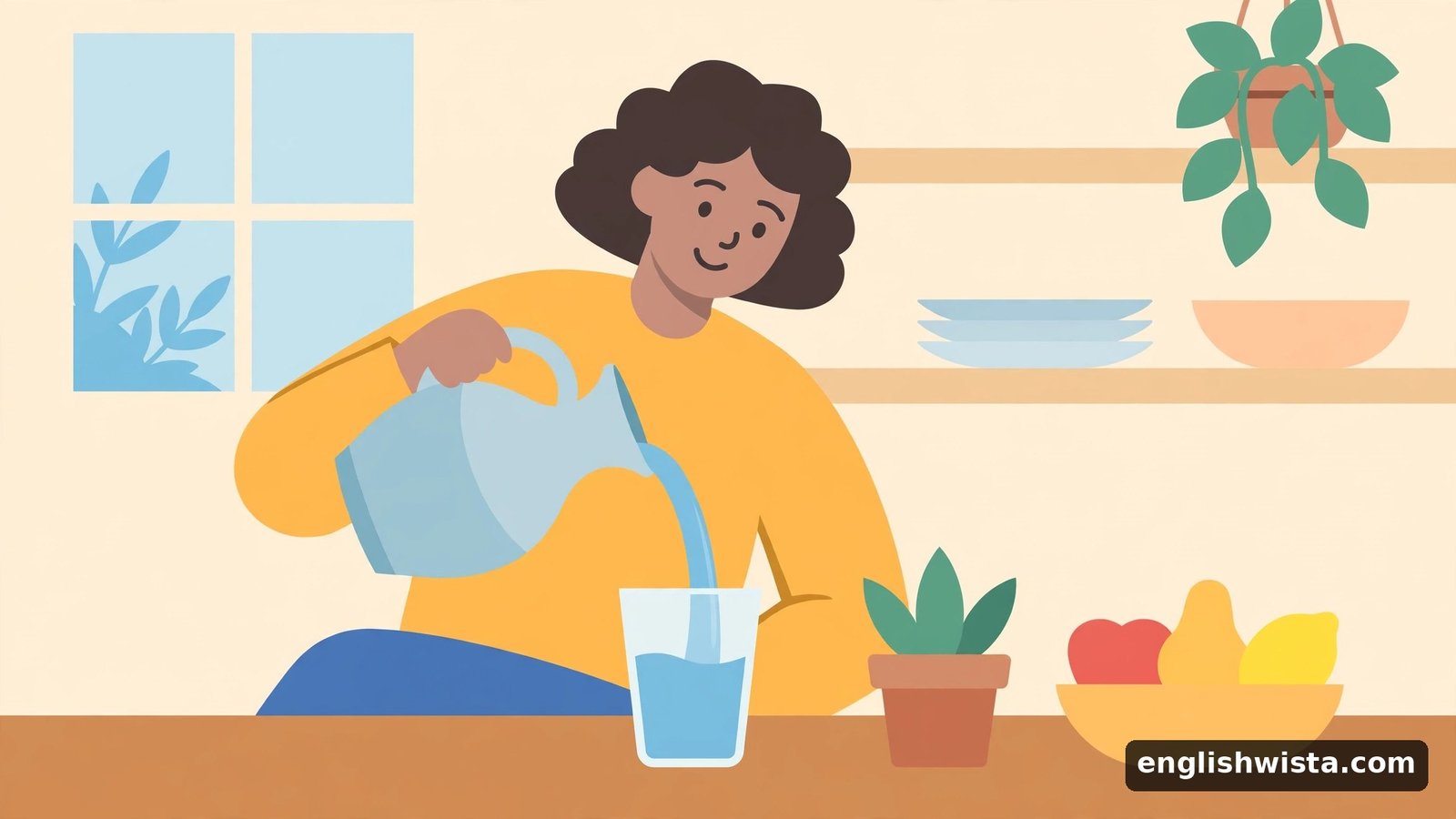
Pour is a verb — to make liquid flow, or to rain heavily.
- Pore = tiny hole (skin) or reading closely.
- Pour = flowing liquid (water, rain).
Think of it this way: sweat comes out of pores, but you pour water into a glass.
Pore: Tiny Openings (and Close Reading)
Pore has two meanings:
- Skin openings: “Sweat escapes through your pores.”
- Studying closely: “She pored over the report all night.” (pore over = read very carefully)
Note: “pore over” (study) is always spelled PORE, never pour!
Pour: Flowing Liquid
Pour means to cause liquid to flow — or rain falling hard.
- “Please pour me a glass of water.”
- “It poured with rain all day.” (heavy rain)
- “She poured the sauce over the pasta.”
If liquid is flowing, it is pour.
The Easy Trick to Remember
- Pour has OU — like “OUT”! Liquid goes OUT of the jug when you pour.
- Pore has O — like the tiny round “O” openings in your skin!
OU = OUT (pour). O = openings (pores). That is the whole trick!
Example Pairs
- Pore: “Clean skin has clear pores.” / Pour: “Pour the milk slowly.”
- Pore: “He pored over the map.” / Pour: “Rain poured down all night.”
- Pore: “Her pores opened in the heat.” / Pour: “She poured tea for everyone.”
Common Mistakes to Avoid
Mistake 1: Writing “pour over” for studying.
- Wrong: “She poured over the documents.”
- Right: “She pored over the documents.”
Mistake 2: Writing “pore” for liquid.
- Wrong: “Pore me some juice, please.”
- Right: “Pour me some juice, please.”
Mistake 3: Thinking “pore” is only about skin. “Pore over” (study closely) is just as common — and just as often misspelled!
Frequently Asked Questions
Is “pouring rain” spelled with OU? Yes — “It is pouring outside” always uses pour (liquid falling).
What does “pore over” come from? Old English “porian” (to gaze at) — it means staring closely at something, like reading every word.
How do you pronounce them? Both sound the same: “POR.” Only spelling tells them apart.
Mini Quiz: Test Yourself
Choose the best answer for each question.
- 1. Sweat leaves the body through ______.
- 2. Please ______ the water into the pot.
- 3. “She ______ over the contract for hours” — studying closely.
- 4. True or false: “pour over” means study carefully.
- 5. What does OU in pour remind you of?
Answers: 1. pores 2. pour 3. pored 4. False — it is “pore over” 5. OUT (liquid goes out)

Quick Recap
- Pore = tiny skin opening, or study closely (pore over).
- Pour = make liquid flow, or rain heavily.
- Trick: OU = OUT (pour); O = openings (pores).
- They sound identical — spelling is the only difference.
Conclusion
So, pore vs pour: pores are the tiny openings, pour is the flowing liquid. Remember OUT and openings, and you will never mix them up again!