Do you ever write “desert” and wonder if it should be “dessert”? You are not alone! These two differ by just one letter S, but one is a hot sandy wasteland and the other is a sweet treat after dinner. Today, we will clear it up once and for all with a simple rule and easy examples you can actually remember.
What Is the Simple Difference?
Here is the short answer you can use almost every time:
- Desert (one S) = a dry, sandy land with little water.
- Dessert (two S’s) = the sweet course eaten after a meal.
Think of it this way: nobody wants seconds of a desert, but everyone wants seconds of dessert!
Desert: Dry Land
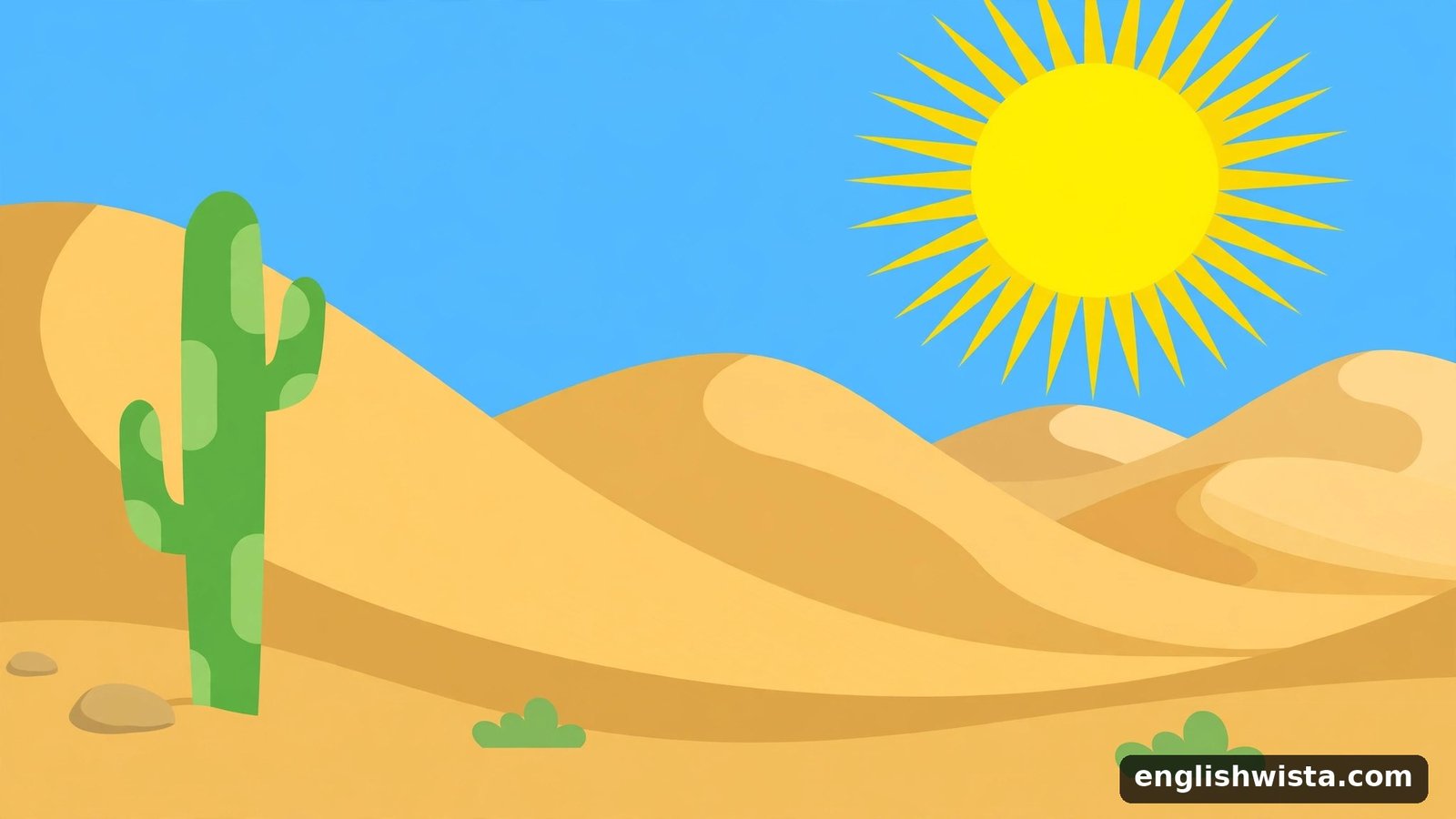
Use desert for a dry region with sand, heat, and very little rain.
- The Sahara is the largest hot desert. (Dry land.)
- Camels survive in the desert. (Sandy region.)
- The desert is freezing at night. (The dry place.)
Warning: desert is also a verb meaning “to abandon” (pronounced de-ZERT): “Soldiers must not desert their posts.” Same spelling, different word!
Dessert: Sweet Treat
Use dessert for the sweet food served at the end of a meal.
- Ice cream is my favorite dessert. (Sweet treat.)
- What’s for dessert tonight? (The sweet course.)
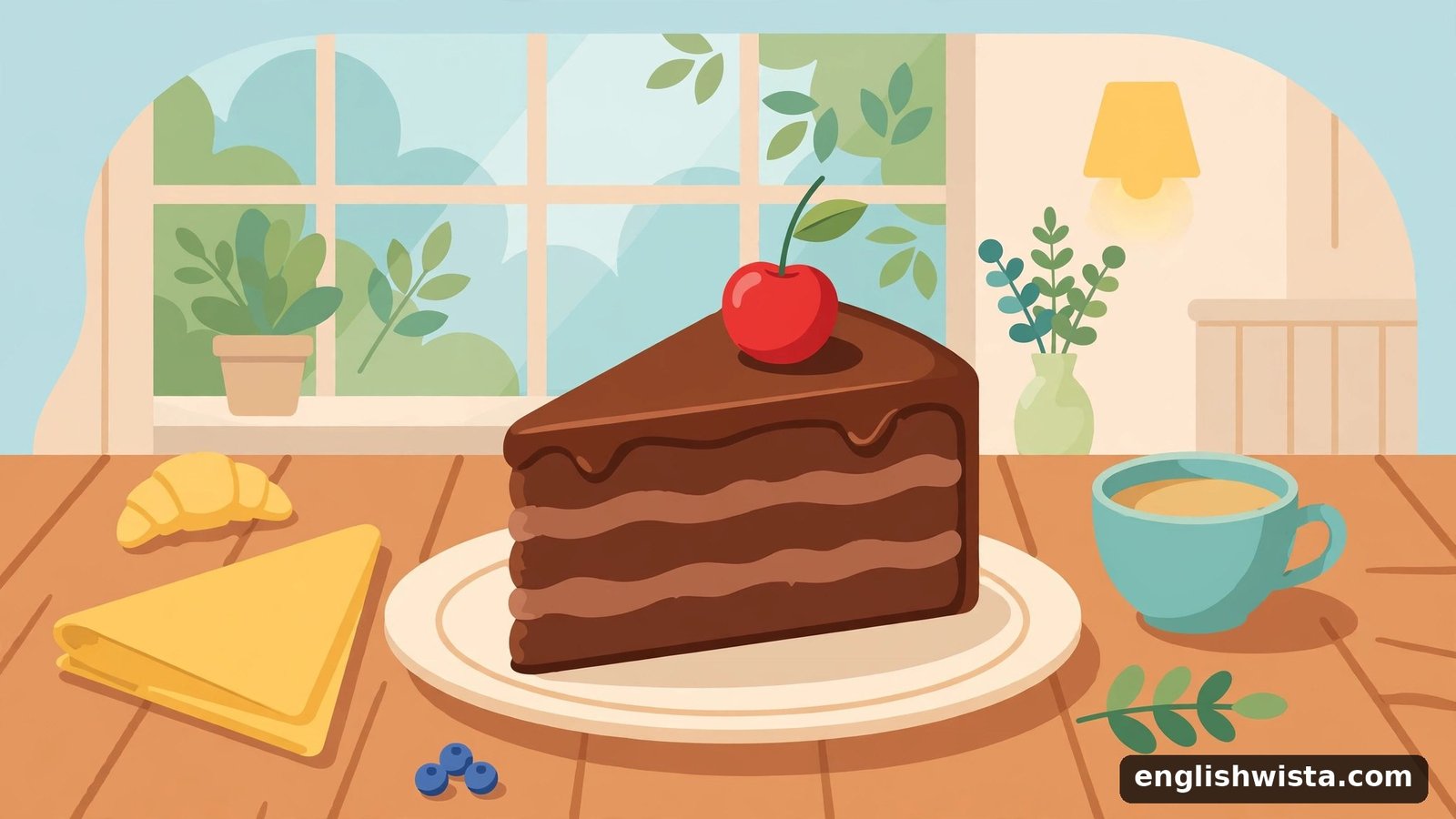
- She ordered chocolate cake for dessert. (Sweet ending.)
If it is sweet and served after dinner, it is dessert.
The Easy Trick to Remember
Here is the classic trick that never fails:
- Dessert has two S’s — because you always want two servings (seconds) of something sweet!
- Desert has one S — because nobody wants even one trip to the dry, empty desert.
Or think of Strawberry Shortcake — a dessert with two S’s!
Try it:
- “Cake for dessert.” — two S’s, sweet! Correct!
- “Lost in the desert.” — one S, sand! Correct!
Seconds = dessert. Sand = desert. That is the whole secret!
Desert vs Dessert in Example Sentences
Let us look at real-life pairs side by side:
- The desert has almost no rain. / The dessert has lots of sugar.
- Cacti grow in the desert. / Cake is served as dessert.
- A dry desert island. / A sweet dessert menu.
In each pair, desert = dry land and dessert = sweet treat.
Common Mistakes to Avoid
Mistake 1: One S for the sweet course.
- Wrong: “What’s for desert?”
- Right: “What’s for dessert?” (Two S’s — seconds!)
Mistake 2: Two S’s for the sandy place.
- Wrong: “The Sahara Dessert is huge.”
- Right: “The Sahara Desert is huge.” (One S — sand!)
Mistake 3: The famous phrase. “Just deserts” (what someone deserves, good or bad) is spelled with ONE S — it comes from the verb desert (what is deserted/deserved), not the sweet course! “He got his just deserts.”
Frequently Asked Questions
Why is the verb “desert” pronounced differently? The noun desert (land) is “DEZ-ert” (stress first). The verb desert (abandon) is “de-ZERT” (stress second) — same stress as dessert “de-ZERT.” Context tells you which is meant.
Is a “desert island” really dry? Not necessarily! “Desert island” uses desert in its older sense of “deserted/uninhabited” — a tropical island with no people. Still spelled with one S.
What are “desert boots”? Suede boots named after the desert (one S) — soldiers wore them in desert campaigns.
Can “dessert” ever have one S? Never. The sweet course is always, always dessert with two S’s.
Mini Quiz: Test Yourself
Choose desert or dessert for each sentence.
- 1. The _____ is home to camels and cacti.
- 2. Apple pie is a classic _____.
- 3. Never _____ your friends in trouble. (verb)
- 4. She skipped _____ to save calories.
- 5. The _____ heat was unbearable.
Answers: 1. desert (dry land) 2. dessert (sweet) 3. desert (abandon) 4. dessert (sweet) 5. desert (dry land)
Quick Recap
- Desert (1 S) = dry sandy land; also a verb = abandon.
- Dessert (2 S’s) = sweet course after a meal.
- The trick: two S’s = two servings of something sweet.
- “Just deserts” (deserved fate) = one S.
- Dessert NEVER has one S.
Conclusion
So, desert or dessert? Now you know: cross the desert (one S) and save room for dessert (two S’s). With the seconds trick in your pocket, you will never mix them up again. Keep practicing with real sentences, and soon the right word will come to you automatically!