Have you ever mixed up “coarse” and “course”? They sound exactly the same, but their meanings could not be more different! One describes rough things, and the other describes a path or a class. Today, we will explain exactly what coarse vs course means, with a simple trick to remember it forever.
What Is the Simple Difference?
Coarse is an adjective — it describes something rough, uneven, or not smooth.
Course is a noun (sometimes a verb) — it means a path, a route, a class, or a part of a meal.
- Coarse = rough texture (describes a thing).
- Course = a path, a class, or a meal step (a thing you follow).
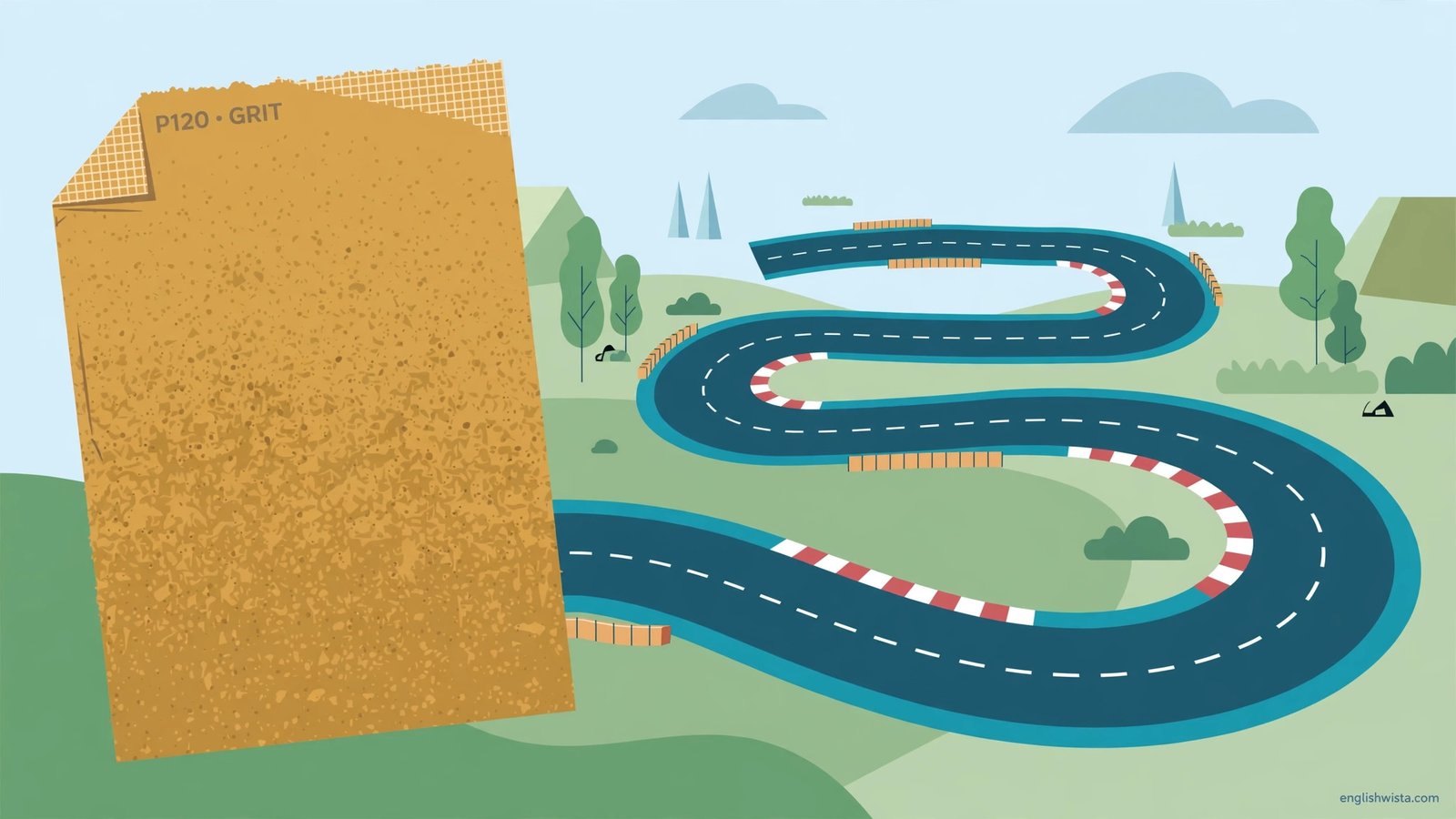
Think of it this way: sandpaper is coarse, but a golf game happens on a course.
Coarse: The Rough One
Coarse means rough or uneven in texture — the opposite of smooth. It can also describe rude or crude behavior.
- “The coarse sand hurt my feet.”
- “Use a coarse brush to clean the wood.”
- “His coarse language shocked everyone.” (rude)
If it means “rough,” it is spelled C-O-A-R-S-E — coarse.
Course: The Path One
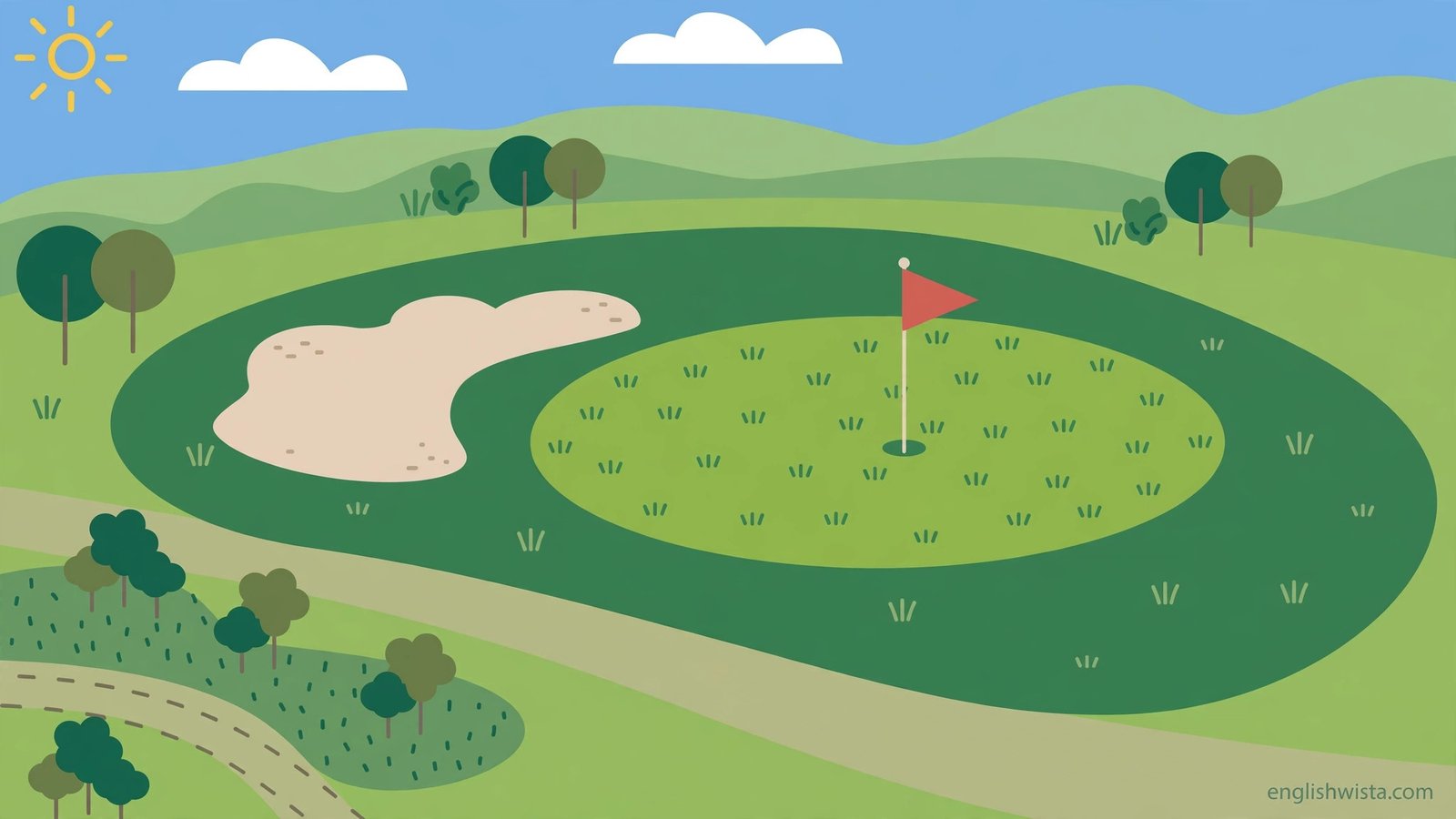
Course means a path or route (golf course), a series of lessons (English course), or one dish of a meal (main course). As a verb, it means to flow or move quickly.
- “We played nine holes on the golf course.”
- “She is taking an online course in English.”
- “The main course was chicken and rice.”
- “Tears coursed down her cheeks.” (flowed — verb)
If it means “path, class, or meal part,” it is spelled C-O-U-R-S-E — course.
The Easy Trick to Remember
- Coarse (rough) has an A — think of the A in “brasive,” which also means rough.
- Course (path) has a U — think of “you follow a path,” or the U in “route.”
A for abrasive (coarse); U for route (course). That is the whole trick!
Example Pairs
- Coarse: “The rope has a coarse texture.” / Course: “The river changed its course.”
- Coarse: “She used coarse salt for the pasta water.” / Course: “The main course was pasta.”
- Coarse: “His shirt was made of coarse fabric.” / Course: “She finished her training course.”
Common Mistakes to Avoid
Mistake 1: Writing “course” when you mean rough texture.
- Wrong: “The sandpaper has a very course surface.”
- Right: “The sandpaper has a very coarse surface.”
Mistake 2: Writing “coarse” when you mean a class or path.
- Wrong: “I signed up for an English coarse.”
- Right: “I signed up for an English course.”
Mistake 3: Confusing “of course” with “coarse.” “Of course” means “certainly” — it always uses “course” (the path word), never “coarse.”
Frequently Asked Questions
Are “coarse” and “course” pronounced the same? Yes — both sound like “kors.” Spelling is the only difference.
What does “of course” mean? It means “certainly” or “yes, naturally.” It is always spelled with “course.”
Can “course” be a verb? Yes — “to course” means to flow or run quickly, as in “water coursed down the hill.”
Mini Quiz: Test Yourself
Choose the best answer for each question.
- 1. The beach sand was too ______ for comfortable walking.
- 2. He is taking a photography ______ this summer.
- 3. Which word means “rough in texture”?
- 4. True or false: “Of coarse, I will help you” is spelled correctly.
- 5. The ______ of the race went through the mountains.
Answers: 1. coarse 2. course 3. coarse 4. False — it is “of course” 5. course
Quick Recap
- Coarse = rough, not smooth (adjective).
- Course = a path, a class, or a part of a meal (noun).
- Trick: A is for abrasive (coarse); U is for route (course).
- Both are pronounced “kors” — spelling is the only difference.
Conclusion
So, coarse vs course: coarse describes rough things like sandpaper, and course describes a path, a class, or a meal step. Remember the A for abrasive, and you will never mix them up again!