Continual and continuous look almost the same, but their meanings are completely different. One means on-and-off, and the other means non-stop. One describes things that keep repeating with breaks, and the other describes something that never pauses. This simple guide will help you understand the difference with easy examples, a memory trick, and a mini quiz.
What Is the Simple Difference?
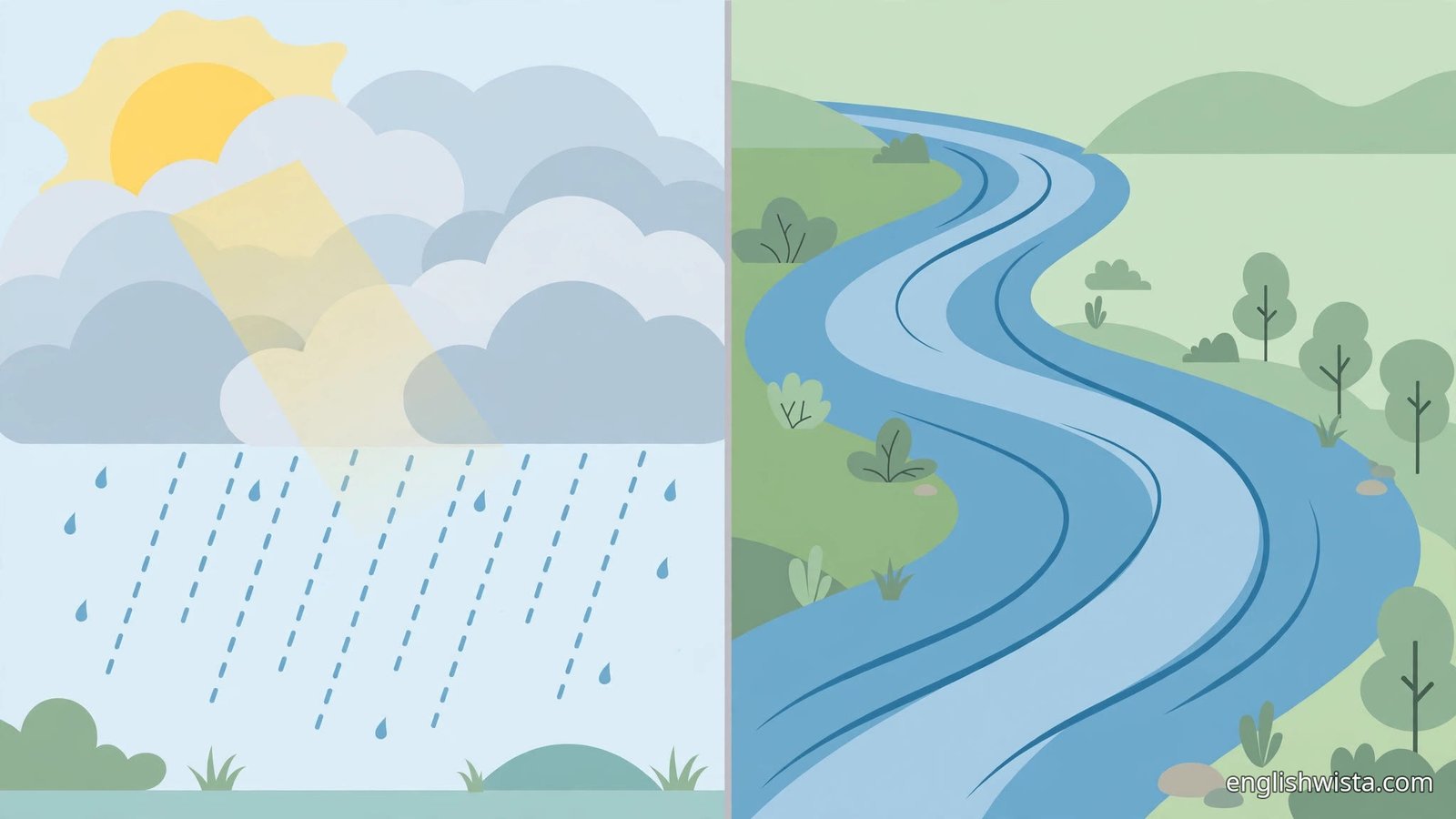
The simple difference is this: continual means happening again and again with breaks in between — it starts and stops. Continuous means going on without any break — one unbroken stretch. So the continual ringing of a phone is annoying because it keeps starting again, but a continuous line has no gaps at all. Remember: continual = repeatedly, continuous = unbroken.
Continual: The On-and-Off Word
Continual describes something that happens repeatedly over time but with pauses in between. It stops and starts again and again.
- The continual ringing of the phone annoyed everyone in the office.
- He was tired of the baby’s continual crying through the night.
- The continual rain showers ruined our weekend plans.
Continuous: The Non-Stop Word
Continuous describes something that goes on without stopping or breaking. It is one smooth, unbroken stretch from start to finish.
- The continuous hum of the engine kept him awake all night.
- Draw a continuous line without lifting your pen from the paper.
- They drove for six continuous hours without a break.
The Easy Trick to Remember
- Continual has an “a” — for “again and again”. It keeps coming back after a pause.
- Continuous has a “u” — for “unbroken”. It never stops.
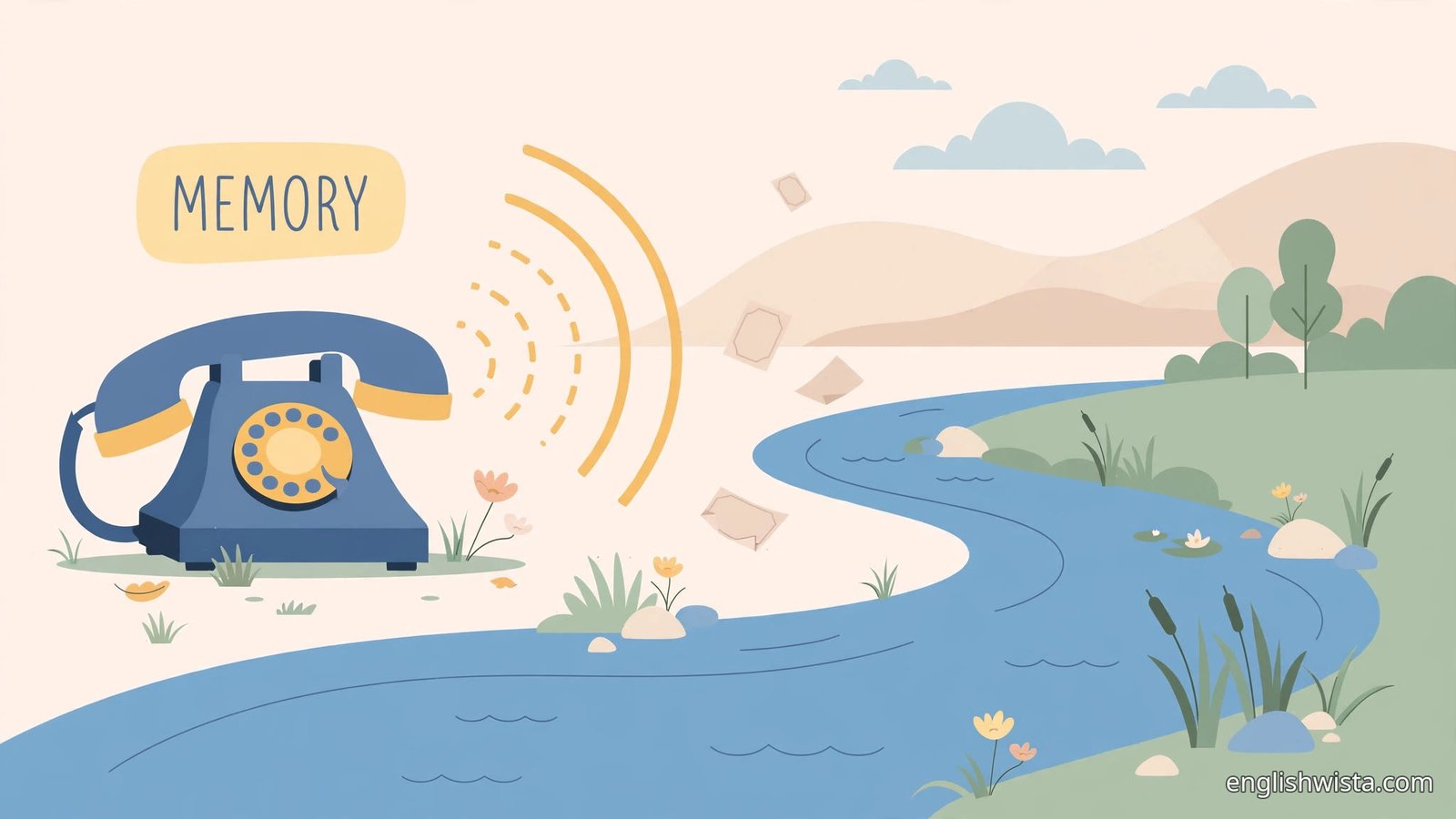
- Think of a phone vs a river — a phone rings in continual bursts, but a river flows in one continuous stream.
- Say it as a rhyme: “Continual knocks keep coming back for more, continuous runs smooth from shore to shore.”
Example Pairs
- Her continual questions slowed down the whole lesson. / The waterfall made a continuous roaring sound.
- The continual interruptions made the movie hard to follow. / He spoke for two continuous hours without stopping.
- We suffered continual power cuts all evening. / A continuous fence runs around the entire farm.
Common Mistakes to Avoid
Wrong: The continuous knocking at the door drove me mad.
Right: The continual knocking at the door drove me mad.
Wrong: Draw a continual line between the two dots.
Right: Draw a continuous line between the two dots.
Wrong: She talked for three continual hours.
Right: She talked for three continuous hours.
Frequently Asked Questions
Can I use “continual” and “continuous” interchangeably? Not quite. Use continual for repeated actions with pauses, and continuous for something truly unbroken from start to finish.
What are the noun forms of each word? Continual becomes “continuation”, and continuous becomes “continuity”.
Which word means “forever”? Neither one exactly. Continuous means without a break, but it can still end. For “forever”, use words like “eternal” or “constant”.

Mini Quiz: Test Yourself
- 1. The ___ interruptions made the movie hard to follow.
- 2. He drew a ___ line across the whole page.
- 3. The baby’s ___ crying kept the parents awake.
- 4. We heard the ___ sound of the waterfall.
- 5. Her ___ questions slowed down the lesson.
Answers: 1. continual, 2. continuous, 3. continual, 4. continuous, 5. continual.
Quick Recap
- Continual = happening again and again with breaks (think: “a” for “again and again”).
- Continuous = going on without any break (think: “u” for “unbroken”).
- A phone rings continually; a river flows continuously.
- They are not interchangeable — pauses decide which word to use.
Conclusion
Now you know the simple difference: continual means on-and-off, and continuous means non-stop. Keep the memory trick in mind, practice with the example sentences, and you will never mix up these two look-alike words again.