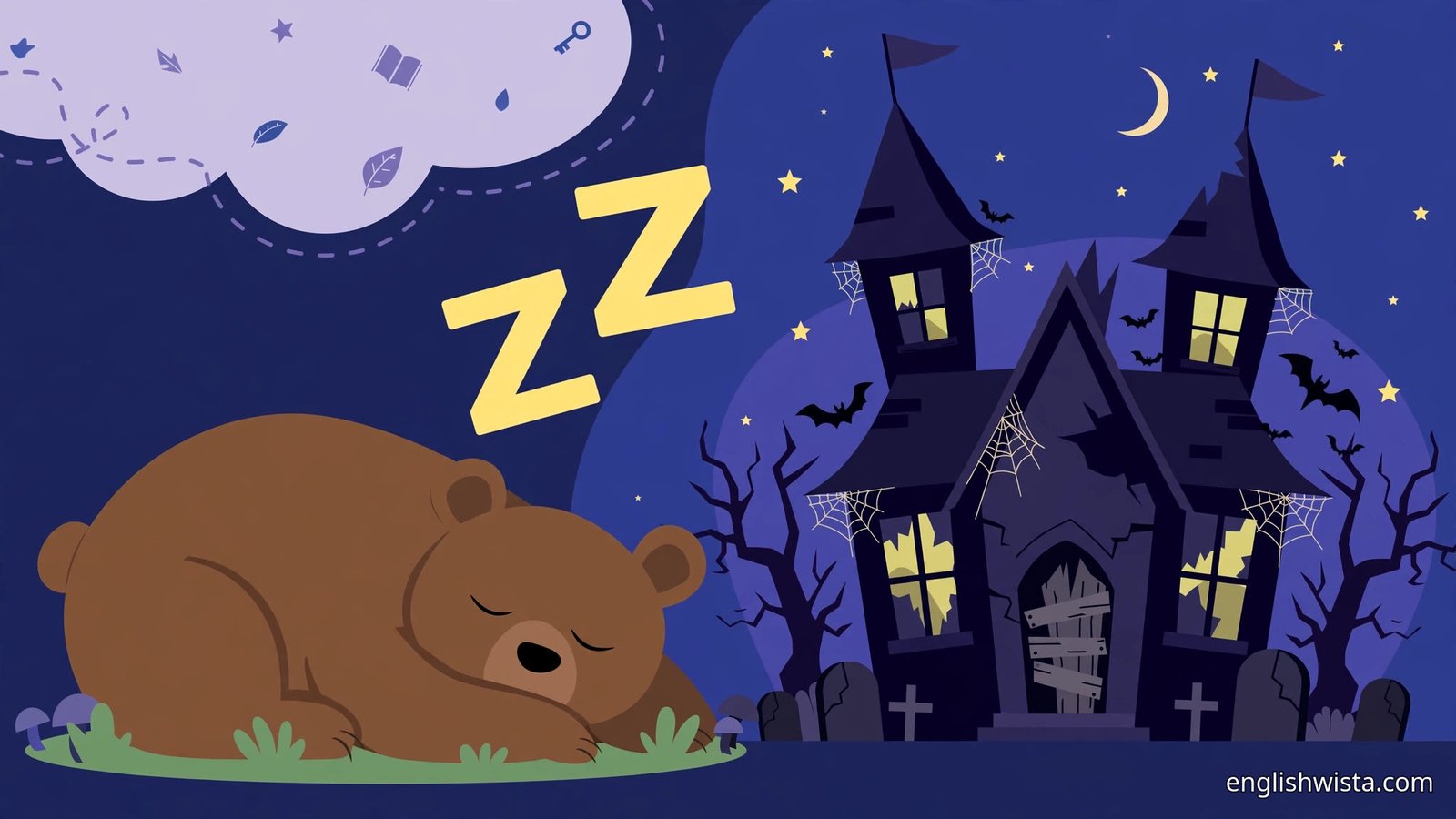
Grisly and grizzly differ by just one letter “z”, but their meanings are completely different. One means horrifying, and the other is a big bear. One belongs in a horror story, and the other lives in the forest. This simple guide will help you understand the difference with easy examples, a memory trick, and a mini quiz.
What Is the Simple Difference?
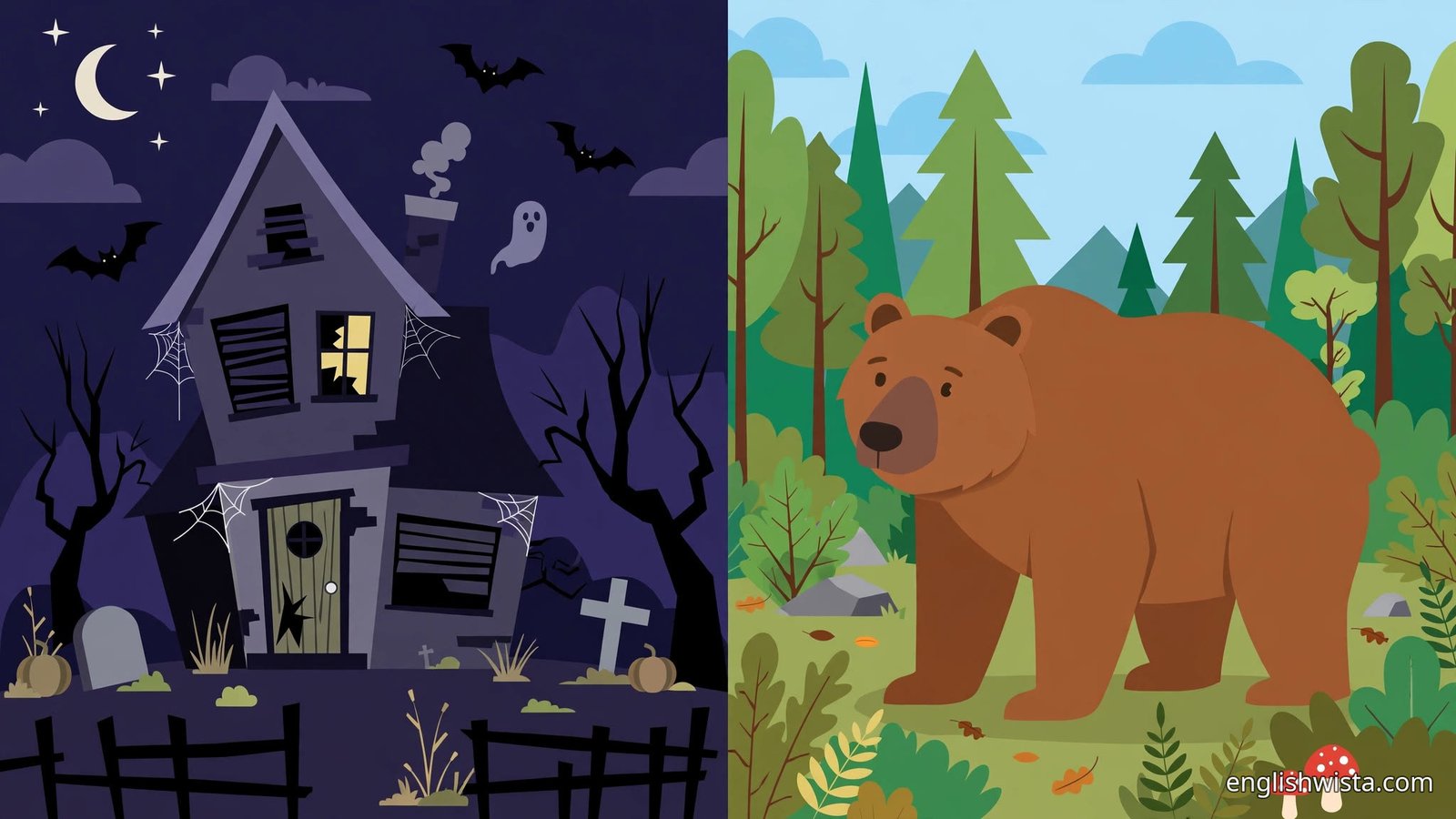
The simple difference is this: grisly (one “z”) means gruesome or horrifying — something shocking and unpleasant. Grizzly (two “z’s”) is a large North American brown bear, and it can also describe gray hair (usually spelled “grizzled”). So a crime scene can be grisly, but the animal in the woods is a grizzly. Remember: grisly crimes are grim, grizzly bears are big.
Grisly: The Gruesome Word
Grisly (pronounced “griz-lee”) is an adjective meaning causing horror or disgust. It describes things that are shocking, bloody, or deeply unpleasant.
- The newspaper reported the grisly details of the crime.
- It was a grisly scene after the car crash.
- The horror film had some truly grisly moments.
Grizzly: The Bear Word
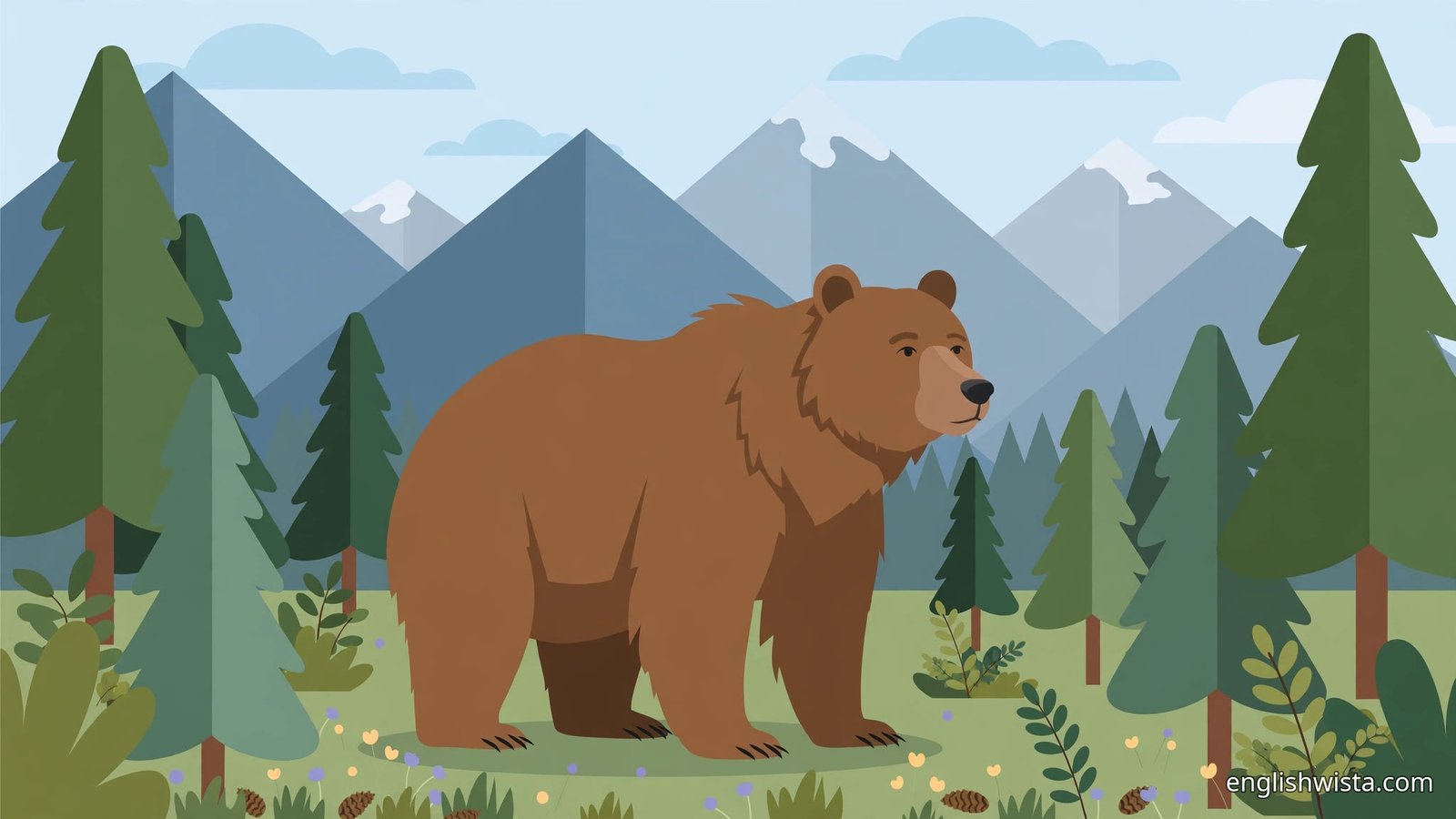
Grizzly (also pronounced “griz-lee”) is a large brown bear found in North America. As an adjective, it means gray or gray-haired, usually written as “grizzled” when describing people.
- A grizzly bear stood by the river catching fish.
- We saw a mother grizzly with her cubs in the national park.
- The old sailor had a grizzled gray beard.
The Easy Trick to Remember
- Grizzly has two z’s because the bear is extra big — the bigger word gets the extra letter.
- Grisly has one z, like “grim” — both start with “gri” and both describe something dark and horrible.
- Think “z” for “zoo” — the place where you might see a grizzly bear safely.
- Say it as a rhyme: “Grisly crimes are grim and gray, a grizzly bear just walks away.”
Example Pairs
- The detective described the grisly crime scene. / A grizzly searched for salmon in the river.
- They told grisly stories around the campfire. / A mother grizzly protected her two cubs.
- The movie showed a grisly battle scene. / The old hunter’s beard was grizzled and gray.
Common Mistakes to Avoid
Wrong: A grisly bear attacked the campsite.
Right: A grizzly bear attacked the campsite.
Wrong: The grizzly murder shocked the whole town.
Right: The grisly murder shocked the whole town.
Wrong: They told grizzly ghost stories at night.
Right: They told grisly ghost stories at night.
Frequently Asked Questions
Are “grisly” and “grizzly” pronounced the same? Yes. Both are pronounced “griz-lee”, which is why learners mix them up so often.
What does “grizzled” mean? Grizzled means gray-haired or streaked with gray — like an old man with a grizzled beard.
Is a grizzly bear dangerous? Yes. Grizzly bears are powerful wild animals, so you should never approach one in real life.
Mini Quiz: Test Yourself
- 1. The ___ bear searched for salmon in the river.
- 2. The detective described the ___ crime scene.
- 3. A mother ___ walked through the national park.
- 4. The movie showed a ___ battle with scary scenes.
- 5. The old hunter had a ___ gray beard.
Answers: 1. grizzly, 2. grisly, 3. grizzly, 4. grisly, 5. grizzled.
Quick Recap
- Grisly (one “z”) = gruesome or horrifying (think: like “grim”).
- Grizzly (two “z’s”) = a large brown bear (think: the big animal gets the bigger word).
- Both are pronounced “griz-lee” — only the spelling tells them apart.
- “Grizzled” means gray-haired.
Conclusion
Now you know the simple difference: grisly means horrifying, and grizzly is a bear. Keep the memory trick in mind, practice with the example sentences, and you will never mix up these two look-alike words again.