Dissemble and disassemble share the letters “dis” and “assemble”, but one is about hiding the truth and the other is about taking things apart. A liar dissembles, while a mechanic disassembles an engine. This simple guide will help you tell them apart with easy examples, a memory trick, and a mini quiz.
What Is the Simple Difference?
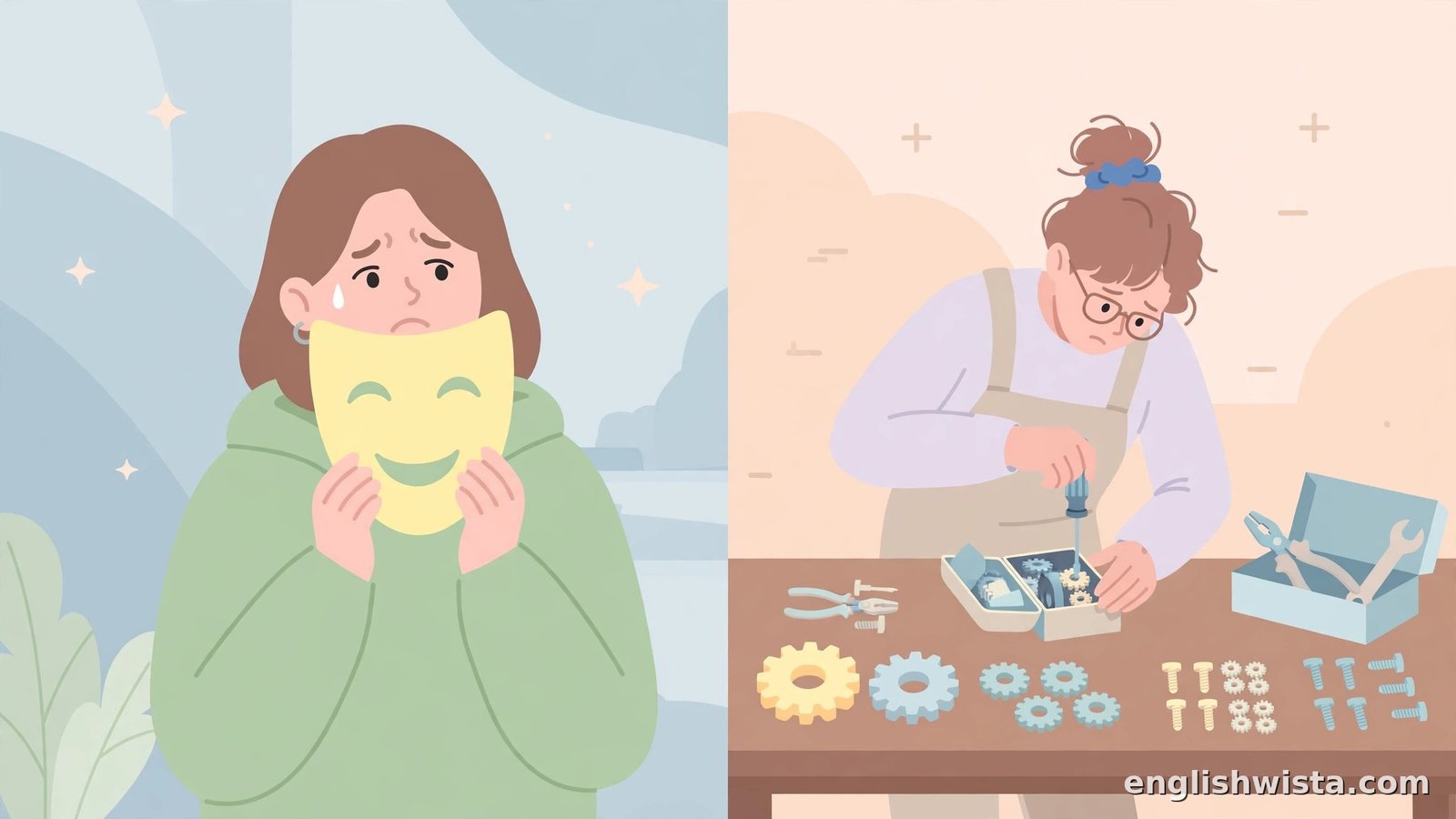
The simple difference is this: to dissemble is to hide your true feelings, opinions, or intentions — to pretend or deceive. To disassemble is to take something apart into its separate pieces. So a spy dissembles to hide who he is, but a worker disassembles a shelf to move it.
Dissemble: The Pretending Word
Dissemble (pronounced “dih-SEM-buhl”) is a verb meaning to hide the truth about your feelings or plans, usually by pretending. It is a formal word often used in stories about spies, liars, and actors.
- She tried to dissemble her anger with a polite smile.
- The spy had to dissemble his true identity for years.
- He could not dissemble his surprise when he heard the news.
Disassemble: The Taking Apart Word
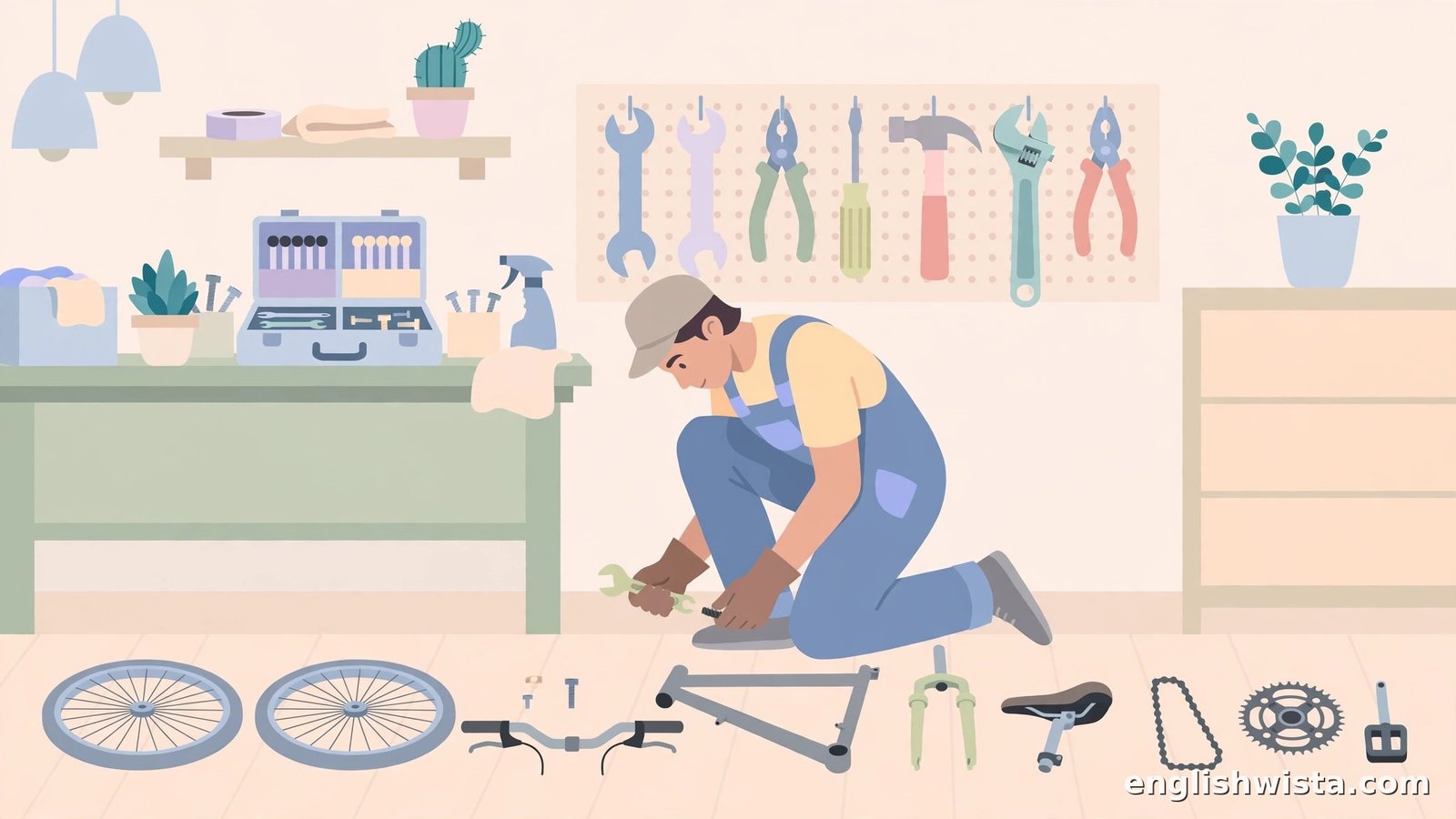
Disassemble (pronounced “dis-uh-SEM-buhl”) is a verb meaning to take a machine, piece of furniture, or device apart into its separate parts. It is the opposite of “assemble”.
- We had to disassemble the bed to carry it upstairs.
- The engineer disassembled the engine to find the fault.
- Please disassemble the toy carefully so we can pack it away.
The Easy Trick to Remember
- Disassemble = dis + assemble. It literally means “undo assembling” — taking apart what was put together.
- Dissemble sounds like “resemble” — and dissembling is about making something resemble the truth when it is not.
- Dissemble has “semble” — think of “semblance”, which means an outward appearance that hides the real thing.
- Say it as a rhyme: “Liars dissemble and pretend, but builders disassemble to mend.”
Example Pairs
- She tried to dissemble her fear during the interview. / He disassembled the chair to fix its broken leg.
- The actor could dissemble any emotion on stage. / We disassembled the tent before leaving the camp.
- He did not even try to dissemble his joy. / The mechanic disassembled the clock to clean it.
Common Mistakes to Avoid
Wrong: We had to dissemble the table to move it.
Right: We had to disassemble the table to move it.
Wrong: She tried to disassemble her true feelings.
Right: She tried to dissemble her true feelings.
Wrong: The engineer dissembled the engine to find the fault.
Right: The engineer disassembled the engine to find the fault.
Frequently Asked Questions
Is “dissemble” the same as “lie”? Not exactly. Dissembling is broader — it means hiding the truth by pretending, which can include lying, but also staying silent or acting a part.
What is the opposite of “disassemble”? “Assemble” — to put the parts together. “Dissemble” has no simple opposite; “be honest” or “reveal” comes closest.
Which word is more common? “Disassemble” is much more common in everyday life, while “dissemble” is formal and mostly appears in books and exams.

Mini Quiz: Test Yourself
- 1. We had to ___ the wardrobe to move it upstairs.
- 2. She tried to ___ her disappointment with a smile.
- 3. The mechanic ___ the motor to repair it.
- 4. A good spy must be able to ___ his feelings.
- 5. Please ___ the model carefully before packing it.
Answers: 1. disassemble, 2. dissemble, 3. disassembled, 4. dissemble, 5. disassemble.
Quick Recap
- Dissemble = to hide your true feelings or intentions by pretending (think: “resemble” — making a false appearance).
- Disassemble = to take something apart into pieces (think: dis + assemble, the opposite of putting together).
- Dissemble is about people and the truth; disassemble is about things and their parts.
- Dissemble is formal and rare; disassemble is common and practical.
Conclusion
Now you know the simple difference: people dissemble when they hide the truth, and workers disassemble when they take things apart. Keep the memory trick in mind, practice with the example sentences, and you will never mix up these two look-alike words again.