
Do you ever write a sentence and pause, wondering, “Is it then or than here?” You are not alone! These two tiny words sound almost the same, but they do completely different jobs. Mixing them up is one of the most common mistakes in English — even native speakers do it. Today, we will clear up the confusion once and for all with a simple rule and easy examples you can actually remember.
Table of Contents
- What Is the Simple Difference?
- Then: Talking About Time
- Than: Making Comparisons
- The Easy Trick to Remember
- Then vs Than in Example Sentences
- Common Mistakes to Avoid
- Frequently Asked Questions
- Mini Quiz: Test Yourself
- Quick Recap
What Is the Simple Difference?
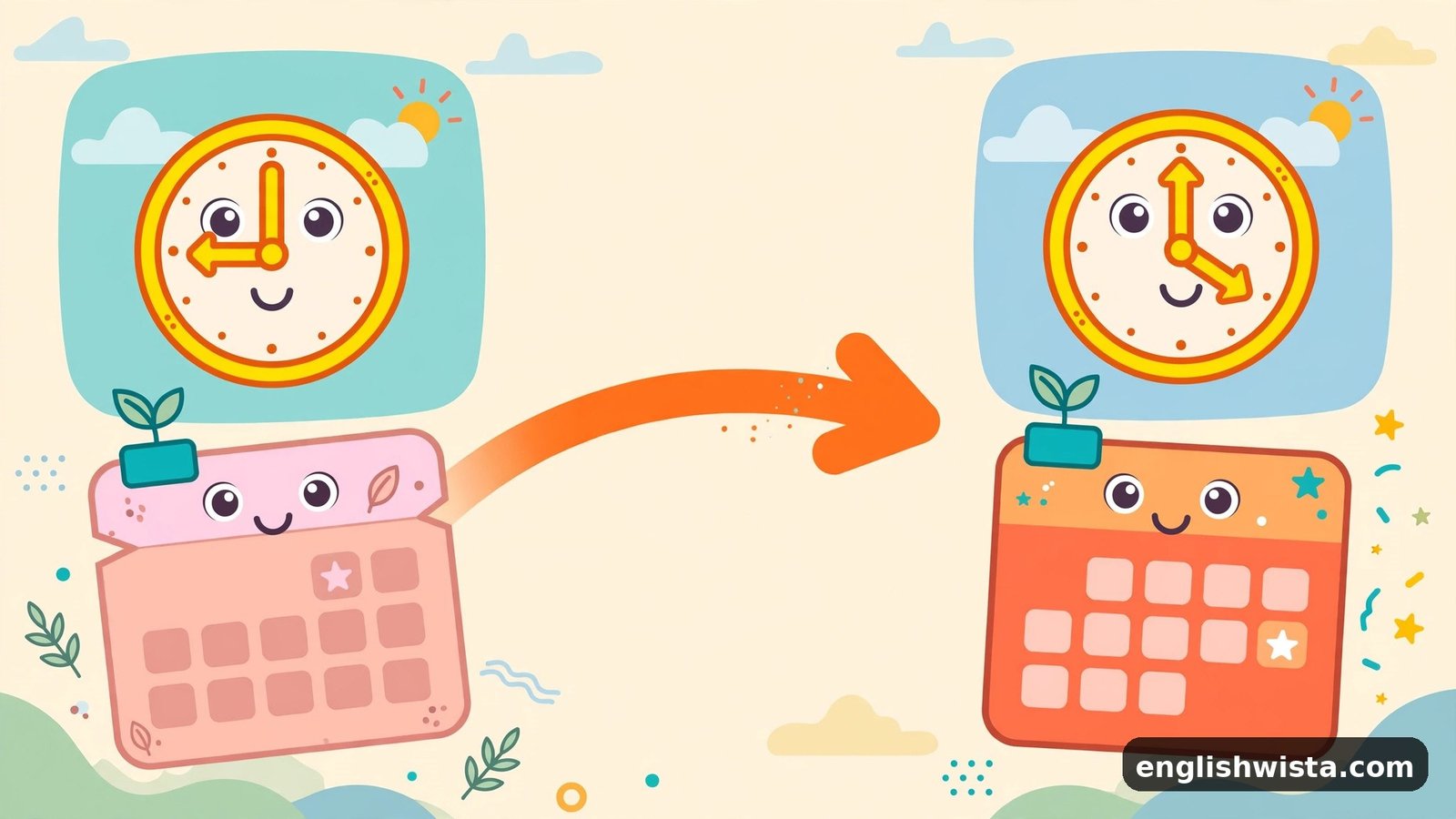
Here is the short answer you can use almost every time:
- Then = talks about time (what happens next, or at that time).
- Than = used for comparisons (comparing two things).
Think of it this way: then has an E like time and when. Than has an A like compare. That little letter is your built-in clue!
Then: Talking About Time
Use then when you talk about time — what happened next, what happens after something, or at that moment.
- We finished lunch, then we went for a walk. (First lunch, next the walk.)
- If it rains, then we will stay inside. (After the rain condition, this happens.)
- She was only ten years old back then. (At that time.)
- Do your homework first, and then you can play. (Sequence: first this, next that.)
Then can also mean “in that case” or “therefore”: “You do not like coffee? Then try tea instead.”
Than: Making Comparisons
Use than when you compare two people, things, or ideas. It almost always appears with a comparative adjective (bigger, faster, better) or words like more, less, rather, other.
- My brother is taller than me. (Comparing two heights.)
- This book is more interesting than the movie. (Comparing book and movie.)
- She would rather stay home than go out. (Comparing two choices.)
- Nothing is better than a good night’s sleep. (Comparing everything to sleep.)
If there is no comparison happening, than is almost certainly wrong.
The Easy Trick to Remember
Here is a trick that never fails. Look at the middle letter:
- Then → E for timE and whEn (time words).
- Than → A for compAre (comparison word).
Try it on these:
- “First we ate, then we left.” (Time — E like time. Correct!)
- “She is smarter than him.” (Comparison — A like compare. Correct!)
One letter, zero confusion — that is the whole secret!
Then vs Than in Example Sentences
Let us look at real-life pairs side by side:
- We will eat first, then watch a movie. / Pizza is better than burgers.
- He smiled and then walked away. / He is older than his sister.
- Back then, phones had buttons. / My phone is faster than yours.
- Study hard, then rest. / Rest is more important than stress.
In each pair, then points to time and than points to a comparison.
Common Mistakes to Avoid
Mistake 1: Using “than” for time sequences. This is the most common mix-up.
- Wrong: “We went home than we slept.”
- Right: “We went home then we slept.”
Mistake 2: Using “then” in comparisons.
- Wrong: “She is taller then me.”
- Right: “She is taller than me.”
Mistake 3: Writing “more then” instead of “more than.” After more, less, better, bigger and other comparatives, it is always than: “more than enough,” “better than ever.”
Frequently Asked Questions
Can “then” start a sentence? Yes! “First, finish your work. Then, you can go outside.” Starting with then is a natural way to show sequence.
Is “rather than” always correct? Yes — “rather than” is a fixed phrase for comparing preferences: “I would rather read than watch TV.” It is always spelled with than.
What about “other than”? Also always than: “No one other than the teacher knew the answer.” It is a comparison-like construction, so than is right.
Can “then” mean “therefore”? Yes. “The roads are icy; then we should drive carefully” means the same as “therefore.” This is still the time/logic use of then, not a comparison.
Mini Quiz: Test Yourself
Choose then or than for each sentence.
- 1. She is younger _____ her cousin.
- 2. We packed our bags, _____ we left for the airport.
- 3. This test was easier _____ the last one.
- 4. If you are tired, _____ take a short nap.
- 5. He would rather walk _____ take the bus.
Answers: 1. than (comparison of ages) 2. then (time sequence) 3. than (comparison of tests) 4. then (“in that case”) 5. than (“rather than” is a fixed phrase)
Quick Recap
- Then = time (E like timE and whEn).
- Than = comparison (A like compAre).
- Use then for sequences: “first this, then that.”
- Use than after comparatives: “bigger than,” “more than,” “rather than.”
- When in doubt, check the middle letter — it never lies.
Conclusion
So, then or than? Now you know: then is about time, and than is about comparison. With the middle-letter trick in your pocket — E for time, A for compare — you will never mix them up again. Keep practicing with real sentences, and soon the right word will come to you automatically!