Perpetrate and perpetuate look almost the same, but one is about committing a crime and the other is about keeping something going. A thief perpetrates a robbery, while a tradition perpetuates a custom for generations. This simple guide will help you tell them apart with easy examples, a memory trick, and a mini quiz.
What Is the Simple Difference?
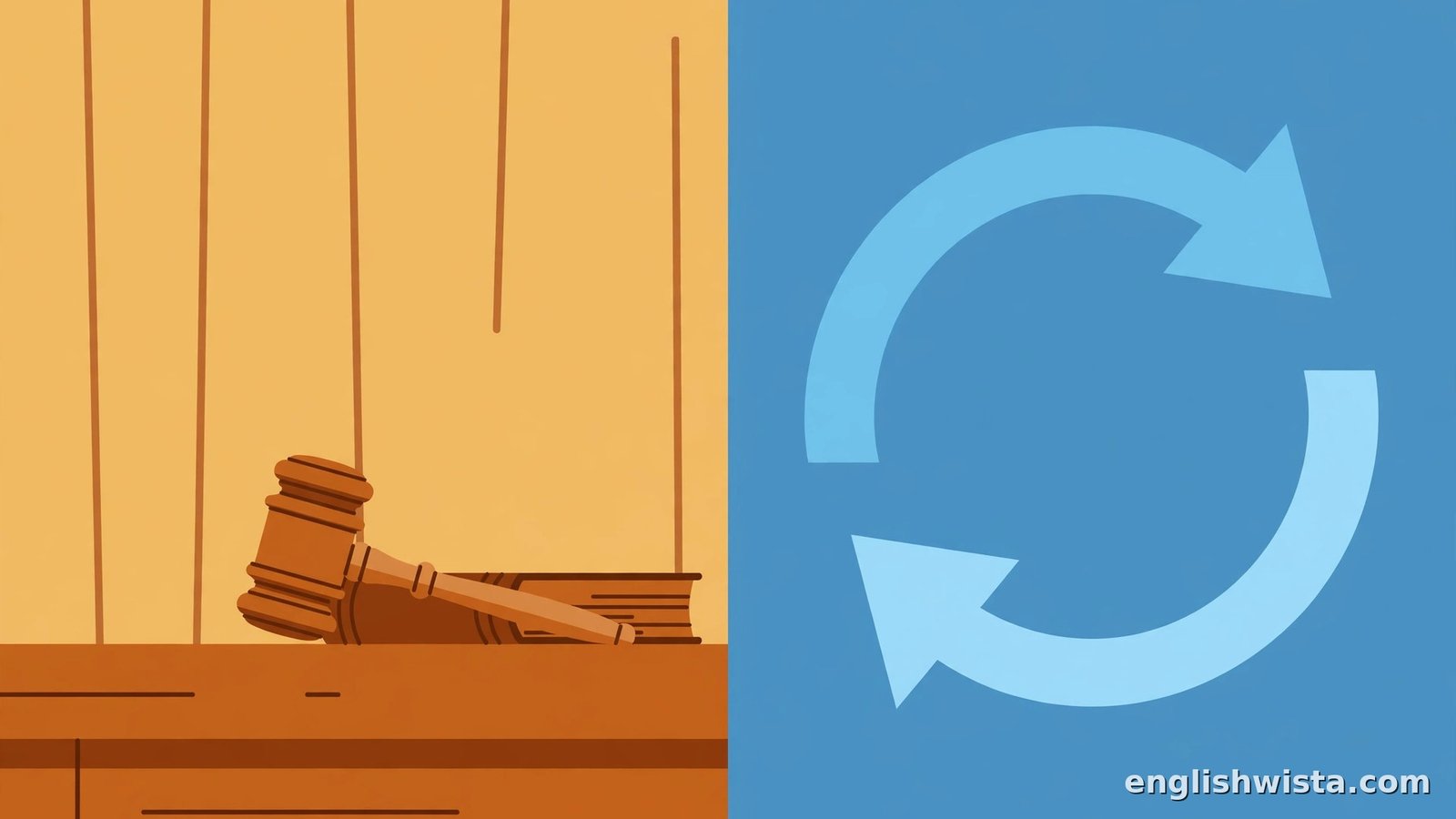
The simple difference is this: to perpetrate is to commit a crime or a wrong act — a robbery, a fraud, an attack. To perpetuate is to make something continue for a long time — a tradition, a myth, an injustice. So criminals perpetrate crimes, while stories and habits perpetuate ideas.
Perpetrate: The Commit-a-Crime Word
Perpetrate (pronounced “PUR-puh-trayt”) is a verb meaning to commit a crime, a harmful act, or something wrong. It is almost always used for bad deeds.
- The gang perpetrated a robbery at the bank last night.
- He was accused of perpetrating a fraud against the company.
- Who perpetrated this terrible attack on the village?
Perpetuate: The Keep-Going Word
Perpetuate (pronounced “pur-PET-yoo-ayt”) is a verb meaning to make something continue forever, or for a very long time. It can keep good things going, like traditions, or bad things, like myths and inequality.
- The festival perpetuates an old tradition of the village.
- These films perpetuate a false idea about the country.
- Unfair rules can perpetuate poverty for many years.
The Easy Trick to Remember
- Perpetrate has “tra” — like “traitor” and “crime”. Crimes are perpetrated by criminals.
- Perpetuate has “petu” — like “perpetual”, meaning never-ending. To perpetuate is to keep something going forever.
- Perpetrate is a single act; perpetuate is a long process — a robbery happens once, but a tradition continues for years.
- Say it as a rhyme: “Thieves perpetrate in the night, while old tales perpetuate wrong and right.”
Example Pairs
- The thief perpetrated a theft in the shop. / The school perpetuates the tradition of the annual play.
- He perpetrated a cruel joke on his friend. / The book perpetuates the myth of the haunted house.
- Hackers perpetrated a cyber attack. / Bad laws perpetuate injustice in society.
Common Mistakes to Avoid
Wrong: The festival perpetrates an old tradition.
Right: The festival perpetuates an old tradition.
Wrong: He perpetuated a robbery at the bank.
Right: He perpetrated a robbery at the bank.
Wrong: These stories perpetrate a false idea.
Right: These stories perpetuate a false idea.
Frequently Asked Questions
What is a “perpetrator”? A person who commits a crime or a wrong act. For example, “The police caught the perpetrator of the robbery.”
Can “perpetuate” be used for good things? Yes. Traditions, memories, and good values can all be perpetuated — kept alive for the next generation.
Is “perpetrate” ever used for good deeds? Almost never. It is reserved for crimes, frauds, and harmful acts.

Mini Quiz: Test Yourself
- 1. The gang ___ a robbery at the bank.
- 2. The festival ___ an old village tradition.
- 3. Who ___ this fraud against the company?
- 4. These films ___ a false idea about the past.
- 5. Unfair rules can ___ poverty for generations.
Answers: 1. perpetrated, 2. perpetuates, 3. perpetrated, 4. perpetuate, 5. perpetuate.

Quick Recap
- Perpetrate = to commit a crime or wrong act (think: “tra” — traitor, crime, a single bad deed).
- Perpetuate = to make something continue for a long time (think: “perpetual” — never-ending).
- Perpetrate is about one bad act; perpetuate is about keeping something going.
- The criminal is called the “perpetrator”.
Conclusion
Now you know the simple difference: criminals perpetrate crimes, and traditions perpetuate customs. Keep the memory trick in mind, practice with the example sentences, and you will never mix up these two look-alike words again.