Pair, pare, and pear sound exactly the same, but they have three very different meanings. One is about two things together, one is about cutting something thin, and one is a fruit. Mixing them up is easy, but this simple guide will help you tell them apart with easy examples, a memory trick, and a mini quiz.
What Is the Simple Difference?
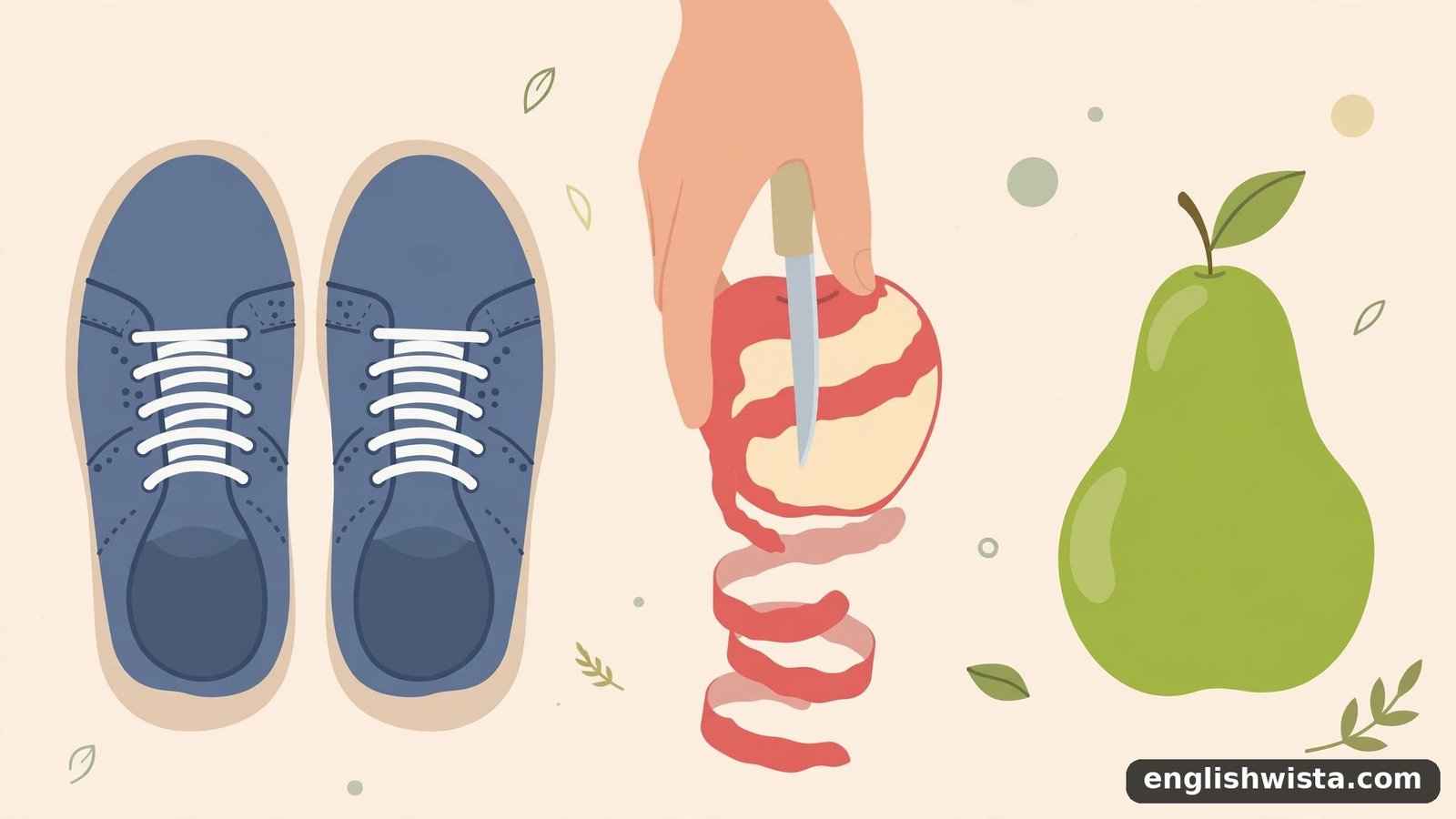
The simple difference is this: pair means two things that go together or are used together, pare means to cut away the outer layer of something, and pear means a sweet, juicy fruit. So you buy a pair of shoes, you pare an apple before eating it, and you enjoy a ripe pear for dessert.
Pair: The Two Things Word
Pair (pronounced “pair”) is a noun meaning two things of the same kind that are used together, such as a pair of shoes, a pair of socks, or a pair of glasses. As a verb, “to pair” means to put two things together, as in “pair the students for the project”.
- She bought a new pair of shoes for the wedding.
- A pair of birds built a nest in the tree.
- The teacher will pair the students for the speaking activity.
Pare: The Cutting Word
Pare (pronounced “pair”) is a verb meaning to cut off the outer skin or layer of something, usually with a knife. You pare an apple, pare a potato, or pare your nails. It can also mean to reduce something little by little, as in “pare down the costs”.
- Please pare the apples before you put them in the pie.
- He used a small knife to pare the potato skin.
- The company had to pare its spending to survive.
Pear: The Fruit Word
Pear (pronounced “pair”) is a noun meaning a sweet fruit with green or yellow skin, a round bottom, and a narrow top. Pears grow on trees and are eaten fresh, baked in pies, or made into juice. A pear tree gives fruit every autumn.
- She picked a ripe pear from the tree in the garden.
- Would you like a pear or an apple with your lunch?
- The pear tree in our yard gives fruit every year.
The Easy Trick to Remember
- Pair has “ai” — like “two”. The “ai” sounds like “I”, and a pair is always two — think “a pair of eyes”.
- Pare has “are” — like “care”. You pare carefully with a knife, so think “pare with care”.
- Pear has “ea” — like “eat”. A pear is a fruit you eat, so think “eat a pear”.
- Say it as a rhyme: “A pair of hands will pare the pear.”
Example Pairs
- I need a new pair of socks. / Pare the carrots before cooking. / She ate a sweet pear.
- The pair of gloves kept her hands warm. / He will pare the apple skin with a knife. / The pear was soft and juicy.
- They make a good pair on the dance floor. / The cook pared the potatoes quickly. / Pears grow on a pear tree.
Common Mistakes to Avoid
Wrong: She bought a pare of shoes.
Right: She bought a pair of shoes.
Wrong: Please pair the apples before the pie.
Right: Please pare the apples before the pie.
Wrong: I ate a sweet pair for lunch.
Right: I ate a sweet pear for lunch.
Frequently Asked Questions
Are pair, pare, and pear homophones? Yes. All three are pronounced exactly the same — “pair” — but they are spelled differently and have different meanings.
Can “pair” be a verb? Yes. To pair means to join two things together, as in “The teacher paired the students for the project.”
What is the difference between “pare” and “peel”? Both mean to remove the skin, but pare is usually done carefully with a small knife, while peel often means pulling the skin off with your hands, like peeling a banana.
Is a pear like an apple? A pear is a fruit like an apple, but it is softer, juicier, and has a different shape — round at the bottom and narrow at the top.
Mini Quiz: Test Yourself
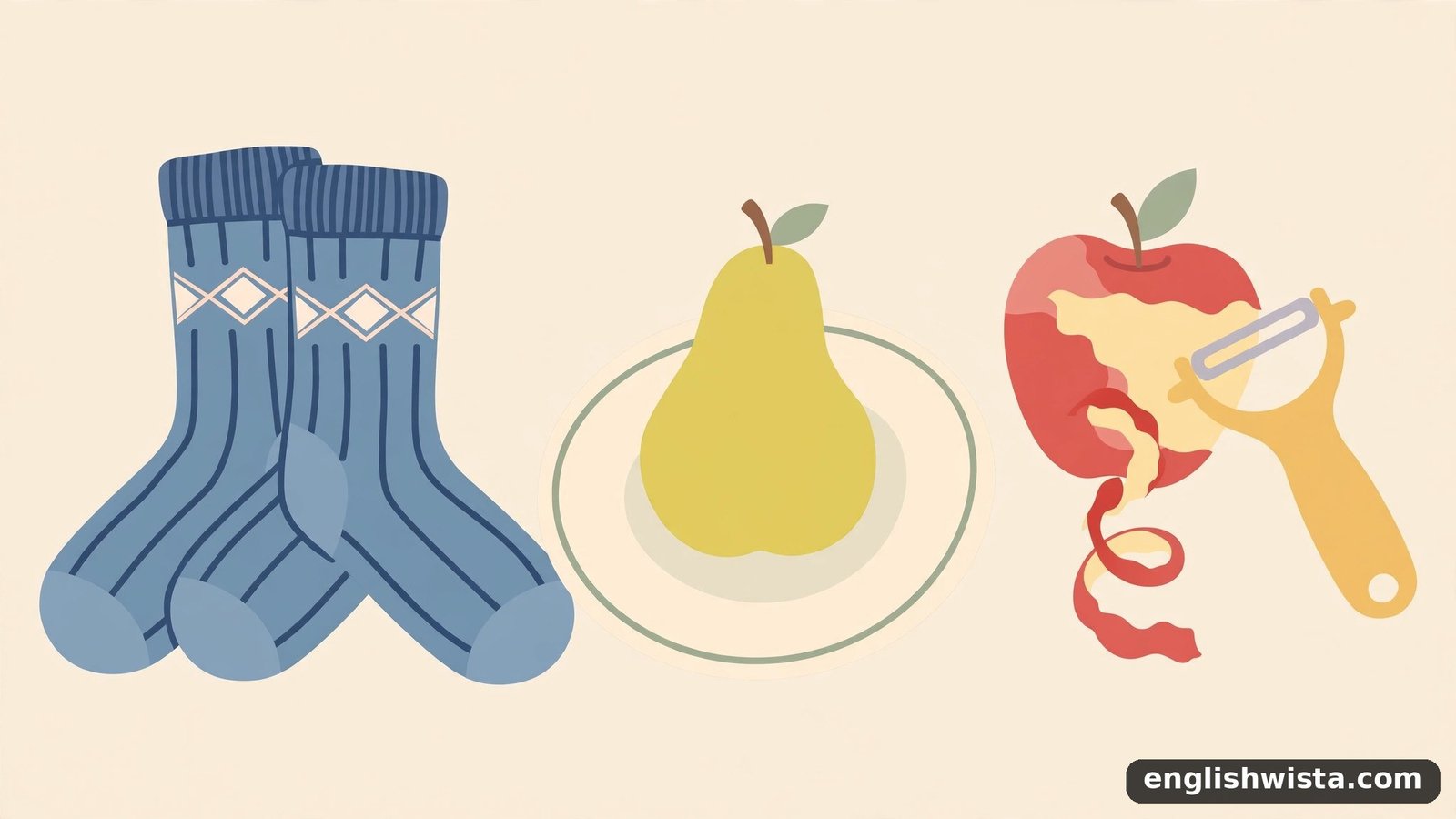
- 1. I need a new ___ of shoes.
- 2. Please ___ the apples for the pie.
- 3. She ate a ripe ___ after lunch.
- 4. A ___ of swans swam across the lake.
- 5. He used a knife to ___ the potato.
Answers: 1. pair, 2. pare, 3. pear, 4. pair, 5. pare.
Quick Recap
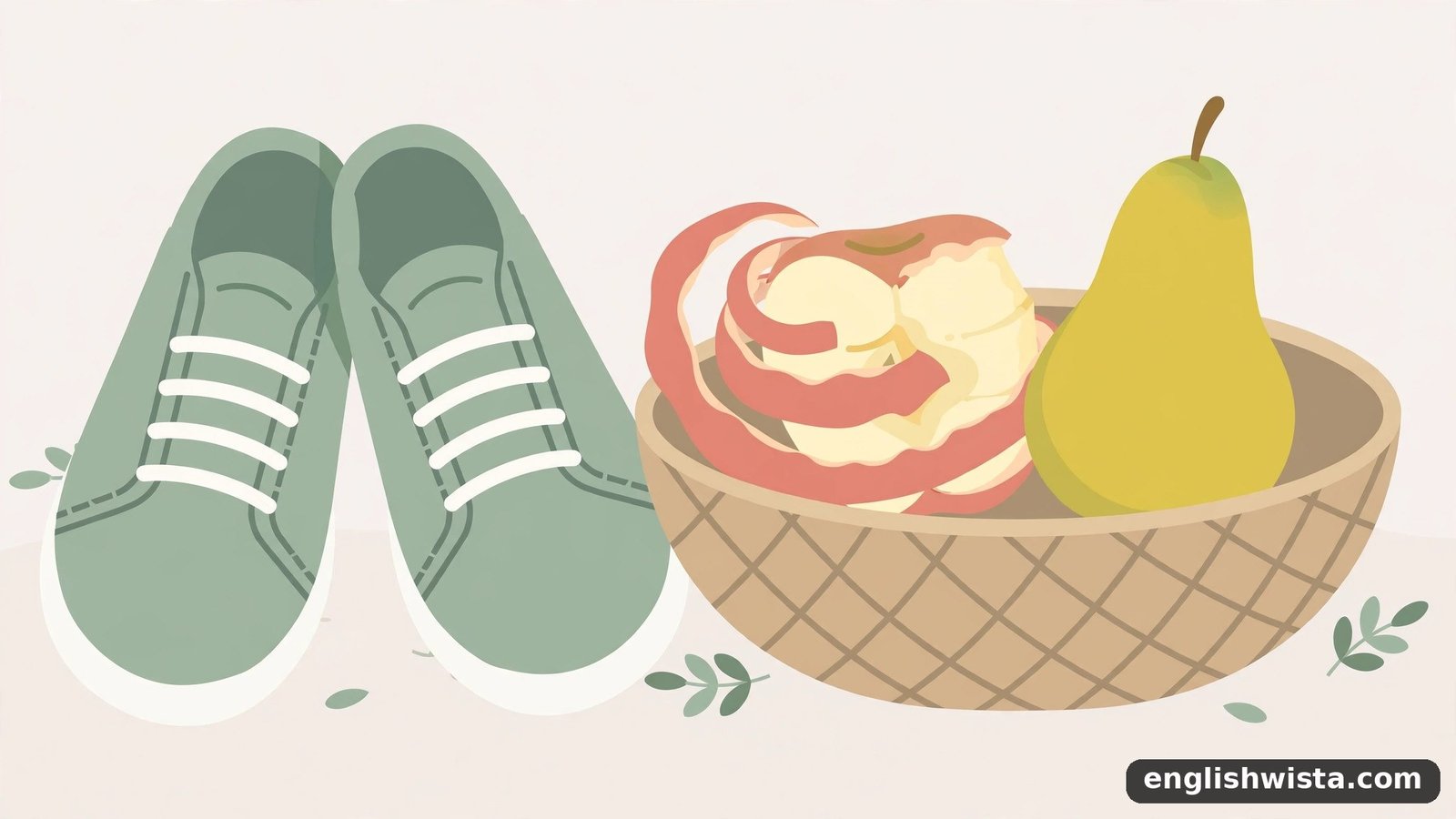
- Pair = two things that go together (think: “two” — a pair is always two).
- Pare = to cut off the outer layer (think: “care” — pare with care).
- Pear = a sweet, juicy fruit (think: “eat” — you eat a pear).
- All three sound the same — “pair” — but their spelling gives the meaning away.
Conclusion
Now you know the simple difference: pair is for two things together, pare is for cutting off a thin layer, and pear is a fruit. Keep the memory trick in mind, practice with the example sentences, and you will never mix up these three sound-alike words again.