Complacent and complaisant look like twins, but they describe two very different attitudes. One is a dangerous kind of self-satisfaction, and the other is a polite willingness to please. A complacent driver stops checking the road, while a complaisant host does everything to make guests happy. This simple guide will help you tell them apart with easy examples, a memory trick, and a mini quiz.
What Is the Simple Difference?
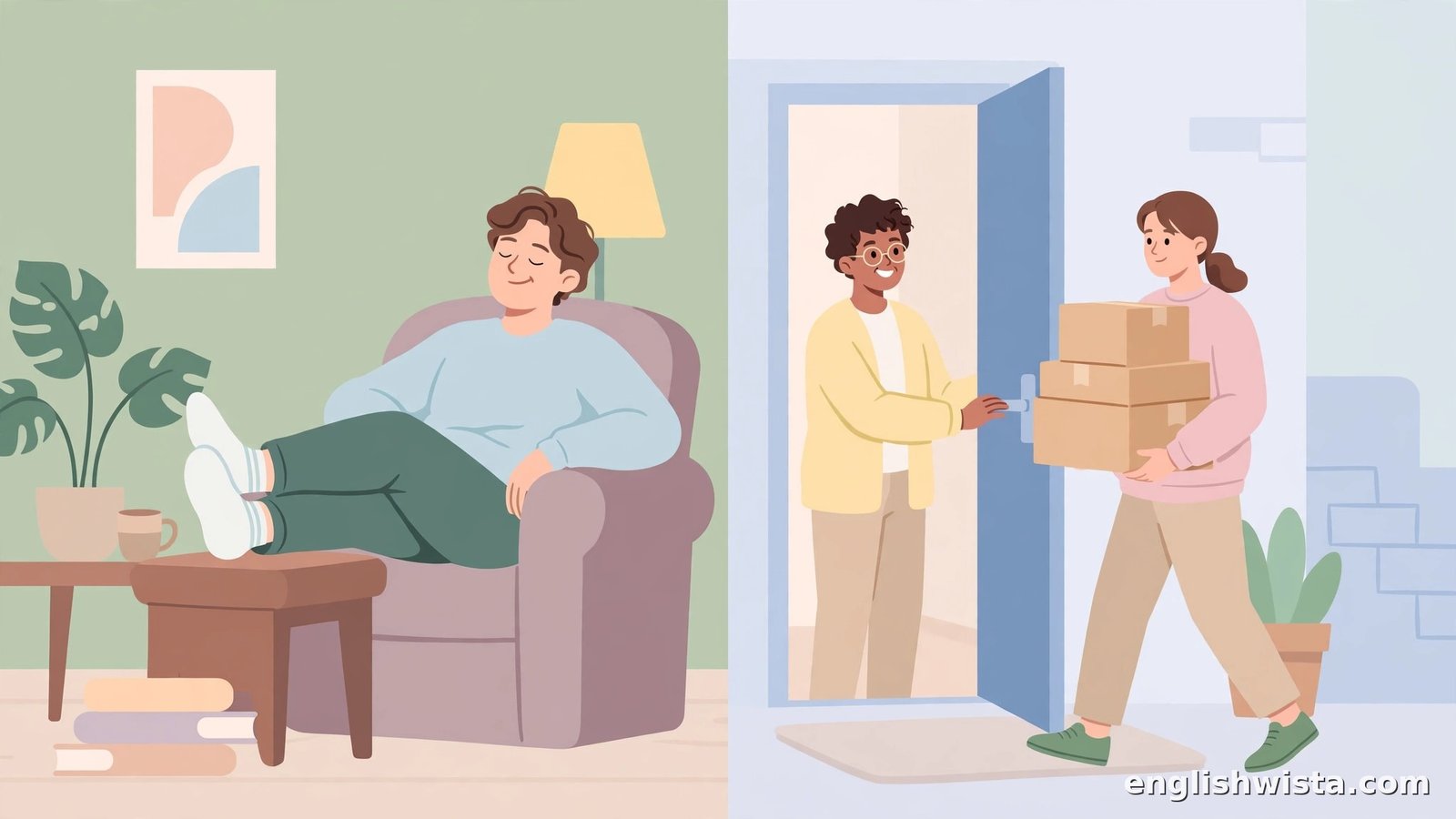
The simple difference is this: complacent means feeling so satisfied with yourself that you stop noticing danger or the need to improve. Complaisant means being polite, obliging, and willing to please others. So a team that stops training is complacent, but a waiter who happily changes your order is complaisant.
Complacent: The Too-Satisfied Word
Complacent (pronounced “kuhm-PLAY-suhnt”) is an adjective meaning smugly satisfied and unaware of possible danger or problems. It is almost always a warning: being complacent means you have stopped trying.
- After three easy wins, the team became complacent and lost the final.
- Do not grow complacent about your health — keep exercising.
- His complacent smile showed he thought the job was already his.
Complaisant: The Polite Word
Complaisant (pronounced “kuhm-PLAY-zuhnt”) is an adjective meaning willing to please others, polite, and obliging. A complaisant person agrees readily and tries to make others comfortable. It is a formal, rather old-fashioned word.
- The complaisant hotel staff changed our room without a fuss.
- She was complaisant and agreed to all the guests’ requests.
- His complaisant manner made everyone feel welcome.
The Easy Trick to Remember
- Complacent has a “c” — for “content”. A complacent person is too content with things as they are.
- Complaisant has an “i” — for “I aim to please”. A complaisant person is pleasant and pleasing to others.
- Complacent is a warning; complaisant is a compliment — one word is dangerous, the other is kind.
- Say it as a rhyme: “Be complaisant and kind, but never complacent in mind.”
Example Pairs
- The champion grew complacent and stopped training. / The complaisant waiter brought an extra chair at once.
- Success can make people complacent. / Her complaisant nature made her a wonderful host.
- Never be complacent about safety. / The shopkeeper was complaisant and wrapped the gift for free.
Common Mistakes to Avoid
Wrong: The complaisant team stopped training after their wins.
Right: The complacent team stopped training after their wins.
Wrong: She was complacent and agreed to every request.
Right: She was complaisant and agreed to every request.
Wrong: Do not be complaisant about your studies.
Right: Do not be complacent about your studies.
Frequently Asked Questions
Which word is more common? “Complacent” is far more common. “Complaisant” is a rare, formal word you will mostly meet in books and exams.
Is “complacent” always negative? Almost always. It describes a false sense of safety — being satisfied when you should still be careful.
What is the noun form of “complaisant”? “Complaisance” — the quality of being willing to please others.

Mini Quiz: Test Yourself
- 1. After easy wins, the team became ___ and lost.
- 2. The ___ waiter changed our table without complaining.
- 3. Do not grow ___ about road safety.
- 4. Her ___ manner made every guest feel welcome.
- 5. His ___ smile showed he thought he had already won.
Answers: 1. complacent, 2. complaisant, 3. complacent, 4. complaisant, 5. complacent.

Quick Recap
- Complacent = too satisfied with yourself, unaware of danger (think: “content” — a warning word).
- Complaisant = polite, obliging, and willing to please (think: “I aim to please” — a kind word).
- Complacent is common and usually negative; complaisant is rare and formal.
- The difference is one letter — “c” versus “i” — but the meanings are opposites in feeling.
Conclusion
Now you know the simple difference: complacent means dangerously satisfied, and complaisant means politely willing to please. Keep the memory trick in mind, practice with the example sentences, and you will never mix up these two look-alike words again.