All ready and already sound almost the same in fast speech, but they mean completely different things. One is a phrase that means fully prepared, and the other is a single word that means by this time or before now. Many learners mix them up because they look so alike. This simple guide will help you understand the difference with easy examples, a memory trick, and a mini quiz.
What Is the Simple Difference?
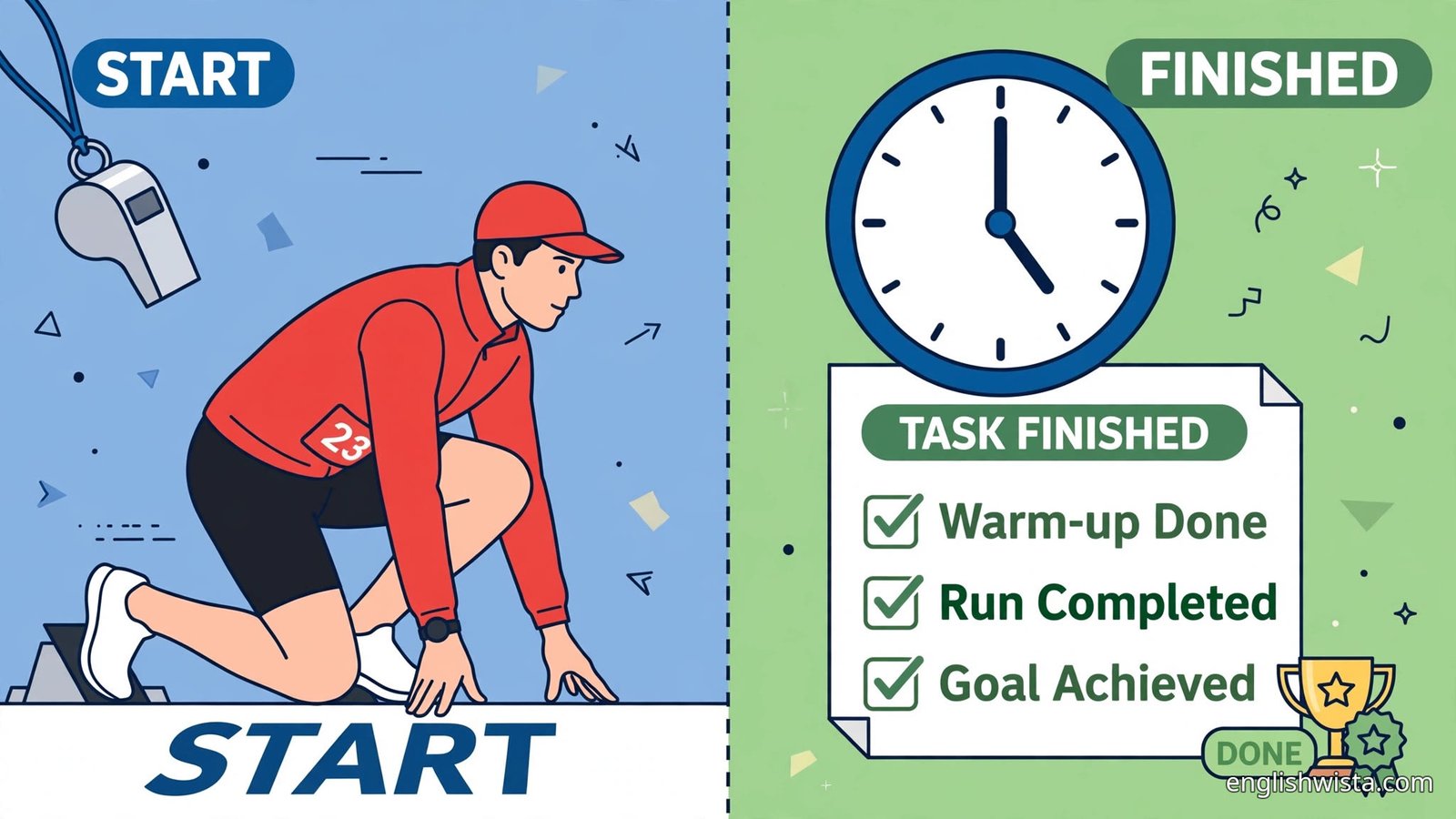
The simple difference is this: all ready (two words) means completely prepared, while already (one word) means by this time or earlier than expected. So when your bags are packed and you can leave the house, you are all ready. When the train has left before you arrived at the station, it has already gone. Remember: all ready is about preparation, already is about time.
All Ready: The Prepared Phrase
All ready is a phrase made of the word all plus the adjective ready. It means completely prepared or fully set for something. You can test it by swapping in “fully prepared” — if the sentence still makes sense, use all ready.
- We are all ready for the exam tomorrow.
- The dinner is cooked, so we are all ready to eat.
- Are the players all ready for the match?
Already: The By-This-Time Word
Already is an adverb that means by this time, before now, or earlier than expected. It usually goes with a perfect tense or a past tense verb. You can test it by swapping in “by this time” — if the sentence still makes sense, use already.
- I have already finished my homework.
- She already knows the answer.
- It is only nine o’clock, and he has already left for work.
The Easy Trick to Remember
- Two words = preparation. All ready has two words, just like “fully prepared” has two words.
- One word = time. Already is one word for one idea: by this time.
- Swap test: if you can say “fully prepared”, write all ready. If you can say “by this time”, write already.
- Say it as a rhyme: “Are you all ready? It is already time to go.”
Example Pairs
- The team is all ready for the final. / The team has already won two matches.
- Are you all ready to order? / I have already ordered my food.
- Put your bags by the door so we are all ready. / The taxi has already arrived.
Common Mistakes to Avoid
Wrong: Are you already for the trip?
Right: Are you all ready for the trip?
Wrong: I have all ready seen this movie.
Right: I have already seen this movie.
Wrong: The guests are already to come in.
Right: The guests are all ready to come in.
Frequently Asked Questions
Can “already” be used with the past simple tense? Yes, in American English it is common: “I already ate.” In British English, the present perfect is more usual: “I have already eaten.”
Does “already” always mean “before now”? Mostly, but it can also show surprise that something happened earlier than expected: “You are already here? That was fast.”
Can I say “all ready” at the start of a sentence? Yes, when it means prepared: “All ready to go?” is a friendly short way of asking if everyone is prepared.
Mini Quiz: Test Yourself
- 1. We have ___ packed our bags for the holiday.
- 2. The players are ___ for the match.
- 3. She has ___ read the whole book.
- 4. The room is clean, so we are ___ for the guests.
- 5. It is only ten in the morning, and he has ___ finished his work.
Answers: 1. already, 2. all ready, 3. already, 4. all ready, 5. already.

Quick Recap
- All ready = fully prepared (two words, like “fully prepared”).
- Already = by this time or before now (one word, about time).
- Swap test: “fully prepared” means all ready; “by this time” means already.
- “Already” often goes with the present perfect: “have already done”.
Conclusion
Now you know the simple difference: all ready means fully prepared and already means by this time. Keep the swap test in mind, practice with the example sentences, and you will never mix up these two look-alike words again.