
Do you ever write “allusion” and wonder if it should be “illusion”? You are not alone! These two sound almost the same and differ by only one letter — but they mean completely different things. One is a hint in words, the other is a trick of the senses. Today, we will clear it up once and for all with a simple rule and easy examples you can actually remember.
Table of Contents
- What Is the Simple Difference?
- Allusion: A Hint in Words
- Illusion: A Trick of the Senses
- The Easy Trick to Remember
- Allusion vs Illusion in Example Sentences
- Common Mistakes to Avoid
- Frequently Asked Questions
- Mini Quiz: Test Yourself
- Quick Recap
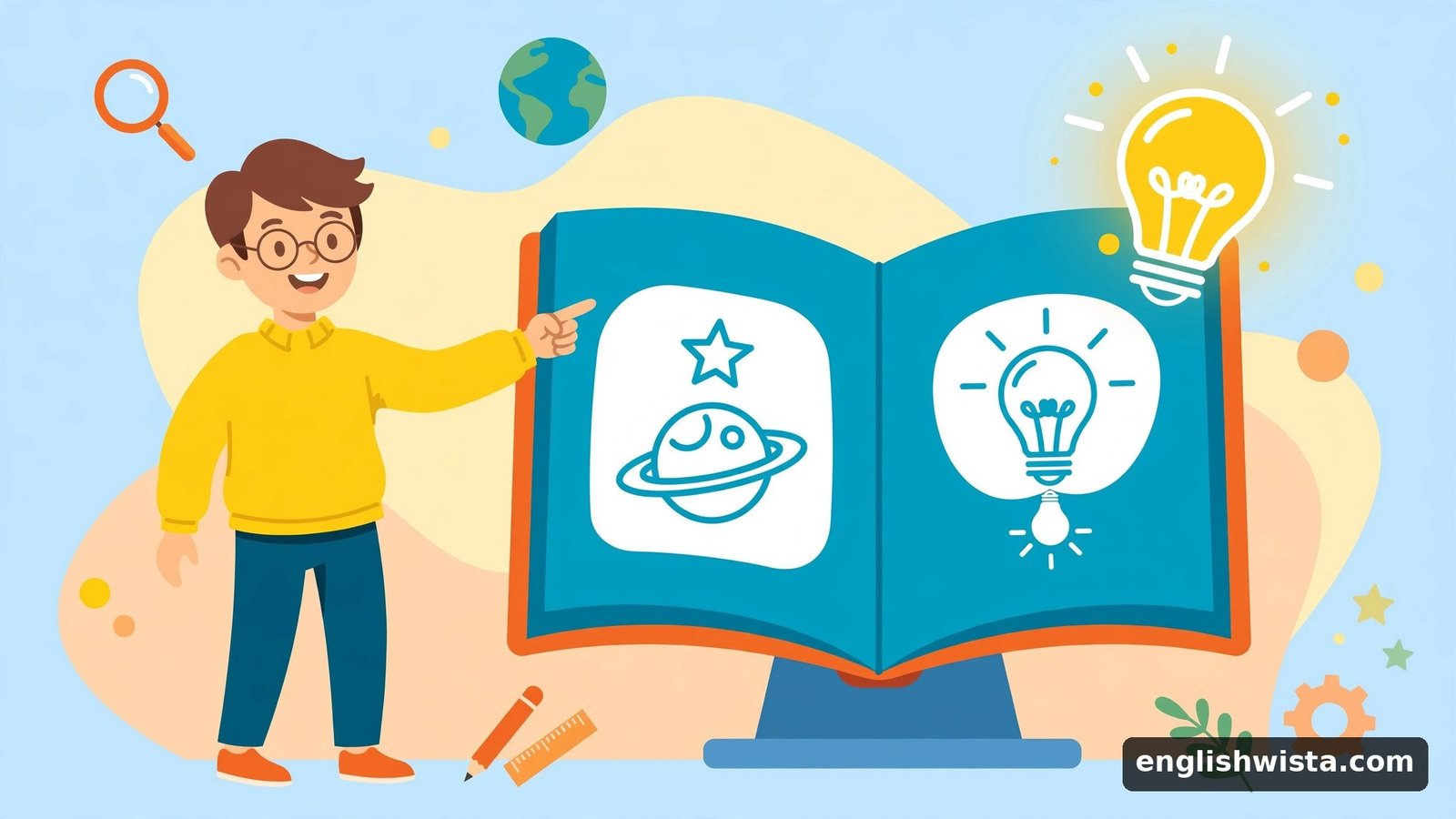
What Is the Simple Difference?
Here is the short answer you can use almost every time:
- Allusion = an indirect reference — hinting at something without naming it.
- Illusion = a false impression — something that looks or seems real but is not.
Think of it this way: an allusion is made with words, an illusion is made with trickery (magic, mirages, optical tricks).
Allusion: A Hint in Words
Use allusion when someone refers to something indirectly — a book, event, or famous person — expecting you to catch the hint.
- Her speech contained an allusion to Shakespeare. (She hinted at Shakespeare without naming him.)
- “He met his Waterloo” is an allusion to Napoleon’s defeat. (A historical hint.)
- The novel is full of allusions to Greek myths. (Indirect references.)
- He made an allusion to our last meeting. (He hinted at it.)
If it is a verbal hint pointing at something else, it is an allusion.
Illusion: A Trick of the Senses
Use illusion for a false impression — when things are not what they seem.
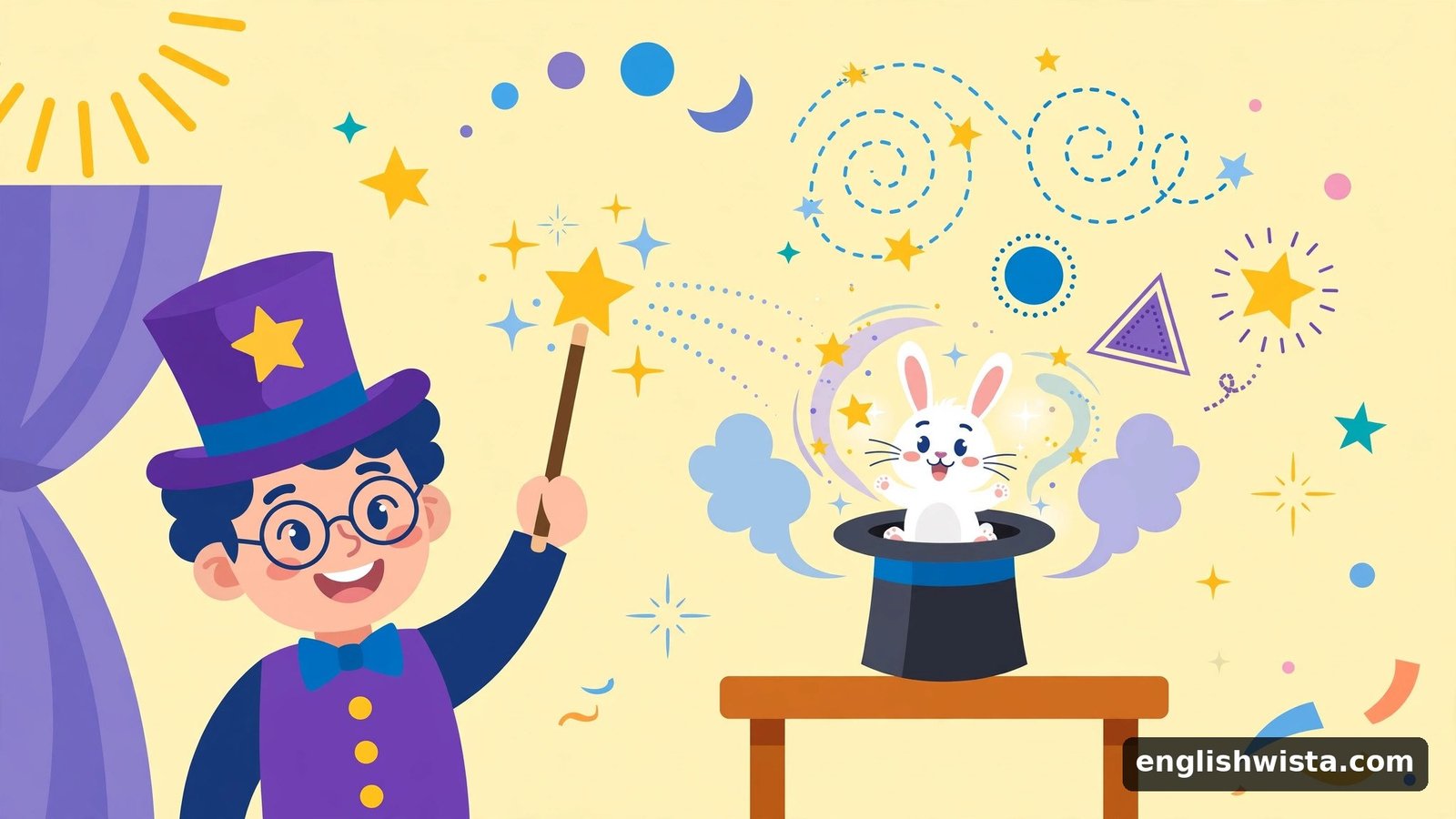
- The magician created the illusion of a disappearing coin. (A trick!)
- The calm water gave the illusion of safety. (It only seemed safe.)
- Mirrors on the wall create an illusion of a bigger room. (A visual trick.)
- His confidence was just an illusion. (Not real.)
If something fools the eyes or mind, it is an illusion.
The Easy Trick to Remember
Here is a trick that never fails. Look at the first letters:
- Allusion → hinting at all those other things (books, events, people).
- Illusion → it is ill (sick/wrong) — what you see is not real.
Or even simpler:
- Allusion = authors hint (writers make allusions).
- Illusion = illusionists trick (magicians make illusions).
Words hint = allusion. Senses tricked = illusion. That is the whole secret!
Allusion vs Illusion in Example Sentences
Let us look at real-life pairs side by side:
- The poem’s allusion to the Bible was subtle. / The desert traveler’s oasis was an illusion.
- She made an allusion to his promotion. / The “promotion” was an illusion — no raise came.
- His speech had clever allusions. / His success was an illusion built on debt.
In each pair, allusion hints with words and illusion deceives the senses.
Common Mistakes to Avoid
Mistake 1: “Illusion” for a literary reference.
- Wrong: “The book’s illusion to history was clever.”
- Right: “The book’s allusion to history was clever.” (A reference, not a trick!)
Mistake 2: “Allusion” for a magic trick.
- Wrong: “The magician’s allusion fooled everyone.”
- Right: “The magician’s illusion fooled everyone.” (A trick, not a hint!)
Mistake 3: Confusing “allude” and “elude.” To allude = to hint at. To elude = to escape. “He alluded to the problem” (hinted) vs “The thief eluded the police” (escaped).
Frequently Asked Questions
What is the verb form of “allusion”? Allude — “She alluded to the scandal.” And the verb for illusion is… there isn’t a direct one; you say “create an illusion” or “it was illusory.”
What does “under no illusions” mean? It means seeing reality clearly: “He is under no illusions about the challenge.” No false impressions!
Are “delusion” and “illusion” the same? Close but different. An illusion tricks the senses (anyone can see it). A delusion tricks the mind — a false belief held despite evidence, often discussed in psychology.
Can an allusion be visual? Usually allusions are verbal or textual. A visual “hint” is more often just called a reference. Keep allusion for words.
Mini Quiz: Test Yourself
Choose allusion or illusion for each sentence.
- 1. The magician’s final _____ left the crowd speechless.
- 2. The essay makes an _____ to ancient Rome.
- 3. The water on the road was just an _____, a mirage.
- 4. “A modern-day Romeo” is an _____ to Shakespeare’s play.
- 5. Wealth gave him the _____ of happiness.
Answers: 1. illusion (a trick) 2. allusion (a reference) 3. illusion (false impression) 4. allusion (a hint at the play) 5. illusion (seemed real, wasn’t)

Quick Recap
- Allusion = an indirect reference or hint (in words).
- Illusion = a false impression (tricks the senses).
- The trick: authors allude, illusionists trick.
- Verbs: allude (hint at); no direct verb for illusion.
- Watch out: elude (escape) is a different word entirely.
Conclusion
So, allusion or illusion? Now you know: an allusion hints with words, and an illusion tricks the senses. With the author/illusionist trick in your pocket, you will never mix them up again. Keep practicing with real sentences, and soon the right word will come to you automatically!