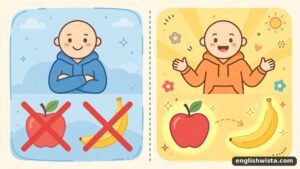
Do you ever write “breath” and wonder if it should be “breathe”? You are not alone! These two differ by one tiny letter, but one is the air itself and the other is the action of taking it in. Today, we will clear it up once and for all with a simple rule and easy examples you can actually remember.

What Is the Simple Difference?
Here is the short answer you can use almost every time:
- Breath (no final E) = a noun — the air you take in or let out.
- Breathe (with final E) = a verb — the action of taking air in and out.
Think of it this way: you breathe (action) a breath (thing).
Breath: The Air (Noun)
Use breath for the air itself — something you can take, hold, or lose.
- Take a deep breath. (The air.)
- He held his breath underwater. (The air in his lungs.)
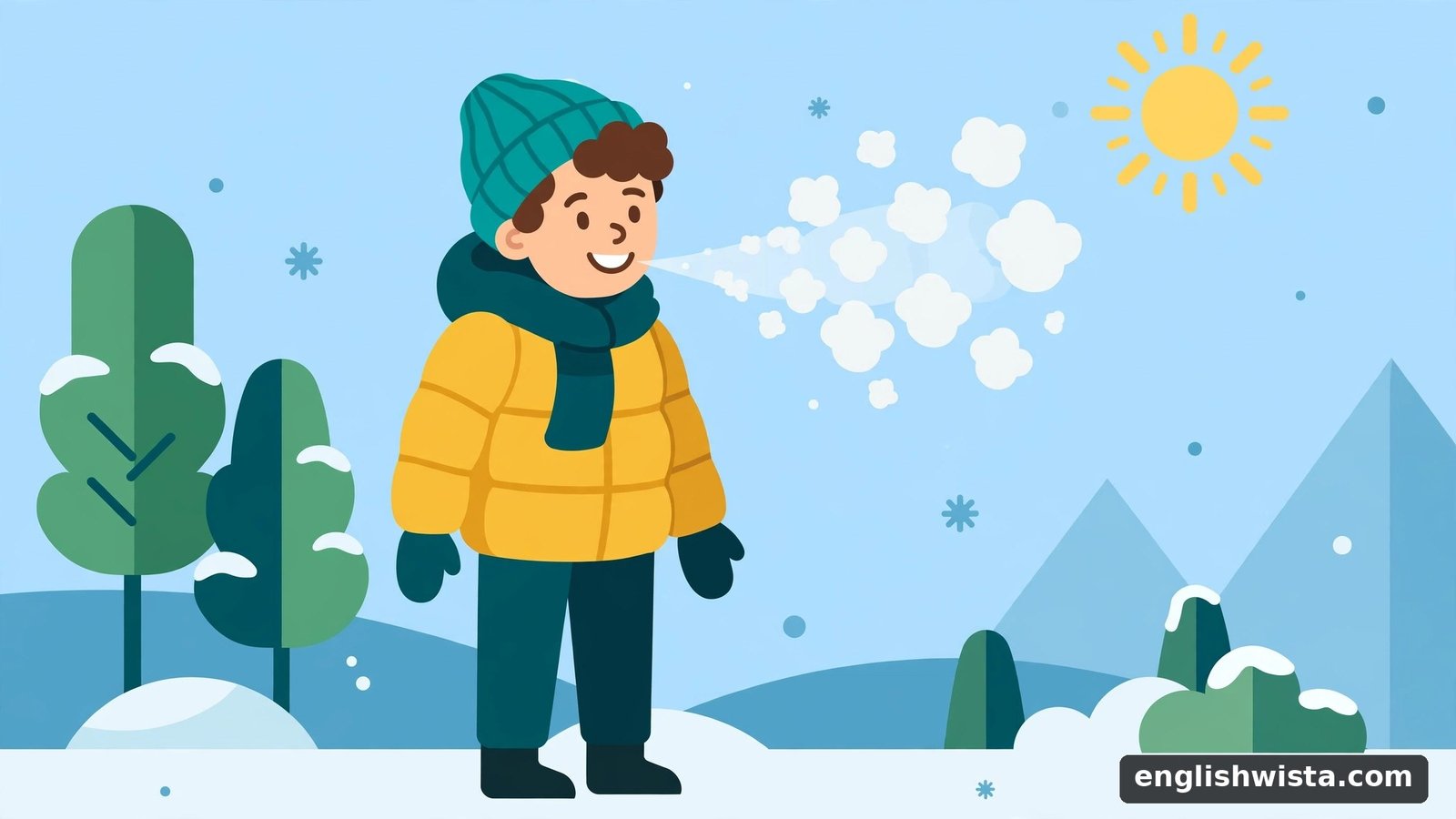
- Her breath smelled of mint. (The air from her mouth.)
- I was out of breath after running. (Short of air.)
If you can count it or put “a” before it, it is breath.
Breathe: The Action (Verb)
Use breathe for the action of inhaling and exhaling.
- Breathe slowly and relax. (Do the action.)
- Fish cannot breathe out of water. (Take in air/oxygen.)
- She breathed a sigh of relief. (Past tense action.)
- It is hard to breathe at high altitude. (The action is hard.)
If someone is doing it, use breathe.
The Easy Trick to Remember
Here is a trick that never fails:
- Breathe (verb) has an extra E — and verbs show Effort/action. The longer word does the longer job.
- Also listen: breath ends with a short “th” (breth); breathe has a long “ee” sound (breethe) — the verb sounds longer, just like it’s spelled longer.
Try it:
- “Take a deep breath.” — a thing! Correct!
- “Just breathe.” — an action! Correct!
Air = breath. Action = breathe. That is the whole secret!
Breath vs Breathe in Example Sentences
Let us look at real-life pairs side by side:
- Take a breath and breathe deeply.
- His last breath was peaceful. / He breathed his last.
- Fresh breath matters. / Breathe fresh air daily.
In each pair, breath = the air and breathe = the action.
Common Mistakes to Avoid
Mistake 1: “Breath” for the action — the #1 error in wellness writing!
- Wrong: “Just breath and relax.”
- Right: “Just breathe and relax.” (Action!)
Mistake 2: “Breathe” for the air.
- Wrong: “Take a deep breathe.”
- Right: “Take a deep breath.” (Thing!)
Mistake 3: “Out of breathe.” The phrase is always “out of breath” (noun): “I’m out of breath after those stairs.”
Frequently Asked Questions
What about “breather”? A breather is a short rest: “Let’s take a breather.” It comes from the verb breathe (catching your breath) — spelled with the E family.
Is “breathless” from breath or breathe? From breath (noun): “The view left me breathless” (without breath). Similarly “breathalyzer” tests your breath.
How do I pronounce them? Breath = “breth” (short e, soft th). Breathe = “breethe” (long ee, soft voiced th). The verb literally sounds longer.
Can “breathe” take an object? Yes! “Breathe the fresh air,” “She breathed new life into the project.” Still the verb, still with E.
Mini Quiz: Test Yourself
Choose breath or breathe for each sentence.
- 1. Take a deep _____ before you speak.
- 2. _____ in through your nose.
- 3. He was out of _____ after the race.
- 4. Plants help us _____ clean air.
- 5. Her _____ fogged the cold window.
Answers: 1. breath (thing) 2. Breathe (action) 3. breath (thing) 4. breathe (action) 5. breath (thing)
Quick Recap
- Breath = noun: the air (take a breath, out of breath).
- Breathe = verb: the action (breathe in, breathe deeply).
- The verb is longer in spelling AND sound (breethe).
- Extra E = Effort/action.
- “Take a breather” = take a rest.
Conclusion
So, breath or breathe? Now you know: a breath is the air, and to breathe is the action. With the extra-E trick in your pocket, you will never mix them up again. Keep practicing with real sentences, and soon the right word will come to you automatically!