
Heal and heel sound exactly the same, but they have two very different meanings. One is about getting better, and the other is about a part of your foot — or your shoe. Mixing them up is easy, but this simple guide will help you tell them apart with easy examples, a memory trick, and a mini quiz.

What Is the Simple Difference?
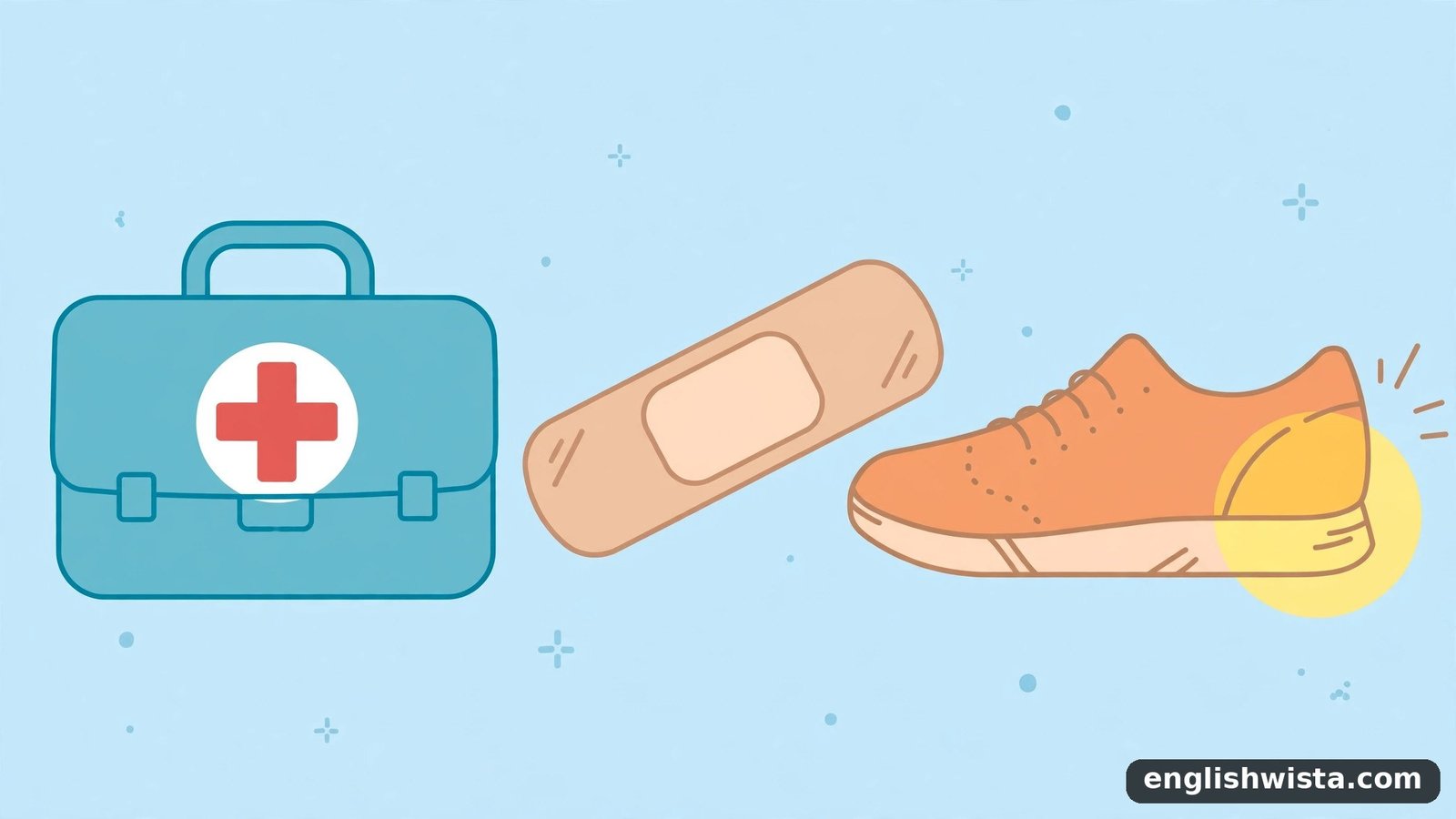
The simple difference is this: heal means to make or become healthy again after an injury or illness, while heel means the back part of your foot, or the raised back part of a shoe. So a cut will heal over time, and your heel is the part of your foot that touches the ground first when you walk.
Heal: The Recovery Word
Heal (pronounced “heel”) is a verb meaning to make or become healthy again. A wound heals, a broken bone heals, and even sad feelings can heal with time. Doctors help the body heal, but rest and care do the real work.
- The small cut on her finger will heal in a few days.
- It took months for his broken leg to heal completely.
- Time can heal a broken heart, but it cannot erase the memory.
Heel: The Foot Word
Heel (pronounced “heel”) is a noun meaning the back part of the foot, below the ankle. It is also the raised part at the back of a shoe, and high heels are shoes with tall heels. As a verb, “to heel” can mean to kick with the heel, or for a dog to walk close behind its owner.
- She had a painful blister on her heel after the long walk.
- Those shoes have very high heels, so they are hard to walk in.
- The dog walked at his owner’s heel through the park.
The Easy Trick to Remember
- Heal has “hea” — like “health”. Both are about getting better and feeling well again.
- Heel has two “e”s — like “feet”. Both are about the body, and the heel is a part of the foot.
- Think of it this way: your heel may hurt, but with rest it will heal.
- Say it as a rhyme: “Rest your heel and let it heal.”
Example Pairs
- The wound will heal soon. / She felt a sharp pain in her heel.
- Good food and sleep help the body heal. / His shoe heel broke while he was running.
- The doctor said the burn would heal without a scar. / The dancer rose up on her heels during the performance.
Common Mistakes to Avoid
Wrong: The cut on my heel will heal in a week.
Right: The cut on my heel will heal in a week.
Wrong: It takes time for a broken bone to heel.
Right: It takes time for a broken bone to heal.
Wrong: She wore shoes with high heals to the party.
Right: She wore shoes with high heels to the party.
Frequently Asked Questions
Are heal and heel homophones? Yes. Both are pronounced exactly the same — “heel” — but they are spelled differently and have different meanings.
Can “heel” be a verb? Yes. To heel something means to kick it with your heel, and a trained dog “heels” when it walks closely at its owner’s side.
What does “heal” mean in medicine? To heal means to recover from an injury or illness. A wound heals when new skin grows over it, and a broken bone heals when it joins back together.
Is “Achilles’ heel” about a foot? Yes. In the old Greek story, the hero Achilles had one weak spot — his heel. Today, an “Achilles’ heel” means a person’s one weak point.
Mini Quiz: Test Yourself
- 1. The cut will ___ in a few days.
- 2. She has a blister on her ___.
- 3. Time can ___ a broken heart.
- 4. His shoes have very high ___.
- 5. Rest and good food help the body ___.
Answers: 1. heal, 2. heel, 3. heal, 4. heels, 5. heal.

Quick Recap
- Heal = to make or become healthy again (think: “health” — both about getting better).
- Heel = the back part of the foot, or the raised back of a shoe (think: “feet” — both about the body).
- Both sound the same — “heel” — but their spelling gives the meaning away.
- Remember the rhyme: “Rest your heel and let it heal.”
Conclusion
Now you know the simple difference: heal is for getting better, and heel is for the back of your foot or shoe. Keep the memory trick in mind, practice with the example sentences, and you will never mix up these two sound-alike words again.