Have you ever been writing or speaking in English and stopped for a moment, wondering, “What’s the plural of child?” You’re definitely not alone! Many learners and even native speakers get confused with irregular plurals — words that don’t follow the usual “add -s” rule.
Most English plurals are simple. One cat becomes two cats. One dog becomes three dogs. Easy, right? But some words don’t follow the usual path, and child is one of them. That’s why today we’re going to look at this special word, step by step, in a clear and friendly way. By the end, you’ll feel confident about when and how to use the plural of child.
Let’s take a closer look.
What Does Child Mean?
Before we talk about plurals, let’s be sure about the meaning of the word.
A child is a young person, usually someone who is not yet an adult. In everyday life, a child could be a baby, a toddler, or a school-aged kid. Parents, teachers, and even neighbors often use this word.
So, in short:
- Child = one young person.
Now let’s see what happens when you have more than one.
The Big Question: What Is the Plural of Child?
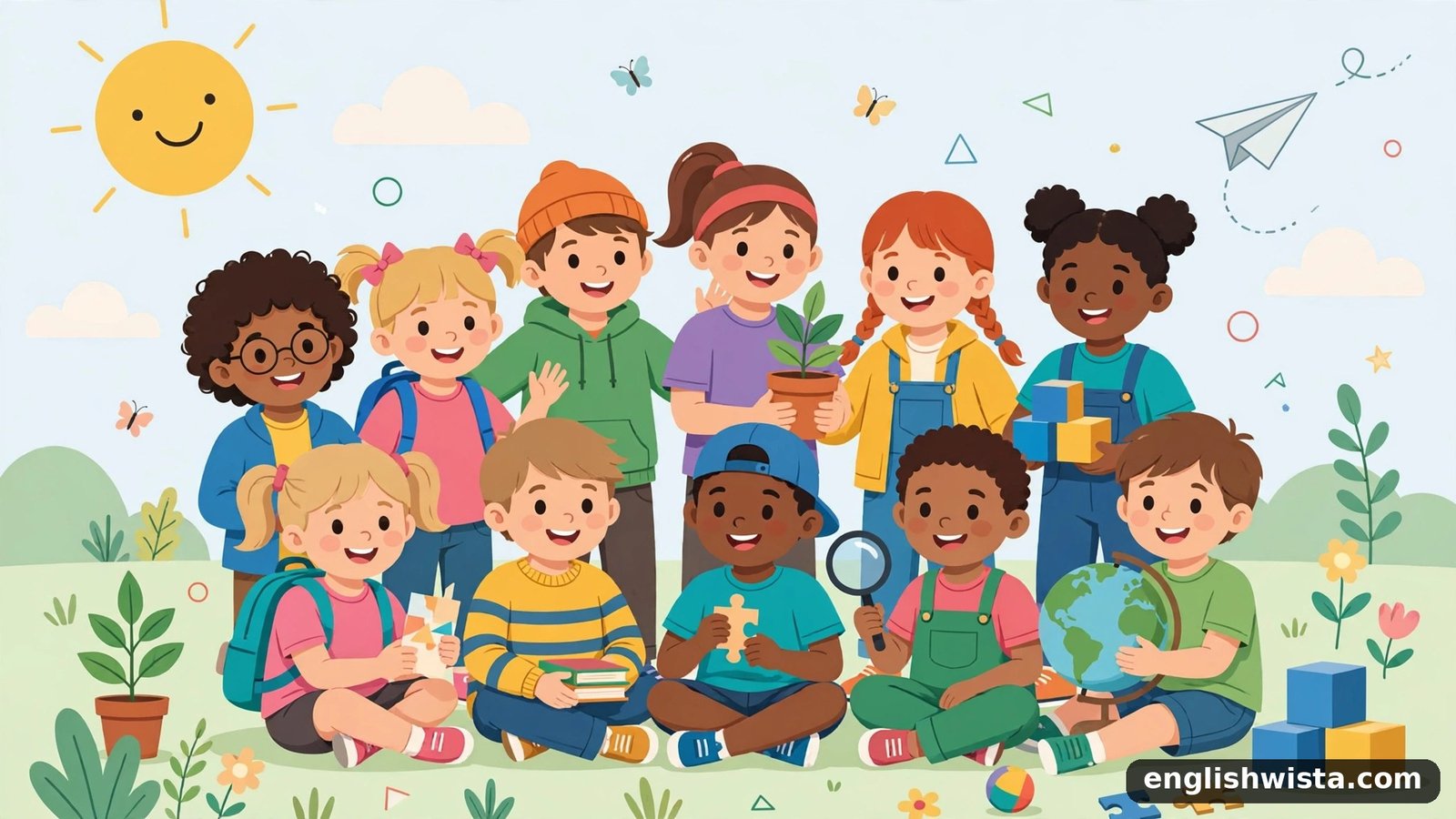
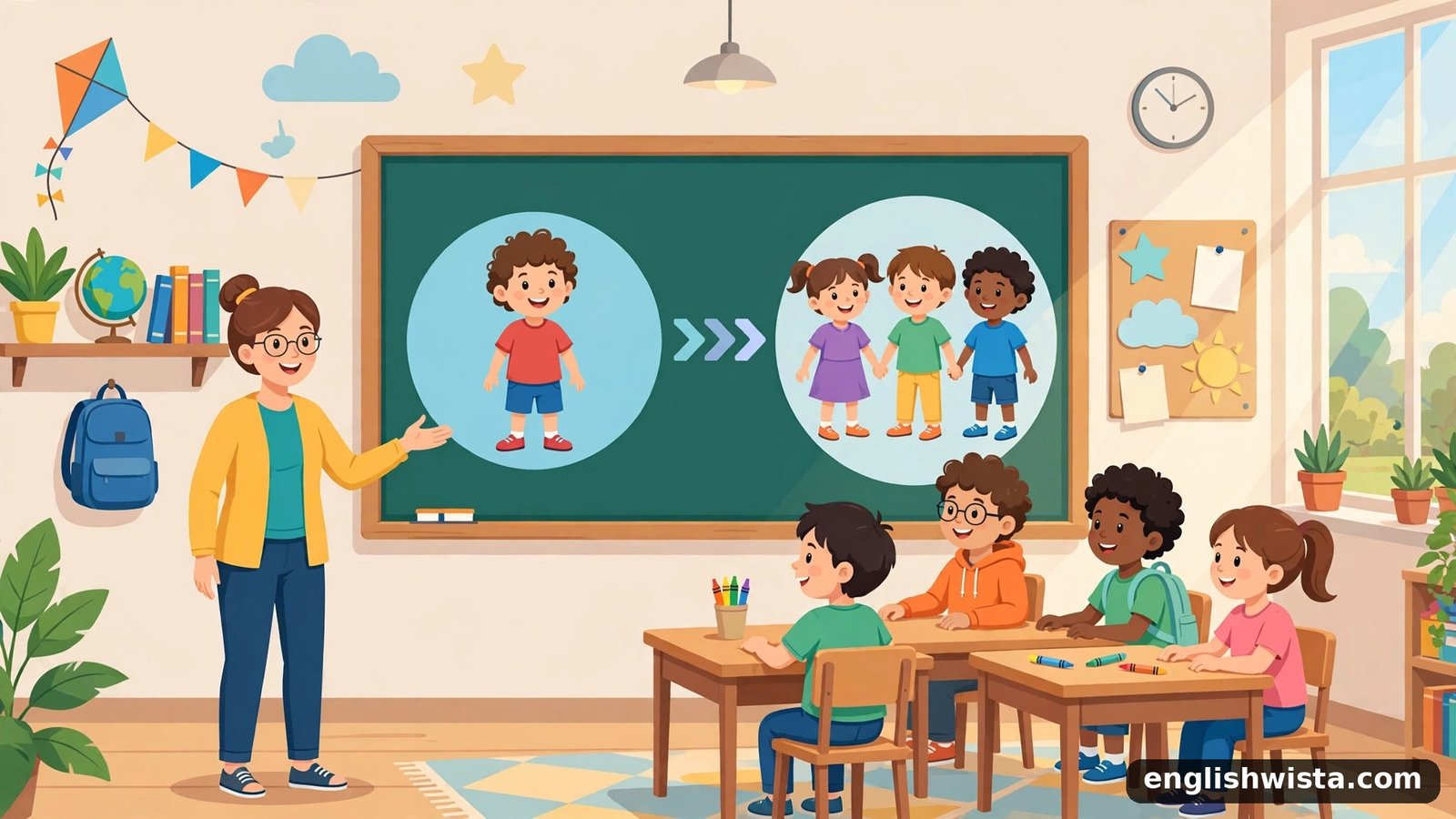
Here’s the answer you’re looking for: the correct plural form of child is children.
Yes, it doesn’t follow the usual rule of adding -s or -es. Instead, it changes form completely. That’s why it can feel tricky.
So remember:
- One child
- Two children
- Many children
Why Not “Childs”?
This is a very common question. Since most English words form their plural by adding -s, it feels natural to want to say “childs.” But in standard English, that is incorrect.
The reason is history. The word child is what we call an irregular noun. Irregular nouns don’t follow the normal plural rules. Instead, they keep special or old-fashioned forms that come from earlier stages of the English language.
So while “cats” and “dogs” make sense with an -s, the singular vs plural pairing here is child → children.
A Quick Definition for Clarity
- Child (singular): One young person.
- Children (plural): More than one young person.
That’s it! Once you memorize this special pair, you’ll always know what to use.
Example Sentences with Child and Children
Let’s see how this works in real-life example sentences.
Singular (child):
- The child is playing in the garden.
- That child loves to read bedtime stories.
- Each child in the class received a gift.
Plural (children):
- The children are laughing loudly in the park.
- We saw many children waiting for the school bus.
- Parents should encourage their children to explore new hobbies.
Notice the subject-verb agreement at work here. With child, we use is. With children, we use are.
Why Does English Use “Children”?
Now let’s talk a little about why this form exists. The word child comes from Old English, the very early form of the English language. Long ago, the plural was cildru or cildra. Over time, the language changed, and eventually we ended up with children.
Interestingly, children itself already had a plural ending -en, which was used for some old plurals. Later, the extra -r and -en got added together, making the form look a bit unusual. That’s why “children” looks different from most other plurals in modern English.
So, it’s irregular, but it’s also a little piece of history hiding in our everyday language.
Other Irregular Plurals Like Child → Children
It might help to compare child → children with other irregular nouns in English. Here are a few:
- Man → Men
- Woman → Women
- Foot → Feet
- Tooth → Teeth
- Mouse → Mice
- Goose → Geese
Just like child, these words don’t follow the normal -s rule. Instead, they change spelling or use old patterns. Learning them one by one is the best way to remember.
Is Children Ever Singular?
This is another fun question learners sometimes ask. The answer is simple: no.
Children is always plural. It never refers to just one. If you are talking about one, you must use child.
For example:
- ❌ That children is happy.
- ✅ That child is happy.
What About “Childrens”?
Sometimes you may hear someone say “childrens” or see it written by mistake. This is not correct in standard English.
Children is already plural, so you don’t add another -s.
- ❌ The childrens are playing outside.
- ✅ The children are playing outside.
So just remember: no “childrens.”
Real-Life Practice: Spot the Correct Form
Let’s try a quick practice. Which sentence is correct?
- The childs are drawing pictures.
- The children are drawing pictures.
The correct answer is number 2. Always use children for more than one.
Here’s another:
- Each child has a backpack.
- Each children has a backpack.
The correct answer is number 1. We use child with each.
Collective Nouns for Children
English also has fun collective nouns for groups of children. While you can simply say “a group of children,” sometimes people get creative. You might hear:
- A class of children
- A gang of children
- A troop of children
- A playground full of children
These aren’t strict grammar rules, but they add color to the language.
Fun Facts About the Word Child
Here are a few interesting extras you might enjoy:
- The word child comes from Old English cild, which originally meant a baby or very young person.
- The suffix -en in children is rare today, but it used to be more common — both the Oxford English Dictionary and Merriam-Webster list children as the only dictionary-recognized plural. You can still see the old -en ending in oxen, which is the plural of ox.
- In literature and poetry, child has been used as a title. For example, in old ballads, a knight or nobleman might be called “Child Roland.”
- In some dialects of English, older plural forms like childer still survive in speech, especially in parts of northern England.
Common Mistakes to Avoid
Here are a few common mistakes to watch out for — and the incorrect forms to fix — when using child and children:
- Don’t say childs.
- ❌ There are many childs at the park.
- ✅ There are many children at the park.
- Don’t say childrens.
- ❌ The childrens are happy.
- ✅ The children are happy.
- Don’t use children for one person.
- ❌ That children is my neighbor.
- ✅ That child is my neighbor.
Comparing Child with Similar Words
Sometimes it helps to compare with other words that feel close in meaning.
- Kid is another word for child, but its plural is simple: kids.
- One kid, two kids.
- Infant or baby also refer to young people, but they use the standard plural forms: infants, babies.
- One baby, three babies.
So while child → children is irregular, most other words for young people are regular.
Takeaways to Remember
Here’s a quick recap to keep in mind:
- Child is singular.
- Children is plural.
- Never use childs or childrens.
- Use child when talking about one person.
- Use children when talking about more than one.
If you can keep these points in your head, you’ll never feel unsure again.
Conclusion
So, what’s the plural of child? The clear and simple answer is children.
It may not follow the normal pattern of adding -s, but that’s just part of English’s quirky charm. Think of it as a special word that connects us to the history of the language. Once you’ve practiced a few sentences, it will start to feel natural.
The next time someone asks, “Is it childs or children?” you’ll be ready with the right answer—and maybe even a fun fact about Old English.
Just remember this little mnemonic: one child, many children. That’s all you really need to know!
Possessive Forms and Verb Agreement
Once you know the plural, two more grammar points fall into place: possessive forms and subject-verb agreement.
Possessive forms: For one child, simply add ’s — the child’s toy. For more than one, the plural children is already irregular, so you add ’s again: the children’s toys. Because children does not end in s, you never use an apostrophe alone here.
Verb agreement: Match the verb to the number. Child is singular, so it pairs with is: “The child is sleeping.” Children is plural, so it pairs with are: “The children are sleeping.” Getting this pairing right is what makes your sentences sound natural.
Quick check — correct or not? “Each children has a lunchbox” is incorrect; say “Each child has a lunchbox” instead. And “the childrens’ playground” is incorrect too — the right form is “the children’s playground.”
Frequently Asked Questions
What is the plural of child?
The correct plural form of child is children — the only standard plural in modern English. Forms like “childs” and “childrens” are incorrect, so “children” is the form to use in every context, from casual conversation to formal writing.
Do I say “the children is” or “the children are”?
Always say “the children are.” Because children is plural, it follows the same subject-verb agreement as any other plural noun. The singular version is “the child is,” and the plural version is “the children are.”
What is the singular possessive of child — child’s or childs’?
The singular possessive is child’s, as in “the child’s backpack.” The plural possessive is children’s, as in “the children’s playground,” because children is already plural and does not end in s. And just like with plurals, never add an apostrophe to form a plain plural.
What other words follow the same plural rule as child?
Child → children belongs to a small family of irregular plurals. The closest match is ox → oxen, which keeps the same old -en ending. Other irregulars like mouse → mice and foot → feet change their vowel sounds instead, so each pattern is worth learning on its own.