Have you ever heard someone say the word louse and thought it sounded a little strange? You might also wonder, what’s the plural of louse? Don’t worry, you’re not alone! Words like louse are a bit tricky because their plurals don’t follow the usual “add -s or -es” pattern. Instead, they change more dramatically, and that can confuse many learners of English (and even native speakers sometimes).
In this article, we’ll walk through everything you need to know about the plural of louse. We’ll keep it light, simple, and fun. Think of it like a friendly chat where we break down the rules, share examples, and even sprinkle in some interesting facts. By the end, you’ll feel confident using both louse and its plural form correctly in your conversations or writing.
So, let’s get started and clear up the mystery!
What Is the Plural of Louse?
The correct plural form of louse is lice.
That’s it! Simple and straightforward once you know it. Instead of saying “louses,” which might sound logical but isn’t correct, the English language gives us one of its classic irregular plurals: lice.
So:
- One louse
- Two or more lice
For example:
- “The doctor found one louse in the child’s hair.”
- “The doctor found several lice in the child’s hair.”
Why Isn’t It “Louses”?
This is a great question! Normally, when we make a plural in English, we add -s or -es:
- cat → cats
- box → boxes
- bus → buses
But English is full of exceptions, especially with older words borrowed from Old English, Latin, or Greek.
The etymology of the word louse starts with Old English (lūs). Back then, the plural form was already different: it became lȳs, which eventually evolved into lice in modern English. So the irregular plural is simply a survival from older forms of the language.
That’s why you never say “louses.” It’s simply one of the incorrect forms learners should memorize and avoid — it doesn’t exist in standard English.
Is Louse Singular or Plural?
Let’s make this singular vs plural difference crystal clear:
- Louse = singular (one insect)
- Lice = plural (more than one insect)
Think of it the same way you think of “mouse” and “mice.” One mouse, many mice. One louse, many lice. This little memory trick works because both words follow the same vowel-change pattern.
Here’s another quick example to help:
- “A louse was crawling on the table.” (singular)
- “There were three lice crawling on the table.” (plural)
Definition of Louse
Before going further, let’s pause and define the word itself.
A louse is a small, wingless insect that lives as a parasite. It usually feeds on the blood, skin, or feathers of mammals and birds. Humans can also get lice in their hair, clothes, or body, which is why the word is familiar to many people, especially in the context of head lice.
So, whenever you hear “louse” or “lice,” it’s referring to these tiny, often unwanted insects.
Example Sentences with Louse and Lice
To make this more practical, here are some example sentences using both forms:
Using louse (singular):
- The teacher spotted a louse in the child’s hair.
- A single louse can quickly spread to others if not treated.
- The scientist studied the louse under a microscope.
Using lice (plural):
- The school nurse checked for lice during the inspection.
- Lice can spread quickly in crowded environments.
- Special shampoo is needed to kill head lice.
Common Mistakes to Avoid
When learning the plural of louse, here are some common mistakes people often make:
- Saying “louses” – This is incorrect. Remember, the plural is always lice.
- Mixing singular and plural in a sentence – For example:
- Wrong: “There is many louse in her hair.”
- Correct: “There are many lice in her hair.”
- Forgetting subject-verb agreement –
- Singular: “The louse is tiny.”
- Plural: “The lice are tiny.”
How Does It Compare with Similar Words?
Sometimes it helps to compare louse → lice with other irregular plurals:

- mouse → mice
- goose → geese
- tooth → teeth
- foot → feet
All of these words change their vowel sound in the plural form instead of simply adding -s. This type of change is called a vowel mutation (or umlaut), but don’t worry about the grammar term—just notice the pattern: the inside of the word changes.
So, think of louse → lice as part of this special group of words.
Origin of the Word Louse
Let’s take a quick dive into history.
The word louse comes from Old English lūs, which had the plural form lȳs. That vowel change eventually gave us today’s plural lice. Other Germanic languages have similar patterns. For example:
- In German: laus → läuse
- In Dutch: luis → luizen
So the irregular form lice isn’t random—it’s part of a much older linguistic tradition.
Fun Facts About Louse and Lice
Here are some extra tidbits to keep things fun and memorable:
- Figurative meaning: In everyday English, louse can also mean a bad or unpleasant person. For example:
- “He lied to his friends—what a louse!”
And in plural: - “Those guys are such lice for cheating.”
- “He lied to his friends—what a louse!”
- Types of lice: There are different types, like head lice, body lice, and pubic lice. Each lives in a different part of the body.
- Collective noun: A group of lice doesn’t have a widely used special collective noun, but people often just say “an infestation of lice.”
- Historical note: During wars, lice were a big problem among soldiers because of close living quarters and poor hygiene.
Possessive Forms and Verb Agreement
Once you know the plural, the next step is using possessive forms correctly. For one louse, add ’s: “the louse’s tiny legs.” For more than one, the plural lice does not end in s, so you still add ’s: “the lice’s eggs were found on the comb.”
A frequent slip is writing “lices” or “louses’” — both are wrong. The plural is always lice, so the only correct plural possessive is lice’s.
Verb agreement follows the same logic. Pair the singular with a singular verb — “The louse is tiny” — and the plural with a plural verb — “The lice are tiny.” So it’s always “Head lice are common in schools,” never “Head lice is common.” Match the verb to the number, and your sentences will always sound natural.
Frequently Asked Questions
What is the plural of louse?
The correct plural form of louse is lice — one louse, many lice. There is no other standard plural; “louses” is not correct English. This follows the -ouse to -ice pattern, just like mouse becomes mice.
Is “louses” a real word?
No — “louses” is not a real word when you mean more than one louse. It’s one of the most common incorrect forms learners write, probably because adding -s feels natural. The only correct plural is lice, so always write “several lice,” never “several louses.”
How do you pronounce the plural of louse?
Lice is pronounced “lyse” (/laɪs/), rhyming with mice and rice. The singular louse is pronounced “lowse” (/laʊs/), rhyming with mouse and house. Notice how the vowel sound shifts from “ow” to “eye” — that vowel change is the hallmark of this irregular plural.
Do I say “the lice is” or “the lice are”?
Always “the lice are.” Lice is a plural noun, so it takes a plural verb — that’s basic subject-verb agreement. Say “The lice are spreading quickly,” not “The lice is spreading quickly.” The matching singular sentence is “The louse is tiny.”
What other words follow the same plural rule as louse?
The closest match is mouse → mice, which follows the exact same -ouse to -ice vowel change. Related vowel-mutation plurals include goose → geese, tooth → teeth, and foot → feet. Grouping these irregular plurals together makes each one easier to remember.
Quick Review Checklist
Let’s recap the most important points so you can walk away confident:
- Singular = louse
- Plural = lice
- Never use “louses” for the insect meaning.
- Think of it like mouse → mice.
- Use correct subject-verb agreement: “louse is” vs. “lice are.”
- Bonus: louse can also mean a nasty person in informal English.
Practice Time!
Let’s test your knowledge with a few short exercises. Try to fill in the blanks:
- The nurse found one _______ in the boy’s hair.
- The children were treated for head _______.
- A single _______ can cause itching and discomfort.
- Several _______ were visible on the comb.
Answers:
- louse
- lice
- louse
- lice
Conclusion
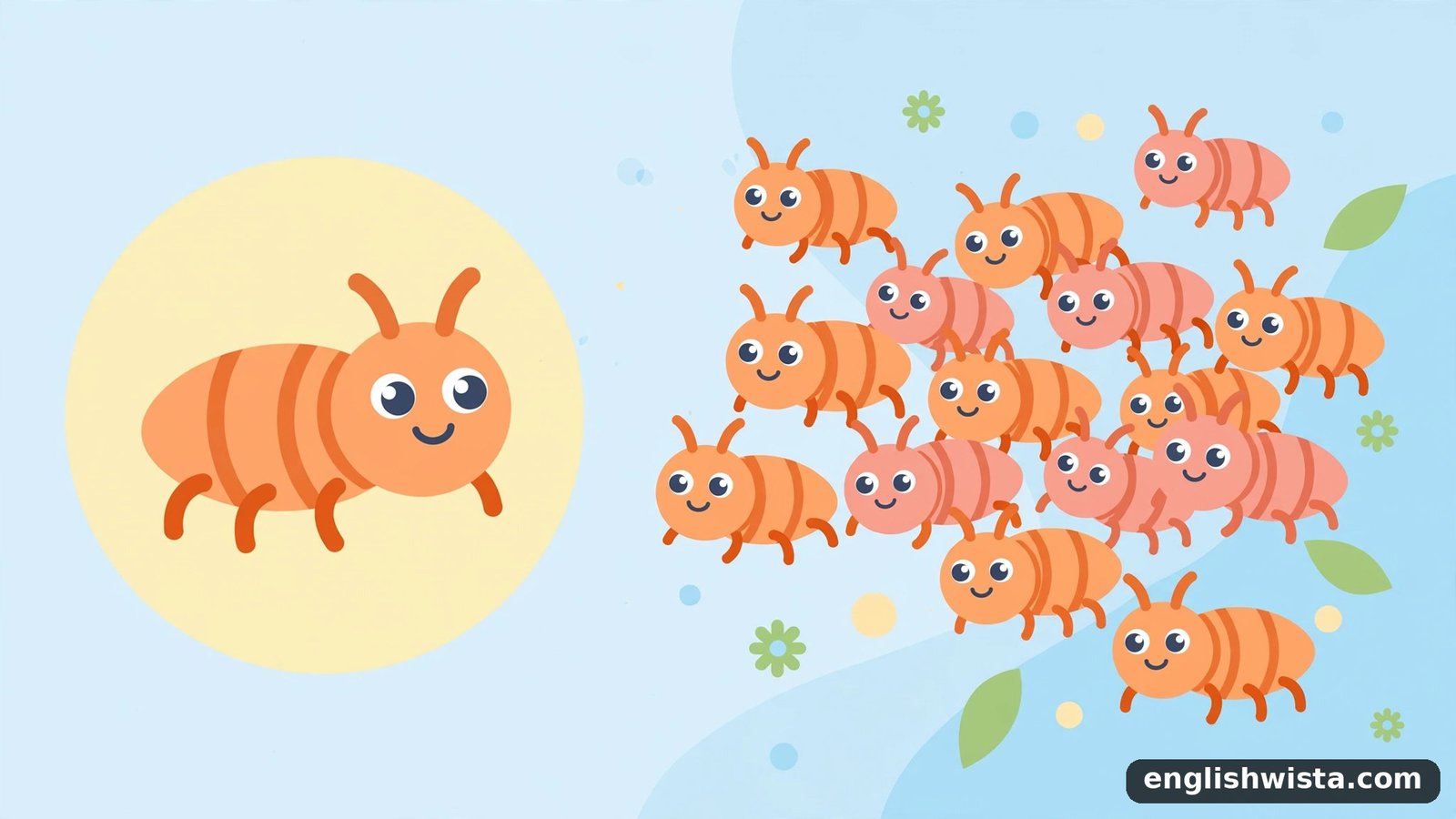
So, what have we learned? The plural of louse is lice, not “louses.” While it may look unusual, it follows the same pattern as other irregular plurals like mouse → mice. A louse is a small parasitic insect, and when there are many of them, we call them lice.
The next time you come across the word, you won’t be puzzled. You’ll know exactly when to use louse and when to use lice. And as a bonus, you now also know that louse can mean an unpleasant person, which gives the word an extra twist.
Language can sometimes feel tricky, but once you break it down step by step, it’s not so scary. Hopefully, this guide made the concept clear, simple, and even a little fun.
Now, the next time someone asks, “What’s the plural of louse?” you can smile and confidently answer: It’s lice!