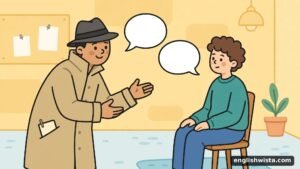
Do you ever write “learn” and wonder if it should be “teach”? You are not alone! This pair confuses learners everywhere because the two words describe the SAME classroom moment — from opposite sides. Even some native speakers mix them up in slang (“That’ll learn you!”). Today, we will clear it up once and for all.
What Is the Simple Difference?
Here is the short answer you can use almost every time:
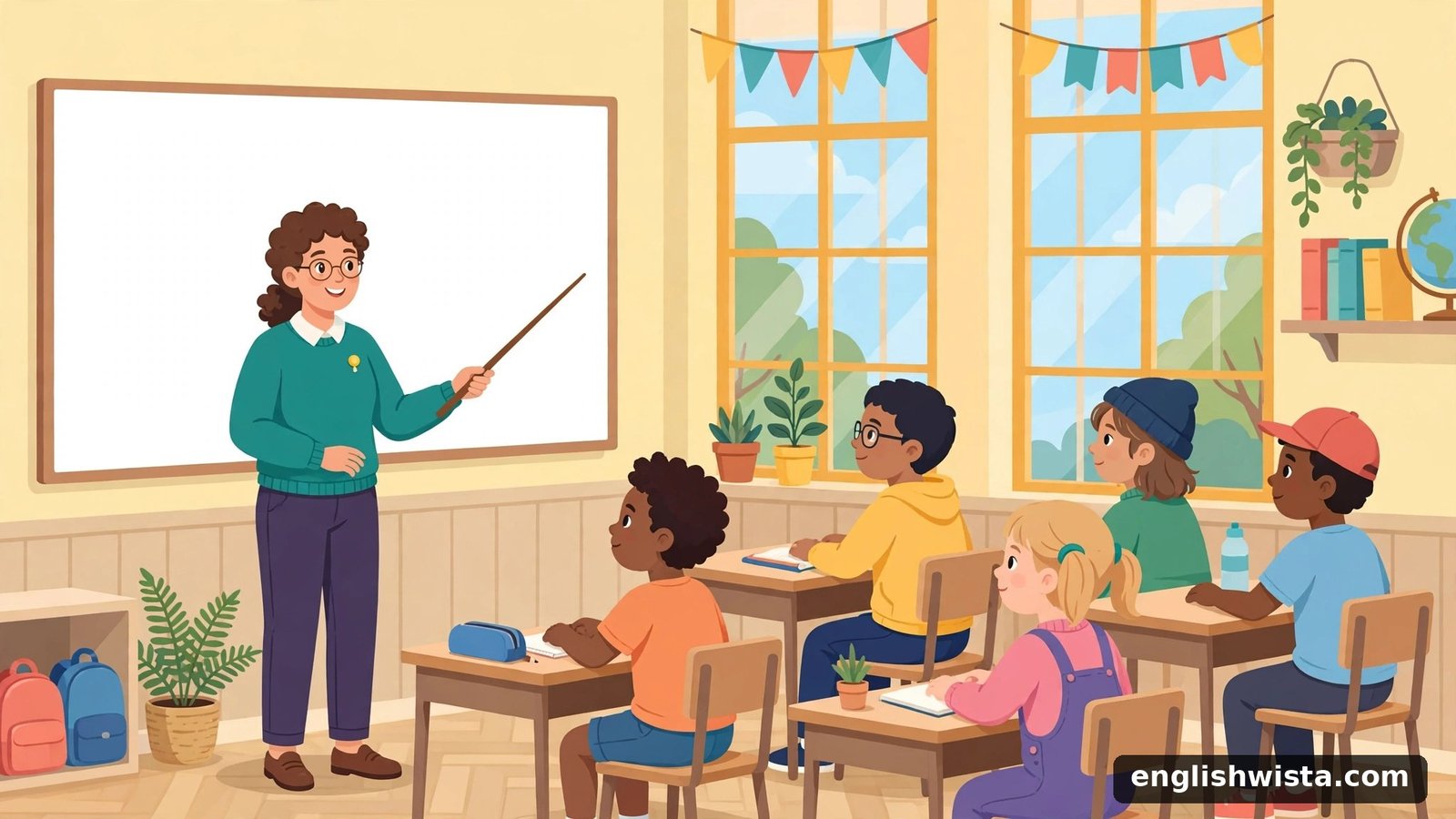
- Teach = to GIVE knowledge — the teacher’s side.
- Learn = to GET knowledge — the student’s side.
Think of it this way: knowledge flows from teach to learn, like water from a tap to a glass.
Teach: Giving Knowledge
Use teach when someone shows, explains, or trains — the one sending the knowledge.
- She teaches English. (She gives the lessons.)
- He taught me to swim. (He showed me how.)
- Can you teach me this song? (I want you to show me.)
- Experience teaches patience. (Life gives the lessons.)
Past tense: taught. If knowledge flows OUT of the person, it is teach.
Learn: Getting Knowledge
Use learn when someone gains knowledge or skill — the one receiving it.
- I am learning English. (Knowledge flows in to me.)
- She learned to swim quickly. (She gained the skill.)
- Children learn fast. (They absorb.)
- We learned the news yesterday. (We came to know it — learn also means “find out”!)
Past tense: learned (or “learnt” in British English). If knowledge flows IN, it is learn.
The Easy Trick to Remember
Here is a trick that never fails — the arrow test:
- Draw an arrow. Knowledge out of a person → TEACH.
- Knowledge into a person → LEARN.
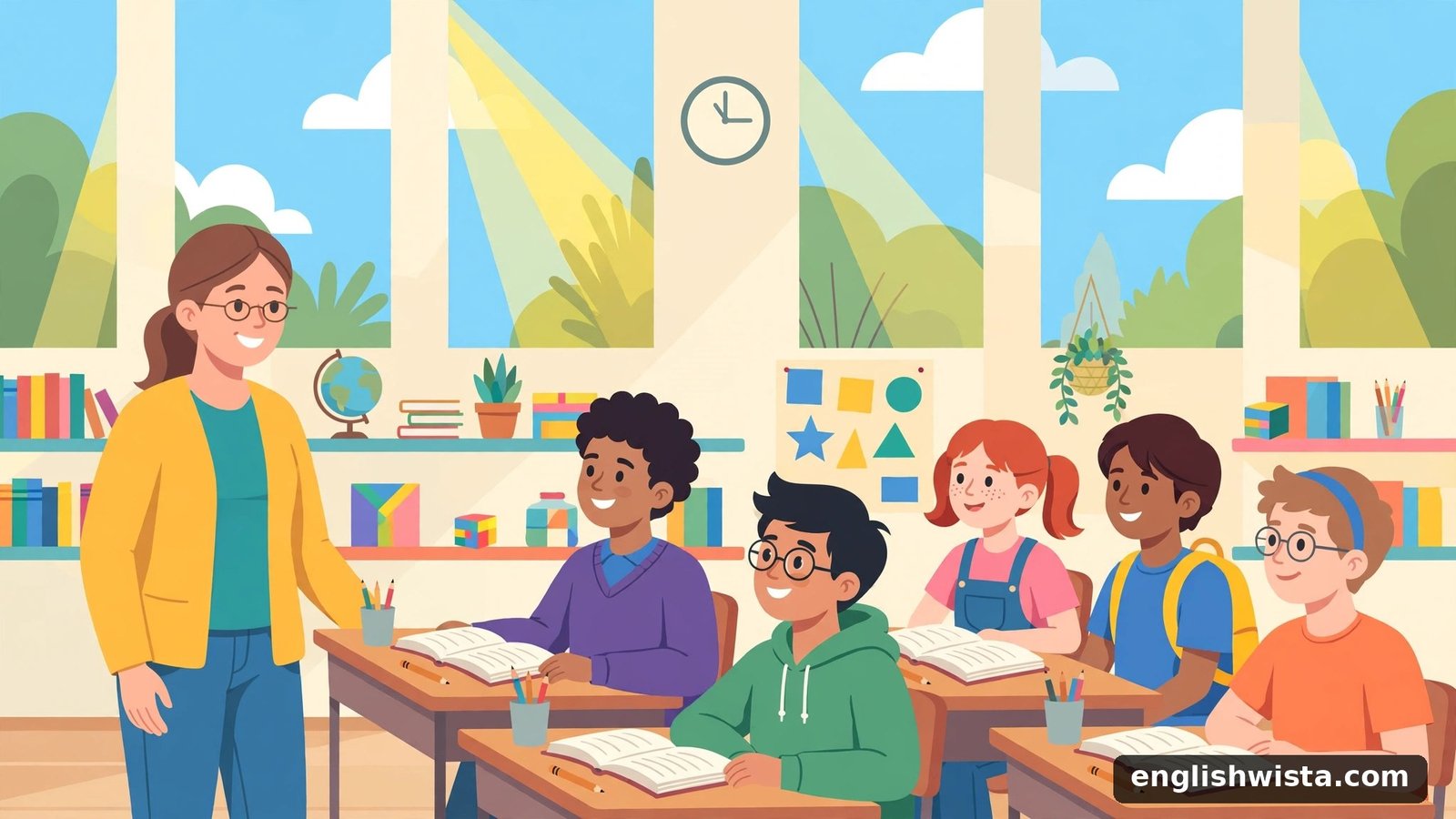
The perfect sentence contains both: “A good teacher teaches so that students learn.” One classroom, two directions!
Try it:
- “Grandma taught me to cook.” — knowledge out of grandma! Correct!
- “I learned to cook from Grandma.” — knowledge into me! Correct!
Out = teach. In = learn. That is the whole secret!
Learn vs Teach in Example Sentences
Let us look at real-life pairs side by side:
- He teaches driving. / He is learning to drive. (Same person can do both — different directions!)
- She taught the class a poem. / The class learned the poem.
In each pair, teach sends and learn receives.
Common Mistakes to Avoid
Mistake 1: “Teach me” reversed — “Learn me.”
- Wrong (standard English): “Please learn me English.”
- Right: “Please teach me English.” (You want knowledge to flow from them — teach!)
Mistake 2: “That’ll learn you!” A humorous dialect phrase meaning “that will teach you a lesson” — fun in films and jokes, but it is deliberately wrong grammar. In standard English: “That’ll teach you!”
Mistake 3: Mixing past forms. Teach → taught (“she taught me”); learn → learned/learnt (“I learned it”). Never “teached” and never “learned me.”
Frequently Asked Questions
Can a book teach? Yes! Anything that gives knowledge can teach: “This book taught me a lot.” And you learn FROM it: “I learned a lot from this book.”
What is “learn about” vs “learn of”? Learn about = study a topic (“learn about history”). Learn of = hear news (“we learned of his arrival”). Both are learn = receiving.
Is “learnt” wrong? No — learnt is standard British past tense; learned is American and also fine in Britain. Pick one style and be consistent.
What is a “learner” and a “teacher”? The person-nouns match the verbs: the teacher teaches; the learner (student) learns. If you know the nouns, you know the verbs!
Mini Quiz: Test Yourself
Choose learn or teach for each sentence.
- 1. Can you _____ me to ride a bike?
- 2. I want to _____ Spanish this year.
- 3. She _____ piano at a music school.
- 4. Mistakes _____ us a lot. (give us lessons)
- 5. He _____ his lesson the hard way. (received it)
Answers: 1. teach (knowledge from you) 2. learn (knowledge into me) 3. teaches (she gives lessons) 4. teach (lessons flow out) 5. learned (he received the lesson)
Quick Recap
- Teach = give knowledge (past: taught).
- Learn = get knowledge (past: learned/learnt).
- Arrow test: out = teach, in = learn.
- “Learn me” is wrong in standard English.
- Learn also means “find out” news.
Conclusion
So, learn or teach? Now you know: teaching sends knowledge out, and learning pulls it in. With the arrow test in your pocket, you will never mix them up again. Keep practicing with real sentences, and soon the right word will come to you automatically!