Do you ever write “raise” and wonder if it should be “rise”? You are not alone! This pair is the classic transitive/intransitive trap — one needs an object and the other does not. Today, we will clear it up once and for all with one question: is something being lifted, or is it lifting itself?

What Is the Simple Difference?
Here is the short answer you can use almost every time:
- Rise = to go up by itself — no object. (“The sun rises.”)
- Raise = to lift something else — needs an object. (“Raise your hand.”)
Think of it this way: rise is self-powered; raise is you-powered.
Rise: Going Up Alone
Use rise when the subject moves up on its own — no object follows.
- The sun rises in the east. (It goes up itself.)
- Prices rose this year. (They went up.)
- He rose from his chair. (He stood up himself.)
- The river is rising. (On its own.)
If nothing is being lifted, it is rise.
Raise: Lifting Something
Use raise when someone lifts or increases something else — an object always follows.
- Raise your hand. (Hand = object.)
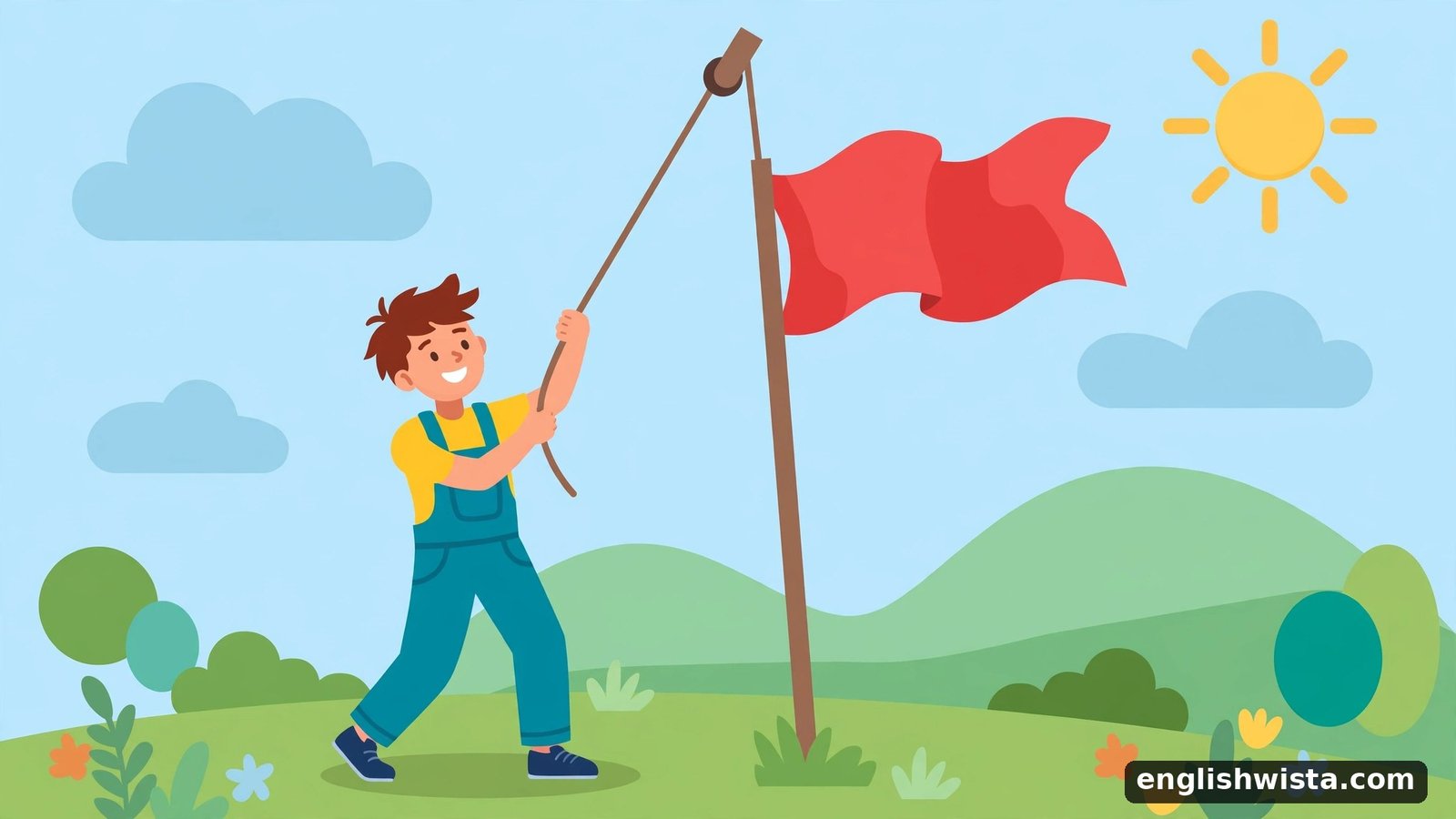
- She raised the flag. (Flag = object.)
- They raised prices. (Prices = object.)
- He raised his voice. (Voice = object.)
If something gets lifted, it is raise.
The Easy Trick to Remember
Here is a trick that never fails — the object test:
- Ask “raise WHAT?” If you can answer with an object → raise.
- If the sentence is complete without an object → rise.
Try it:
- “The sun ___.” — no object possible → rises. Correct!
- “She ___ her hand.” — hand = object → raised. Correct!
Object = raise. No object = rise. That is the whole secret!
Rise vs Raise in Example Sentences
Let us look at real-life pairs side by side:
- The sun rises. / We raise the flag at sunrise.
- Prices rose sharply. / The company raised its prices.
In each pair, rise happens and raise causes.
Common Mistakes to Avoid
Mistake 1: “Raise” without an object.
- Wrong: “The sun raises in the east.”
- Right: “The sun rises in the east.” (The sun lifts itself!)
Mistake 2: “Rise” with an object.
- Wrong: “Please rise your hand.”
- Right: “Please raise your hand.” (Hand = object!)
Mistake 3: Mixing the past forms. Rise → rose → risen (“Prices have risen”). Raise → raised → raised (“She has raised the flag”). The rose/raised swap is the #1 exam trap!
Frequently Asked Questions
What about “raise a child”? A classic raise: you lift/nurture someone else — “She raised three children” (also: “brought up”). Children are raised, never “risen” by parents!
Is “raise” used for money? Yes: “raise funds,” “raise capital” — lifting money from others to a cause. And “get a raise” = a pay increase (your salary was raised!).
What is “rise up”? An emphatic, often dramatic rise: “The people rose up” (rebellion!). “Rise up” = stand and resist — the protest sense.
How are they pronounced? Rise = “ryz” (long i); raise = “rayz” (long a). They almost rhyme — which is why they confuse!
Mini Quiz: Test Yourself
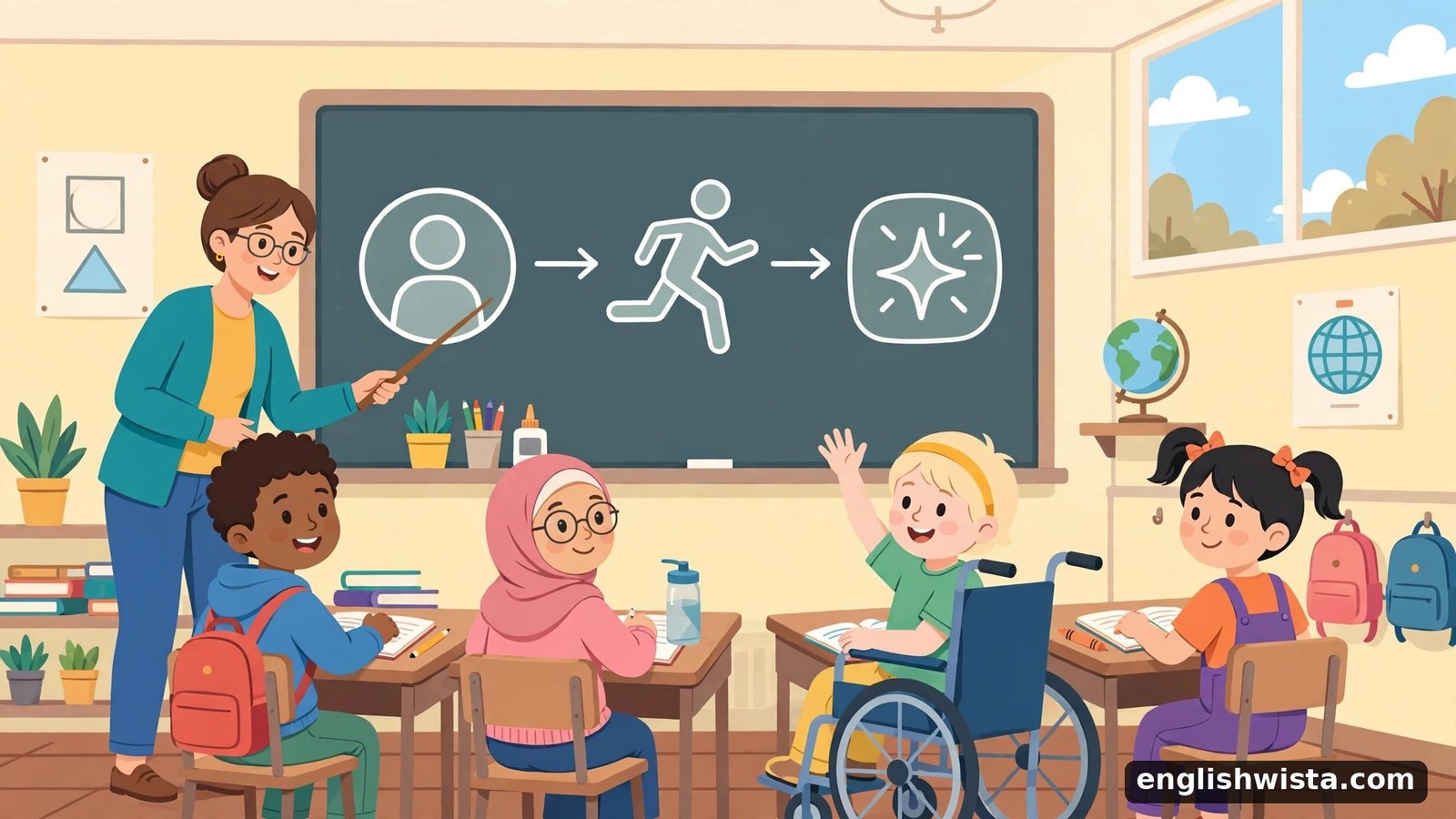
Choose rise or raise for each sentence.
- 1. The sun _____ at 6 a.m.
- 2. Please _____ your voice so all can hear.
- 3. Smoke _____ from the chimney.
- 4. The charity _____ $10,000 last night.
- 5. Prices have _____ again this month.
Answers: 1. rises (no object) 2. raise (voice = object) 3. rises (no object) 4. raised ($10,000 = object) 5. risen (no object, past participle)
Quick Recap
- Rise = go up alone, no object (rose, risen).
- Raise = lift something else, needs object (raised, raised).
- Object test settles every case.
- “Raise a child/funds” = nurture/collect for others.
- Same family as sit/set and lie/lay — transitive vs intransitive pairs.
Conclusion
So, rise or raise? Now you know: rise lifts itself, and raise lifts something else. With the object test in your pocket, you will never mix them up again. Keep practicing with real sentences, and soon the right word will come to you automatically!