Have you seen “device” and “devise” and wondered which one is the gadget? You are not alone! These two words sound almost the same but play different roles. Today, we will explain exactly what device vs devise means, with a simple trick to remember it forever.
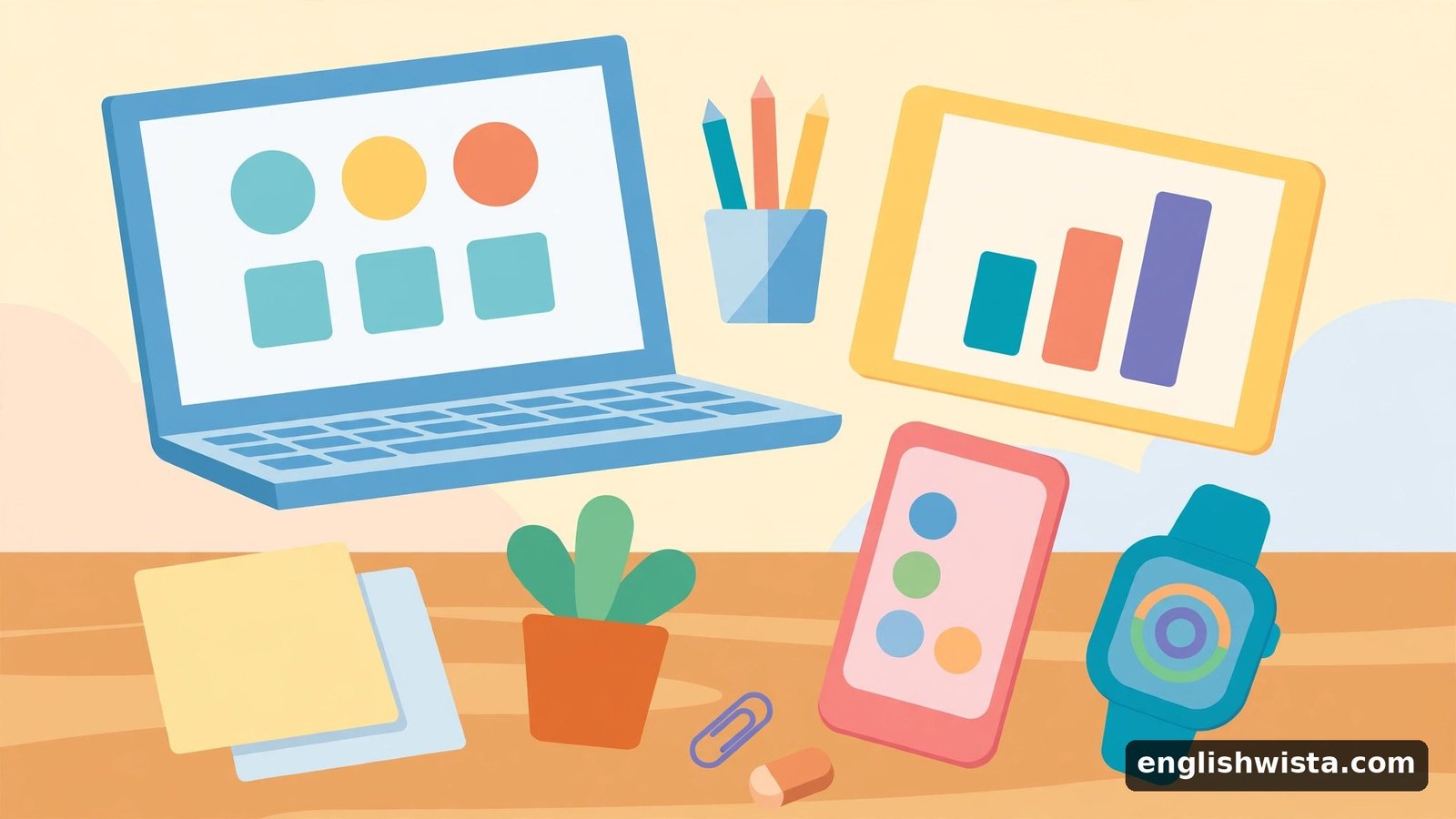
What Is the Simple Difference?
Device is a noun — a gadget, tool, or machine.
Devise is a verb — to invent or plan something clever.
- Device = the thing (phone, gadget).
- Devise = the thinking (invent a plan).
Think of it this way: you HOLD a device, but you DEVISE a plan in your head.
Device: The Gadget
Device means any tool or machine made for a purpose — especially electronics.
- “My phone is my most-used device.”
- “The doctor used a small device to check my heart.”
- “Please turn off all electronic devices.”
Device can also mean a clever scheme in old-fashioned writing (“a device to win the game”), but the gadget meaning is far more common today.
Devise: The Inventing
Devise means to think up and plan something new — a method, a story, or a solution.
- “We need to devise a better way to save water.”
- “She devised a plan to finish early.”
- “The author devised a clever twist for the ending.”
Devise is always an action — inventing, planning, creating in your mind.
The Easy Trick to Remember
Use the same pattern as advice/advise and practice/practise:
- Nouns end in C: device (a thing).
- Verbs end in S: devise (an action).
C = thing you can hold. S = something you do. If you can hold it, it is a device with a C!
Example Pairs
- Device: “This device charges in one hour.” / Devise: “Can you devise a faster method?”
- Device: “Every device in the lab is new.” / Devise: “They devised a new safety system.”
- Device: “A clever device opens the box.” / Devise: “She devised the whole escape plan.”
Common Mistakes to Avoid
Mistake 1: Writing “devise” for a gadget.
- Wrong: “My favourite devise is my tablet.”
- Right: “My favourite device is my tablet.”
Mistake 2: Writing “device” for inventing.
- Wrong: “We must device a new plan.”
- Right: “We must devise a new plan.”
Mistake 3: Pronouncing them the same. Device is “di-VICE” (noun, stress on vice); devise is “di-VIZE” (verb, with a Z sound). The S in devise sounds like Z!
Frequently Asked Questions
Is “device” ever a verb? No — device is only a noun in modern English. The verb is always devise.
What about “devise” as a noun? In law, “devise” can mean property left in a will — but in everyday English, treat devise as the verb.
Why do they look so similar? They share a Latin root (dividere, to divide/arrange) — one became the thing, the other became the thinking.

Mini Quiz: Test Yourself
Choose the best answer for each question.
- 1. A smartphone is a ______.
- 2. We need to ______ a plan to save money.
- 3. Which word ends in C?
- 4. True or false: “devise” is the gadget.
- 5. “She devised a clever trick” — devise here is a verb or noun?
Answers: 1. device 2. devise 3. device 4. False — device is the gadget 5. Verb

Quick Recap
- Device = gadget or tool (noun, ends in C).
- Devise = invent or plan (verb, ends in S, sounds like Z).
- Trick: C = thing you hold; S = something you do.
- Same pattern as advice (noun) / advise (verb).
Conclusion
So, device vs devise: hold the device, devise the plan. Remember C for the thing and S for the action, and you will never mix them up again!