Bait and bate sound exactly the same, and the mix-up usually happens in one famous phrase: “with bated breath”. Many people write “baited breath”, picturing a fishing hook, but the correct word is bate. One is food for catching fish, and the other is about holding your breath in suspense. This simple guide will help you tell them apart with easy examples, a memory trick, and a mini quiz.
What Is the Simple Difference?
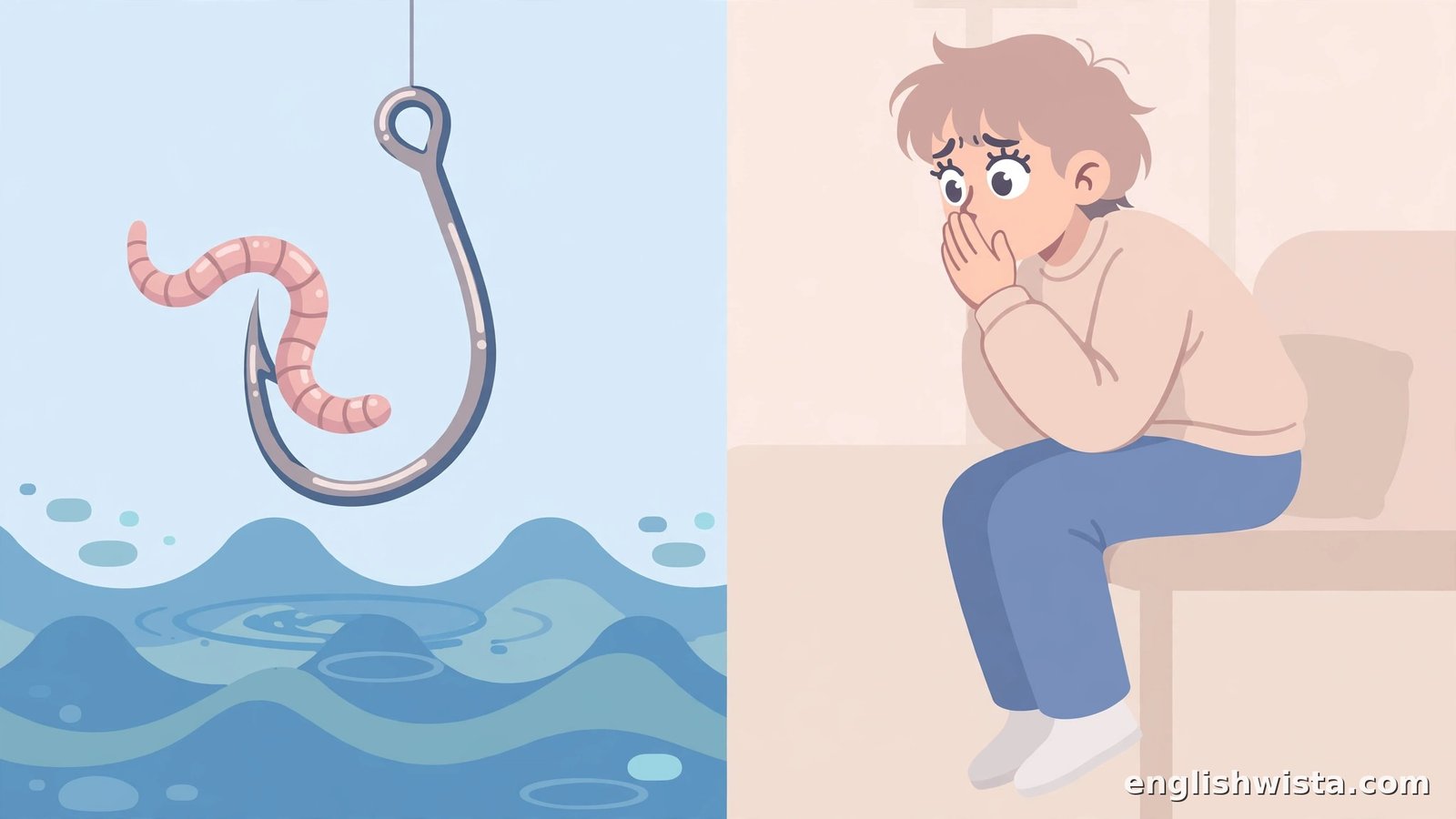
The simple difference is this: bait is food used to lure and catch fish or animals, and it can also mean anything used to tempt or trap someone. Bate is a rare verb meaning to hold back or restrain, and it survives mainly in the fixed phrase “with bated breath”, which means waiting anxiously with your breath held in. So you put bait on a hook, but you wait with bated breath.
Bait: The Fishing Word
Bait (pronounced “bayt”) is a noun meaning food placed on a hook or in a trap to catch fish or animals. As a verb, it means to put bait on a hook, or to tempt or tease someone on purpose.
- He put a worm on the hook as bait for the fish.
- The mouse trap was set with cheese as bait.
- Do not take the bait — he is only trying to make you angry.
Bate: The Waiting Word
Bate (also pronounced “bayt”) is a verb meaning to restrain or hold back, shortened from “abate”. You will almost never see it outside the phrase “with bated breath”, which describes waiting in eager, nervous suspense, as if your breathing has slowed down.
- We waited with bated breath for the exam results.
- The crowd watched with bated breath as the winner was announced.
- She listened with bated breath to the final score.
The Easy Trick to Remember
- Bait is for fish — think of a fish hook, a worm, and a trap. If it catches something, it is bait.
- Bated breath is about breathing — “bate” is a short form of “abate”, meaning to slow down or hold back, just like holding your breath.
- Breath is never “baited” — you cannot put a worm on your breath, so the phrase is always “bated breath”.
- Say it as a rhyme: “Fish take the bait, but good news makes us bate and wait.”
Example Pairs
- The fisherman fixed the bait to his hook. / The fans waited with bated breath for the final whistle.
- She refused to take the bait in the argument. / He listened with bated breath to the news.
- The hunter set bait near the trap. / We held our breath — bated breath — as the lights went out.
Common Mistakes to Avoid
Wrong: We waited with baited breath for the results.
Right: We waited with bated breath for the results.
Wrong: He used cheese as bate in the trap.
Right: He used cheese as bait in the trap.
Wrong: Do not take the bate — he is teasing you.
Right: Do not take the bait — he is teasing you.
Frequently Asked Questions
Is “baited breath” ever correct? No. The correct idiom is “with bated breath”. “Baited” only belongs with hooks, traps, and teasing.
Can “bait” be a verb? Yes. “He baited the hook” means he put bait on it, and “She baited him into an argument” means she tempted him into one.
Is “bate” used anywhere else? Very rarely. Apart from “bated breath”, you may see it in old books meaning to reduce or hold back, as in “bate your anger”.
Mini Quiz: Test Yourself
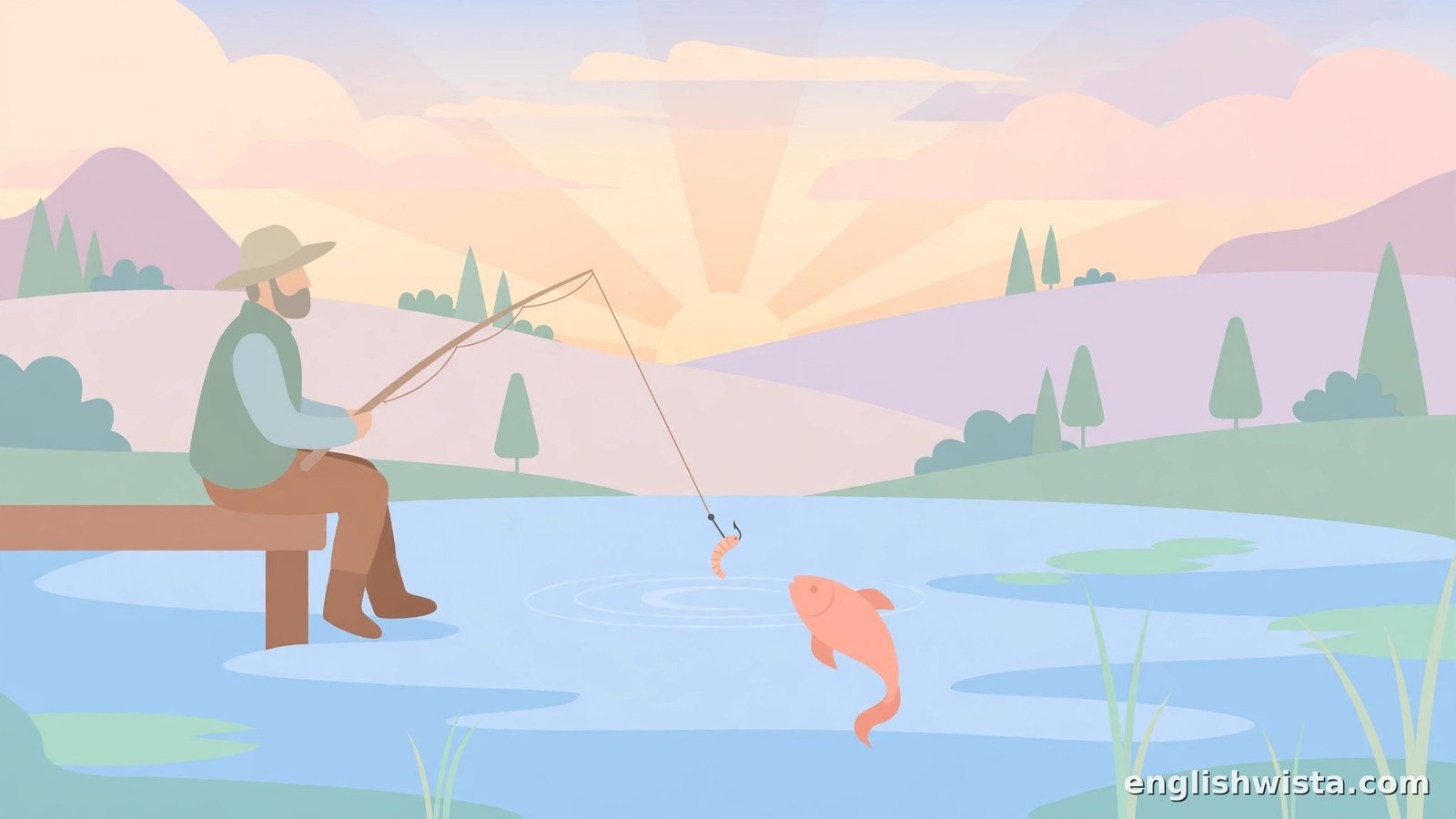
- 1. The fisherman put a worm on the hook as ___.
- 2. We waited with ___ breath for the announcement.
- 3. Do not take the ___ — he only wants an argument.
- 4. The audience listened with ___ breath to the story.
- 5. The trap was set with cheese as ___.
Answers: 1. bait, 2. bated, 3. bait, 4. bated, 5. bait.

Quick Recap
- Bait = food used to catch fish or animals, or anything used to tempt someone (think: hooks and traps).
- Bate = to hold back or restrain; seen almost only in “with bated breath”, meaning waiting in anxious suspense (think: held breath).
- The two words sound the same, but “baited breath” is always wrong.
- Bait can also be a verb meaning to tempt or tease someone.
Conclusion
Now you know the simple difference: bait catches fish and tempts people, while bate lives in “bated breath” and means holding back in suspense. Keep the memory trick in mind, practice with the example sentences, and you will never mix up these two sound-alike words again.