Born and borne look almost the same and are pronounced the same, but they are used in different ways. One is about coming into the world, and the other is about carrying something. This simple guide will help you tell them apart with easy examples, a memory trick, and a mini quiz.
What Is the Simple Difference?
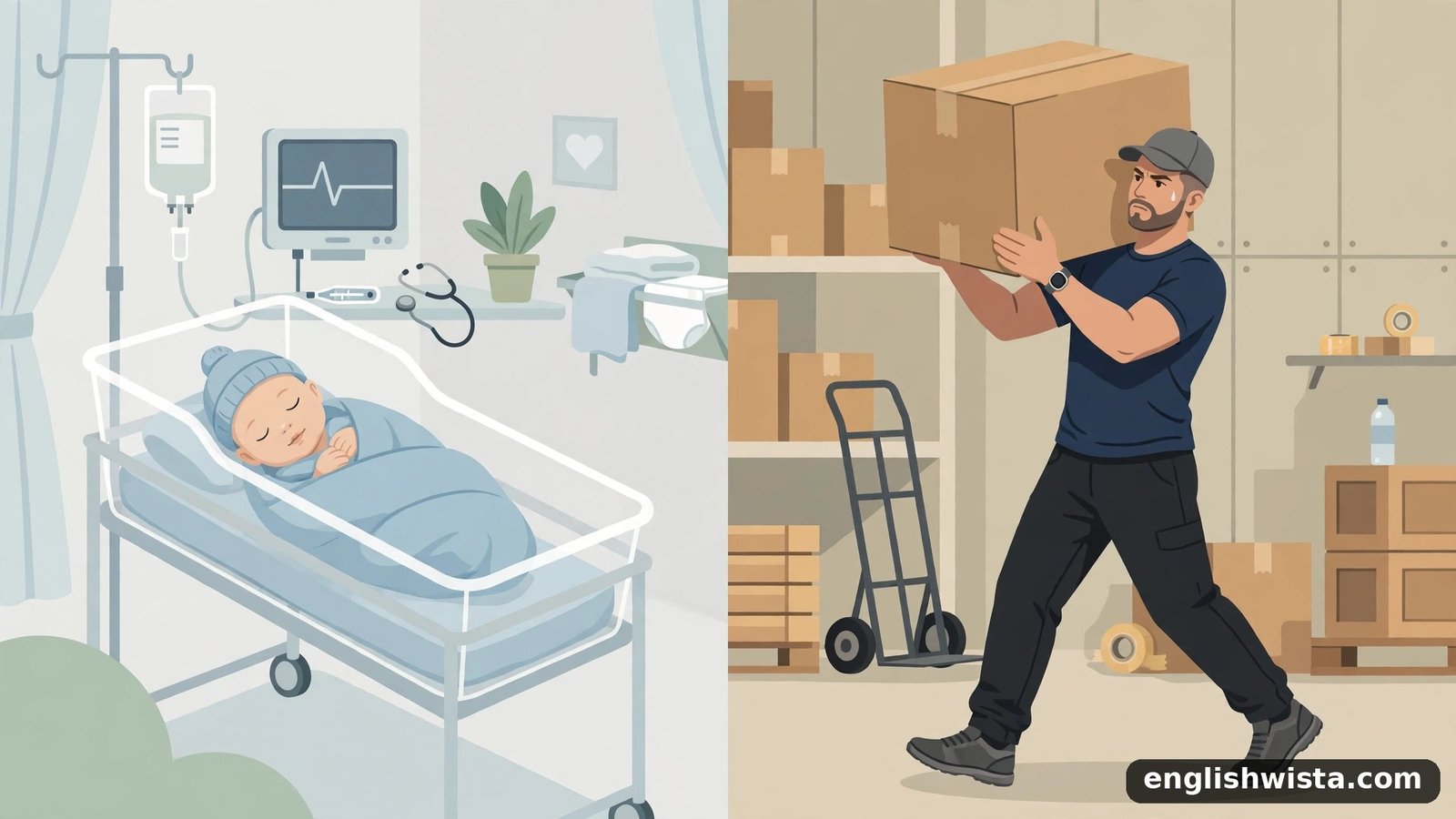
The simple difference is this: born means brought into life by birth — it is only used for being born. Borne is the past participle of “bear” in its other senses: carried, supported, or endured. So a baby is born, but a burden is borne.
Born: The Birth Word
Born (pronounced “born”) is an adjective and verb form used only for birth. It describes when and where someone came into the world, or a natural talent someone has had since birth.
- She was born in London in 1998.
- He is a born leader — people naturally follow him.
- The twins were born two minutes apart.
Borne: The Carrying Word
Borne (pronounced “born”) is the past participle of the verb “bear” meaning to carry, support, or endure. It is used for loads, costs, diseases, and hardships that someone carries.
- The heavy box was borne up the stairs by two workers.
- The cost of the repairs was borne by the landlord.
- She has borne her illness with great courage.
The Easy Trick to Remember
- Born is for birth only. If the sentence is about a baby or a birthday, the word is “born”.
- Borne has an “e” — like “carried”. The extra “e” reminds you of the extra effort of carrying something.
- Borne = carried or endured. Ask: “Was it carried?” If yes, use “borne”.
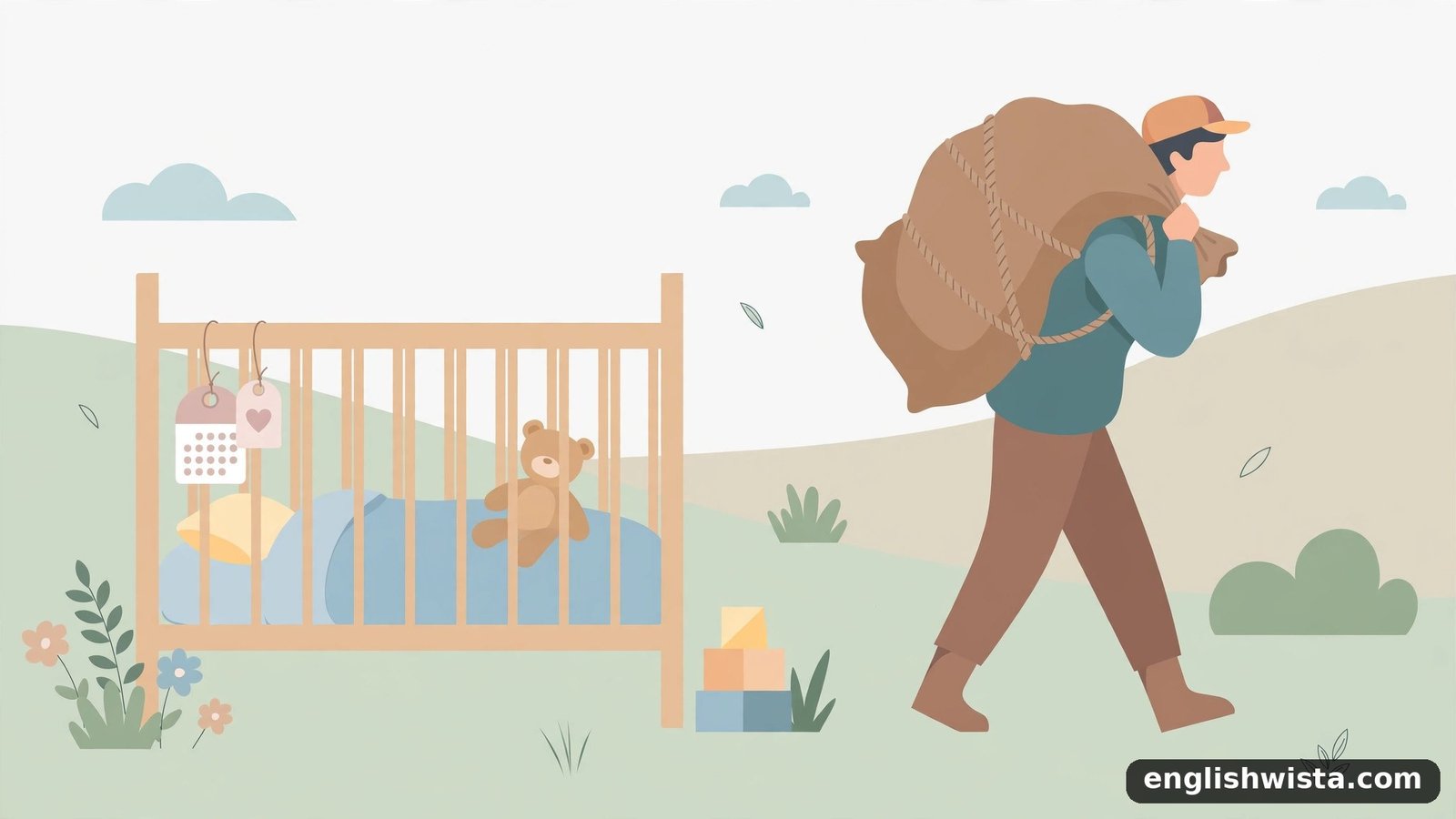
- Say it as a rhyme: “A baby is born; a burden is borne.”
Example Pairs
- He was born in Paris. / The message was borne by a fast rider.
- She is a born singer. / The blame was borne by the manager.
- The child was born on a rainy night. / The disease is borne by mosquitoes.
Common Mistakes to Avoid
Wrong: The cost was born by the company.
Right: The cost was borne by the company.
Wrong: She was borne in 2005.
Right: She was born in 2005.
Wrong: He has born the pain for years.
Right: He has borne the pain for years.
Frequently Asked Questions
Are born and borne pronounced the same? Yes. Both are pronounced “born”, which is why they are so easy to confuse in writing.
Can “born” ever mean “carried”? No. “Born” is only used for birth or natural talent, never for carrying a load.
What about “borne” in “water-borne”? That is the carrying sense — “water-borne disease” means a disease carried by water. The same rule applies.
Is “born” a verb or an adjective? It works as both: “She was born” uses it as a verb form, and “a born leader” uses it as an adjective.
Mini Quiz: Test Yourself
- 1. He was ___ in Canada.
- 2. The cost was ___ by the government.
- 3. She is a ___ artist — she has painted since childhood.
- 4. The letter was ___ by a messenger on horseback.
- 5. The twins were ___ on the same day.
Answers: 1. born, 2. borne, 3. born, 4. borne, 5. born.

Quick Recap
- Born = brought into life by birth, or a natural talent (think: birthday).
- Borne = carried, supported, or endured (think: a burden that is carried).
- Both sound the same — “born” — but only “born” is about birth.
- If something was carried, the word is “borne”.
Conclusion
Now you know the simple difference: born is for birth, and borne is for carrying. Keep the memory trick in mind, practice with the example sentences, and you will never mix up these two look-alike words again.