
Have you ever come across the words flounder and founder and wondered if they mean the same thing? Don’t worry—you’re not alone. These two commonly confused words look very similar and sound alike, and can both appear in situations that involve failure or difficulty. That’s why many people get confused about when to use flounder and when to use founder.
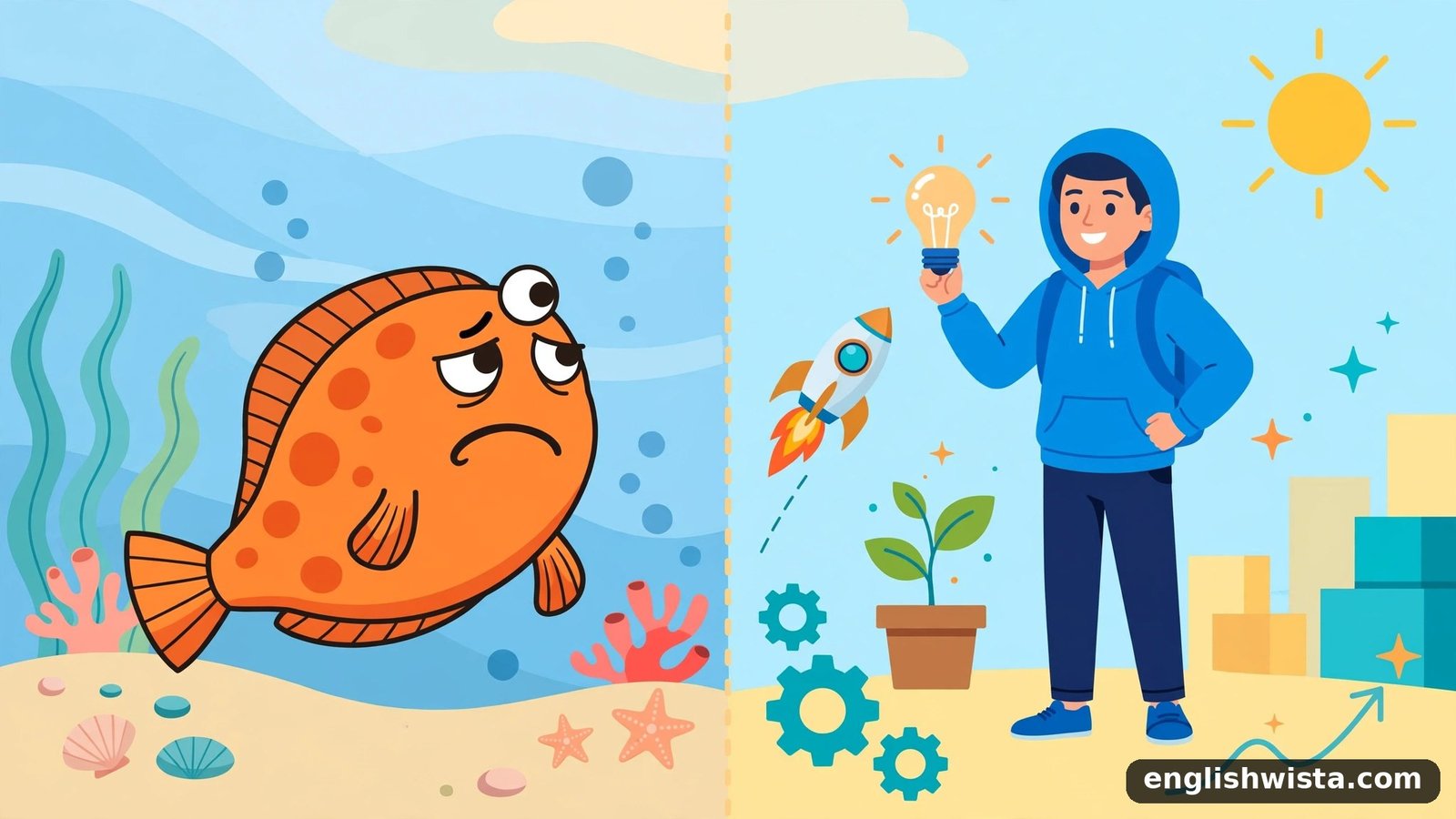
In this article, we’ll break everything down step by step. We’ll keep things simple, friendly, and practical, so by the end, you’ll never mix them up again. You’ll also learn how to use them in real-life example sentences, discover a bit of their history, and enjoy some fun facts along the way.
So, let’s dive in and explore flounder vs founder together.
What Does “Flounder” Mean?
The word flounder is most often used as a verb. It means to struggle, move clumsily, or have trouble doing something. Think of someone trying to swim but failing, or a student stumbling through a hard exam—they are “floundering.”
Simple definition:
Flounder = to struggle awkwardly or clumsily.
Examples of “flounder” in a sentence:
- The company began to flounder after losing its biggest client.
- She tried to explain her idea but started to flounder when asked difficult questions.
- The injured bird was floundering on the ground.
Notice how “flounder” always gives a sense of being stuck, clumsy, or not succeeding smoothly.
What Does “Founder” Mean?
The word founder has more than one meaning — and even works as different parts of speech — which adds to the confusion.
- As a noun: A founder is a person who starts or establishes something, like a business or an organization.
- Example: Steve Jobs was the founder of Apple.
- As a verb: To founder means to fail, break down, or sink.
- Example: The ship began to founder in the storm.
- Example: His project foundered because of poor planning.
Simple definition:
- Founder (noun) = person who starts something
- Founder (verb) = to fail or collapse
Why Do People Confuse Flounder and Founder?
The mix-up happens because, in this word pairs comparison, both words can describe failure or difficulty:
- If a company is not doing well, you might say it’s floundering (struggling).
- If the company completely collapses, you might say it has foundered (failed).
See how close they are? One suggests struggling without success, while the other suggests total failure or sinking.
Think of it like this:
- Flounder = stumbling, but still moving.
- Founder = total collapse.
Quick Trick to Remember the Difference
Here’s an easy memory trick — a simple mnemonic:
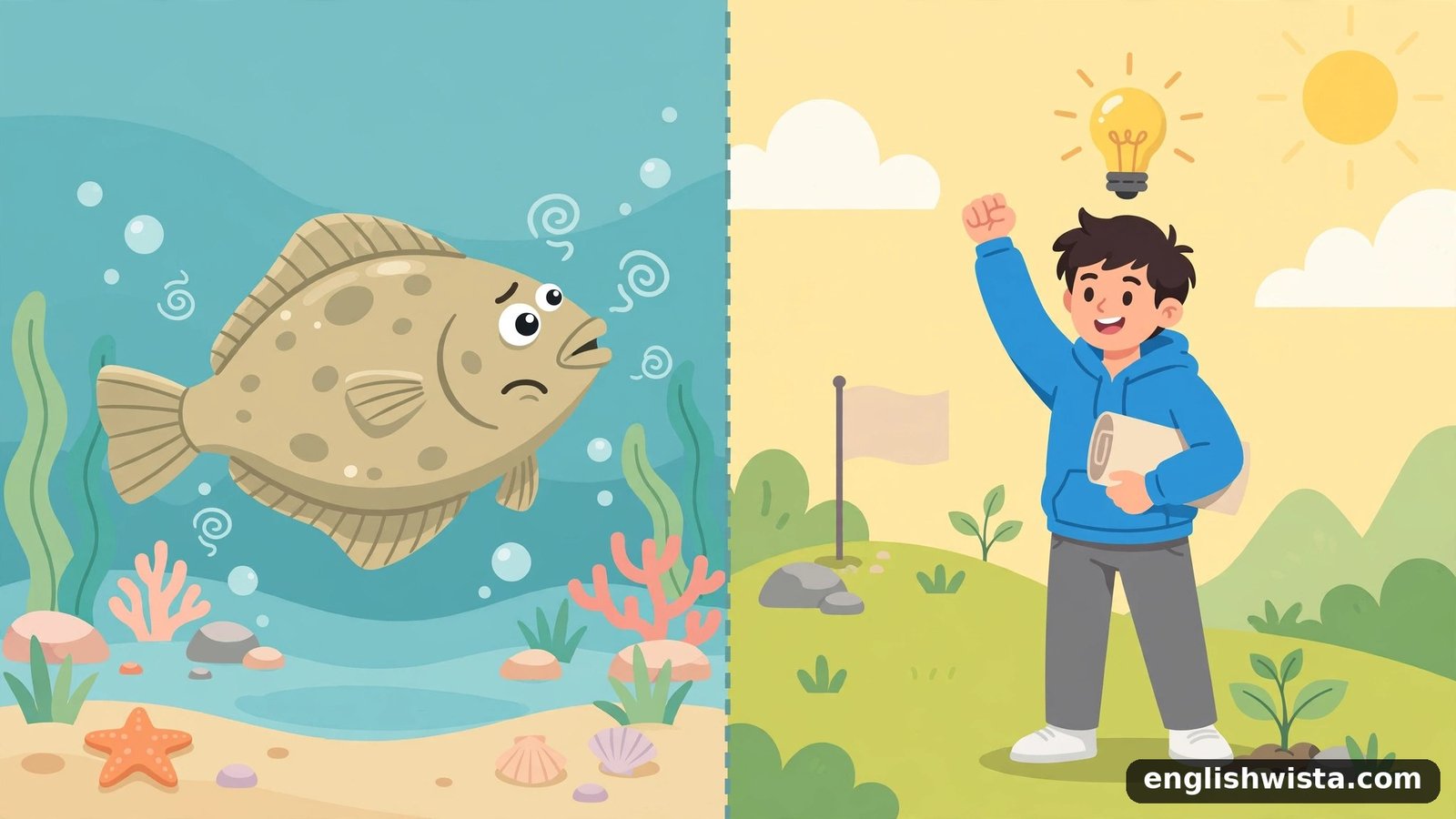
- Flounder = Fish → Flounder is also the name of a flat fish. Imagine the fish flipping and flapping awkwardly, struggling in shallow water. That’s what “flounder” means.
- Founder = Failure → When something founders, it completely fails, like a ship sinking.
If you remember “flounder = fish” and “founder = fail,” you’ll never mix them up again.
More Example Sentences for Practice
Let’s compare the two side by side:
- The athlete began to flounder after running out of energy.
- The expedition foundered when supplies ran out.
- She tried to cook without a recipe and floundered in the kitchen.
- His business foundered after just one year.
- The swimmer was floundering in the rough waves.
- The ship foundered and sank to the bottom of the sea.
Notice again: flounder = struggling; founder = sinking/failing.
The Word Origins (Etymology)
Sometimes the word origin — the etymology — helps us remember the meanings.
- Flounder: Comes from a blend of older words meaning “to stumble” or “to thrash about.” Think of someone awkwardly moving, just like the fish flopping around.
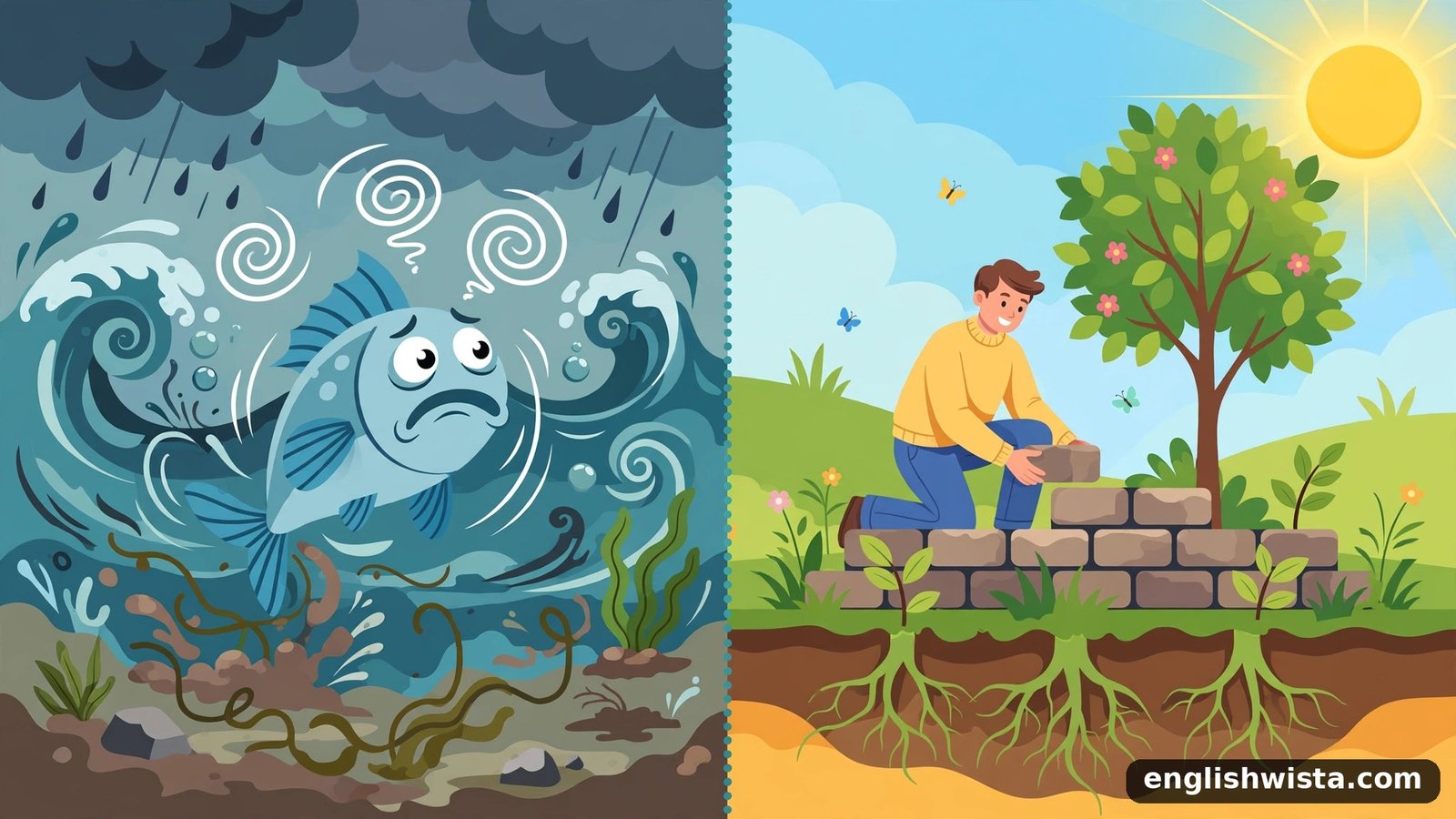
- Founder: Comes from Latin fundare, meaning “to lay a foundation” (as in to start something). Later, it also came to mean “to sink” or “to fail.”
So, founder is connected to both starting (a founder of a company) and ending (a ship that founders). Interesting, right?
Is “Founder” Always Negative?
Not always! As we saw earlier, “founder” can be very positive when it’s used as a noun — this verb vs noun split is the key to using it correctly:
- He is the founder of a non-profit organization.
- She is one of the founders of the school.
But as a verb, “founder” usually has a negative meaning, like collapse or sinking.
- The negotiations foundered after days of arguing.
So the word can go either way depending on how you use it.
Fun Facts About Flounder and Founder
- Flounder the fish: If you’ve seen Disney’s The Little Mermaid, you might remember Ariel’s best friend, a fish named Flounder. Ironically, the character isn’t clumsy at all, even though the word suggests it.
- Founder’s Day: Many schools and organizations celebrate “Founder’s Day” to honor the person who started them.
- Ships that founder: In historical accounts, you’ll often see “the ship foundered” instead of “the ship sank.” It’s a more dramatic, old-fashioned way of saying it.
Common Mistakes to Avoid
Here are some mistakes people make with these words:
- ❌ Saying “the company floundered” when they actually mean it collapsed completely (foundered).
- ❌ Using “founder” (verb) when they only want to describe struggling (flounder).
- ❌ Forgetting that “founder” can also mean a person who starts something—not just failure.
Always ask yourself:
- Is it struggling but still alive? Use flounder.
- Is it a total collapse or sinking? Use founder.
- Is it about a person starting something? Use founder (noun).
A Step-by-Step Guide to Choosing the Right Word
- Check the context. Is the subject struggling but not yet finished? Or has it completely failed?
- If it’s clumsy struggling → Flounder.
- Example: The new student is floundering in math class.
- If it’s complete failure or sinking → Founder.
- Example: The ship foundered in the storm.
- If you’re talking about a person who created something → Founder (noun).
- Example: She’s the founder of the bookstore.
Following these steps will keep you on track every time.
Mini Quiz for Practice
Let’s test your knowledge! Fill in the blanks with either flounder or founder.
- The horse began to _______ on the rocky path.
- After months of poor sales, the company finally _______.
- Mark Zuckerberg is the _______ of Facebook.
- She tried to answer but started to _______ when the questions got harder.
Answers:
- flounder
- foundered
- founder
- flounder
How did you do? Hopefully great!
Conclusion
Now you know the difference between flounder and founder. Let’s finish with a quick summary recap:
- Flounder = to struggle awkwardly.
- Founder (noun) = person who starts something.
- Founder (verb) = to fail or sink.
If you picture a fish flapping clumsily, you’ll remember flounder. If you think of a ship sinking, you’ll remember founder. And if you think of the creator of a company or group, you’ll remember founder as a noun.
So the next time you’re writing or speaking, you’ll know exactly which word to use. Language can sometimes trip us up, but with little memory tricks and examples, it becomes much easier.
And hey—if you ever start to flounder with vocabulary, just come back to guides like this one. They’ll help you before your understanding founders completely!
Quick-Reference Table
When you need a fast answer, this quick reference table puts the two words side by side.
| Word | Part of speech | Meaning | Example |
|---|---|---|---|
| flounder | verb | to struggle awkwardly or clumsily | The swimmer floundered in deep water. |
| founder (verb) | verb | to fail completely; to sink or collapse | The ship foundered in the storm. |
| founder (noun) | noun | a person who starts something | She is the founder of the charity. |
Frequently Asked Questions
What is the difference between flounder and founder?
Flounder is a verb meaning to struggle awkwardly or clumsily (The speaker floundered during the Q&A). Founder works two ways: as a noun it means a person who starts something (She is the founder of the club), and as a verb it means to fail completely or sink (The project foundered). Short version: flounder = struggling; founder = starting or failing.
Is “founder” a noun or a verb? (Can it be used as both?)
Both! As a noun, a founder is someone who starts or establishes something — a company, a school, an organization. As a verb, “to founder” means to fail, break down, or sink. The part of speech changes the meaning completely, so always check the sentence before you choose.
How can I remember the difference between flounder and founder? (Is there a mnemonic?)
Try this mnemonic: flounder = fish (picture a fish flopping and struggling in shallow water) and founder = fail or found (think of a ship sinking in failure, or the founder of a company). Quick test: if it’s struggling but still moving, use flounder; if it’s a total collapse — or a person starting something — use founder.
What are the most common mistakes people make with flounder and founder — and how do I avoid them?
Three big ones: (1) writing “the company floundered” when you mean it collapsed completely — use foundered; (2) using “founder” (verb) when you only mean struggling — use flounder; (3) forgetting that “founder” can also be a noun meaning the person who starts something. One quick wrong-vs-right check before you hit send will catch them all.