Deprecate and depreciate look almost the same and both sound formal, but they mean very different things. One is about disapproval, and the other is about losing value. A teacher may deprecate cheating, while a car depreciates in value every year. This simple guide will help you tell them apart with easy examples, a memory trick, and a mini quiz.
What Is the Simple Difference?
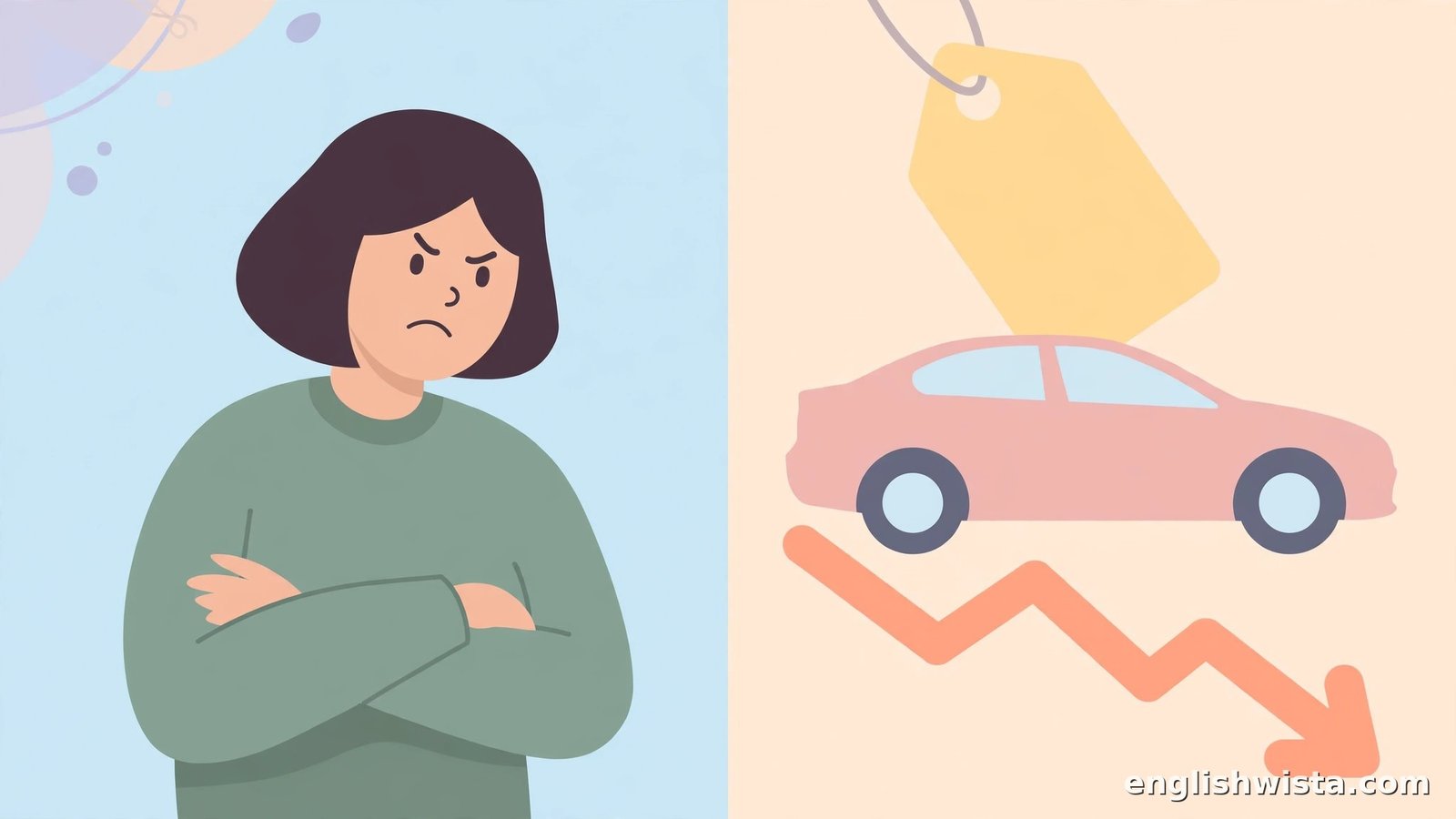
The simple difference is this: to deprecate something is to express strong disapproval of it, or to say it is not good. To depreciate is to lose value over time, as a car or a machine does. So you deprecate bad behaviour, but a used phone depreciates in price.
Deprecate: The Disapproval Word
Deprecate (pronounced “DEP-ruh-kayt”) is a verb meaning to express disapproval of something, or to feel and show that something is wrong. It is often used in formal writing. A related word is “self-deprecating”, which means making fun of yourself in a modest way.
- The school deprecated the use of phones during exams.
- He deprecated his own work, saying it was not good enough.
- Many parents deprecate too much screen time for children.
Depreciate: The Losing Value Word
Depreciate (pronounced “duh-PREE-shee-ayt”) is a verb meaning to lose value over time, or to make something seem less valuable. A new car depreciates the moment you drive it away, and a currency can depreciate against other currencies.
- A new car can depreciate by 20 percent in its first year.
- The old laptop has depreciated to almost nothing.
- Do not depreciate her hard work by calling it luck.
The Easy Trick to Remember
- Depreciate hides the word “price” — de-PRECI-ate. If it is about money and value going down, it is depreciate.
- Deprecate is about “disapproval” — both start with “de”, and deprecate pairs with words like “dislike” and “disapprove”.
- Depreciate is about things; deprecate is about opinions — cars and phones depreciate, while people deprecate ideas and behaviour.
- Say it as a rhyme: “I deprecate the crime, but the car will depreciate with time.”
Example Pairs
- The teacher deprecated copying in the exam. / The car depreciated quickly after three years.
- She deprecated smoking in the office. / The value of the old machine has depreciated a lot.
- He made a self-deprecating joke about his cooking. / The currency depreciated against the dollar.
Common Mistakes to Avoid
Wrong: The car deprecated in value after one year.
Right: The car depreciated in value after one year.
Wrong: The committee depreciated the new rule.
Right: The committee deprecated the new rule.
Wrong: Old computers deprecate very fast.
Right: Old computers depreciate very fast.
Frequently Asked Questions
What does “self-deprecating” mean? It means making jokes about your own faults in a modest, humble way — for example, “I am terrible at cooking, so do not ask me to make dinner.”
Can “depreciate” mean to belittle someone? Yes, in a less common sense it means to make something seem less valuable, as in “Do not depreciate his achievement.” But for money and value, it is the standard word.
Are these words common in everyday speech? Not very. Both are formal words, but “depreciate” is common in business and finance, while “deprecate” appears in formal writing and exams.
Mini Quiz: Test Yourself
- 1. A new car will ___ in value each year.
- 2. The teacher ___ cheating during the test.
- 3. The old phone has ___ to almost nothing.
- 4. He made a self-___ joke about his singing.
- 5. Many experts ___ the idea of banning books.
Answers: 1. depreciate, 2. deprecated, 3. depreciated, 4. deprecating, 5. deprecate.
Quick Recap
- Deprecate = to express disapproval of something (think: dislike and disapprove).
- Depreciate = to lose value over time (think: the word “price” hiding inside it).
- Deprecate is about opinions and behaviour; depreciate is about money and value.
- “Self-deprecating” means modestly joking about your own faults.
Conclusion
Now you know the simple difference: you deprecate what you disapprove of, and things depreciate when they lose value. Keep the memory trick in mind, practice with the example sentences, and you will never mix up these two look-alike words again.