Gibe and jibe sound the same, and their meanings overlap in a confusing way. Both can mean a taunt, but their main modern meanings are different: a gibe is an insult, while a jibe means to agree. This simple guide will help you tell them apart with easy examples, a memory trick, and a mini quiz.
What Is the Simple Difference?
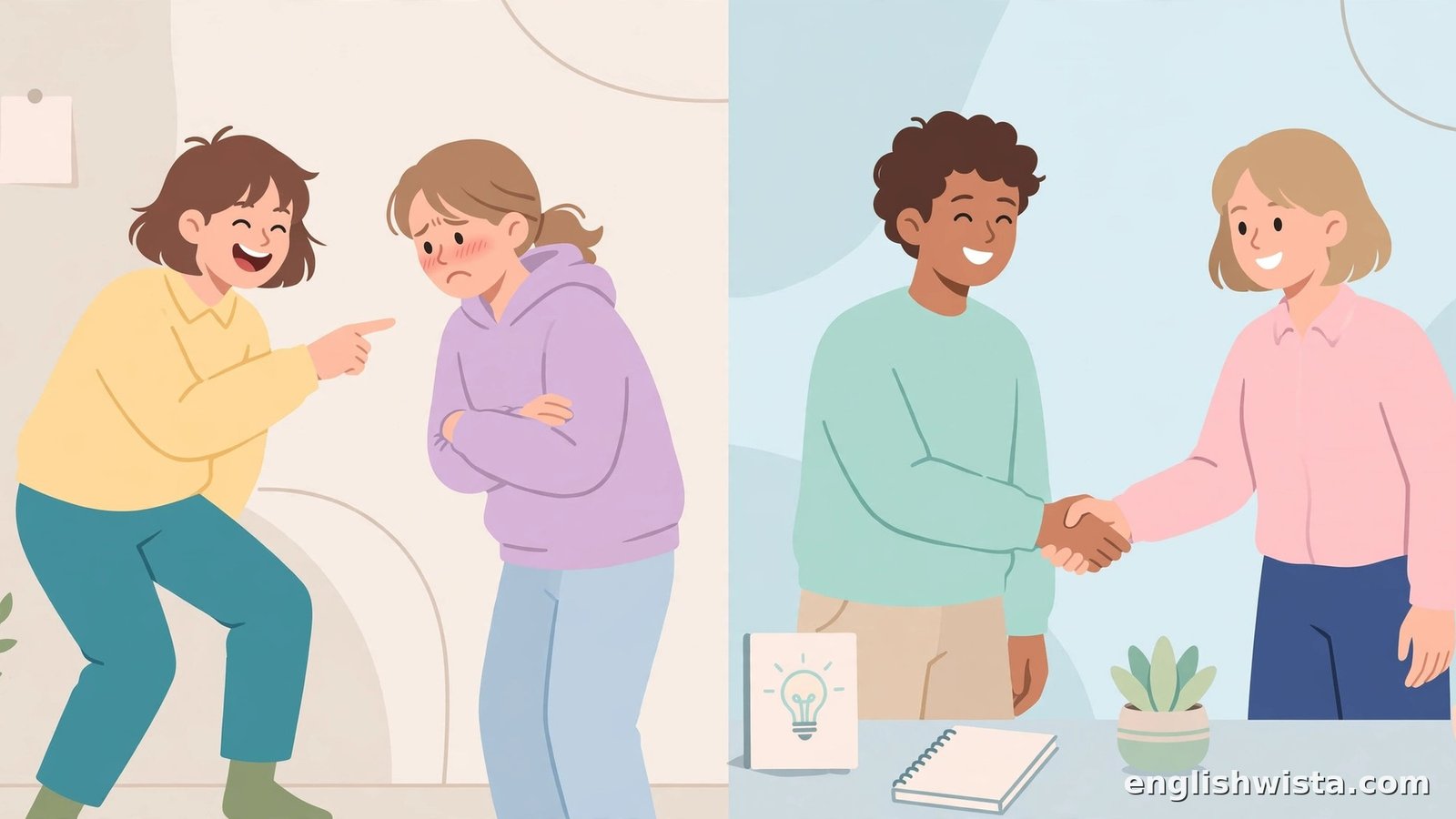
The simple difference is this: a gibe is a mocking remark — a taunt or insult meant to make someone feel small. To jibe is to agree with something, as in “that jibes with what I heard”, and it is also a sailing move where a boat turns its sail across the wind. So you throw a gibe at someone, but a story jibes with the facts.
Gibe: The Taunt Word
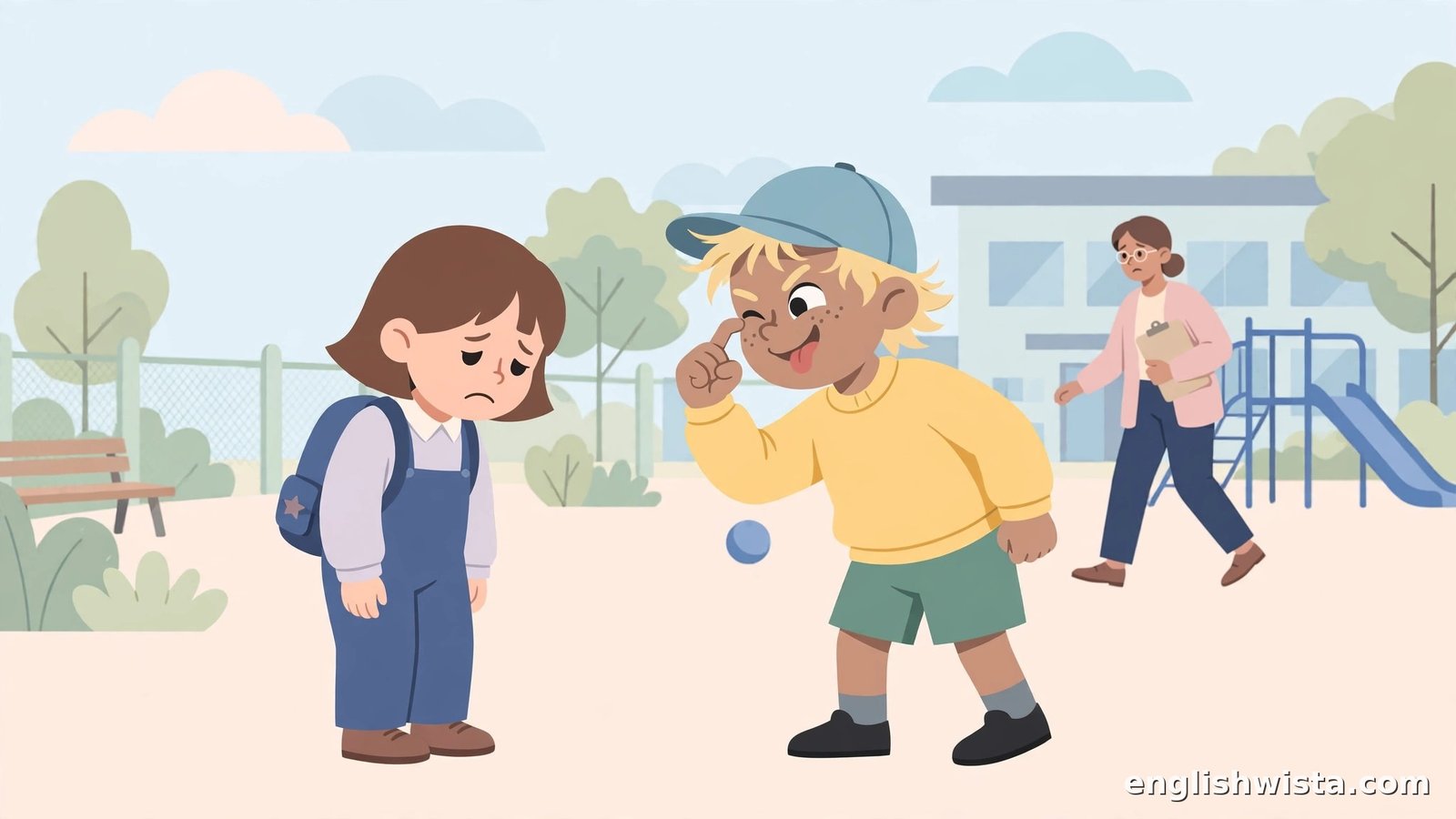
Gibe (pronounced “jyb”) is a noun or verb meaning a mocking remark, a taunt, or a jeer. When someone gibes at you, they are making fun of you in a cruel way.
- The other children made a gibe about his old shoes.
- She ignored his cruel gibes and walked away.
- Do not gibe at people for their mistakes.
Jibe: The Agree Word
Jibe (also pronounced “jyb”) is a verb meaning to be in agreement with something, or to match the facts. In sailing, “to jibe” is a manoeuvre where the boat turns so the wind catches the sail from the other side. In older use, “jibe” could also mean a taunt, like “gibe”.
- Her story does not jibe with the evidence we found.
- That jibes with what the witness told us.
- The sailor had to jibe the boat to change direction.
The Easy Trick to Remember
- Gibe starts with “g” — like “give a jeer”. A gibe is given to hurt someone.
- Jibe starts with “j” — like “just agree”. If things match and agree, they jibe.
- Jibe also belongs to sailing — picture a “j” shaped sail turning in the wind.
- Say it as a rhyme: “A gibe is a jeer that makes you cry, but when facts agree, they jibe.”
Example Pairs
- He threw a cruel gibe at his rival. / His account jibes with the video evidence.
- She ignored their gibes about her accent. / The dates do not jibe with the official record.
- Do not gibe at the new student. / The sailor will jibe the boat around the buoy.
Common Mistakes to Avoid
Wrong: His story does not gibe with the facts.
Right: His story does not jibe with the facts.
Wrong: She threw a cruel jibe at her brother.
Right: She threw a cruel gibe at her brother.
Wrong: The two reports gibe with each other.
Right: The two reports jibe with each other.
Frequently Asked Questions
Can “jibe” also mean a taunt? Yes, in older writing “jibe” was also used for a mocking remark, and some dictionaries still list it. But in modern use, “gibe” is the taunt and “jibe” is the agreement.
Is “gibe” related to “jibe” in spelling? They come from different roots but sound identical, which is why they are so often confused. The spelling is the only clue.
Which spelling do exams expect? Exams usually test “gibe” for a taunt and “jibe” for agreement or the sailing move. Use those meanings to stay safe.
Mini Quiz: Test Yourself
- 1. He made a cruel ___ about her clothes.
- 2. Her story does not ___ with the facts.
- 3. Do not ___ at people who are trying their best.
- 4. The sailor had to ___ the boat to turn.
- 5. The two witnesses’ stories ___ perfectly.
Answers: 1. gibe, 2. jibe, 3. gibe, 4. jibe, 5. jibe.

Quick Recap
- Gibe = a mocking remark or taunt (think: “g” for “give a jeer”).
- Jibe = to agree or match the facts; also a sailing turn (think: “j” for “just agree”).
- Both sound the same — “jyb” — so the spelling is the clue.
- In older use, “jibe” could also mean a taunt, but modern English keeps them apart.
Conclusion
Now you know the simple difference: a gibe is a taunt that hurts, and to jibe is to agree — or to turn a sailboat. Keep the memory trick in mind, practice with the example sentences, and you will never mix up these two look-alike words again.