Shear and sheer sound exactly the same, but their meanings are completely different. One means to cut, and the other means steep, pure, or very thin. One belongs in a sheep farm or a hair salon, and the other describes tall cliffs, light curtains, and amazing luck. This simple guide will help you understand the difference with easy examples, a memory trick, and a mini quiz.
What Is the Simple Difference?
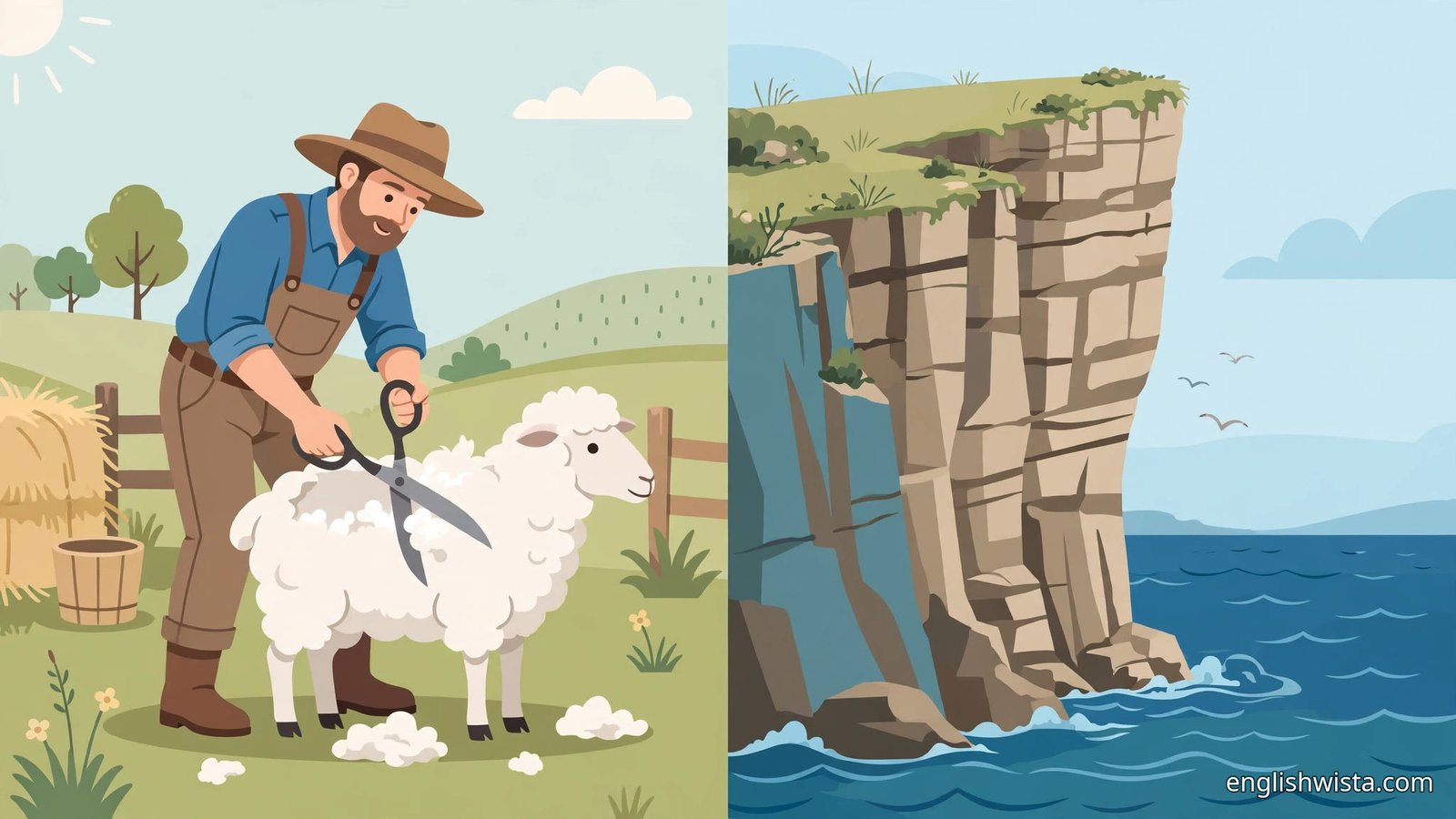
The simple difference is this: shear is a verb that means to cut, especially wool, hair, or metal. Sheer is an adjective with three common meanings: steep (a sheer cliff), complete or utter (sheer luck), and very thin or transparent (sheer curtains). So a farmer will shear his sheep, but a climber will face a sheer rock wall. Remember: you shear things, but things are sheer.
Shear: The Cutting Word
Shear (pronounced “sheer”) is a verb meaning to cut something off, especially wool from sheep, hair, or metal, using sharp tools. It can also mean to break off suddenly, as in “the branch sheared off in the storm.”
- The farmer will shear the sheep before summer begins.
- She went to the salon to shear off her long hair.
- The strong wind sheared the roof off the old barn.
Sheer: The Pure and Steep Word
Sheer (also pronounced “sheer”) is an adjective. It means steep or vertical when describing a cliff or drop, complete or utter when describing luck or joy, and very thin or transparent when describing fabric like curtains.
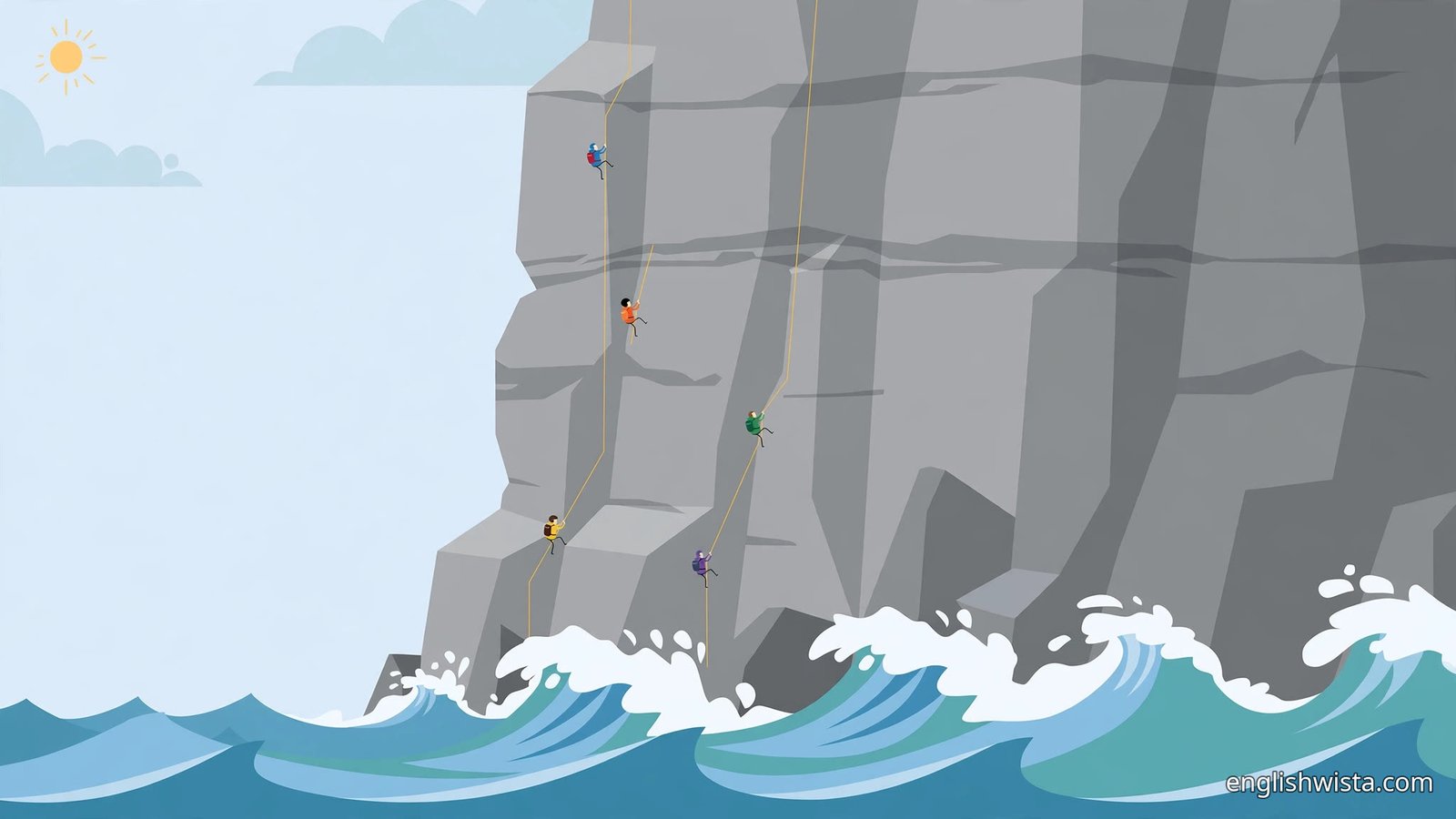
- The climbers faced a sheer rock wall with no safe path.
- He passed the difficult exam by sheer luck.
- She hung sheer white curtains that let in soft light.
The Easy Trick to Remember
- Shear ends in “ear” — picture the barber cutting hair near your ear. Shear is the cutting word.
- Sheer starts with “she” — she wore a sheer, thin summer dress. Sheer is the describing word.
- Shear is an action, sheer is a description — you shear things (verb), but cliffs, luck, and curtains are sheer (adjective).
- Say it as a rhyme: “To shear is to cut with care, but luck and cliffs and cloth are sheer.”
Example Pairs
- They sheared fifty sheep in one day. / The mountain dropped in a sheer cliff to the sea.
- The barber sheared his hair very short. / It was sheer joy to see her old friend again.
- The machine can shear through thick steel. / The sheer fabric felt light as air.
Common Mistakes to Avoid
Wrong: It was shear luck that he won.
Right: It was sheer luck that he won.
Wrong: They climbed the shear cliff carefully.
Right: They climbed the sheer cliff carefully.
Wrong: The farmer sheered the sheep this morning.
Right: The farmer sheared the sheep this morning.
Frequently Asked Questions
Are “shear” and “sheer” pronounced the same? Yes. Both are pronounced “sheer”, which is why learners mix them up so often.
What is the past tense of “shear”? The past tense is “sheared”, and the past participle can be “sheared” or “shorn”. “Shorn” is common for sheep — “the shorn sheep looked much smaller.”
Can “sheer” be used for people? Yes, in phrases like “sheer determination” or “sheer willpower”, meaning complete and absolute.
Mini Quiz: Test Yourself
- 1. The farmer ___ the sheep every spring.
- 2. It was ___ luck that he found his lost wallet.
- 3. The curtains were ___ and let in the morning light.
- 4. They had to ___ through the thick metal fence.
- 5. The road runs along a ___ drop into the sea.
Answers: 1. sheared, 2. sheer, 3. sheer, 4. shear, 5. sheer.
Quick Recap
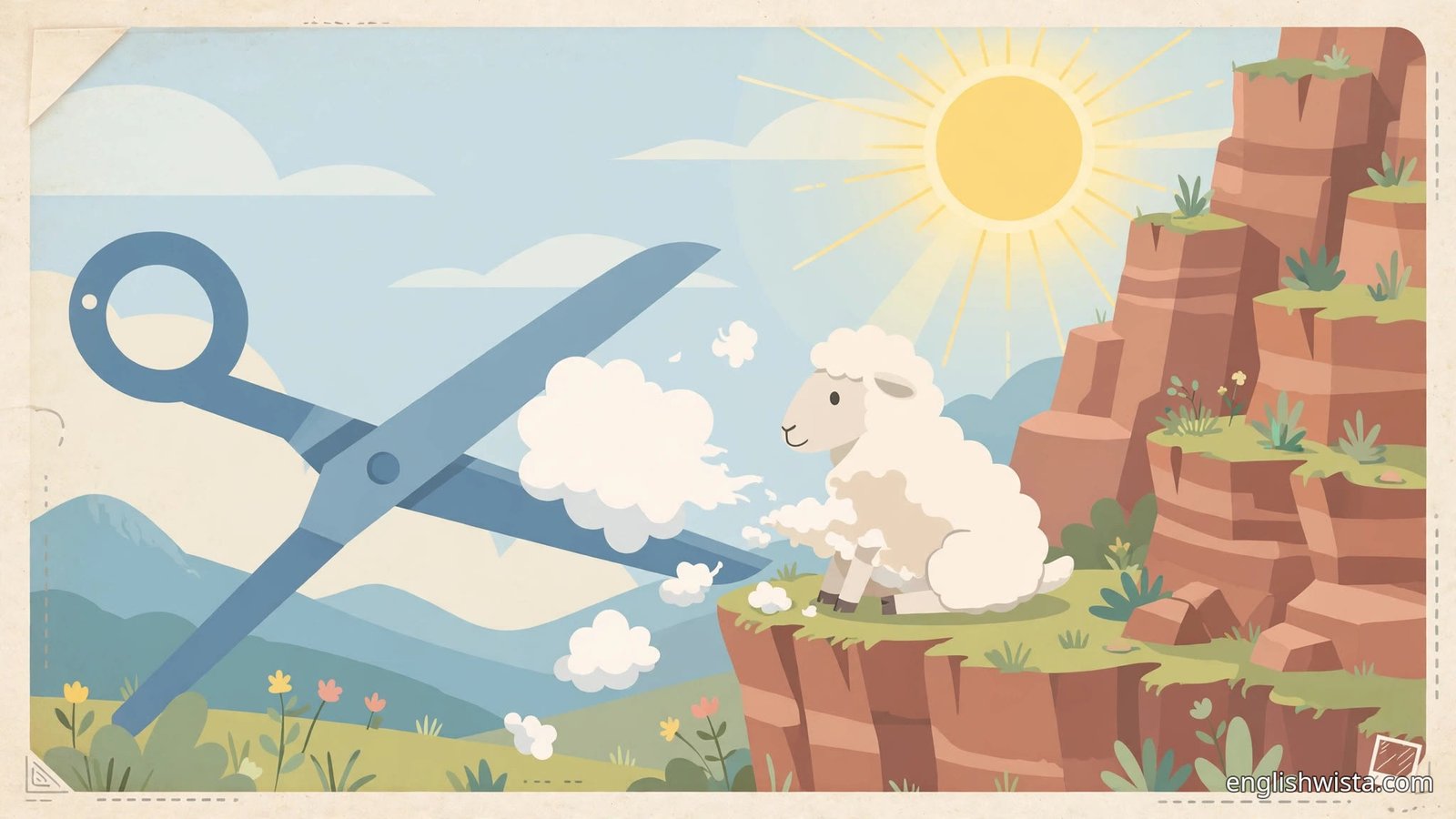
- Shear = to cut, especially wool, hair, or metal (think: the barber near your ear).
- Sheer = steep, complete, or very thin — sheer cliff, sheer luck, sheer curtains (think: she wore sheer fabric).
- Both are pronounced “sheer” — only the spelling tells them apart.
- Shear is a verb (an action); sheer is an adjective (a description).
Conclusion
Now you know the simple difference: shear means to cut, and sheer means steep, pure, or thin. Keep the memory trick in mind, practice with the example sentences, and you will never mix up these two sound-alike words again.