
Do you ever write “stationary” and wonder if it should be “stationery”? You are not alone! These two sound exactly the same and differ by only one letter — but they mean completely different things. Mixing them up is a classic English mistake, even for native speakers. Today, we will clear it up once and for all with a simple rule and easy examples you can actually remember.
Table of Contents
- What Is the Simple Difference?
- Stationary: Not Moving
- Stationery: Paper and Office Supplies
- The Easy Trick to Remember
- Stationary vs Stationery in Example Sentences
- Common Mistakes to Avoid
- Frequently Asked Questions
- Mini Quiz: Test Yourself
- Quick Recap
What Is the Simple Difference?
Here is the short answer you can use almost every time:
- Stationary (with an a) = not moving, standing still.
- Stationery (with an e) = paper and writing supplies (envelopes, notebooks, pens).
Think of it this way: stationary = standing still, and stationery = envelopes. The vowel tells you the meaning!
Stationary: Not Moving
Use stationary (with an a) when something is standing still or not moving.
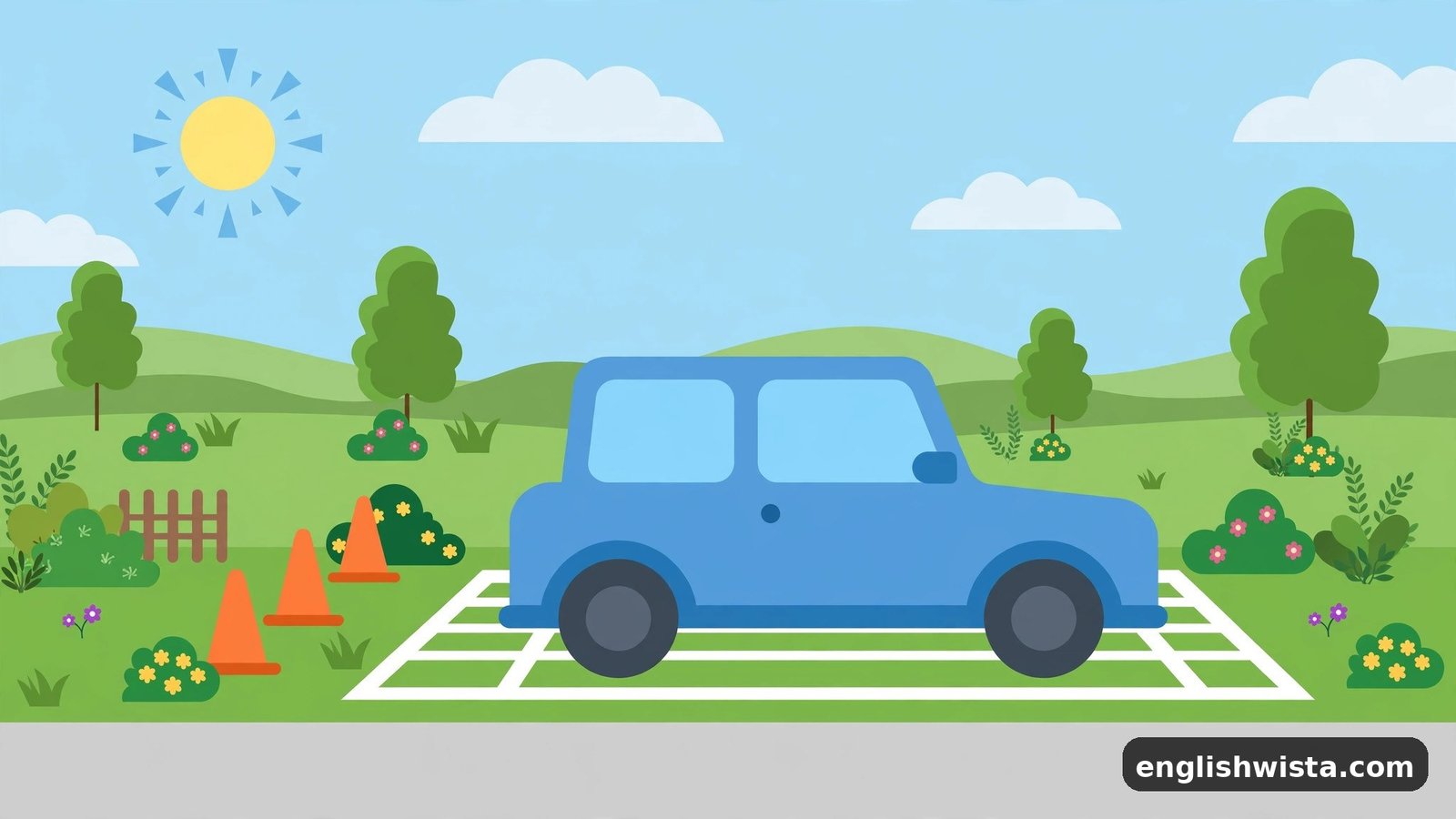
- The car remained stationary at the red light. (It was not moving.)
- He sat stationary for an hour, thinking. (He did not move.)
- The stationary bike lets you exercise indoors. (The bike stays in one place.)
- Traffic was stationary for miles. (Nothing was moving.)
Stationary is an adjective — it describes something that stays put.
Stationery: Paper and Office Supplies
Use stationery (with an e) for paper, envelopes, notebooks, pens, and other writing materials.
- She bought new stationery for the office. (Paper and supplies.)
- The wedding invitations were printed on fine stationery. (Fancy paper.)
- He keeps his stationery in the top drawer. (Pens, envelopes, notepads.)
- The hotel provides free stationery in every room. (Writing paper.)
Stationery is a noun — it names the things you write with and on.
The Easy Trick to Remember
Here is a trick that never fails. Look at the vowel before the r:
- Stationary → a for standing still (not moving).
- Stationery → e for envelopes (paper supplies).
Try it:
- “The bus was station-a-ry.” — standing still! Correct!
- “I need station-e-ry.” — envelopes! Correct!
A for standing still, E for envelopes — that is the whole secret!
Stationary vs Stationery in Example Sentences
Let us look at real-life pairs side by side:
- The train sat stationary at the platform. / She wrote a letter on hotel stationery.
- Keep the camera stationary for a clear shot. / The camera shop also sells stationery.
- The patient lay stationary on the bed. / The nurse handed him stationery to write a note.
In each pair, stationary = not moving and stationery = paper supplies.
Common Mistakes to Avoid
Mistake 1: “Stationery” for not moving.
- Wrong: “The car was stationery at the light.”
- Right: “The car was stationary at the light.” (A for standing still!)
Mistake 2: “Stationary” for paper.
- Wrong: “I bought stationary for school.”
- Right: “I bought stationery for school.” (E for envelopes!)
Mistake 3: Mixing up the parts of speech. Stationary is an adjective (describes), stationery is a noun (names things). “A stationery car” makes no sense!
Frequently Asked Questions
Why do they sound the same? They come from the same Latin root (stationarius, “standing”). Centuries ago, booksellers had fixed (stationary) shops, and the paper goods they sold became “stationery.” Same origin, different meanings!
Can “stationary” be a noun? Almost never in modern English — it is an adjective. If you need the noun for “not moving,” use “stillness.” The noun you want is almost certainly stationery (paper).
Is “stationery bike” correct? No! It is “stationary bike” — the exercise bike that stays in one place. This is one of the most common real-world mix-ups.
What counts as stationery? Paper, envelopes, notebooks, pens, pencils, folders — anything for writing or office use. If you can write on it or with it, it is probably stationery.

Mini Quiz: Test Yourself
Choose stationary or stationery for each sentence.
- 1. The guard stood _____ at the gate all night.
- 2. She ordered custom _____ with her name on it.
- 3. Keep the ladder _____ while I climb.
- 4. The office ran out of _____, so I could not print.
- 5. Is it “stationary bike” or “stationery bike”?
Answers: 1. stationary (not moving) 2. stationery (paper with her name) 3. stationary (not moving) 4. stationery (paper supplies) 5. “stationary bike” (it stays in place!)

Quick Recap
- Stationary (a) = not moving, standing still. Adjective.
- Stationery (e) = paper and writing supplies. Noun.
- The trick: a for standing still, e for envelopes.
- “Stationary bike” — the bike stays put!
- Same Latin root, two different meanings.
Conclusion
So, stationary or stationery? Now you know: stationary with an a stands still, and stationery with an e means envelopes and paper. With the vowel trick in your pocket, you will never mix them up again. Keep practicing with real sentences, and soon the right word will come to you automatically!