If you’ve ever been in a school, college, or university, you’ve probably heard the word campus more than once. It’s one of those words that sounds fancy but simply refers to the grounds or area where an educational institution is located. For example, when someone says, “The university has a large campus,” they’re talking about the land, buildings, and facilities that belong to the university.

Now, here’s where things get a little tricky: what happens when you want to talk about more than one campus? Should you say campuses or campi? You might’ve heard both forms and wondered which one is correct. Don’t worry this article will make everything crystal clear.
We’ll take it step by step, breaking down what campus means, how its plural form developed, and how you can use it correctly in everyday English. So, grab a coffee (or your favorite snack), and let’s dive into the world of campus and campuses!
What Does “Campus” Mean?
Before we explore its plural form, it helps to understand what campus actually means.
Definition:
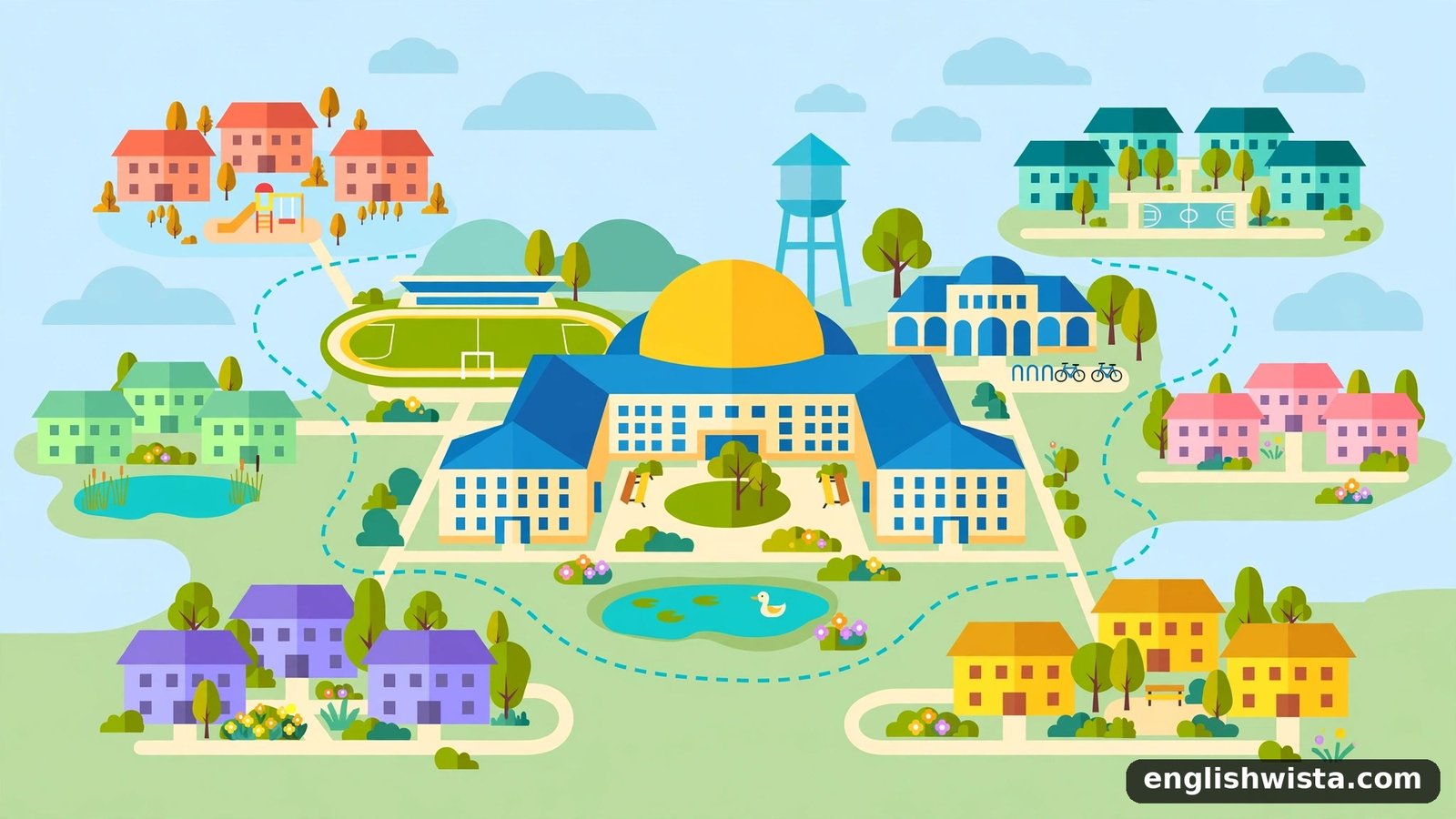
A campus is the land and buildings of a university, college, or school. It often includes classrooms, dormitories, libraries, cafeterias, playgrounds, and even sports fields.
In simple words, a campus is the physical area where students and teachers spend their time studying, socializing, and learning.
Example Sentences:
- The new campus is located near the city center.
- Our campus has a library, gym, and student café.
- She lives on campus to save time on commuting.
Notice how the word campus can also mean living on the grounds of the institution when used with “on.”
What Is the Plural of “Campus”?
Let’s get to the main question: what’s the plural of campus?
The correct plural form in modern English is campuses — the dictionary-recognized plural listed by Merriam-Webster and every other major dictionary.
That’s right just add -es to the end of the word.
So, it goes like this:
- Singular: campus
- Plural: campuses
Example Sentences:
- Many campuses across the country are adopting eco-friendly designs.
- The university has three campuses, each offering different programs.
- Students from various campuses joined the national sports event.
Why Not “Campi”?
You might’ve come across the word campi somewhere and thought, “Wait, isn’t that the plural too?”
Well, campi does exist, but it’s not the standard plural in English — it’s one of the incorrect forms people reach for when they try to force Latin grammar onto everyday English.
Here’s why:
- Campus is of Latin origin — a handy bit of etymology: it originally meant field or open space.
- In Latin, the plural of campus would indeed be campi.
- However, when English borrowed the word, it changed how the plural worked like it often does with other borrowed words.
In English, most nouns ending in “-us” don’t keep their Latin plural forms anymore. Instead, they follow regular English plural rules by adding “-es.”
That’s why we say:
- Buses, not bussi
- Bonuses, not bonusi
- Campuses, not campi
In short: Campi may sound fancy, but campuses is what modern English prefers and it’s what you should use in writing and conversation.
A Quick Grammar Tip: When to Use “Campuses” vs “Campus”
It’s easy to confuse the singular vs plural forms. Here’s a simple trick:
Use campus when talking about one institution or location.
Use campuses when talking about two or more.
(Quick subject-verb agreement check: singular campus pairs with “is,” plural campuses pairs with “are.”)
Examples:
- Harvard has a beautiful campus. (One)
- Harvard and Yale have beautiful campuses. (More than one)
- Each campus has its own student government.
- The university maintains several campuses across the state.
You can also use campus life, campus events, and campus facilities when referring to things related to one school or university.
How Did the Word “Campus” Originate?
Words have stories, and campus has a pretty interesting one.
The word comes from Latin, where campus meant “field,” “plain,” or “open space.” In ancient Rome, campus was used to describe wide, open areas used for military exercises or gatherings basically big fields.
When the word made its way into English in the 1700s, it began to describe the open grounds of a college or university. The earliest known use was at Princeton University in the United States. Over time, it spread to other schools, and now it’s a common term worldwide.
So, when you say campus, you’re actually using a word that’s been around for centuries first as Latin, then as English!
Similar Words and How Their Plurals Work
To understand campus better, it helps to compare it with other words that end in “-us.”
| Singular | Correct Plural (English) | Latin-style Plural (less common) |
|---|---|---|
| focus | focuses | foci |
| cactus | cactuses | cacti |
| nucleus | nuclei | — |
| bonus | bonuses | — |
| campus | campuses | campi |
As you can see, some Latin-based words (like focus or cactus) kept their Latin plurals (foci, cacti) but campus didn’t. English speakers found campuses easier and more natural to say.
So, while campi is technically correct from a Latin perspective, it feels a bit outdated or academic in modern English.
When Is “Campi” Used?
Although it’s rare, you might see campi used in specific contexts mostly by academics, historians, or people trying to sound formal or traditional.

Examples:
- “The university maintains several campi across Europe.”
- “He studied the architecture of ancient Roman campi.”
But keep in mind, this usage is uncommon. In everyday speech and writing, campuses is always better. It sounds natural, modern, and widely accepted.
If you use campi in an essay or article, it might come off as pretentious unless your context is historical or scholarly.
Real-Life Examples: “Campus” and “Campuses” in Sentences
Let’s look at some practical examples — real usage in sentences — to see how the words fit into everyday English.
Using “Campus”:
- The campus is filled with cherry blossoms in the spring.
- We have a café right in the middle of the campus.
- The campus security office is open 24 hours.
Using “Campuses”:
- The university’s campuses are spread across three cities.
- Technology has transformed the way students connect across different campuses.
- Many campuses now focus on sustainability and renewable energy.
These examples show that campuses is used naturally whenever you refer to more than one school or institution.
Common Mistakes to Avoid
Here are a few common errors learners make when using campus and campuses:
- Using “campus’s” instead of “campuses”:
- ❌ Wrong: The city has many campus’s.
- ✅ Correct: The city has many campuses.
- Confusing “campus” (place) with “campus life” (experience):
- ❌ Wrong: I love the campus of my university. (okay, but sounds stiff)
- ✅ Better: I love campus life at my university.
- Using “campi” in casual writing:
- ❌ Wrong: Students from different campi gathered for the event.
- ✅ Correct: Students from different campuses gathered for the event.
Remember: Campuses is the correct and natural plural in both spoken and written English.
Fun Facts About the Word “Campus”
Let’s make things a little more fun! Here are a few cool facts about campus:
- First Use in the U.S.: The word campus was first used by Princeton University students in the late 18th century.
- Not Just for Universities: Today, we use campus for other organizations too like tech companies (Google Campus) or medical institutions (hospital campuses).
- Extended Meaning: Campus doesn’t always mean a physical space anymore. Many online universities refer to their digital platforms as “virtual campuses.”
- Metaphorical Use: Sometimes, people use on campus metaphorically to mean being involved in student life or university activities even if not literally on the grounds.
Example: “She’s really active on campus” doesn’t necessarily mean she lives there; it means she’s involved in student events or clubs.
Other Phrases and Expressions with “Campus”
To make your English sound more natural, here are some common expressions and collocations using campus:
- On campus: living or staying within the university grounds.
Example: “I live on campus to save travel time.” - Off campus: living outside the school area.
Example: “Many students rent apartments off campus.” - Campus life: student experiences and social activities at a university.
Example: “Campus life is full of new friendships and adventures.” - Campus tour: a guided visit for prospective students.
Example: “We took a campus tour before applying to college.” - Campus security: the department responsible for safety on school grounds.
Example: “Campus security patrols the area at night.”
These expressions help you sound fluent and confident when talking about university environments.
How to Pronounce the Plural of “Campus”: A Pronunciation Guide
Saying campuses correctly is easy once you break it down. Here is a simple pronunciation guide with the singular and plural side by side.
- Singular: campus — IPA transcription: /ˈkæmpəs/ — say it like “KAM-puhs”.
- Plural: campuses — IPA transcription: /ˈkæmpəsɪz/ — say it like “KAM-puh-siz”.
Notice that the stress stays on the first syllable (KAM) in both forms. The -es ending adds one extra syllable, pronounced like a short “iz” — the same sound you hear at the end of wishes or boxes. A good practice tip: say campus slowly, then add -iz right after it, keeping the KAM stress strong. After three or four tries out loud, campuses will roll off your tongue naturally.
Frequently Asked Questions
What is the plural of campus?
The plural of campus is campuses. This is the preferred plural in modern English — simply add -es to the singular form, just like bus → buses.
Is “campi” a real word?
Campi is the Latin plural of campus, so it exists in Latin — but it is not the standard plural in English. The dictionary-recognized English plural is campuses, and that is the form to use in writing, schoolwork, and conversation.
How do you pronounce the plural of campus?
Campuses is pronounced “KAM-puh-siz” (/ˈkæmpəsɪz/), with the stress on the first syllable. The -es ending adds an extra “iz” syllable, unlike the singular campus (“KAM-puhs”).
Do I say “the campuses is” or “the campuses are”?
Say “the campuses are.” Because campuses is a plural noun, subject-verb agreement requires a plural verb. For example: “The campuses are open for tours.” Use “is” only with the singular: “The campus is open for tours.”
Quick Recap: Key Takeaways
Before we wrap up, let’s summarize what we’ve learned:
- The plural of campus is campuses.
- Campi exists but is not standard in modern English.
- Campus comes from Latin, meaning “field” or “open space.”
- Use campus for one location and campuses for more than one.
- Avoid using campi unless you’re writing something academic or historical.
- Common phrases include on campus, off campus, and campus life.
Conclusion: Keep It Simple Say “Campuses”!
Language is always evolving, and English has a way of simplifying words over time. While campi might sound like something straight out of an ancient textbook, campuses is the word you’ll actually hear in classrooms, workplaces, and daily conversation.
So the next time you’re describing multiple universities or school grounds, confidently say campuses you’ll sound natural, fluent, and completely correct.
Remember, English doesn’t always follow Latin rules. It creates its own rhythm, one that’s easy to learn when you take it step by step.
Now you can use campus and campuses without hesitation. Whether you’re writing an essay, filling out a college form, or chatting with friends about your favorite university, you’ve got it right!
Final Tip: Keep an ear out when people use the word campus you’ll notice it appears everywhere, from tech company offices to online learning platforms. It’s a simple word with a long history and a modern life that’s still growing.
So go ahead talk about your campuses with confidence!