Have you ever typed “weak” when you meant “week”? They sound exactly the same, but one means “not strong” and the other means “seven days”! Today, we will explain exactly what weak vs week means, with a simple trick to remember it forever.
What Is the Simple Difference?
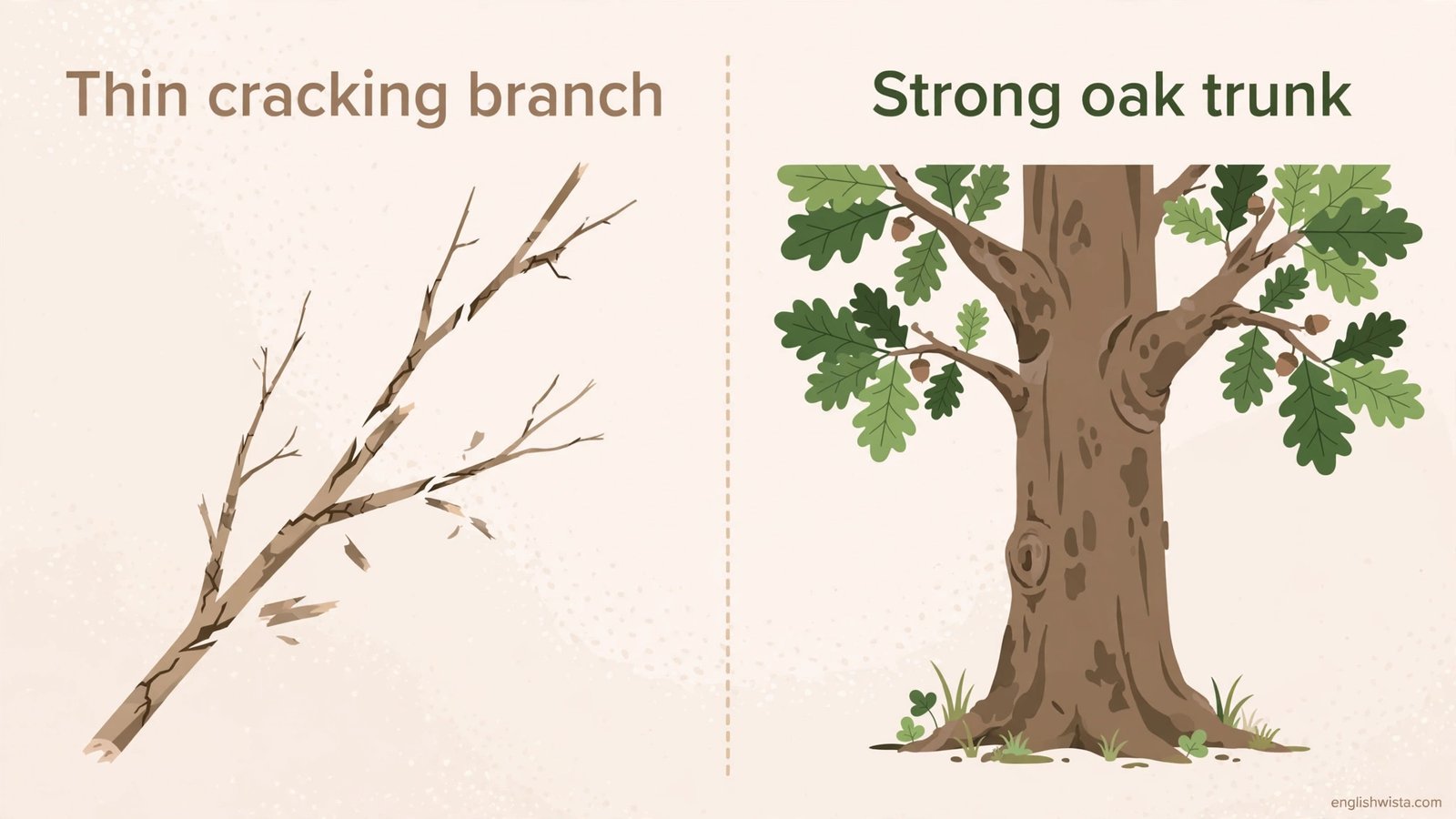
Weak is an adjective — it means not strong, fragile, or lacking power.
Week is a noun — it means a period of seven days.
- Weak = not strong (describes a thing).
- Week = seven days (a unit of time).
Think of it this way: a weak branch can snap, but a week always lasts seven days.
Weak: The Not-Strong One
Weak means lacking strength or power — a weak person, a weak signal, or a weak excuse.
- “He felt weak after the illness.”
- “The coffee was too weak; I need a stronger cup.”
- “That is a weak excuse for being late.” (not convincing)
If it means “not strong,” it is spelled W-E-A-K — weak, with EA.
Week: The Seven-Days One
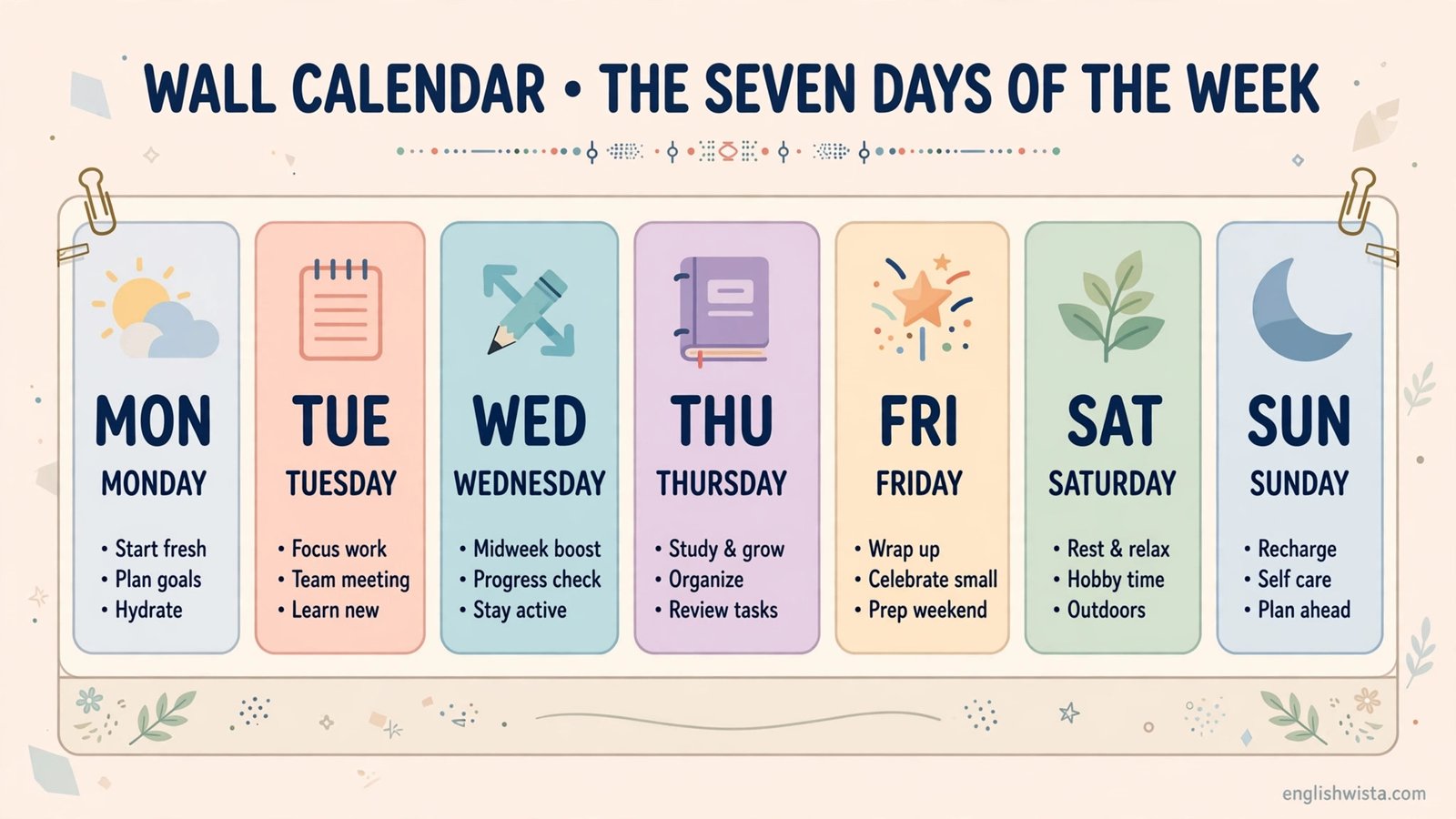
Week means seven days — Monday to Sunday. It also appears in “weekend” (Saturday and Sunday).
- “There are seven days in a week.”
- “I will finish the project next week.”
- “We visit grandma once a week.”
If it means “seven days,” it is spelled W-E-E-K — week, with EE.
The Easy Trick to Remember
- Weak (not strong) has EA — the same EA as in “heart,” and a weak heart needs rest.
- Week (seven days) has EE — think of “seeven days,” or that week looks like the number “7” with its two Es standing together.
EA for weak (like heart); EE for seeven days (week). That is the whole trick!
Example Pairs
- Weak: “The weak bridge could not hold the truck.” / Week: “The bridge will reopen next week.”
- Weak: “She has a weak memory for names.” / Week: “I exercise three times a week.”
- Weak: “His voice was weak and shaky.” / Week: “They went camping for a whole week.”
Common Mistakes to Avoid
Mistake 1: Writing “week” when you mean not strong.
- Wrong: “The tea is too week.”
- Right: “The tea is too weak.”
Mistake 2: Writing “weak” when you mean seven days.
- Wrong: “See you next weak!”
- Right: “See you next week!”
Mistake 3: Mixing them in “a weak week.” It is possible to have “a weak week” (a not-strong seven days) — both words in one phrase! Double-check the spelling of each.
Frequently Asked Questions
Are “weak” and “week” pronounced the same? Yes — both sound like “week.” Spelling is the only difference.
What is the opposite of “weak”? “Strong” is the opposite.
Does “week” always mean seven days? Yes — and “weekend” is the end of the week (Saturday and Sunday).
Mini Quiz: Test Yourself
Choose the best answer for each question.
- 1. After the flu, she felt very ______.
- 2. School starts again next ______.
- 3. Which word means “seven days”?
- 4. True or false: “The signal is too week” is spelled correctly.
- 5. A ______ password is easy to guess.
Answers: 1. weak 2. week 3. week 4. False — it is “too weak” 5. weak
Quick Recap
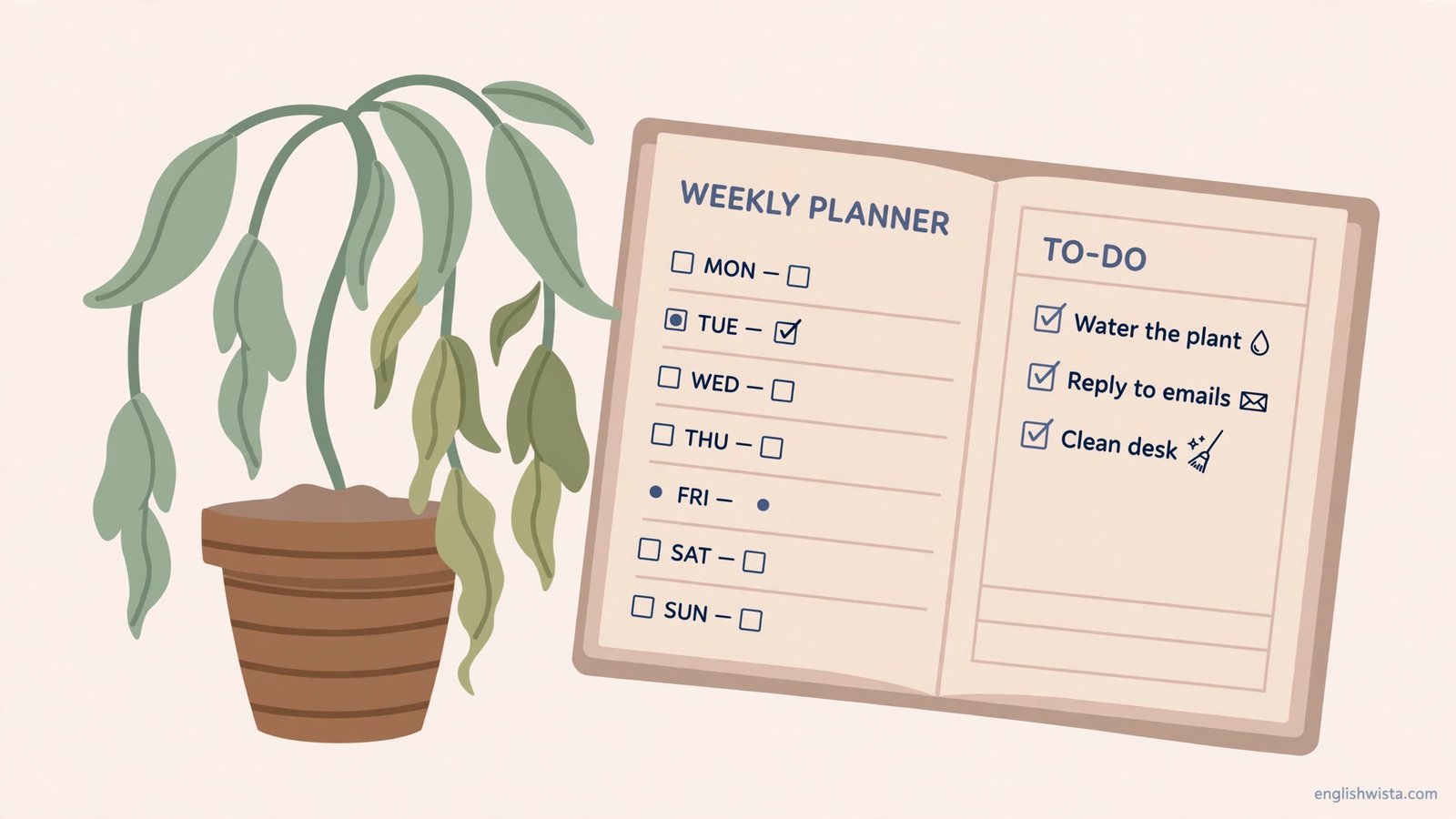
- Weak (with EA) = not strong, lacking power.
- Week (with EE) = a period of seven days.
- Trick: EA for weak (like heart); EE for seeven days (week).
- Both are pronounced “week” — spelling is the only difference.
Conclusion
So, weak vs week: weak means not strong, and week means seven days. Remember EA for the heart and EE for seven, and you will never mix them up again!