Marshal and martial differ by just one letter “t”, but their meanings are completely different. One is an officer, and the other means related to war. One keeps the law, and the other describes the battlefield. This simple guide will help you understand the difference with easy examples, a memory trick, and a mini quiz.
What Is the Simple Difference?
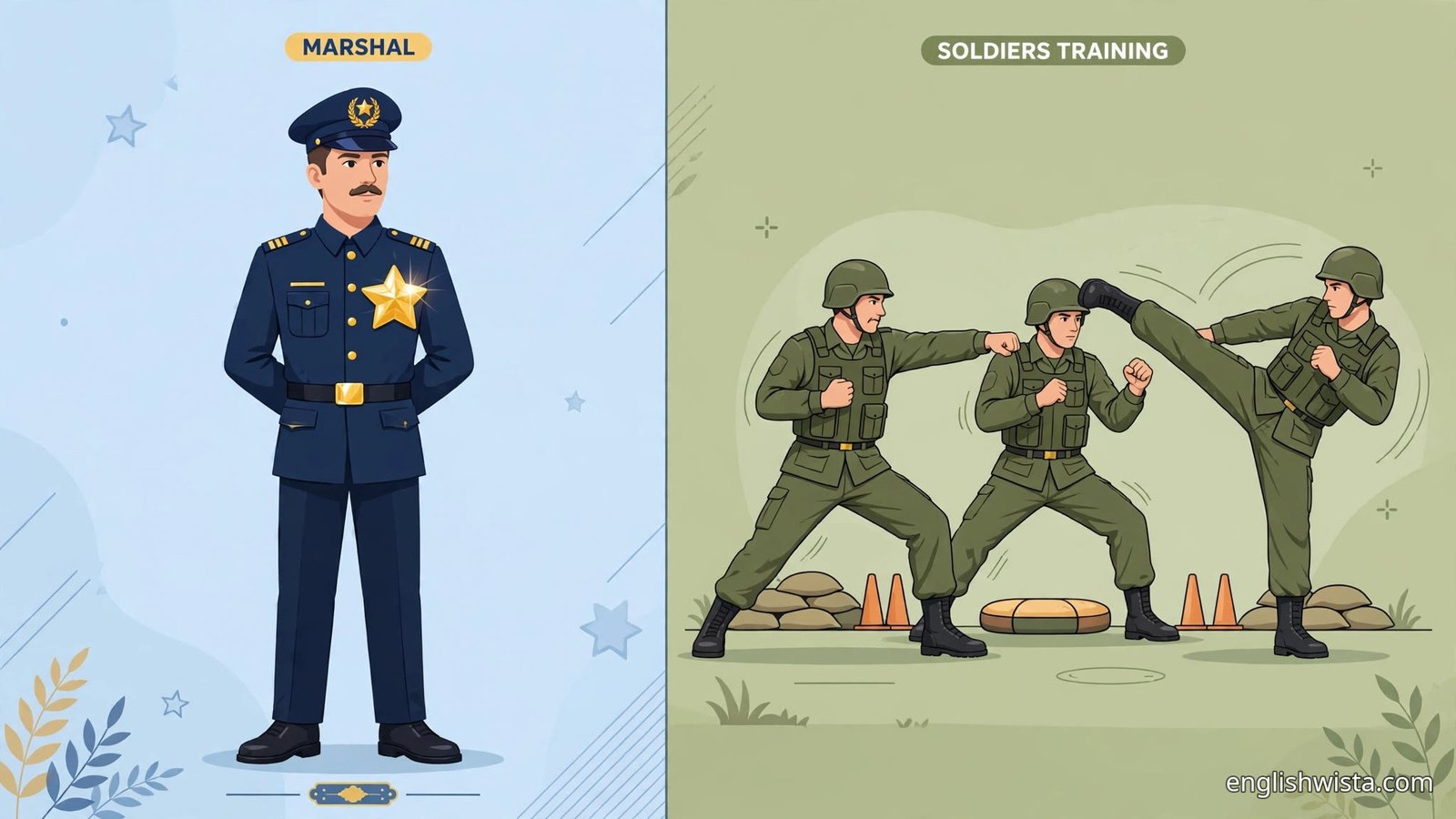
The simple difference is this: a marshal (no “t”) is an officer of the law or a high-ranking official, and as a verb it means to arrange or gather. Martial (with a “t”) is an adjective meaning related to war or fighting — as in martial arts and martial law. So the officer with the badge is a marshal, but karate is a martial art. Remember: marshal keeps order, martial means war.
Marshal: The Officer Word
A marshal (pronounced “mar-shul”) is a law officer, like a US Marshal, or an official in charge of ceremonies and events. As a verb, “to marshal” means to arrange or bring together in order.
- The marshal arrested the outlaw in the old western town.
- She worked as a fire marshal at the factory.
- He marshaled all his courage before the big speech.
Martial: The War Word
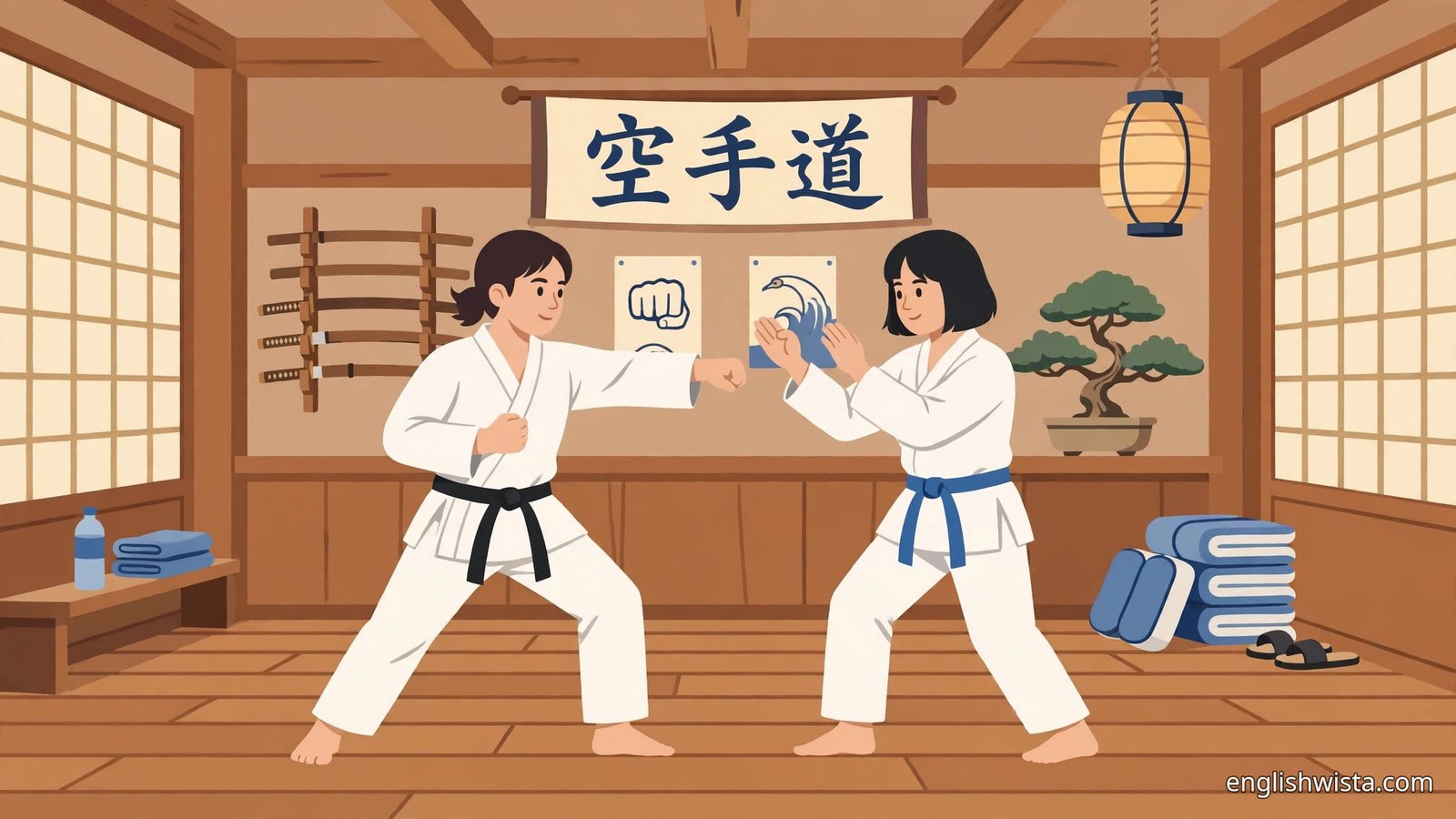
Martial (also pronounced “mar-shul”) is an adjective meaning connected with war, soldiers, or fighting. “Martial arts” are fighting sports like karate and judo, and “martial law” is military control of an area.
- He has practiced martial arts for ten years.
- The army declared martial law after the disaster.
- The soldiers marched with martial pride.
The Easy Trick to Remember
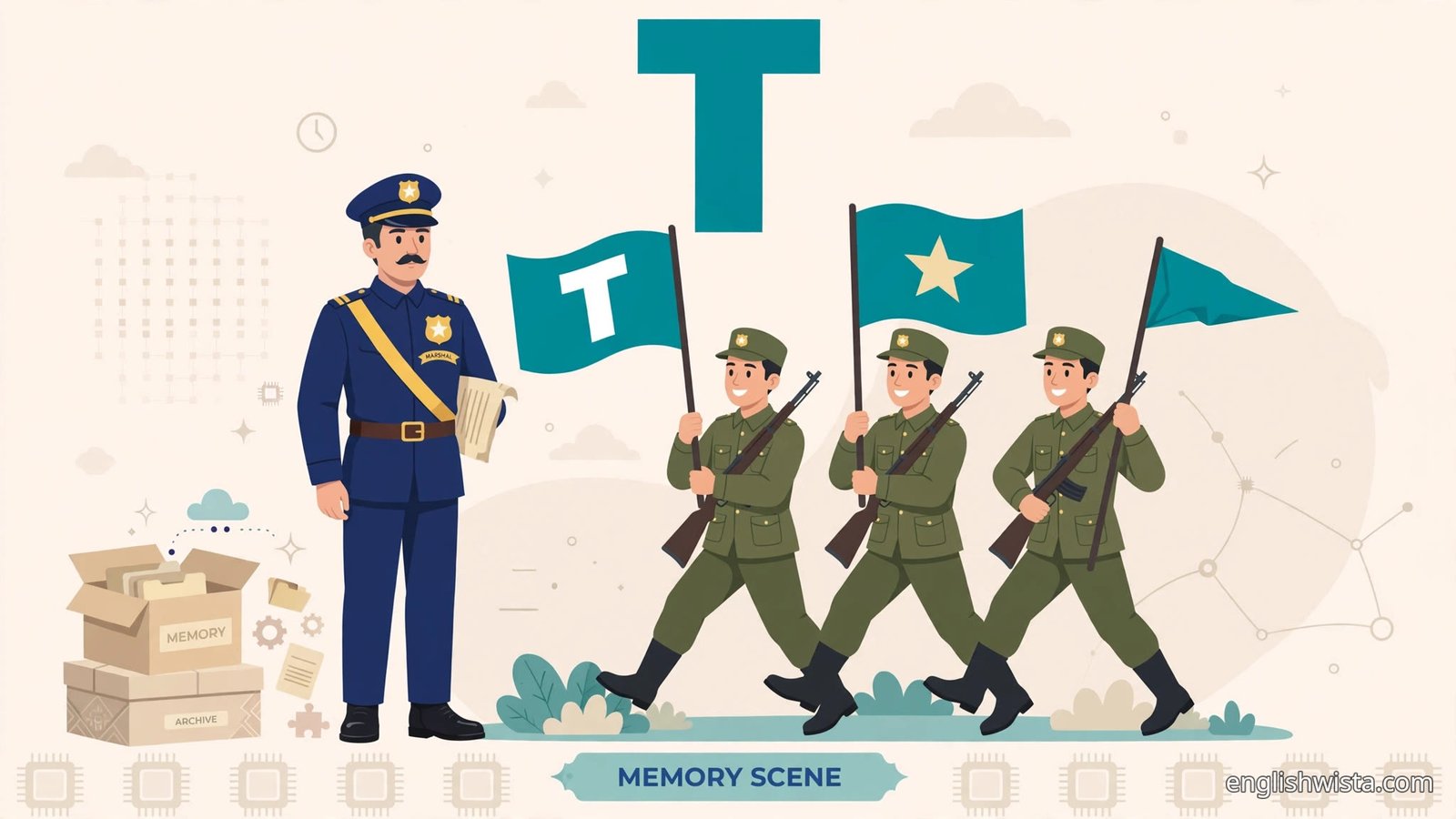
- Martial has a “t” — for “troops” and “tanks”. Both are war words, just like martial.
- Marshal has no “t” — but he has a badge. The officer with the badge is the marshal.
- Martial comes from Mars, the Roman god of war. That is why the “t” word means war-like.
- Say it as a rhyme: “The marshal keeps the peace with skill, while martial law means troops at will.”
Example Pairs
- The marshal pinned his shiny badge on his jacket. / She takes martial arts classes every Saturday.
- An air marshal sat quietly among the passengers. / The government declared martial law in the city.
- He marshaled his thoughts before answering. / The film was full of exciting martial arts fights.
Common Mistakes to Avoid
Wrong: He learned marshal arts as a child.
Right: He learned martial arts as a child.
Wrong: The martial arrested the thief.
Right: The marshal arrested the thief.
Wrong: The country was under marshal law.
Right: The country was under martial law.
Frequently Asked Questions
Are “marshal” and “martial” pronounced the same? Yes. Both are pronounced “mar-shul”, which is why learners mix them up so often.
Is “marshal” also a verb? Yes. To marshal means to arrange or gather, as in “marshal your arguments” or “marshal your courage”.
What is a “field marshal”? A field marshal is the highest rank in many armies — above a general.
Mini Quiz: Test Yourself
- 1. The ___ pinned his shiny badge on his jacket.
- 2. She takes ___ arts classes every Saturday.
- 3. The government declared ___ law in the city.
- 4. An air ___ sat quietly among the passengers.
- 5. He ___ his thoughts before answering the question.
Answers: 1. marshal, 2. martial, 3. martial, 4. marshal, 5. marshaled.
Quick Recap
- Marshal (no “t”) = a law officer or official — and a verb meaning to arrange (think: the badge, not the battlefield).
- Martial (with “t”) = related to war or fighting — martial arts, martial law (think: “t” for troops and tanks, from Mars the god of war).
- Both are pronounced “mar-shul” — only the spelling tells them apart.
- “Field marshal” is the highest army rank — that one uses “marshal”, the officer word.
Conclusion
Now you know the simple difference: a marshal is an officer, and martial means related to war. Keep the memory trick in mind, practice with the example sentences, and you will never mix up these two sound-alike words again.