Do you ever write “adopt” and wonder if it should be “adapt”? You are not alone! These two differ by one letter — D vs P — but one means taking something in and the other means changing to fit. Today, we will clear it up once and for all with a simple letter trick.
What Is the Simple Difference?
Here is the short answer you can use almost every time:
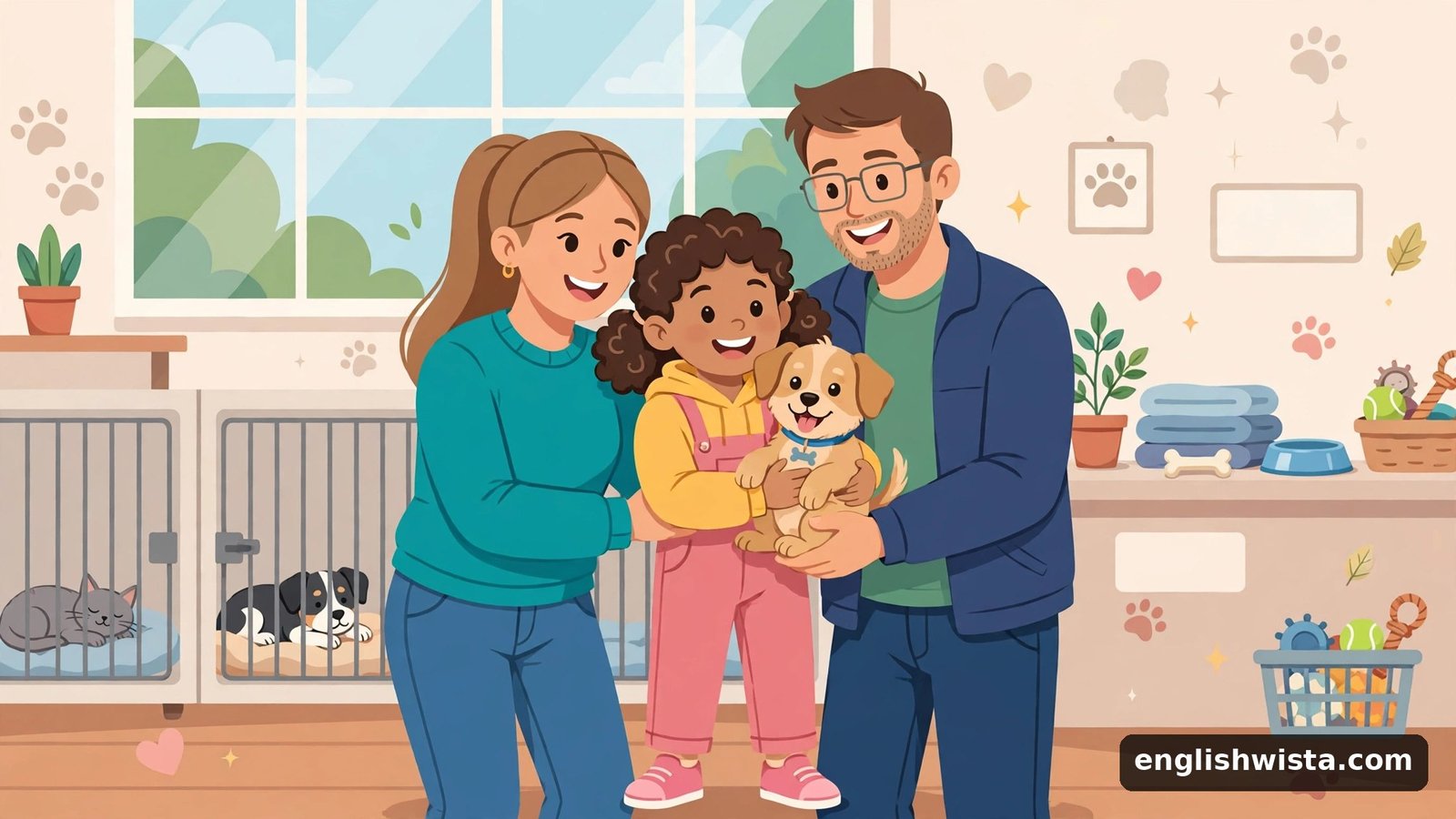
- Adopt (with P) = to take in — a child, a pet, an idea, a method. (“Adopt a puppy.”)
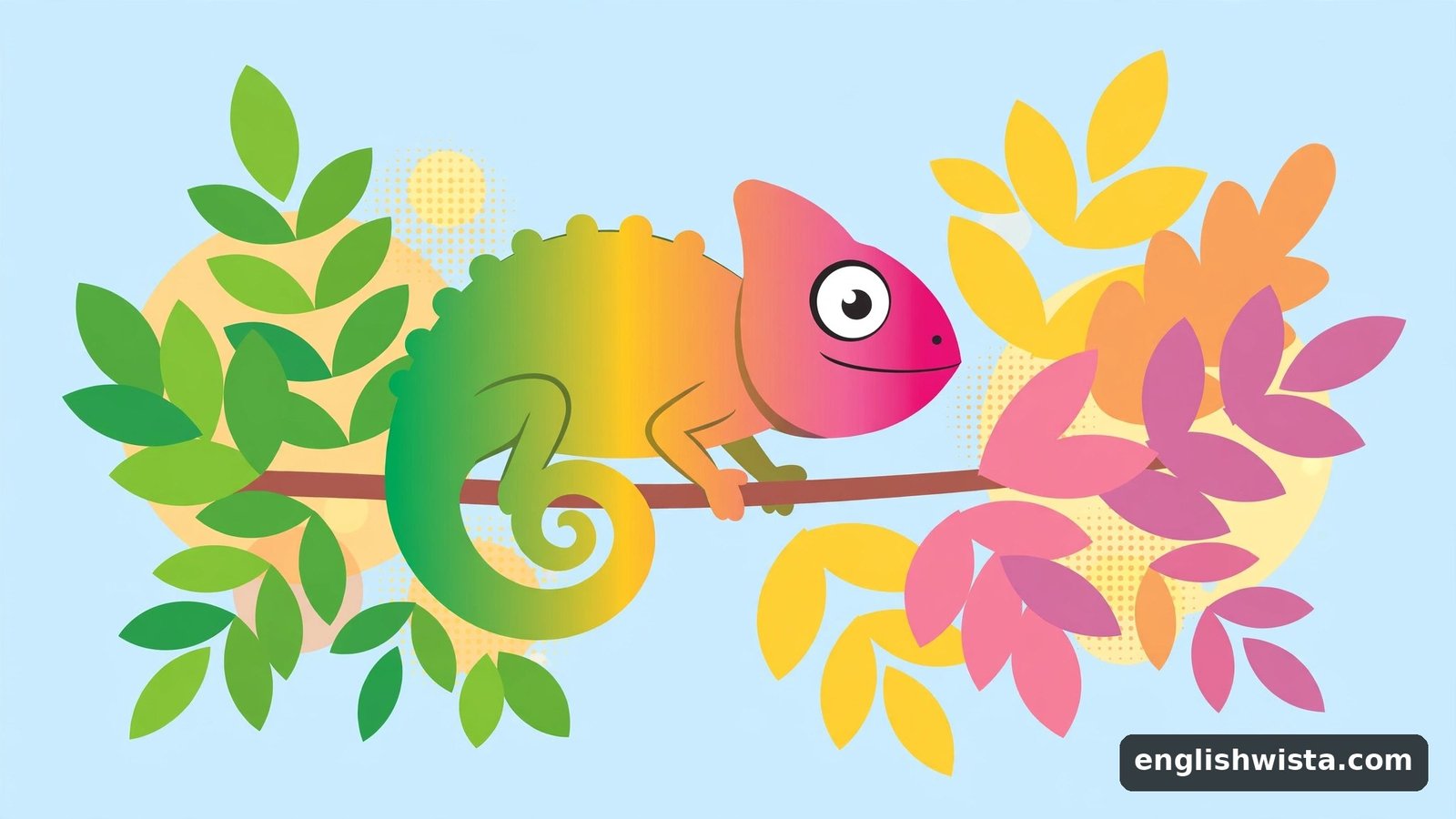
- Adapt (with D) = to change to fit new conditions. (“Adapt to the cold.”)
Think of it this way: adopt brings something IN; adapt changes yourself to FIT.
Adopt: Taking In
Use adopt when someone accepts something as their own — legally, emotionally, or practically.
- They adopted a baby. (Took the child as their own.)
- We adopted a dog from the shelter. (Took the pet in.)
- The company adopted a new policy. (Took the policy as its own.)
- She adopted a healthier lifestyle. (Took it up.)
If something is taken in as yours, it is adopt.
Adapt: Changing to Fit
Use adapt when someone or something changes to suit new conditions — usually with “to.”
- Humans adapt to cold climates. (Change to fit.)
- She adapted quickly to her new school. (Adjusted.)
- The novel was adapted into a film. (Changed form to fit a new medium!)
- Adapt or perish. (Change or die — evolution’s motto!)
If something changes to fit, it is adapt.
The Easy Trick to Remember
Here is a trick that never fails — the letter trick:
- Adopt has a P — like Pick up! You PICK something up and take it in.
- Adapt has a D — like Different! You become DIFFERENT to fit in.
Try it:
- “They adopted a kitten.” — picked it up as their own! Correct!
- “He adapted to city life.” — became different to fit! Correct!
P = pick up. D = different. That is the whole secret!
Adopt vs Adapt in Example Sentences
Let us look at real-life pairs side by side:
- The family adopted a child. / The child adapted to the new home.
- The studio adopted new software. / The team adapted to using it.
In each pair, adopt takes and adapt adjusts.
Common Mistakes to Avoid
Mistake 1: “Adapt a child.”
- Wrong: “They adapted a baby.”
- Right: “They adopted a baby.” (You take a child in — you don’t change to fit a baby!)
Mistake 2: “Adopt to a climate.”
- Wrong: “We adopted to the heat.”
- Right: “We adapted to the heat.” (Adapt pairs with “to”!)
Mistake 3: “Adapt” a policy. Careful: a company adopts a policy (takes it as its own) but adapts a policy (changes it to fit). Both are possible — the meaning flips with the verb!
Frequently Asked Questions
What is an “adaptation”? The noun for the changed version: a film adaptation of a book, or an animal’s adaptation (thick fur for cold). Adapt’s family: adapt, adaptation, adaptable.
What is “adoption”? The noun for taking in: “child adoption,” “the adoption of new rules.” Adopt’s family: adopt, adoption, adopted.
Can a person be “adaptable”? Yes — a compliment! An adaptable person adjusts easily to change. (There is no “adoptable” compliment for people — “adoptable” describes pets waiting for homes!)
How are they pronounced? Adopt = “uh-DOPT”; adapt = “uh-DAPT.” The P/T ending is the only sound difference — listen for it!
Mini Quiz: Test Yourself
Choose adopt or adapt for each sentence.
- 1. The couple _____ a baby girl last year.
- 2. Camels _____ to desert life.
- 3. Our school _____ a new uniform policy.
- 4. The book was _____ for television.
- 5. New employees must _____ quickly.
Answers: 1. adopted (took in) 2. adapt (changed to fit) 3. adopted (took as its own) 4. adapted (changed form) 5. adapt (adjust to fit)
Quick Recap
- Adopt (P) = take in as your own (child, pet, policy).
- Adapt (D) = change to fit (to new conditions).
- P = Pick up; D = Different.
- Adapt pairs with “to”; adopt pairs with an object taken in.
- Nouns: adoption (taking in) vs adaptation (changed version).
Conclusion
So, adopt or adapt? Now you know: adopt picks something up, and adapt changes to fit. With the P/D trick in your pocket, you will never mix them up again. Keep practicing with real sentences, and soon the right word will come to you automatically!